En route pour la pêche (Setting Out to Fish) by Sargent, John Singer
View the artwork: En route pour la pêche (Setting Out to Fish) →
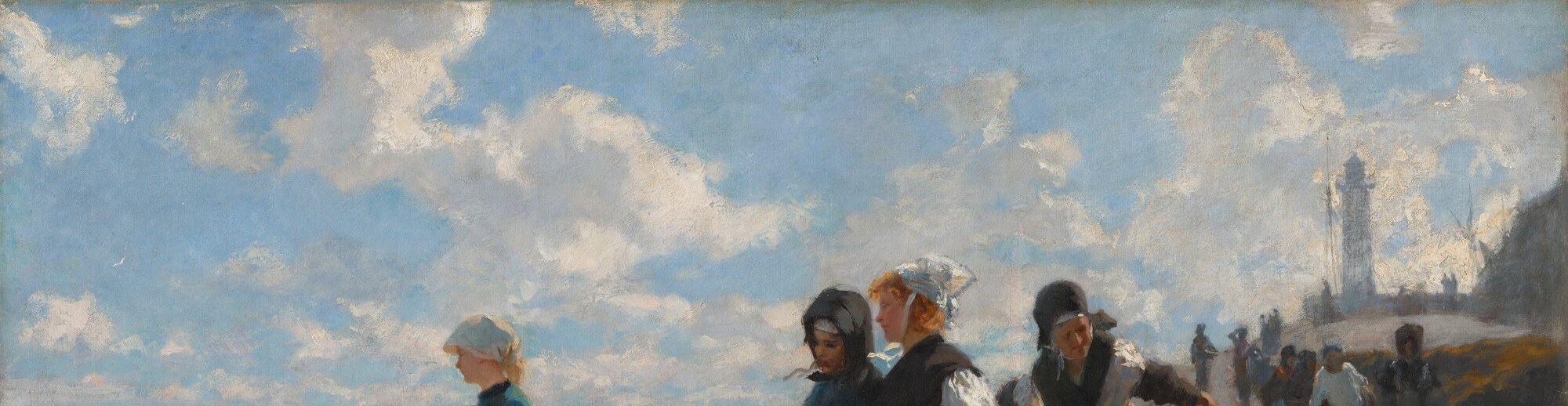
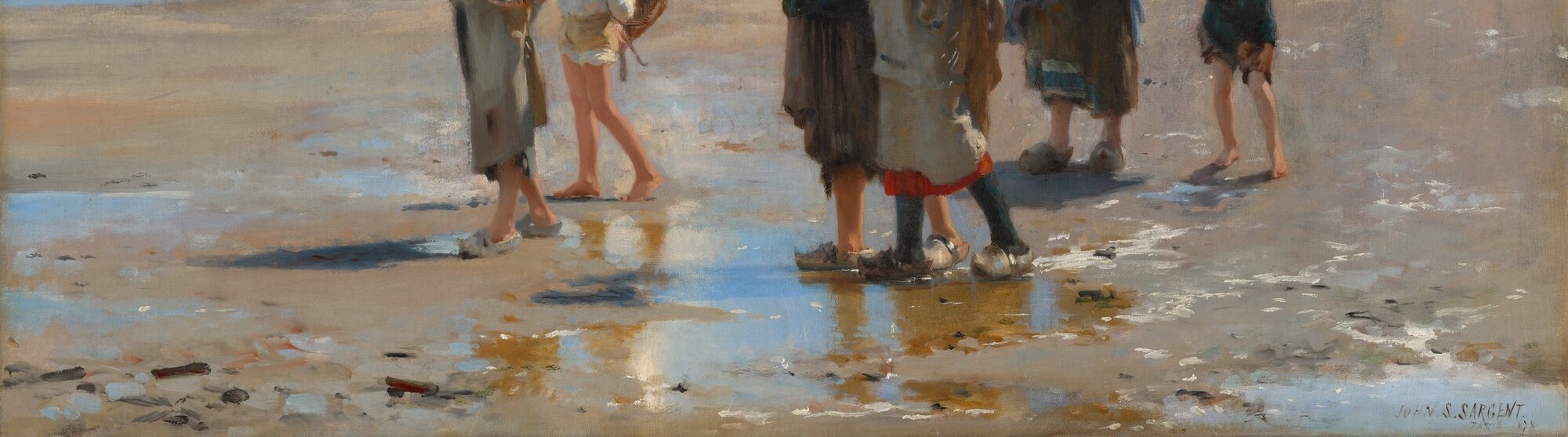
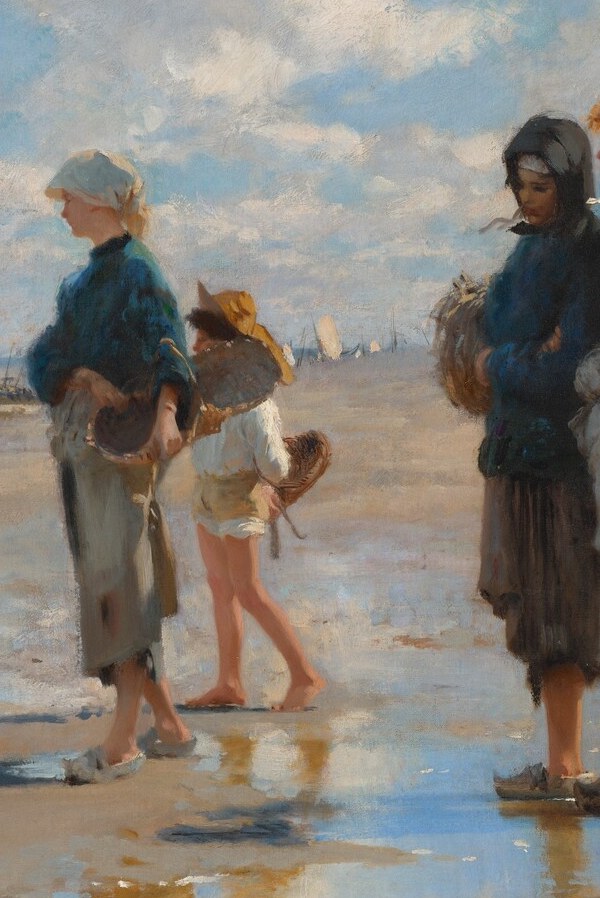
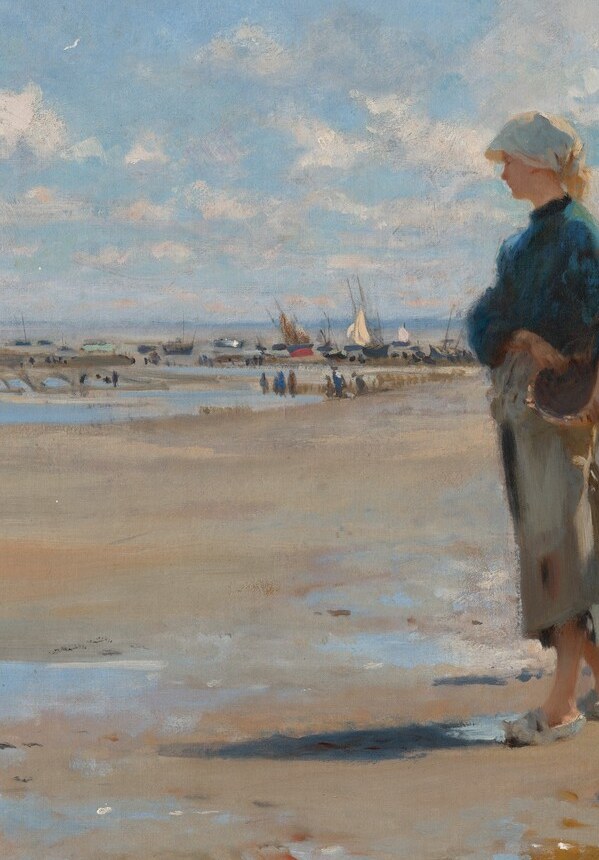
En route pour la pêche (Setting Out to Fish) by John Singer Sargent, painted in 1878, and held by a private collection. Sargent was twenty-two when he finished this canvas in Cancale, on the coast of Brittany. He had trained in the ateliers of Paris, but this is not a Parisian painting. It is the work of a young man watching working people, finding the composition in their own movement rather than imposing one on them.
Look at the one face turned toward us, the tall woman near the center of the group. Every other figure moves outward toward the tidal flats, their backs to us. She alone meets the painter's eye, and the contact is quiet, unglamorous, and true. Follow her gaze, then let your eye drift to the child tucked among the skirts, an inheritance of labor, carried without sentimentality.
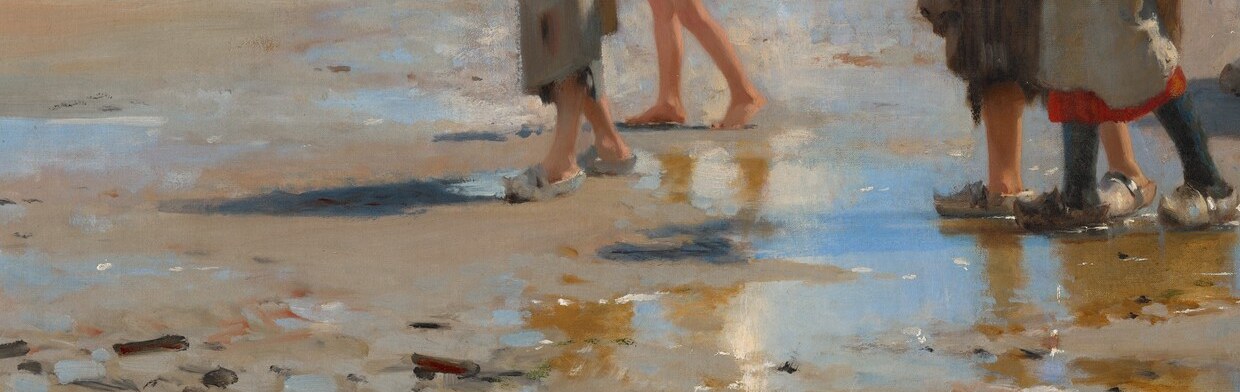
The painting is also a technical announcement. Sargent had already begun drawing with a brush, laying down strokes the way a draftsman uses charcoal. The wet sand is barely described, just loose horizontal bands of blue-gray and white that read as light hitting water, and yet the figures cast clear reflected silhouettes in it. That economy would become his signature.
What you are seeing is a portrait of a community at work, but also a portrait of the painter. He would spend the next forty years painting presidents, aristocrats, and society women in silk. Here, on a cold beach, he painted fishermen's wives with the same gravity he would later give to the wealthy. Do you think that early sincerity ever left him?
#arthistory #sargent
Details
Transcript
Cancale, France. 1878. The tide is out, and the women are walking. They carry wicker baskets toward the shallow pools. The painter was twenty-two. He had left the art schools of Paris to be here. Her face catches the light. She looks back at him, and so at us. In a few years Sargent would be famous for portraits.