The Lamentation by http://www.wikidata.org/.well-known/genid/85e9aad577700446812f2c323c6113fc
View the artwork: The Lamentation →
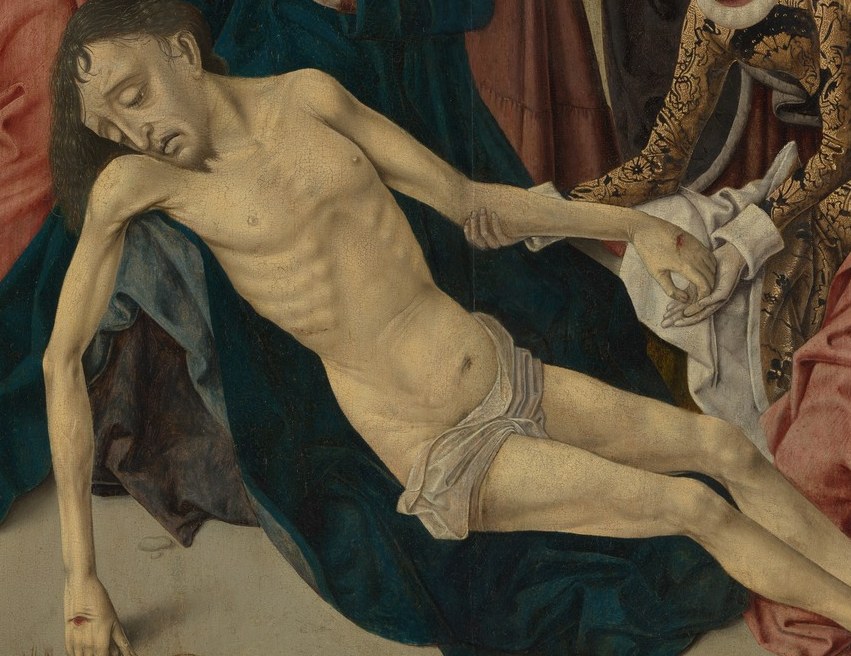
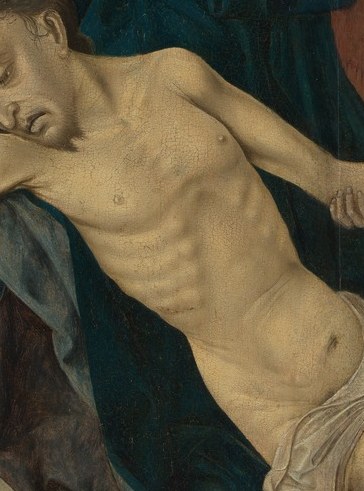
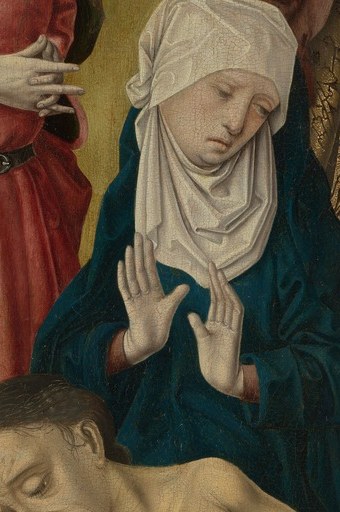
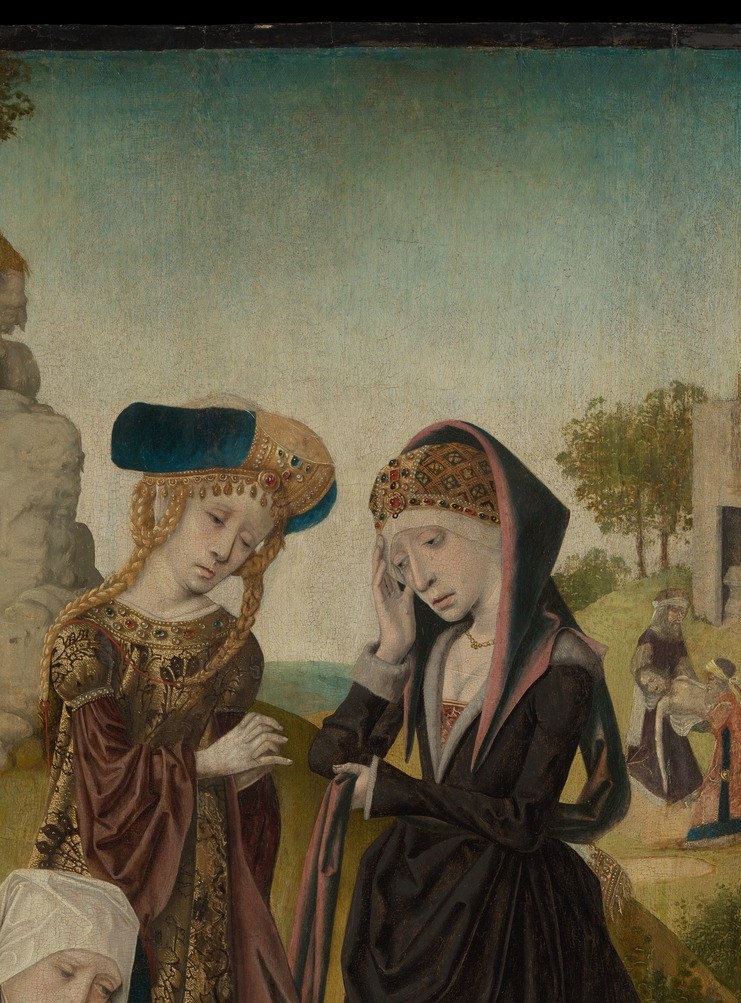
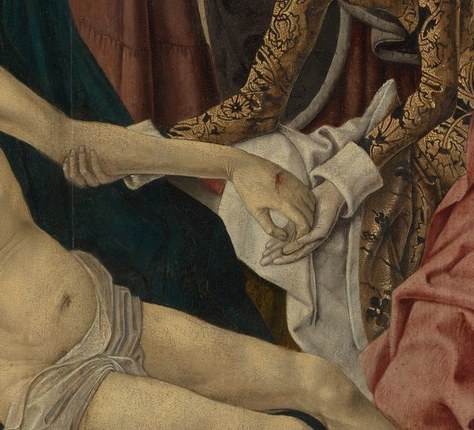
The Lamentation, painted around 1500 by the Workshop of the Master of the Virgin among Virgins, is a panel designed to break a heart. Now in the Metropolitan Museum of Art, this oil on wood shows the dead Christ draped across his mother's lap, ringed by John the Evangelist and the Three Marys. But its real trouble began after it left the painter's hands.
Look at the Virgin's hands cradling her son's head, and then at his slack face. The painting is built around that touch. This wasn't meant to be a scene you watched from a distance; 15th-century viewers were meant to feel it physically, to use this image to meditate on the weight of death. The tears are painted on, visible and wet, a devotional prompt as direct as a stage direction.
The scandal here isn't a lost reputation but a lost partner. This panel was originally paired with a Resurrection scene, a panel that ended up in the Rijksmuseum in Amsterdam while the Lamentation came to New York in 1926. For most of the 20th century, the two halves of one story sat in separate countries, their meaning fractured by an ocean. Only later did scholars reconnect them, restoring a narrative arc that moves from this wrecked afternoon to the impossible morning that follows.
What do you think seeing it alone, without the promised sunrise?
#arthistory #netherlandishart #metmuseum
Details
Transcript
A mother holds her dead son. His body is a fallen column, cutting across her grief. The artist surrounded them with witnesses who ache on cue. But this panel was not made to stand alone. It was half of a story. For centuries, its other half sat in a different country. The Resurrection panel was in Amsterdam. This was in New York. Only scholarship put them back together: a diptych of despair and dawn.