A Sermon on Charity (possibly the Conversion of Saint Anthony) by http://www.wikidata.org/.well-known/genid/1f6abafcf63b7034123a39db8e87f04a
View the artwork: A Sermon on Charity (possibly the Conversion of Saint Anthony) →
This is A Sermon on Charity, painted around 1525 by an anonymous artist working in Antwerp. It may also show the moment Saint Anthony heard the Gospels and decided to give everything away. The painting lives at the Metropolitan Museum of Art, and its whole argument is built into a single structural choice.
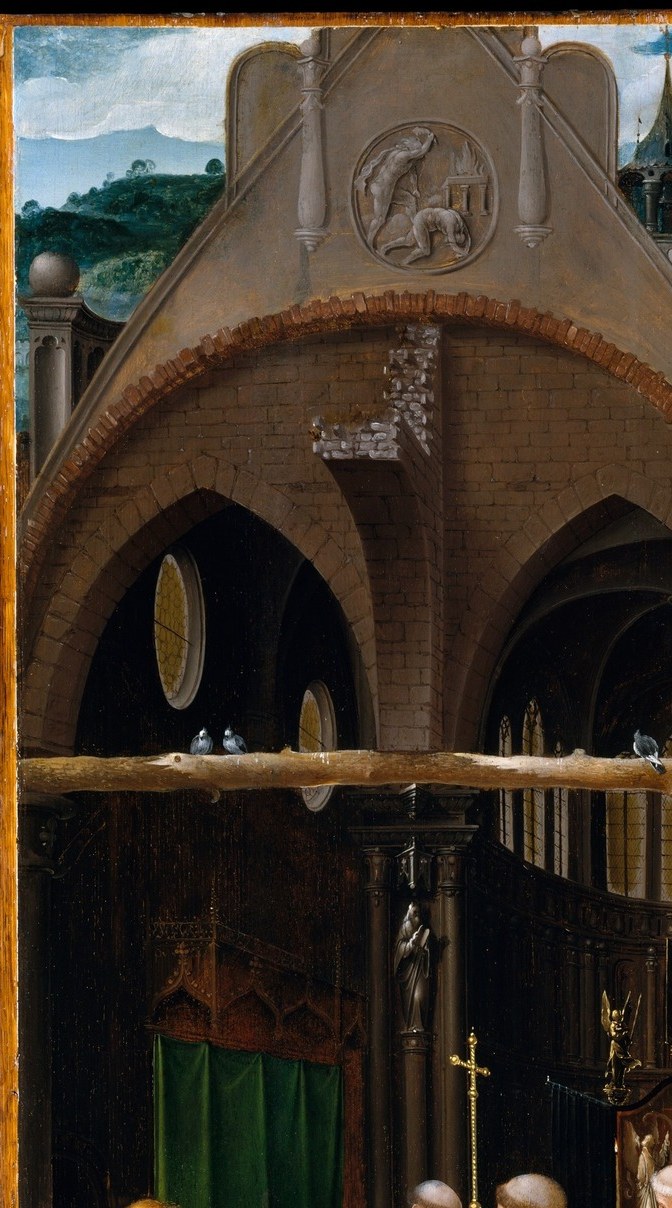
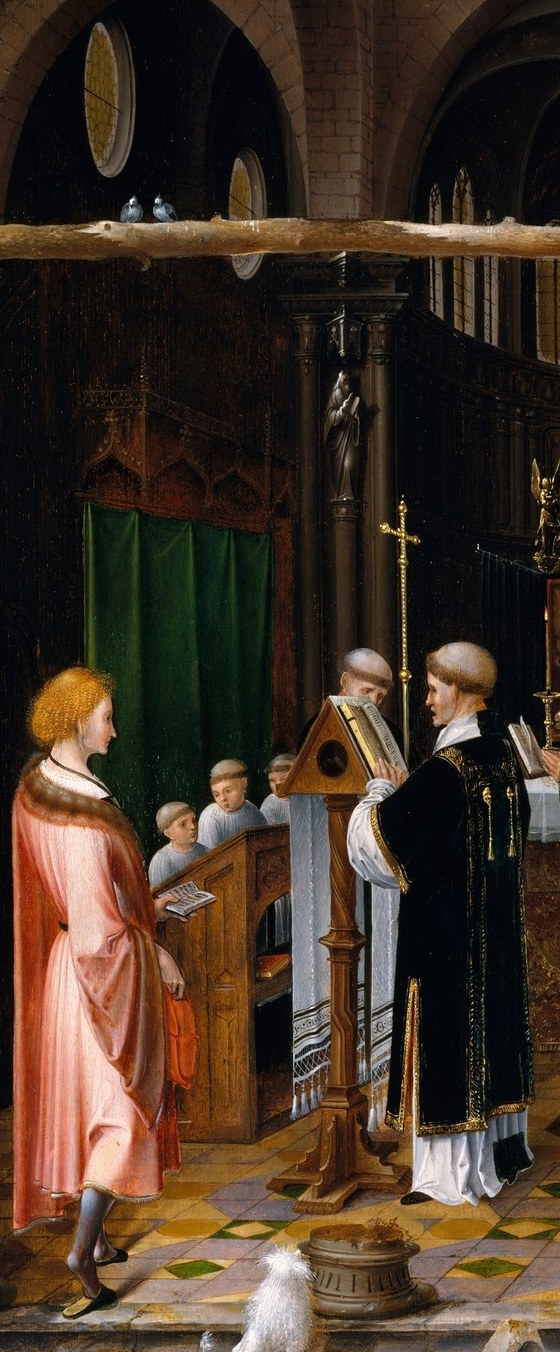
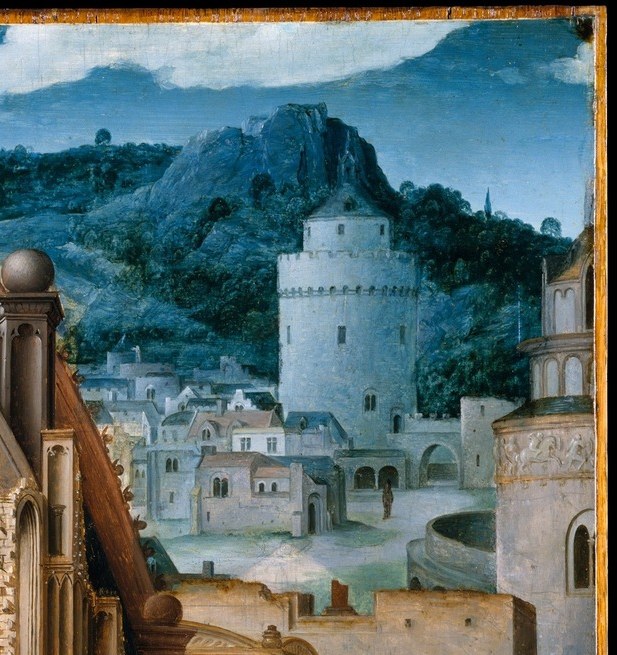
Look at the brick wall running straight down the middle of the panel. It is deliberately unfinished. On the left, clergy in dark robes perform a liturgy, someone reads aloud from a book. The man in the red robe, probably Saint Anthony, hears it. And then your eye crosses the wall to find the same scripture already being lived out: clothes handed to the poor, coins changing hands, a beggar kneeling low in the right foreground.
The wall is the argument. In the early 1500s, a reform-minded circle called the Biblical Humanists taught that living a Christian life mattered more than attending church rituals. This painter made that idea visible in brick, dividing hearing from doing, ritual from action, and placing the weight of the composition on the side of charity.
Next time you look, find the small white dog at the bottom center. In Netherlandish painting, a dog means fidelity. The question the panel leaves you with is quietly pointed: where does your fidelity actually live, in the words you hear, or in what you do with your hands?
#arthistory #northernrenaissance #antwerpmannerist
Details


Transcript
Around 1525, a painter in Antwerp built a wall. It cuts the world in two. On this side, clergy read scripture in dark robes. A voice from the Gospels lands on the man in red. On the other side, the scripture is already happening. The painting argues: charity is not a ritual. It is an action.