Trappers by Jonathan K. Trego|J. L. Williams
Jonathan K. Trego was a Quaker portraitist from Bucks County, Pennsylvania, who regarded painting as a trade. He spent his career producing perceptive likenesses of lawyers, farmers, and judges. His portraits still hang in the Doylestown courthouse. But around 1855, he painted something entirely different: "Trappers," a quiet record of two men on horseback working their way through deep winter snow. In collaboration with a nearly unknown painter named J.L. Williams, Trego left behind what appears to be his only surviving wilderness scene.
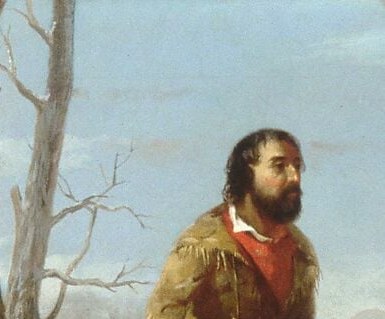
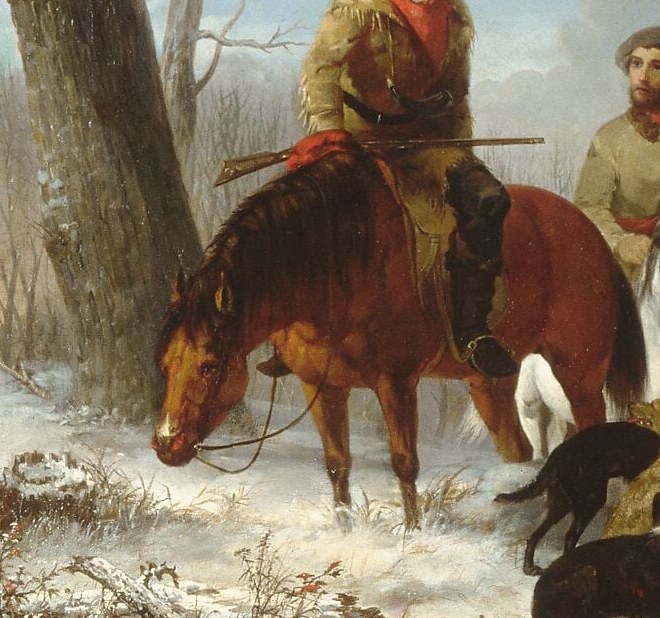
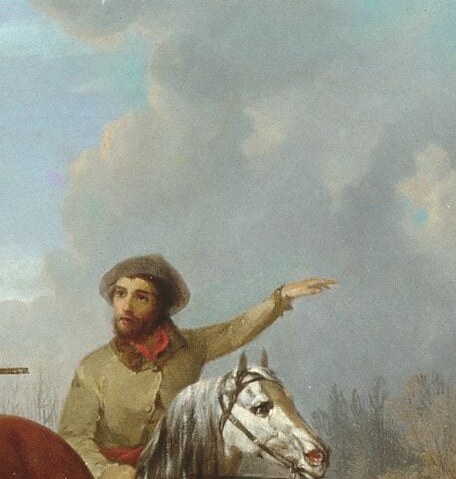
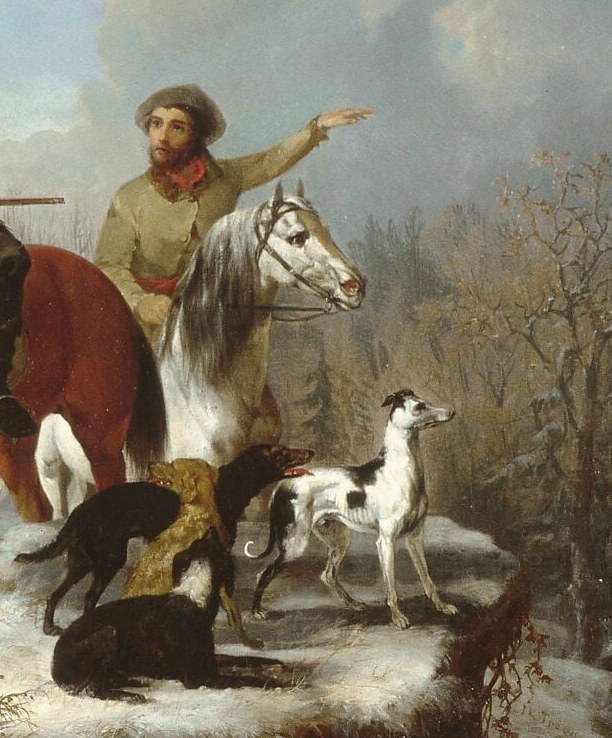
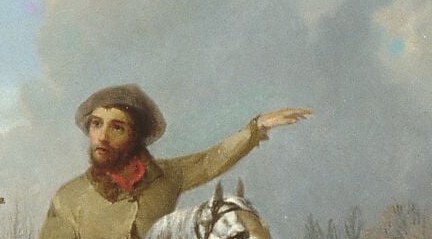
Look at the snow itself. It is not decorative. It is heavy and churned, recording the effort of hooves and paws. The chestnut horse stands ankle-deep, its posture communicating the sheer physical weight of the terrain. The second trapper points, and the greyhound leans forward, the painting's whole narrative hangs on that single gesture. Every dog, every hunched coat, responds to it.
Trego's father had been a farmer, and Trego himself later produced genre scenes and images of Western frontier life. "Trappers" is not a drama of conquest. It is a document of daily labor, painted by a man who understood that a portrait could be a record of someone's actual life. The trappers' buckskin clothing, the working dogs, the cold sky filtering through bare branches, all of it argues for authenticity over spectacle.
The painting measures just 25 by 30 inches and entered The Metropolitan Museum of Art in 1985 as a gift from Dr. Arthur Localio. It hangs in the American Wing, a small, steady window into a world that was already disappearing when Trego set down his brush.
#arthistory #americanart #metmuseum
Details
Transcript
Around 1855, a Quaker portraitist painted this. His name was Trego. He painted judges and farmers for a living. But here, he records a trapper in the deep snow. His companion points. The dogs are already locked on. You can feel the weight of the snow in the horse's stance. This was everyday life. Hard, cold, and completely unromantic. Trego left almost no wilderness paintings. Only this one.