Felucca off Gibraltar by Chambers, Thomas
View the artwork: Felucca off Gibraltar →
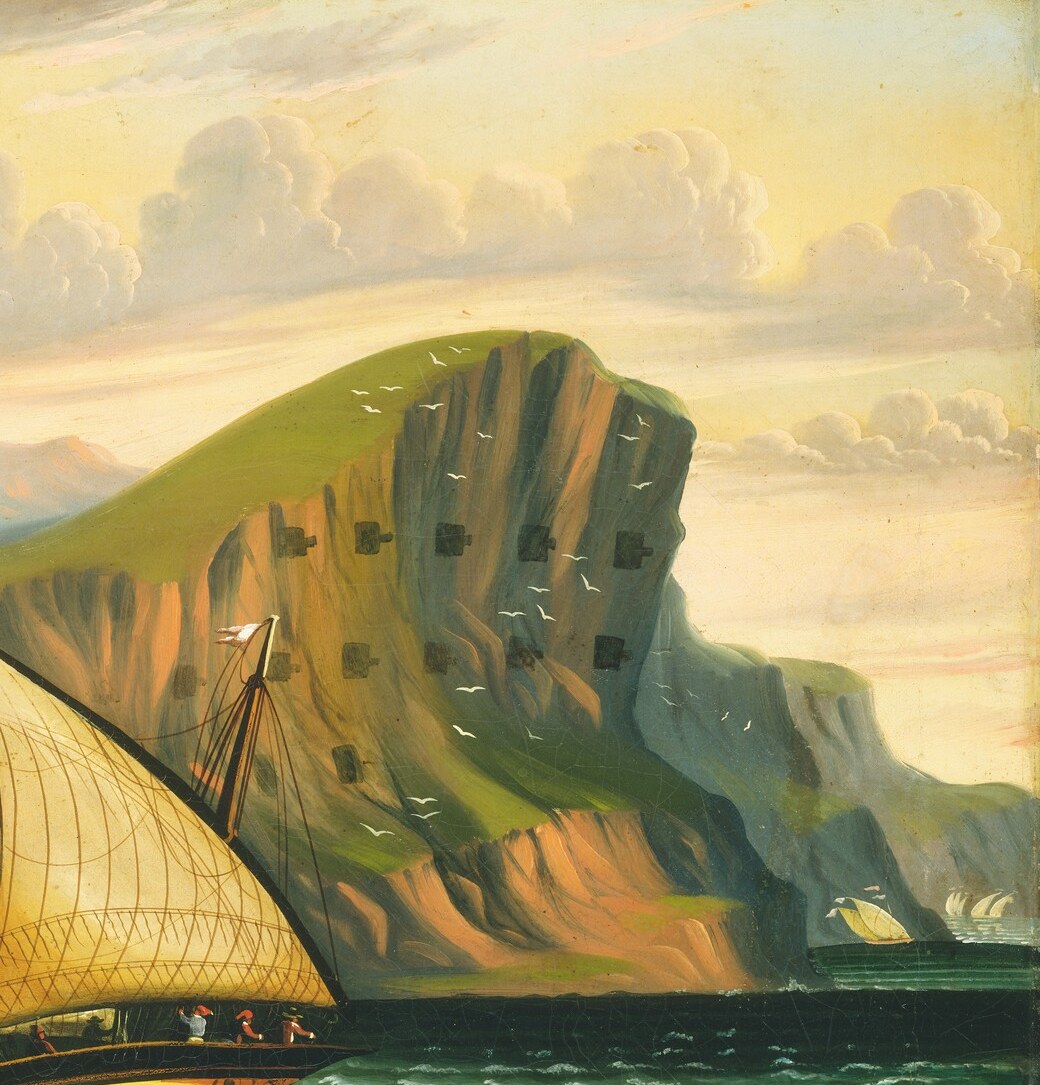
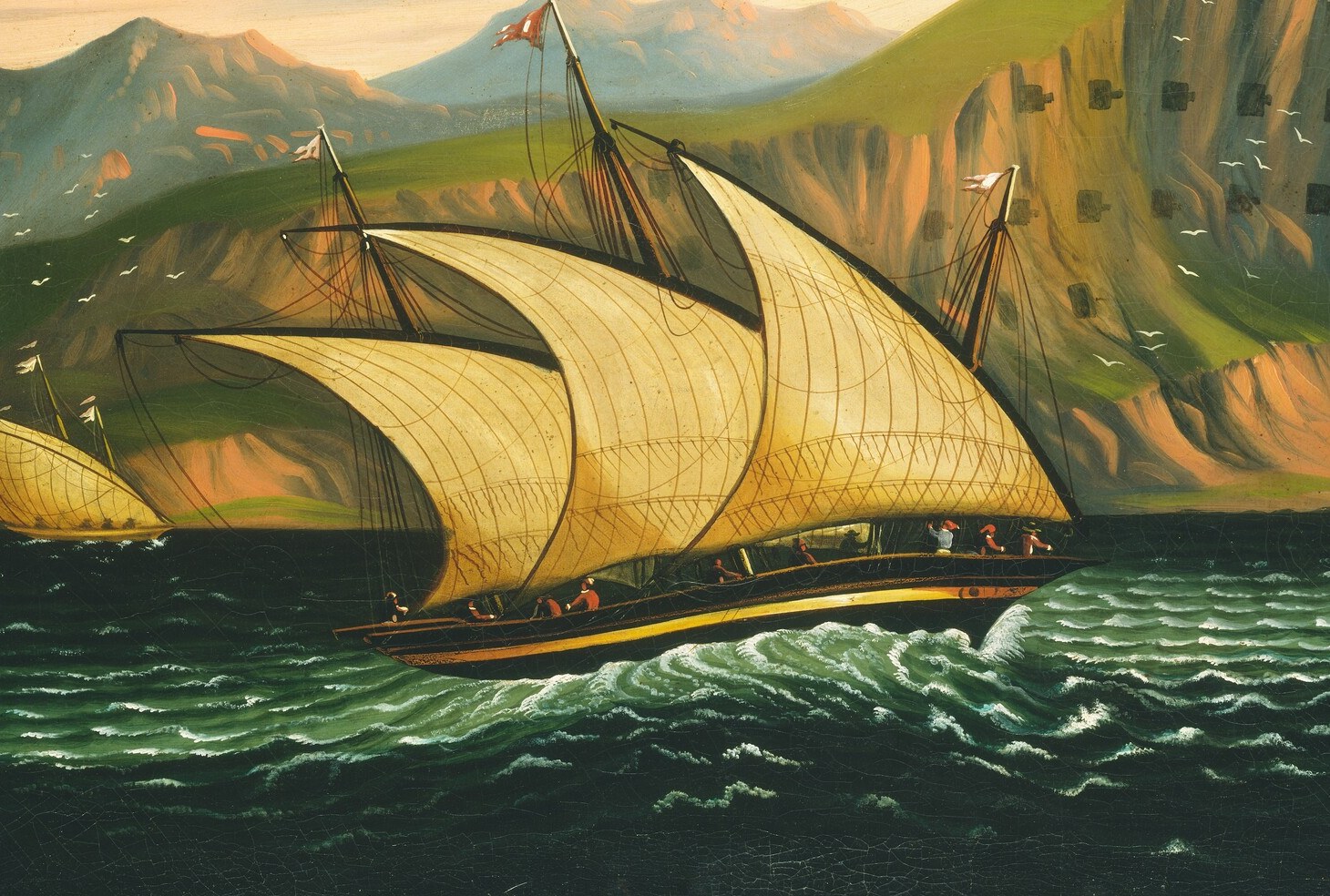
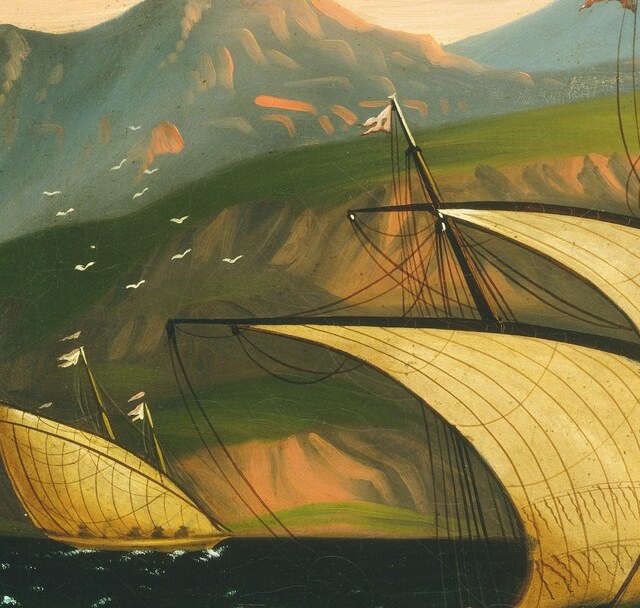
Thomas Chambers painted "Felucca off Gibraltar" in the mid-19th century, and it hangs today as a testament to what a self-taught eye can do with nothing but color and confidence. The painting was likely born from Chambers's own time in Gibraltar, a strategic port where he would have watched these lateen-rigged boats cutting across the strait toward the Moroccan coast.
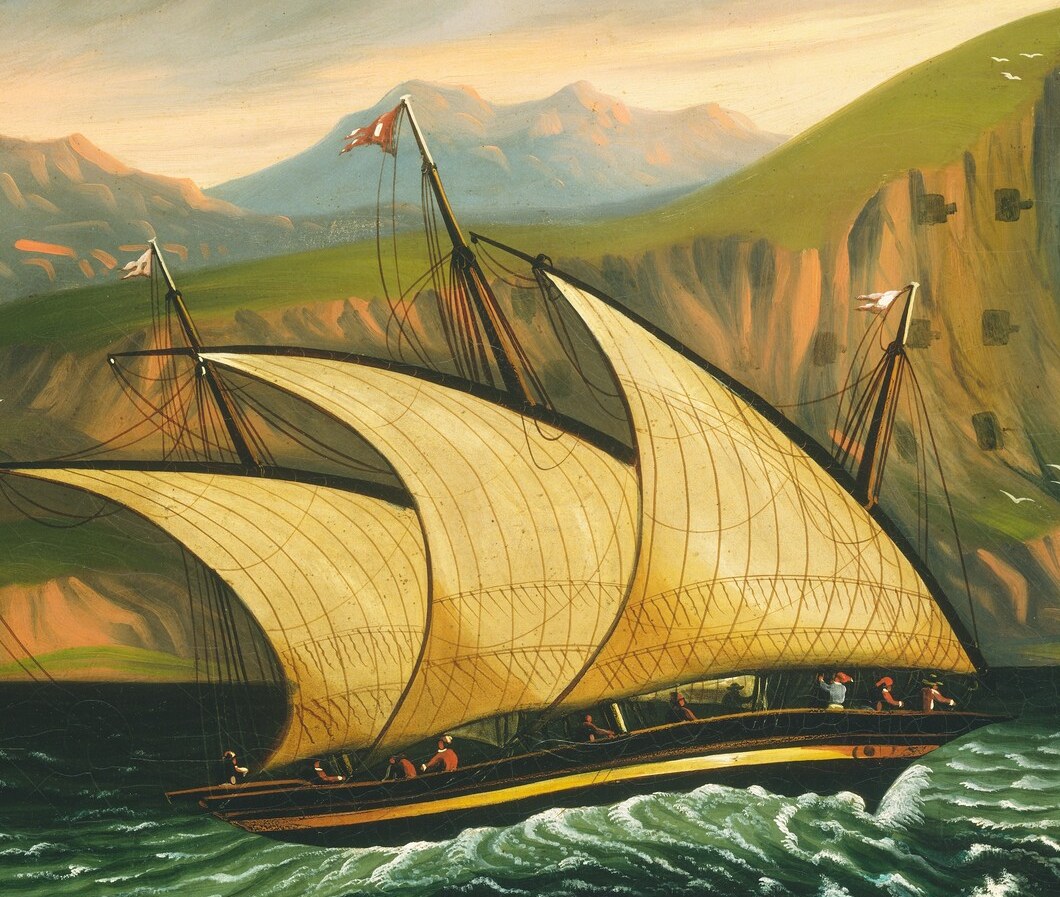
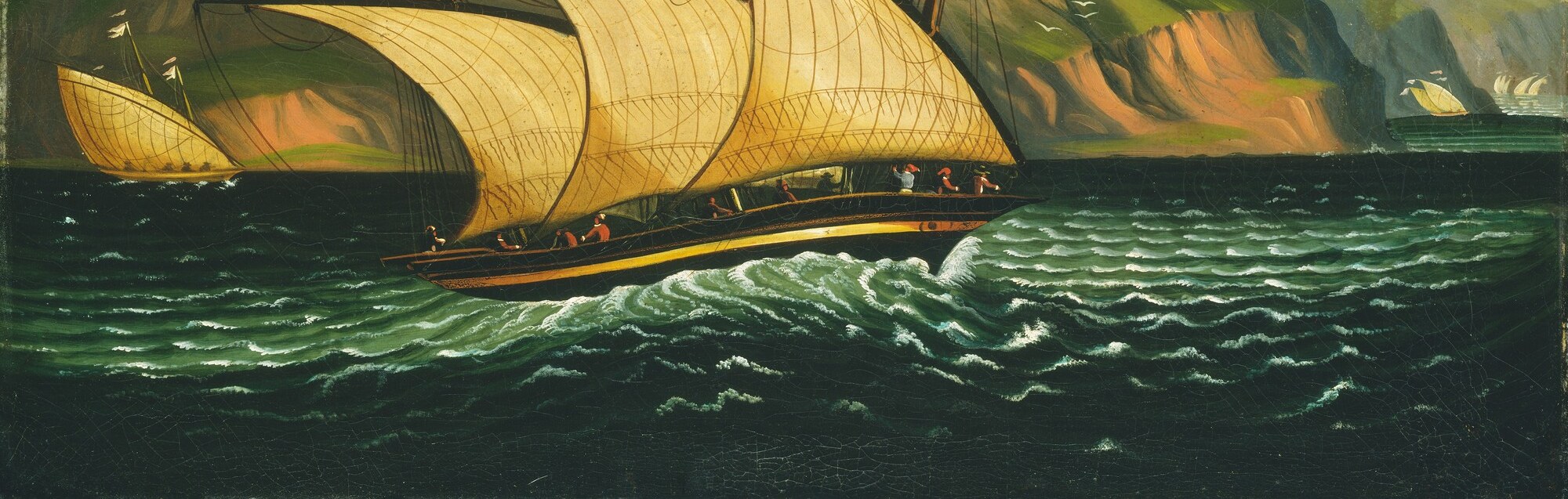
The trick is the sail. Chambers used a near-black sea as his ground, then laid down a golden ochre so luminous it vibrates. Look closely and you can sense the raw canvas breathing through the pigment, he didn't overwork it. The white wake behind the hull is the only bright white in the lower half of the painting, and it singlehandedly sells the boat's speed.
Chambers was an American original, active from the 1830s into the 1860s, and his style has been described as a kind of folk modernism before its time, bold, flat, decorative, and utterly direct. He painted what he saw and what he remembered, simplifying shapes until they hummed. The felucca itself was a Mediterranean workhorse with a rig inherited from Arab maritime culture, and here it becomes a golden shape burning across a dark channel.
You don't need a studio in Paris to make a painting that stops someone mid-scroll. You just need to know where to put the light. What's the last painting that made you stop because of a single color?
#arthistory #thomaschambers #americanart
Details
Transcript
The water is nearly black. And the sail burns gold. Chambers didn't mix them. He let the raw canvas glow through the ochre. The black water is the same deep tone, pushed dark with a single glaze. A self-taught American, painting the Strait of Gibraltar. All the drama is in the contrast.