A Summer Landscape by Seurat, Georges
View the artwork: A Summer Landscape →
This is *A Summer Landscape*, painted by Georges Seurat around 1883. It hangs in the Musée d'Orsay in Paris. What you are looking at is not yet Pointillism, but the moment right before it. A young artist, barely twenty-three, standing alone in a field and quietly building the visual language that would reshape modern painting.
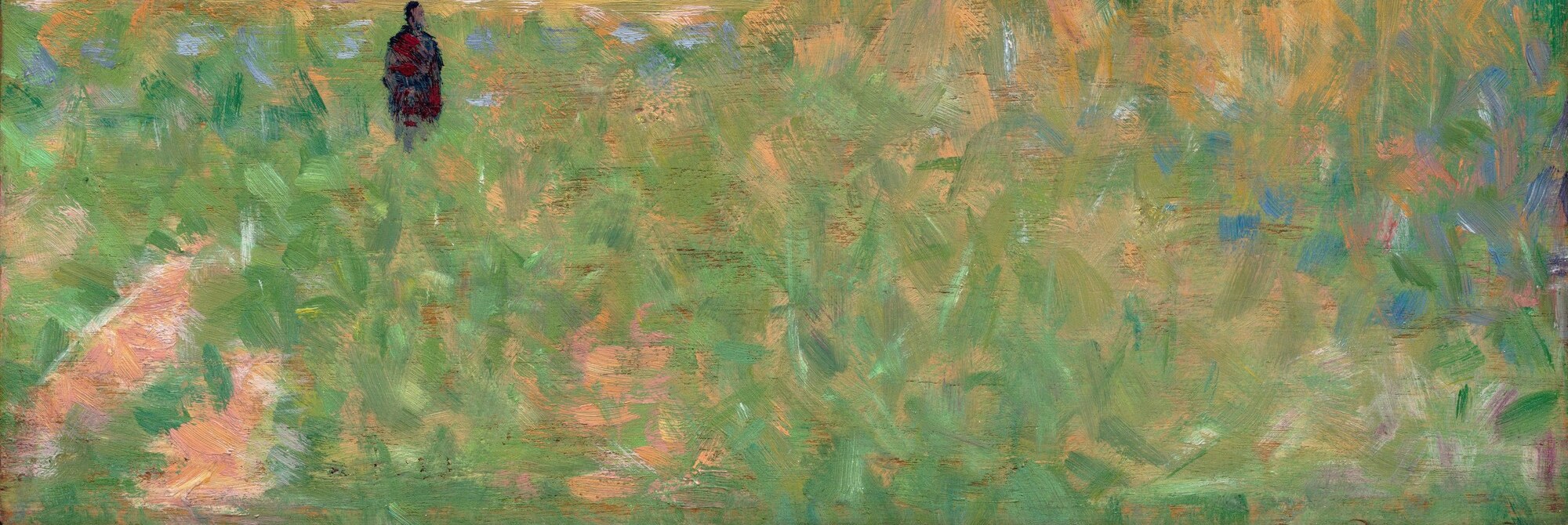
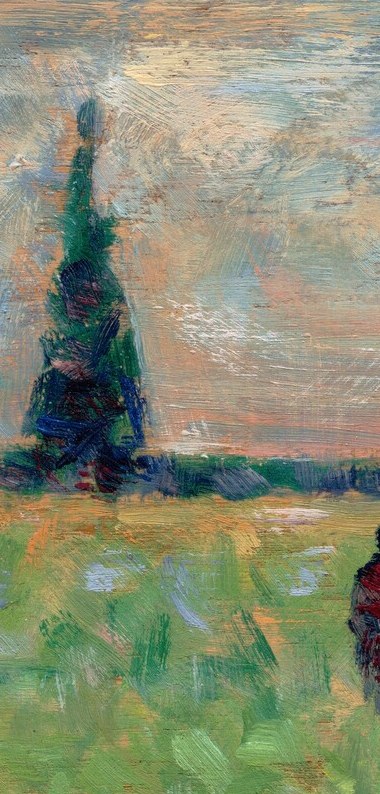
Let your eye settle on the figure in the meadow. The scale alone is an argument: she is tiny, nearly swallowed by the open grass and the pale sky. The painting is not about her story. It is about the light pressing down on her shoulders. Seurat made the summer feel immense and indifferent, and a human presence small within it.
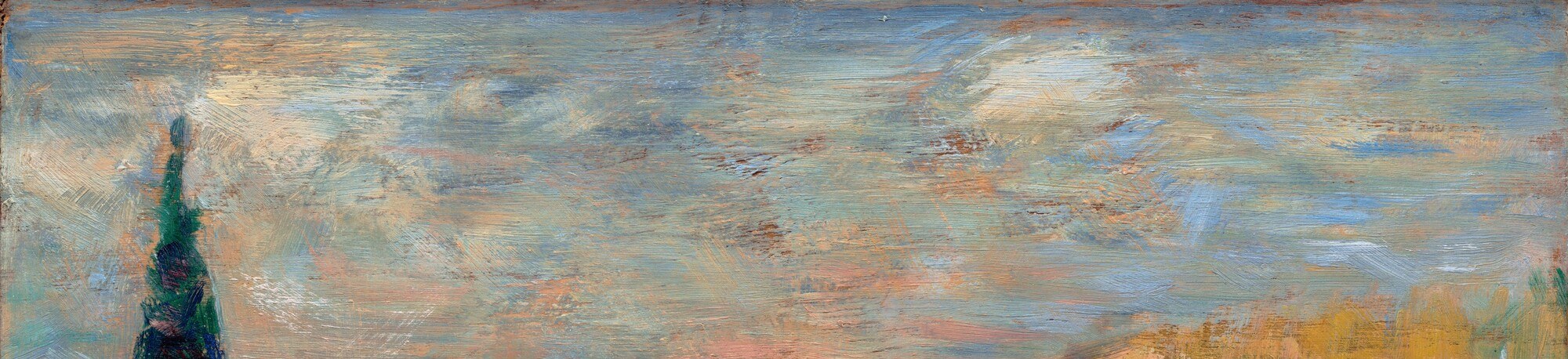
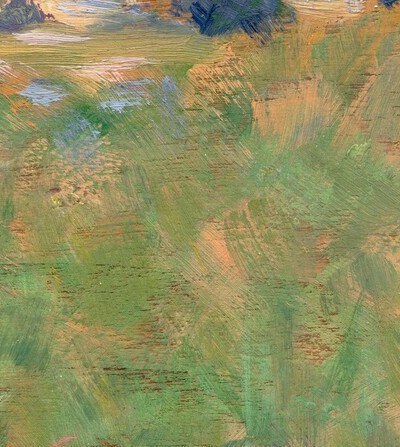
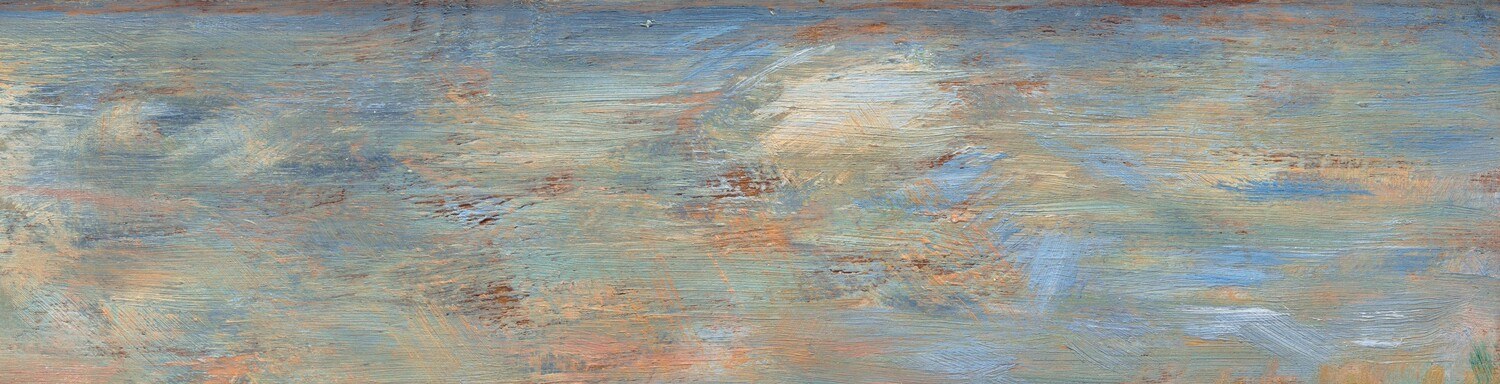
The grass is the technical heart of this panel. From a distance it reads as a single sunlit green, but close up it fractures into dozens of layered strokes of varied value. He was not yet using distinct dots; instead he laid parallel, directional marks of adjacent hues and trusted the eye to combine them. The sky is the clearest proof. In the upper left, a passage of systematic brushwork reveals a young man obsessed with optical effect, testing the physics of color on a wooden panel no bigger than a briefcase.
Two years later he would stand on the island of La Grande Jatte and begin the enormous canvas that made him famous. This little field is where he did the homework. It is a painting full of the solitary concentration of someone who knows he is onto something and is not yet quite sure what. Next time you see a Seurat, remember the long afternoons he spent in the grass getting it right.
#arthistory #georgesseurat #postimpressionism
Details
Transcript
Summer, 1883. A field in northern France. One person, small against the sunlit meadow. Look closely at the grass. It's not just green. Layered strokes of varied greens build the shimmer of light. Seurat was twenty-three. He was already testing a system. He painted parallel, directional strokes as a color-field experiment. That optical logic would soon become pointillism. But here, in the heat of a quiet field, a young man was just practicing.