Lake Lucerne by Bierstadt, Albert
View the artwork: Lake Lucerne →
Albert Bierstadt's Lake Lucerne is an 1858 oil on canvas that measures six by ten feet, now in the National Gallery of Art. It was the painting that made his reputation in America. He sent it from Europe to the National Academy of Design in New York, where it caused a sensation and won him election as an honorary member within weeks.
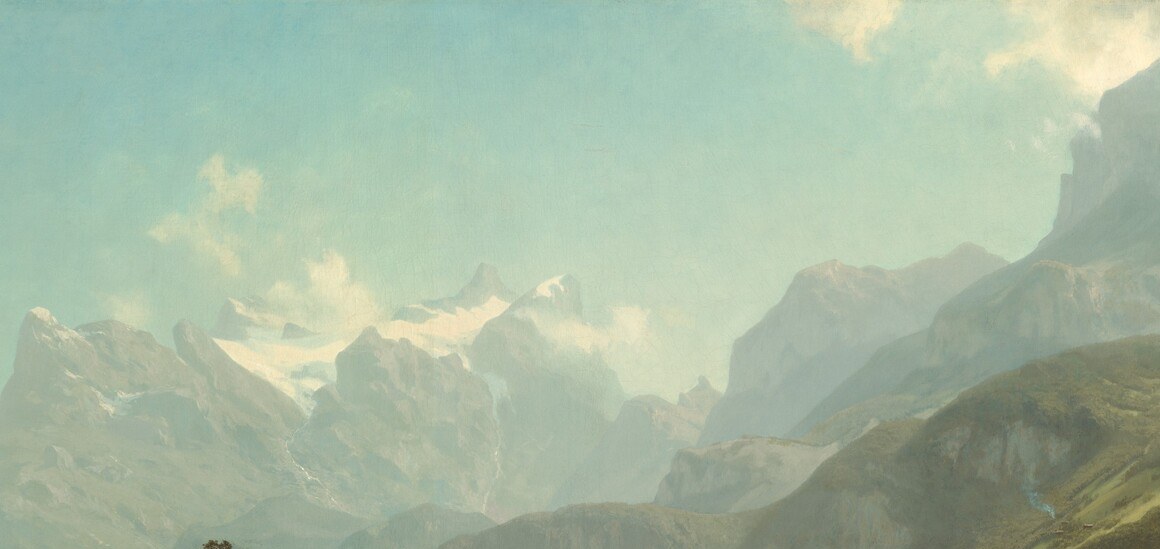
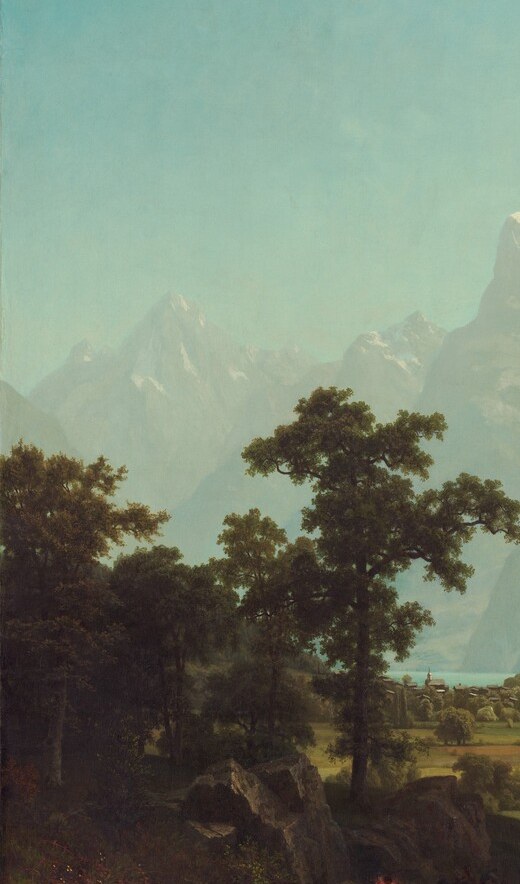
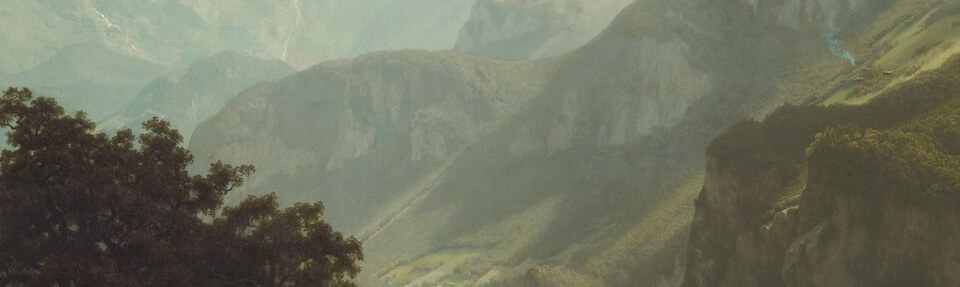
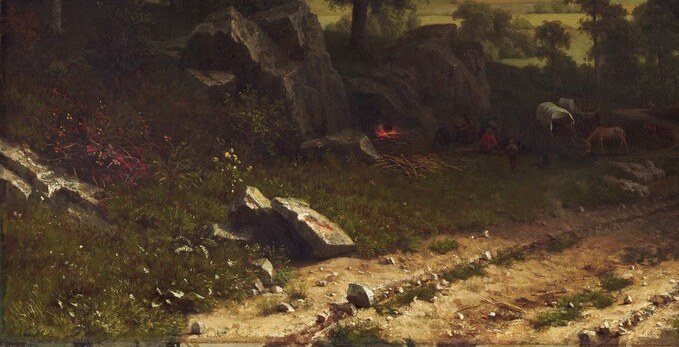
Look first at the rocky outcrop in the lower left. Bierstadt gives it warm ochres, thick paint, and crisp edges. Then let your eye travel across the lake's cold blue-green surface and into the band of purple-grey haze that separates water from mountains. That haze is the painting's real subject. Distance here is not shown by making things smaller. It is shown by shifting the color temperature from warm to cool to neutral, step by step.
Bierstadt painted Lake Lucerne in his Düsseldorf studio using plein air sketches he had made in Switzerland two years earlier. His training there taught him this atmospheric perspective technique, and he pushed it further than anyone expected. Alvin Adams, founder of the Adams Express Company, bought the work for $925 before the year was out. It later passed through a Boston estate, a Rhode Island industrialist, and a private home in Exeter, where it sat unknown to scholars for most of the twentieth century. It resurfaced at auction only in 1990.
Art historians now see this painting as the prototype for Bierstadt's great western landscapes of the 1860s, including his Rocky Mountains and Yosemite views. The panoramic format and the color-as-distance trick were born right here, in a Swiss valley, before he ever saw the American frontier.
#arthistory #hudsonriverschool #bierstadt
Details

Transcript
These rocks feel close enough to touch. Warm ochre, sharp edges. The paint here is thick. Now the lake. Already colder. Blue-green and smooth. Between water and mountains: a band of purple-grey. That haze is not fog. It is distance, painted as a color. The peaks glow warmer at the base than the summit. This was his first giant canvas. It taught him how to do this.