The Baptism of Christ by Sebastiano Ricci
View the artwork: The Baptism of Christ →
Sebastiano Ricci painted The Baptism of Christ in 1713, during the last great age of Venetian Baroque spectacle. It was most likely a grand architectural commission, meant to dissolve into a real wall through its illusionistic archway and flanking stone statues. The painting is an eyewitness to how early 18th-century Venice staged the sacred: as a public drama with a cast of dozens and a spotlight operated by heaven itself.
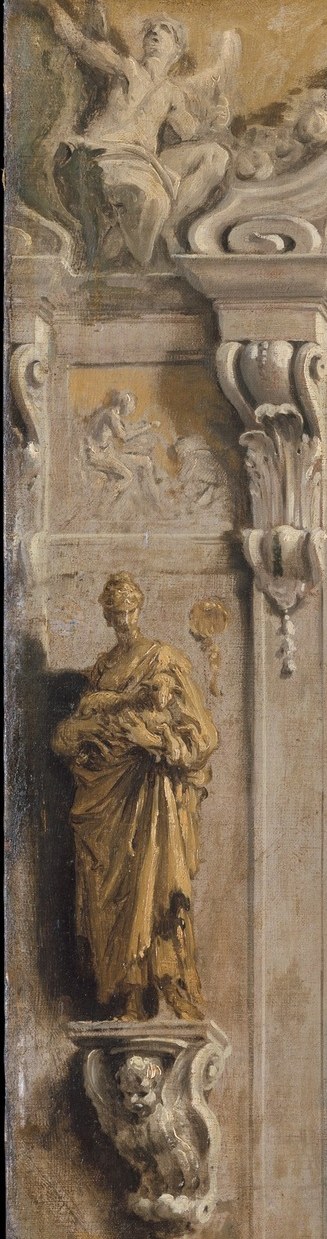
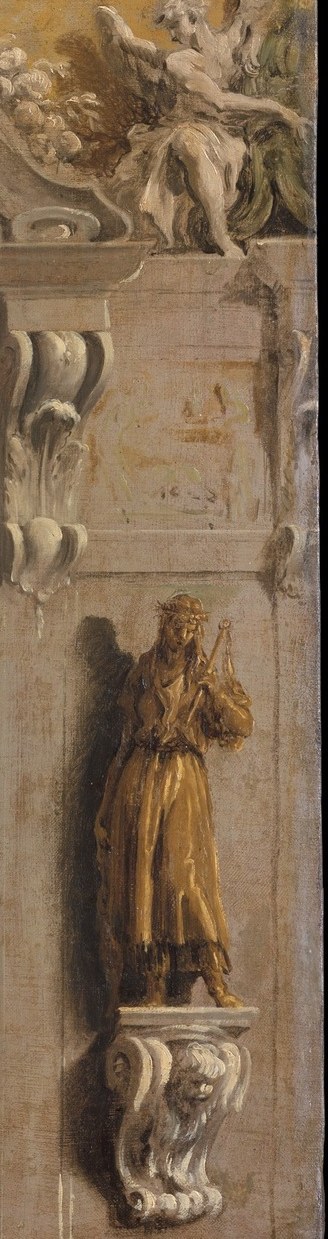
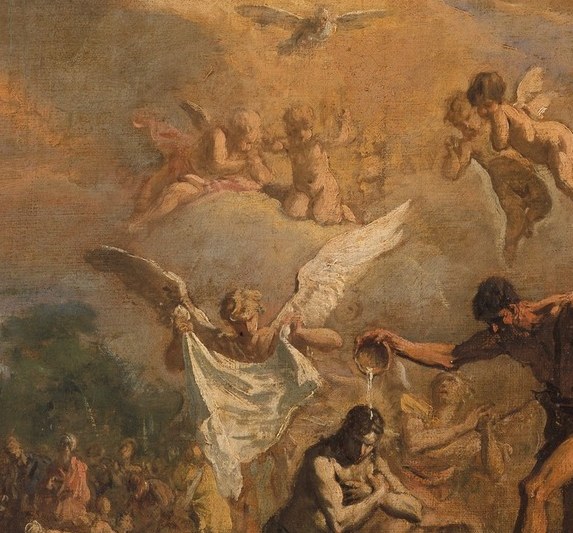
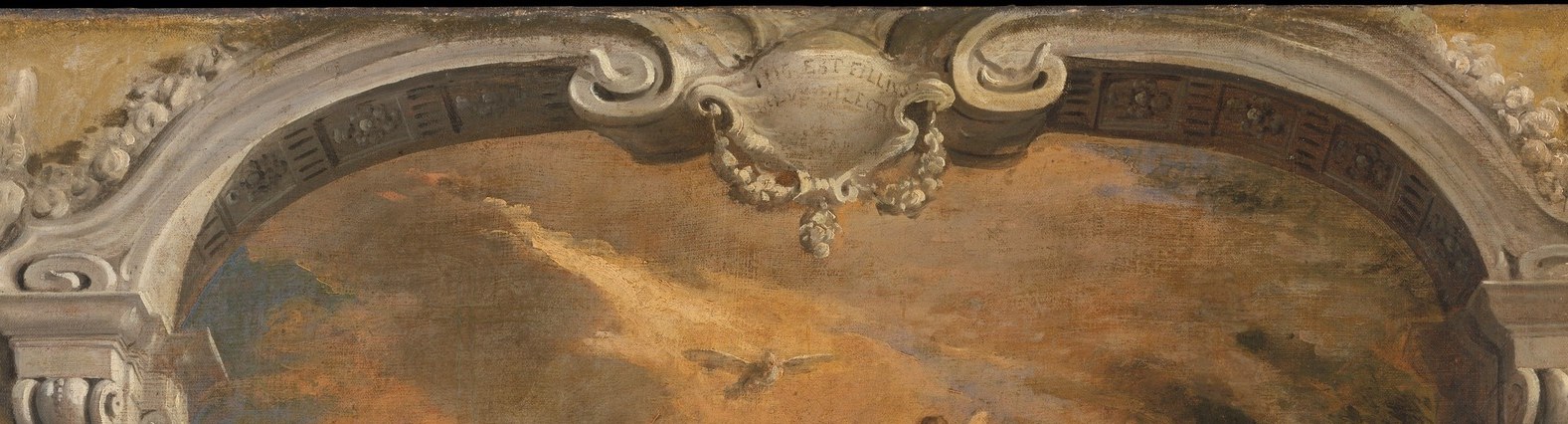
The trick starts with the painted architecture. The pilasters and statues on both sides are trompe-l'oeil, designed to be indistinguishable from the stonework of the room. Ricci wants you to forget you're looking at canvas, so that the supernatural event in the center feels like it's breaking through the palace or church wall into your space. The storm-charged sky behind the river amplifies the single shaft of golden light that picks out Christ in the water.
Look for the small, strange details Ricci tucks in. At lower right, a semi-nude river god reclines beside the Jordan, a pagan classical figure sitting calmly inside a Christian sacrament. The crowd in the midground isn't a uniform chorus; each figure reacts differently: pointing, reaching, talking through the miracle. And at the apex, the dove descends through the light, linking the three registers of the Trinity from the heavenly vision down to the river.
The painting's original home is lost, but its purpose is still visible. Ricci built a window into a vanished room, and left the divine spectacle playing forever inside it. What do you notice first: the human crowd or the light breaking through the clouds?
#arthistory #baroque #venetianpainting
Details

Transcript
This is not a quiet miracle. 1713. Venice still thinks in fresco, even on canvas. Look at that painted stone. You were meant to mistake it for the real wall. Now find the river god. A pagan myth, right corner. The dark sky makes the one bright thing undeniable. Sebastiano Ricci painted this for a room that no longer exists.