The Artist's Studio by Johann Georg Platzer
View the artwork: The Artist's Studio →
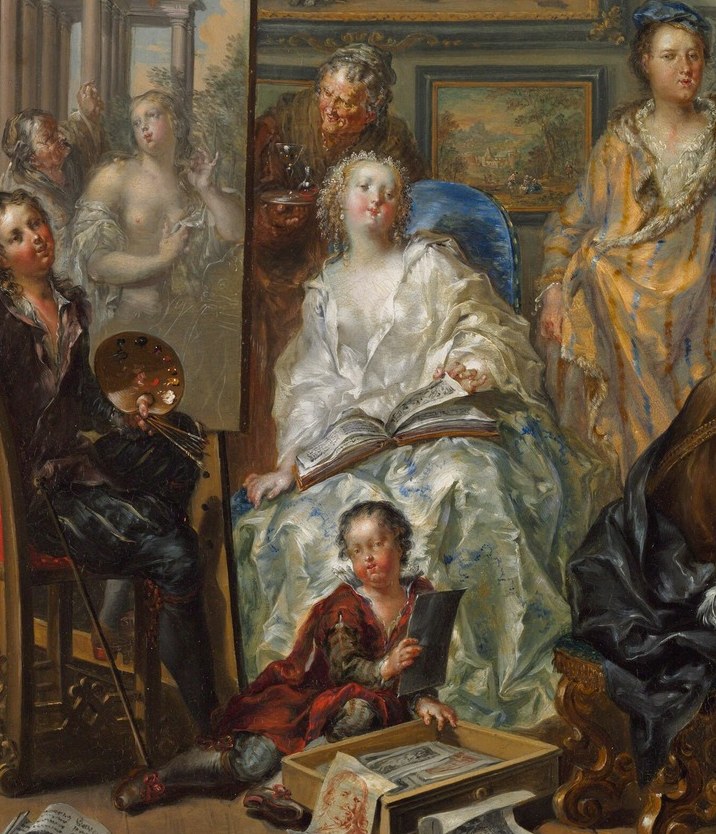
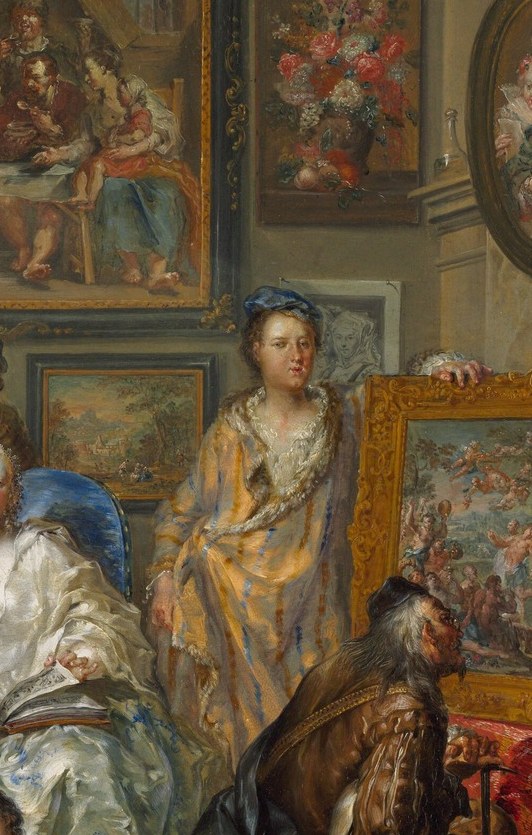
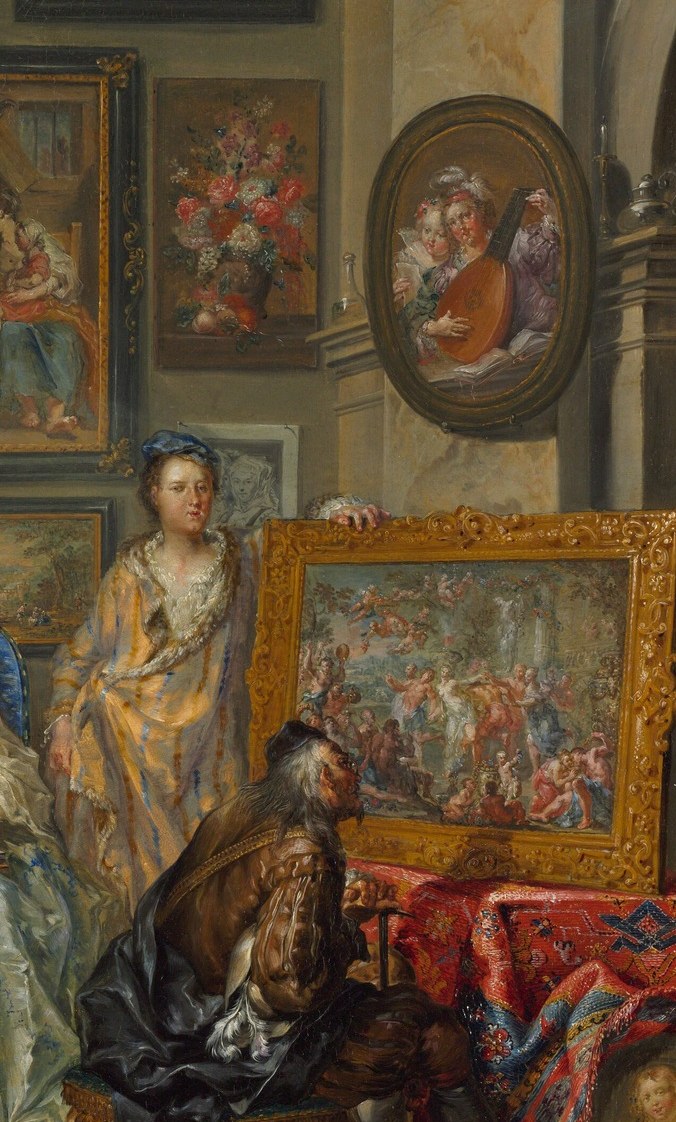
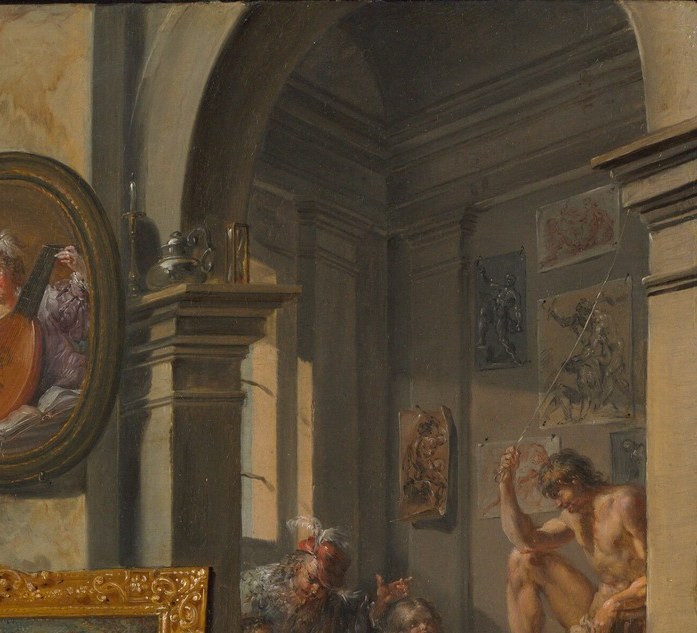
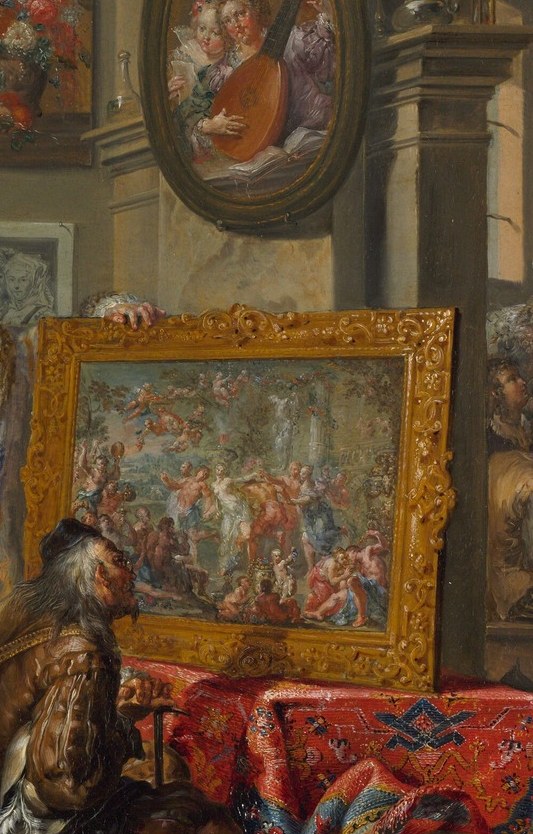
This is Johann Georg Platzer's The Artist's Studio, painted in oil on copper in the 1740s or 1750s. It's a cabinet-sized panel, only about 42 by 60 centimeters, yet it contains a whole world. Platzer packed the scene with twelve smaller paintings and a cast of assistants, models, and patrons, all orbiting his own self-portrait at the center.
Look at the print inscribed 'Spranger' on the floor at the lower center-left. That single legible word is Platzer tipping his hat to Bartholomeus Spranger, the Flemish Mannerist whose complex compositions shaped his own. The dozen paintings hanging on the walls and easels aren't random decoration either: together they build an allegory of the five senses, turning the studio into a cabinet of intellectual pleasures.
Platzer was born in 1704 in Eppan, County of Tyrol, and trained as a court painter in Passau before returning home. He painted on copper because its smooth surface allowed for jewel-like precision: every fold of velvet, every gilded frame, every strand of fur in his robe is rendered with startling clarity. The painting was acquired by the Cleveland Museum of Art in 2012, having previously been exhibited in Graz, where the Alte Galerie holds the largest collection of his work.
It's a painting about painting, about looking, and about how artists position themselves among their heroes. What's the last detail you noticed in a crowded picture that made the whole thing click?
#arthistory #rococo #johanngeorgplatzer
Details
Transcript
A painter shows his work in a crowded studio. The print on the floor says 'Spranger'. A breadcrumb: his debt to Flemish Mannerism. Twelve other paintings hang on the walls. Together they form an allegory of the five senses. The artist paints himself as the ideal maker. A self-portrait inside a self-portrait, signed twice over.