Washerwoman, Study by Camille Pissarro

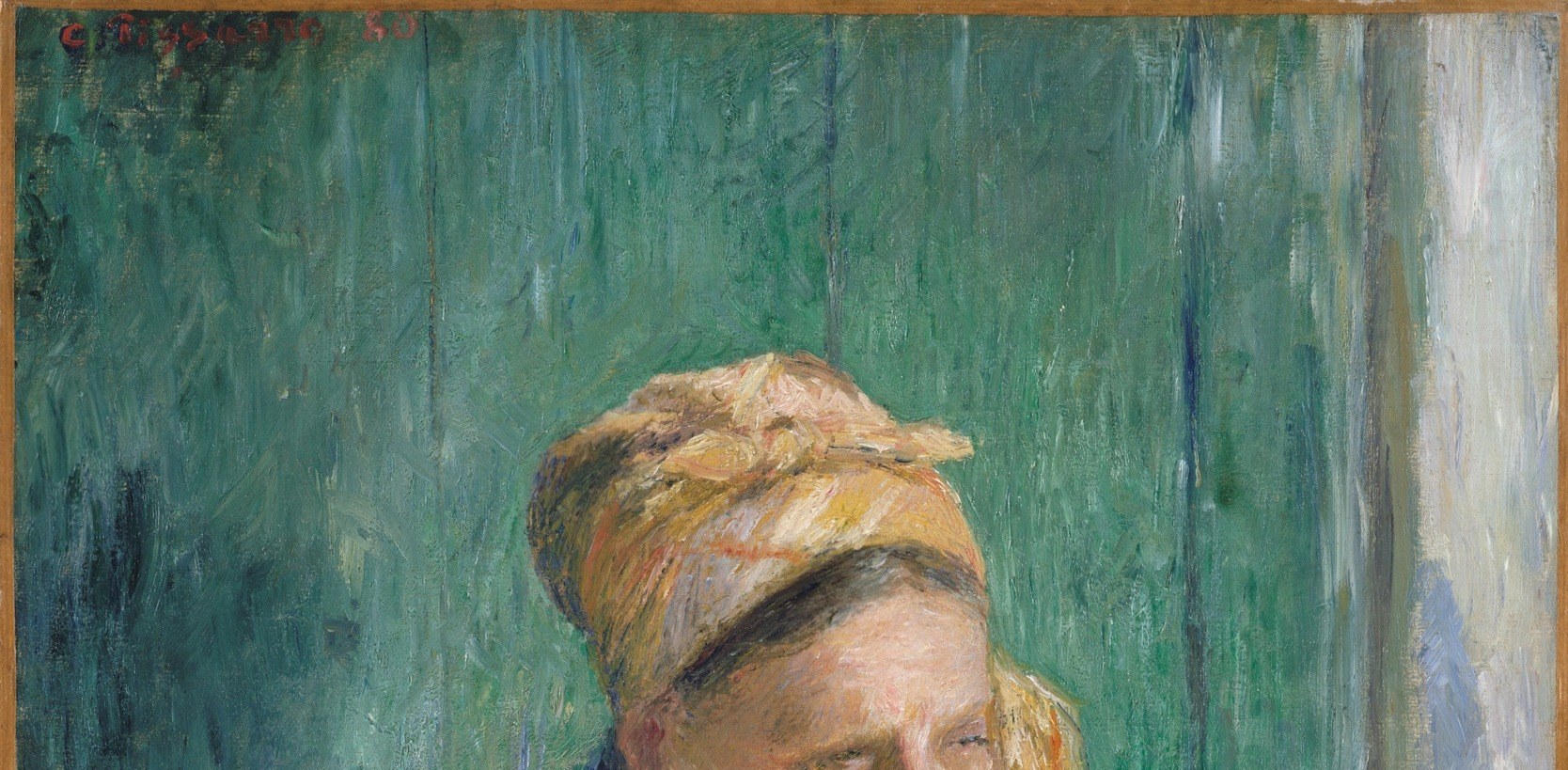
Camille Pissarro's 'Washerwoman, Study' (1880) is not an official portrait. It is a radical act of quiet observation. Painted in oil on a modest scale, this study captures a laundress in a moment of unguarded rest, her eyes averted and her posture slack with genuine fatigue. The painting now lives in a private collection, a small but profound testament to a lifetime of artistic integrity.

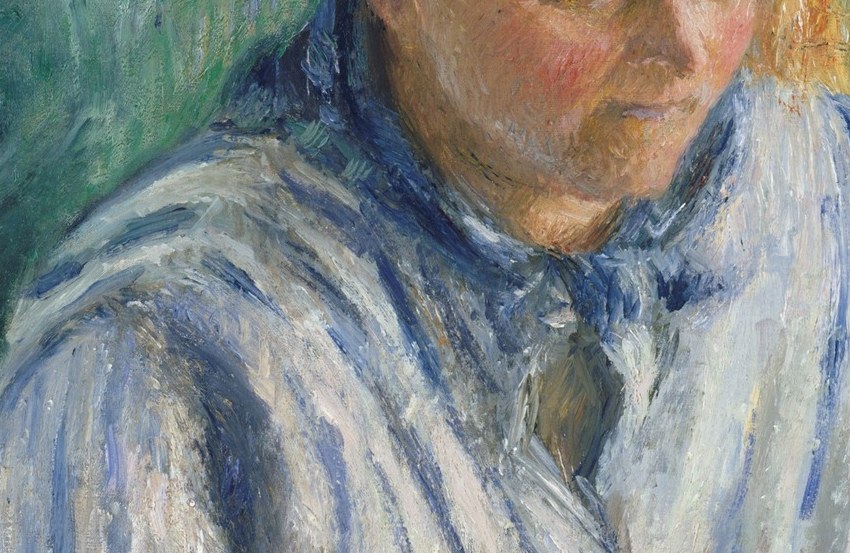
Look at her hands. They are folded, utterly still, resting in her lap after hours of physical labor. Follow the heaviness of her left sleeve, then the dense, sculptural stripes across her chest. Pissarro builds the fabric not with busy detail, but with thick impasto strokes that cast their own tiny shadows. The brush handles the woolen shirt with the same serious attention another painter might reserve for a silk gown.

Pissarro was the anchor of the Impressionist circle. Cézanne called him 'a father to me,' and Gauguin considered him a master. While others chased light on water, Pissarro kept his gaze on people. He insisted on painting individuals in their working clothes, refusing to turn them into symbols of poverty or charm. At 50 years old, when many artists settle into a signature style, he was still calling his work a 'study.'

The result is a portrait that gives a washerwoman what society denied her: weight, privacy, and a stillness that feels almost sacred. What do you notice in the way she holds herself?

#arthistory #impressionism #pissarro

Details
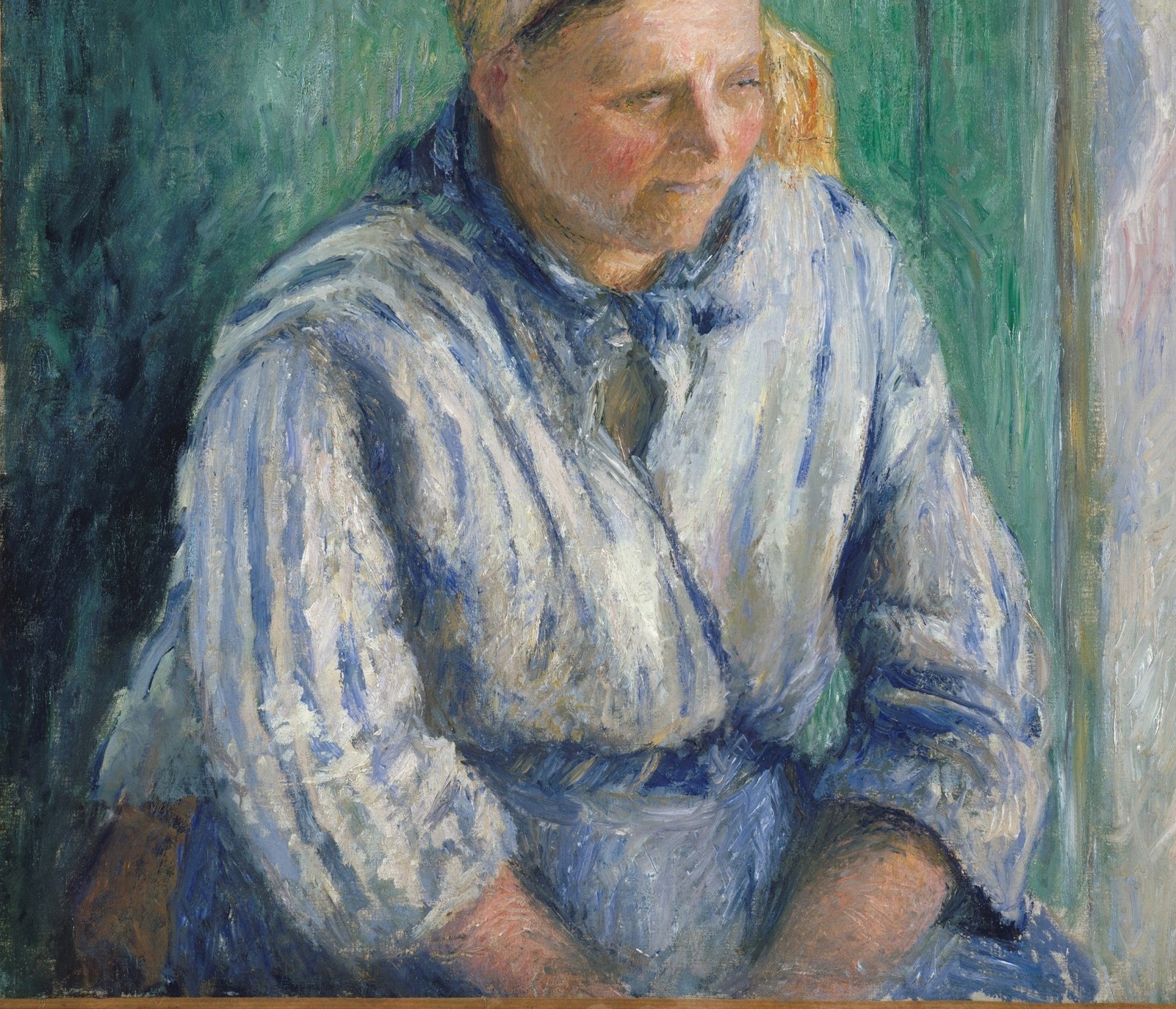
The garment is the painting's largest single area; its vertical stripes modulate from tight pattern at the chest to near-abstraction at the hem, showing Pissarro pressing toward the flatness Cézanne would push further.
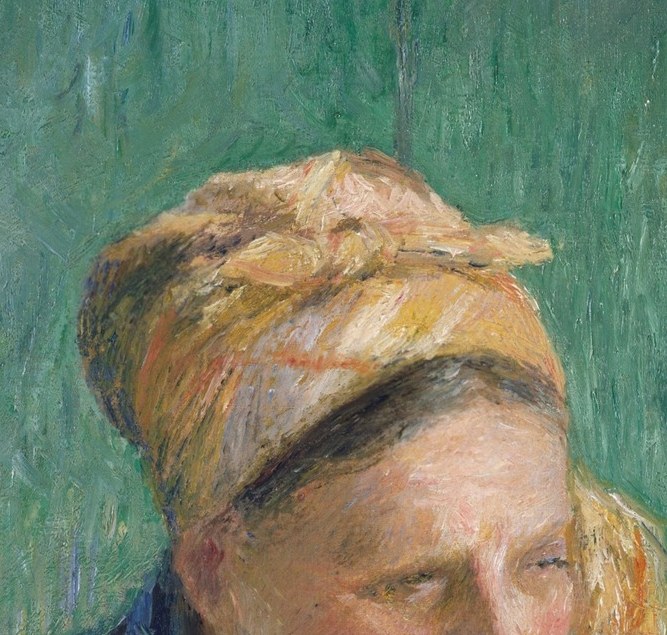
The only warm color in a cool blue-green painting , the golden-yellow immediately reads as a working woman's cloth tied to keep hair dry at the washtub, doing class identification without a word.
Pissarro refuses glamour: the unguarded tilt and softened features give this working woman an interior life , she is resting, not posing, which was a radical choice in 1880.
Paint laid so heavily the ridges cast physical shadows; Pissarro uses brush direction to describe fabric weave and simultaneously assert the painting as a material object , close-up reveals form held by pigment mass, not outline.
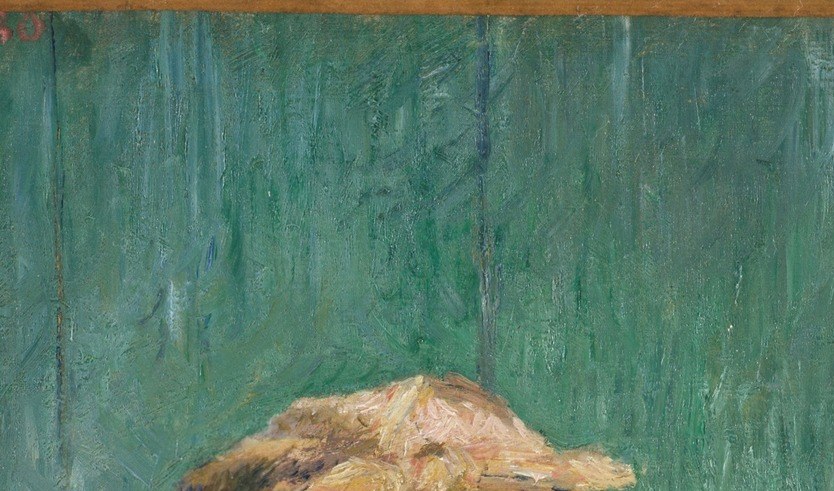
The cool varied green is painted with the same loose touch as the figure, collapsing the boundary between person and environment , a Impressionist move that anticipates the Post-Impressionist treatment of space as continuous texture.
Transcript

She does not know we are watching. The year is 1880. Most painters treat working women as props. Pissarro was different. He called Cézanne his friend, and Gauguin his student. Now look at her eyes. Half-closed. No performance. It feels like a stolen observation from a life of hard work. Hands that wring laundry all day, finally still. The paint itself holds the dignity. Every stripe built from thick pigment. Renoir said Pissarro's work was 'revolutionary' in its portrayal of the common person.