The Love Letter by Jacob Ochtervelt

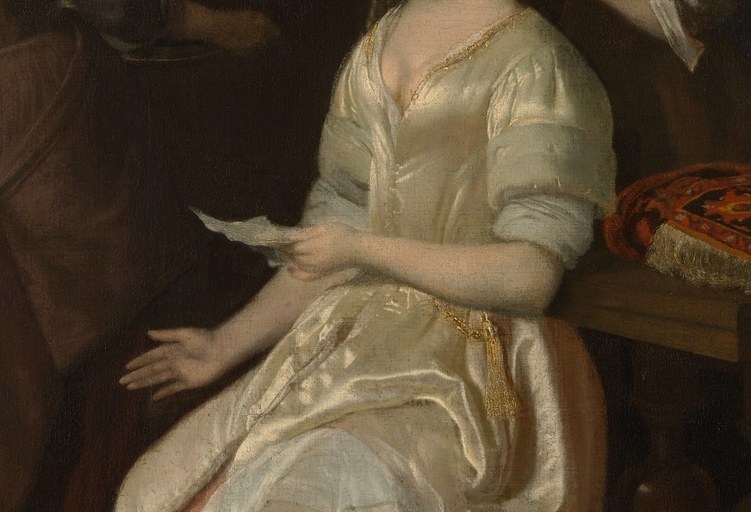
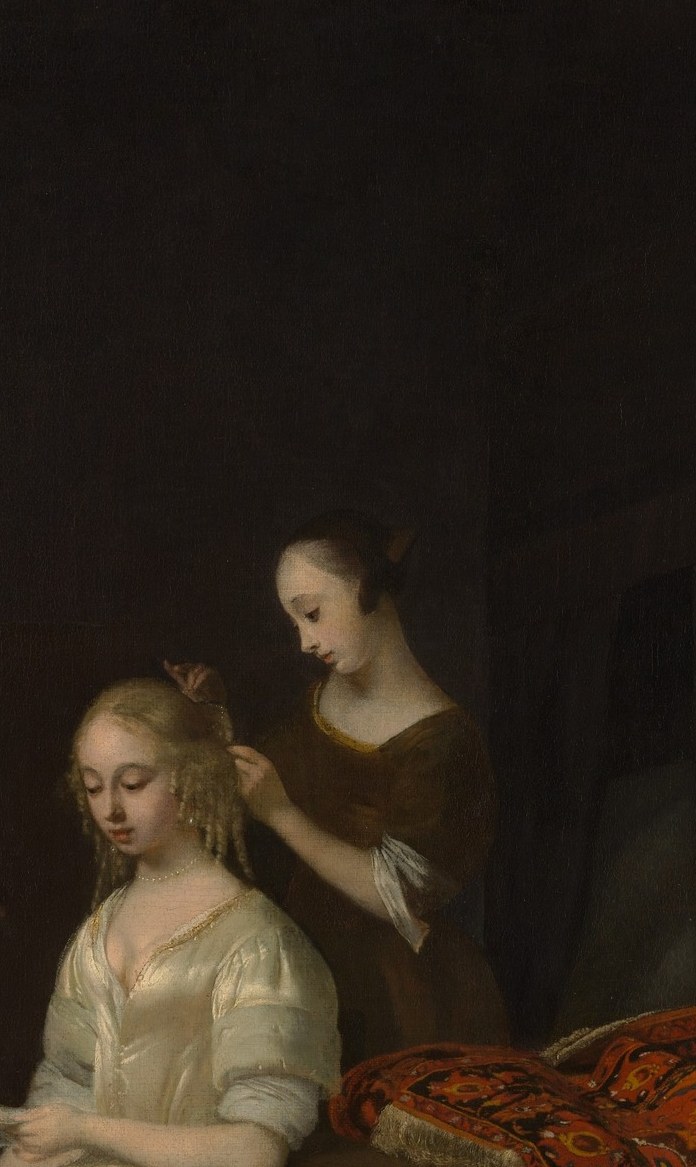
Jacob Ochtervelt painted the global economy into one quiet room. The Love Letter, from around 1670, shows a woman interrupted during her morning toilet by a letter. The painting now hangs in the Metropolitan Museum of Art.

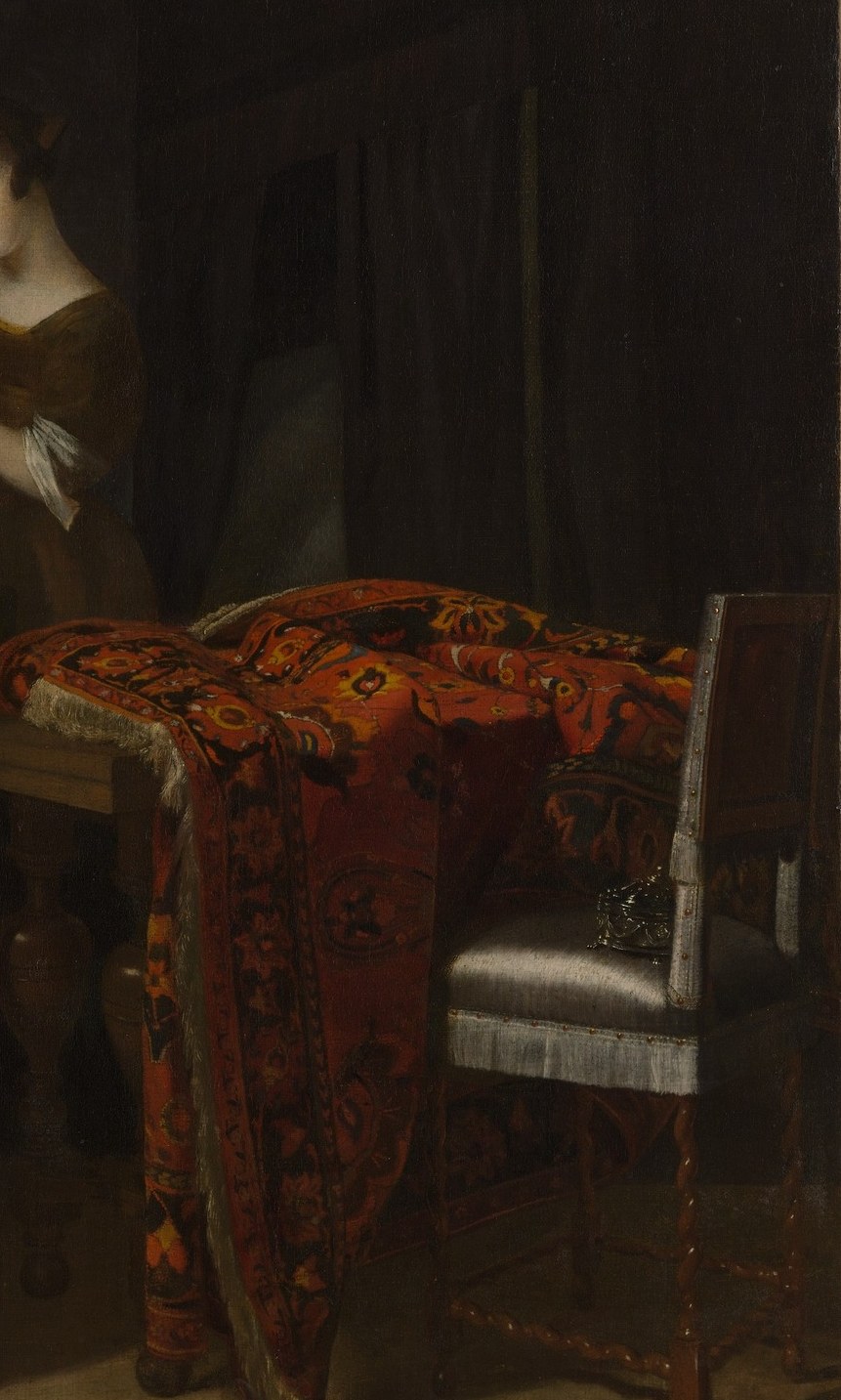
Look at the red rug draped over her table. Its patterns and dye came through Dutch trade networks that stretched across continents. In the background, the blurred figures hint at a busy household beyond this private moment. The maid stands half-obscured behind her mistress, her expression unreadable.

Ochtervelt was born in Rotterdam in 1634 and trained in Haarlem alongside Pieter de Hooch. By the time he painted this work, Gerard ter Borch's influence was clear: the restrained gestures, the light on silk, the narrative held in a folded piece of paper. The painting stayed in a private New York collection until 1980, when the Mendelsohns gave it to the Met.

What do you think is in the letter?

#arthistory #dutchgoldenage #jacobochtervelt

Details
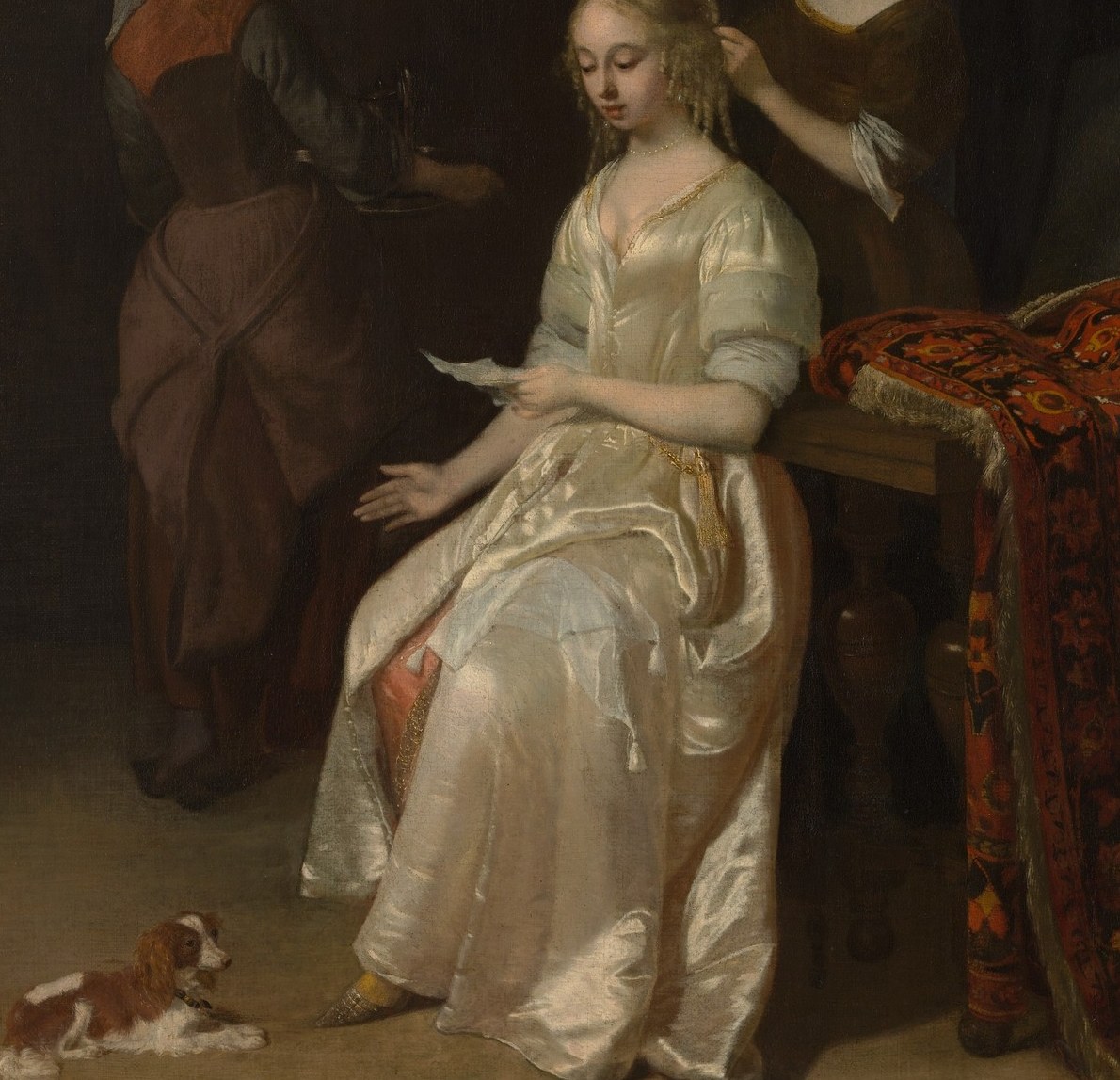
Ochtervelt's signature virtuoso passage: the interplay of cool highlight and warm shadow across silk satin is the technical showpiece that places him alongside ter Borch.
The titular object, never legible to the viewer , its contents exist only as the woman's barely visible response, making it one of Dutch painting's great withheld secrets.
The saturated red anchors the right half of the composition and throws the silver-white dress into starker relief , a deliberate coloristic opposition.
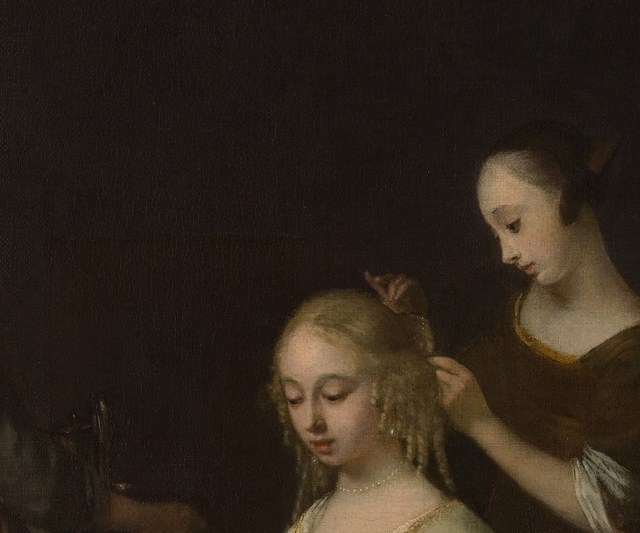
Her downcast gaze and composed expression are the emotional fulcrum , the viewer reads the letter's power entirely through her controlled reaction.
Her proximity creates an involuntary witness to a private moment; the social asymmetry between mistress and maid is encoded in posture alone.
Transcript

Rotterdam, around 1670. The Dutch Republic runs on trade. A woman pauses her morning. A letter has arrived. She reads. Everything else has stopped. The red rug on her table came from the other side of the world. A maid waits, half-hidden. Her role in this moment is unclear. Ochtervelt trained alongside Pieter de Hooch. Ter Borch shaped him. The dog at her feet grounds a lavish room in ordinary life.