Harbour at Sunrise by Claude Lorrain
View the artwork: Harbour at Sunrise →
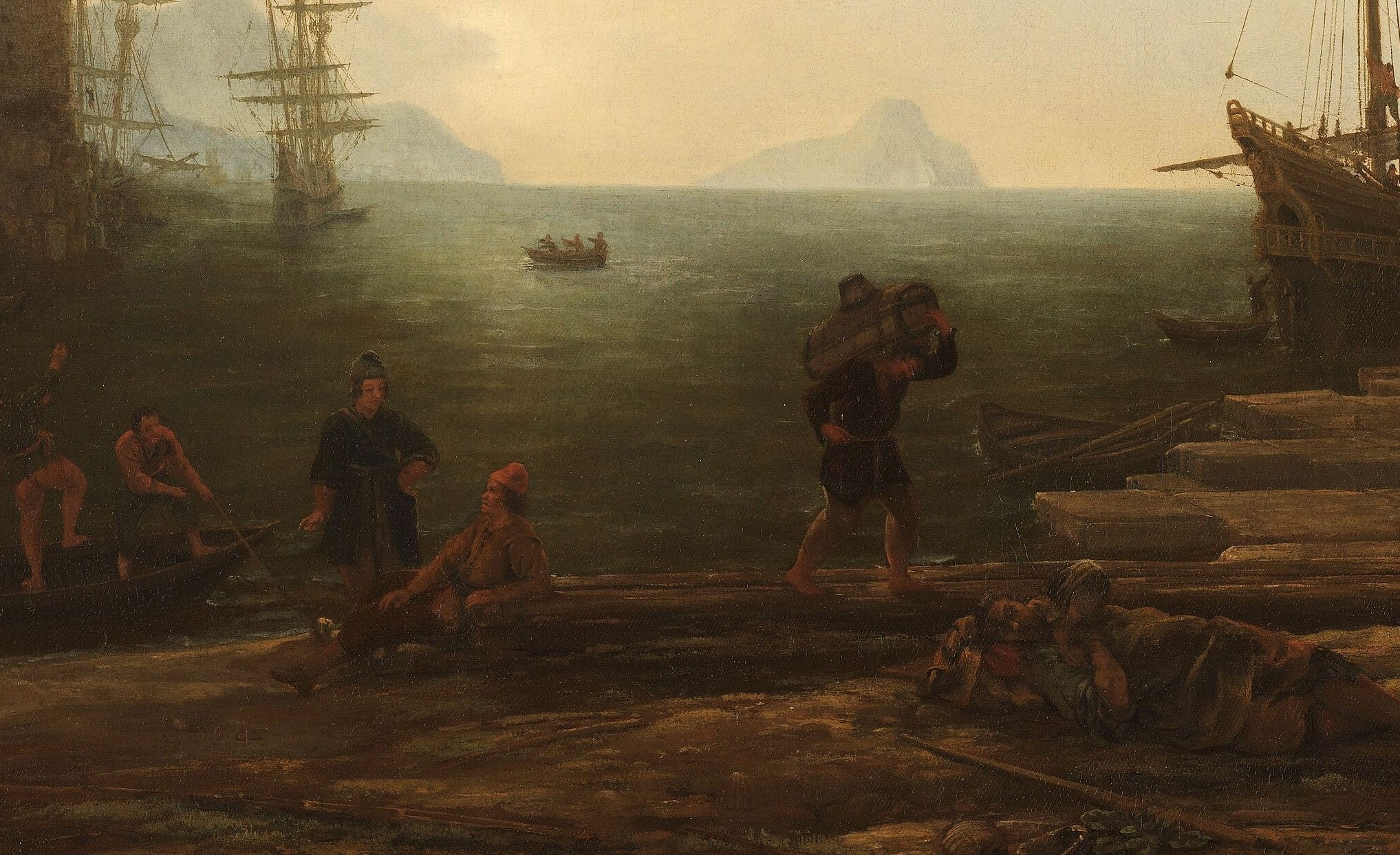
Harbour at Sunrise, painted by Claude Lorrain in 1637, is a quiet manifesto in oil paint. It was created at the moment Lorrain had just become the most sought-after landscapist in Italy, and the canvas argues for an idea: the commercial present is the worthy heir to the classical past.
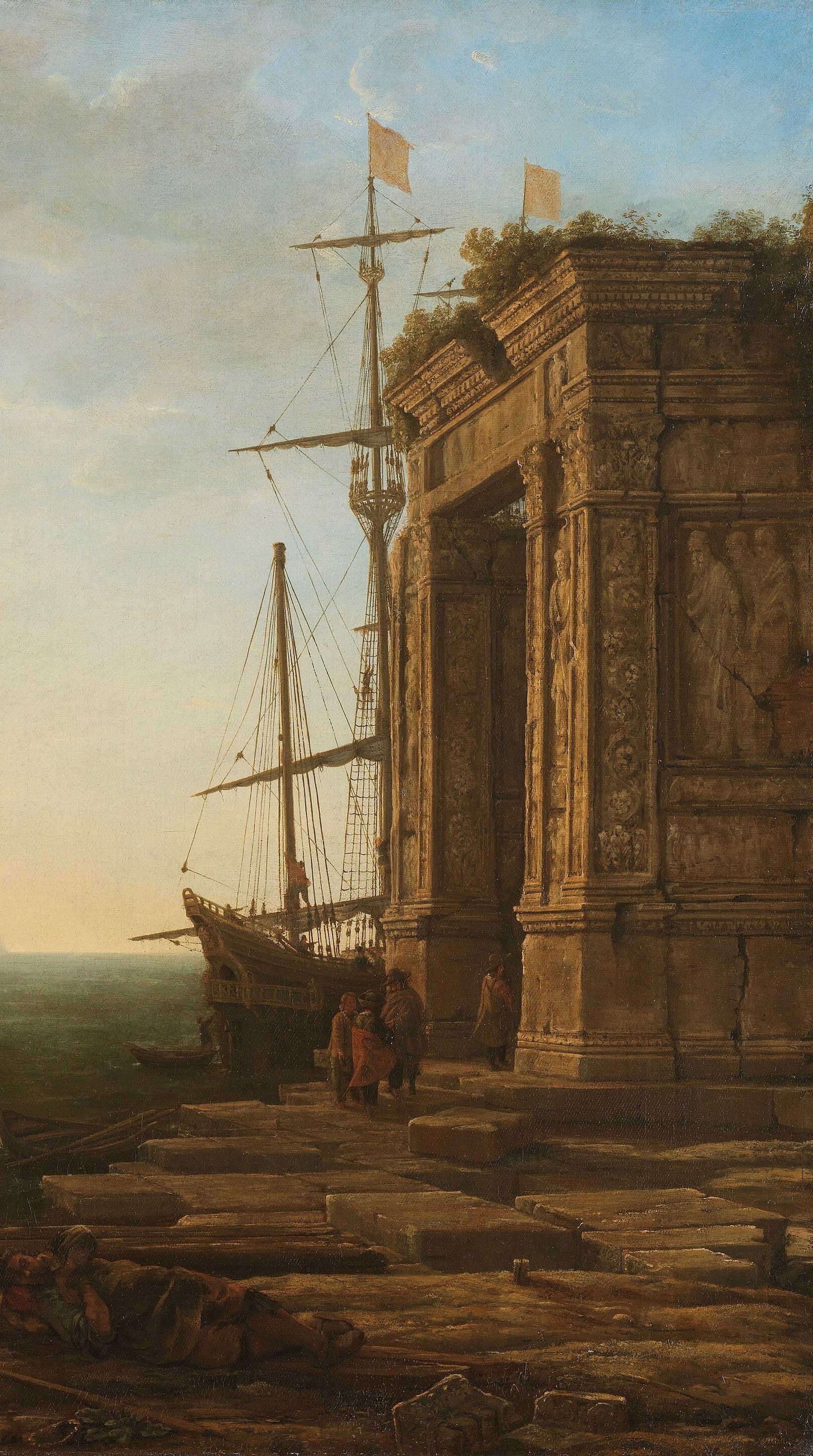
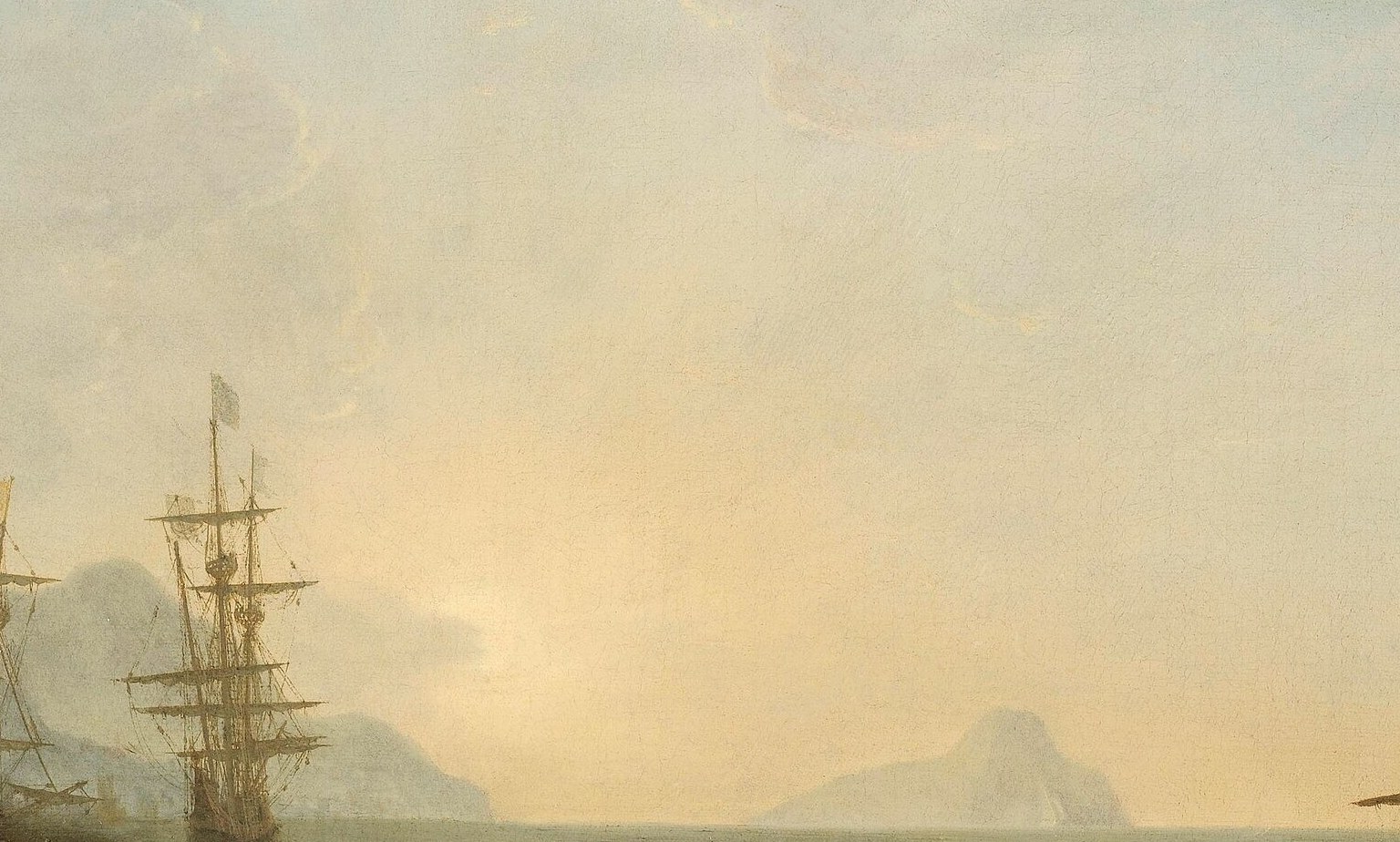
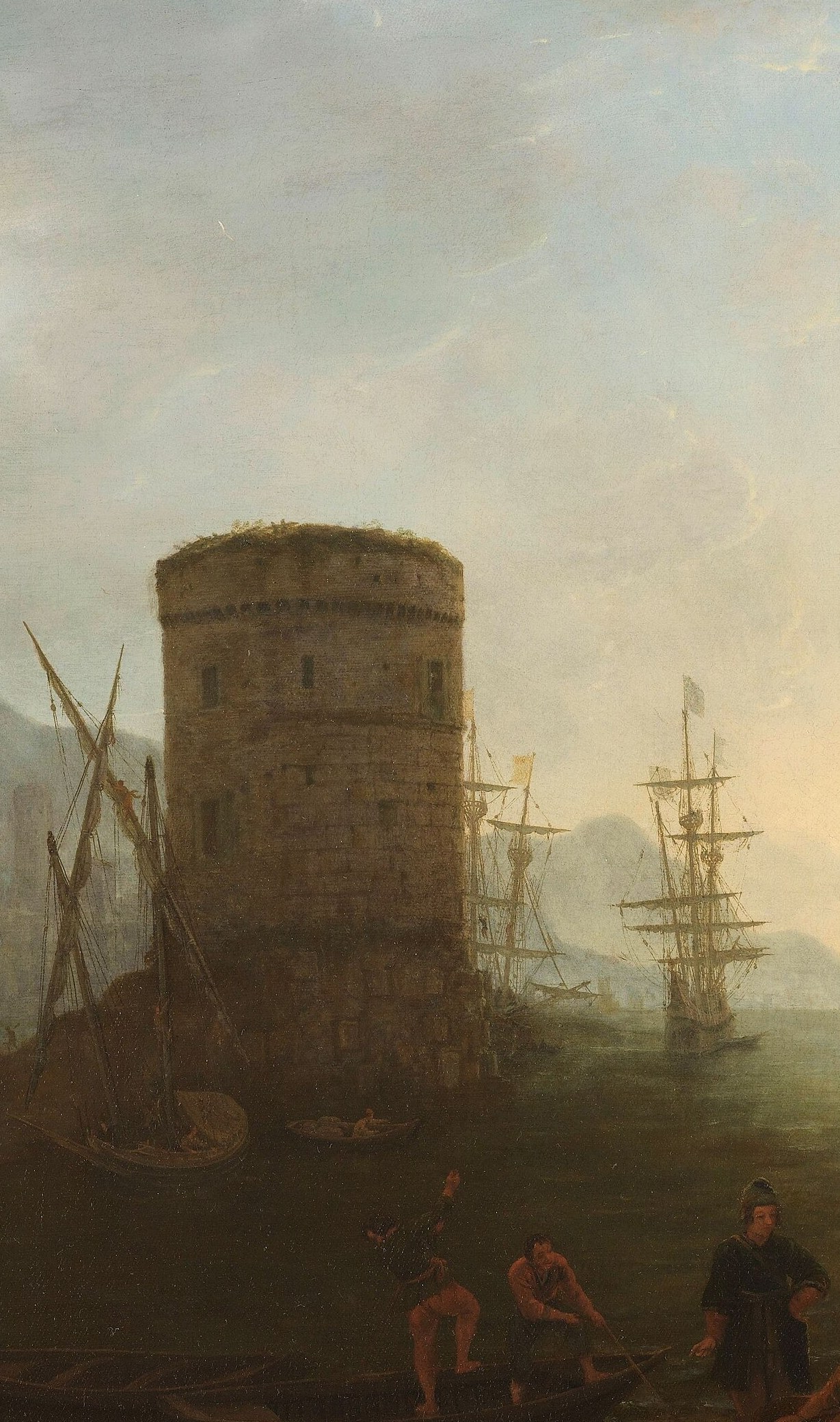
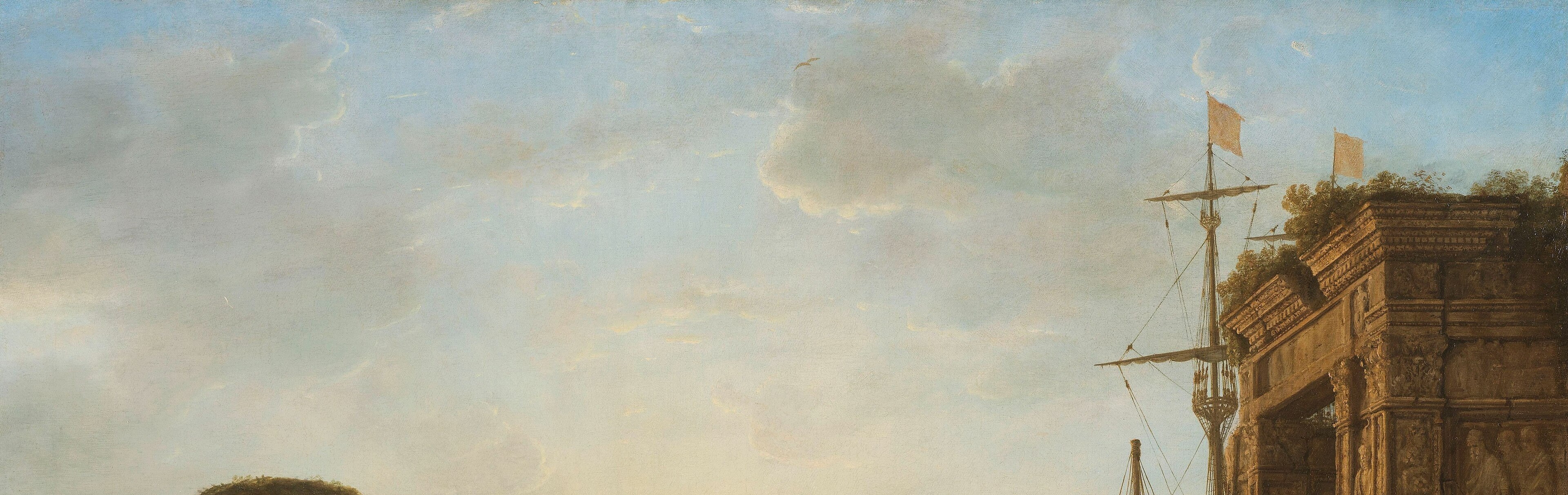
Let your eye move between the ruined Roman arch on the right and the tall merchant ship moored directly beside it. The ship's masts outstrip the ancient columns. Lorrain does not treat antiquity with melancholy; the architecture frames the harbor rather than haunting it. Follow the gilded reflection of the rising sun across the water, and you see the real subject: light breaking over a world built on trade.
Lorrain was born Claude Gellée in the independent Duchy of Lorraine around 1600, but he spent almost his entire working life in Rome. By the late 1630s his harbor scenes commanded enormous fees from cardinals, princes, and collectors who saw in this kind of imagery a flattering mirror of their own mercantile ambitions. The painting belongs to the tradition of ideal landscapes, but its ships and classical fragments are not merely decorative; they are a coded argument.
A Roman triumphal arch crumbling while a working ship stands tall: it is hard to look at this and not feel the confidence of a century that believed it was building something to last.
#arthistory #claudelorrain #baroque
Details
Transcript
Start with the arch on the right. It is a Roman ruin, crumbling and half-swallowed by time. Now look at the ship moored beside it. The masts rise higher than the ancient columns. Lorrain painted this in 1637, at the height of European seafaring. The message is in the juxtaposition. A new sun rises not on a lost empire, but on a living one.