Madonna and Child by Antoniazzo Romano
View the artwork: Madonna and Child →
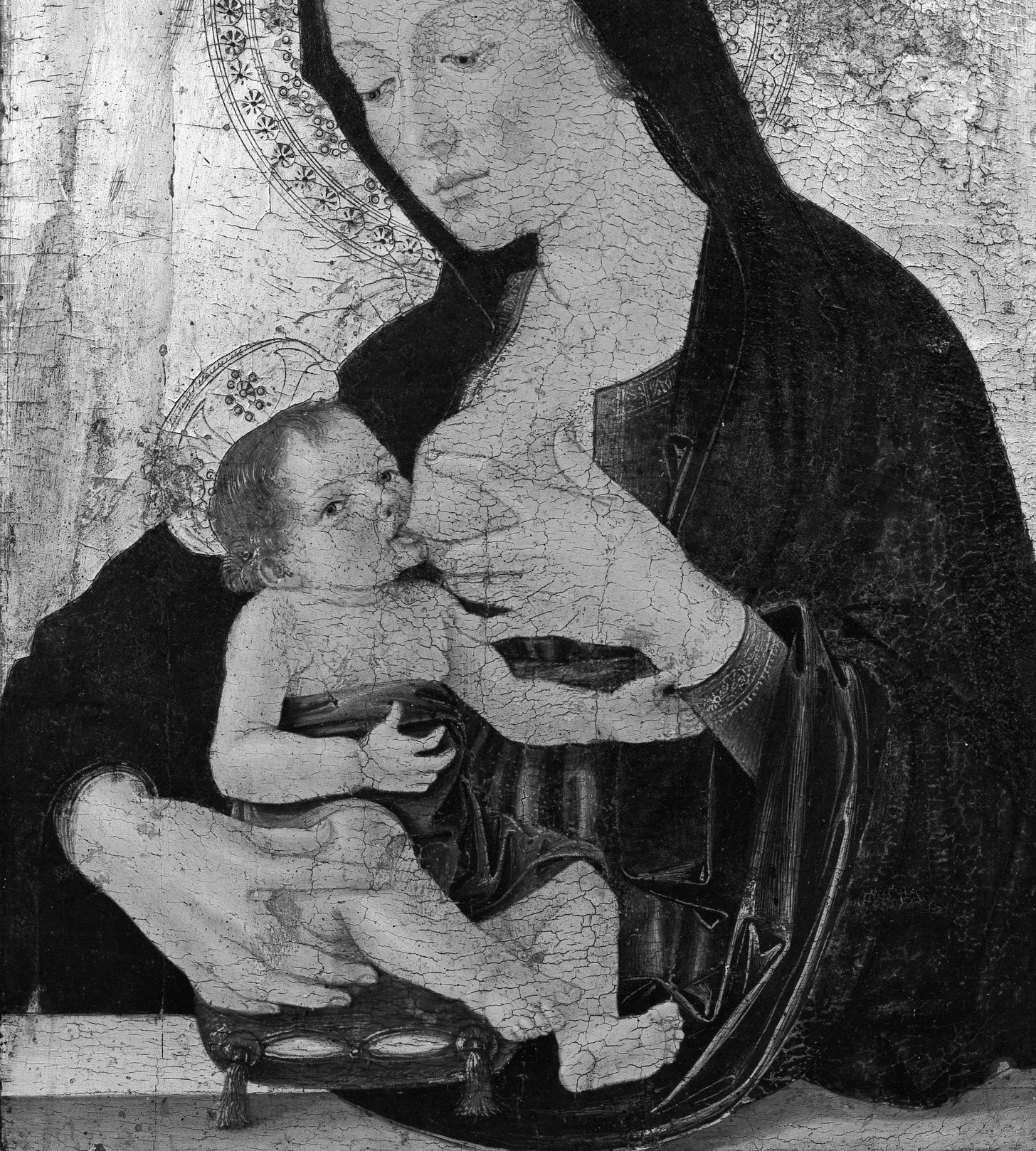
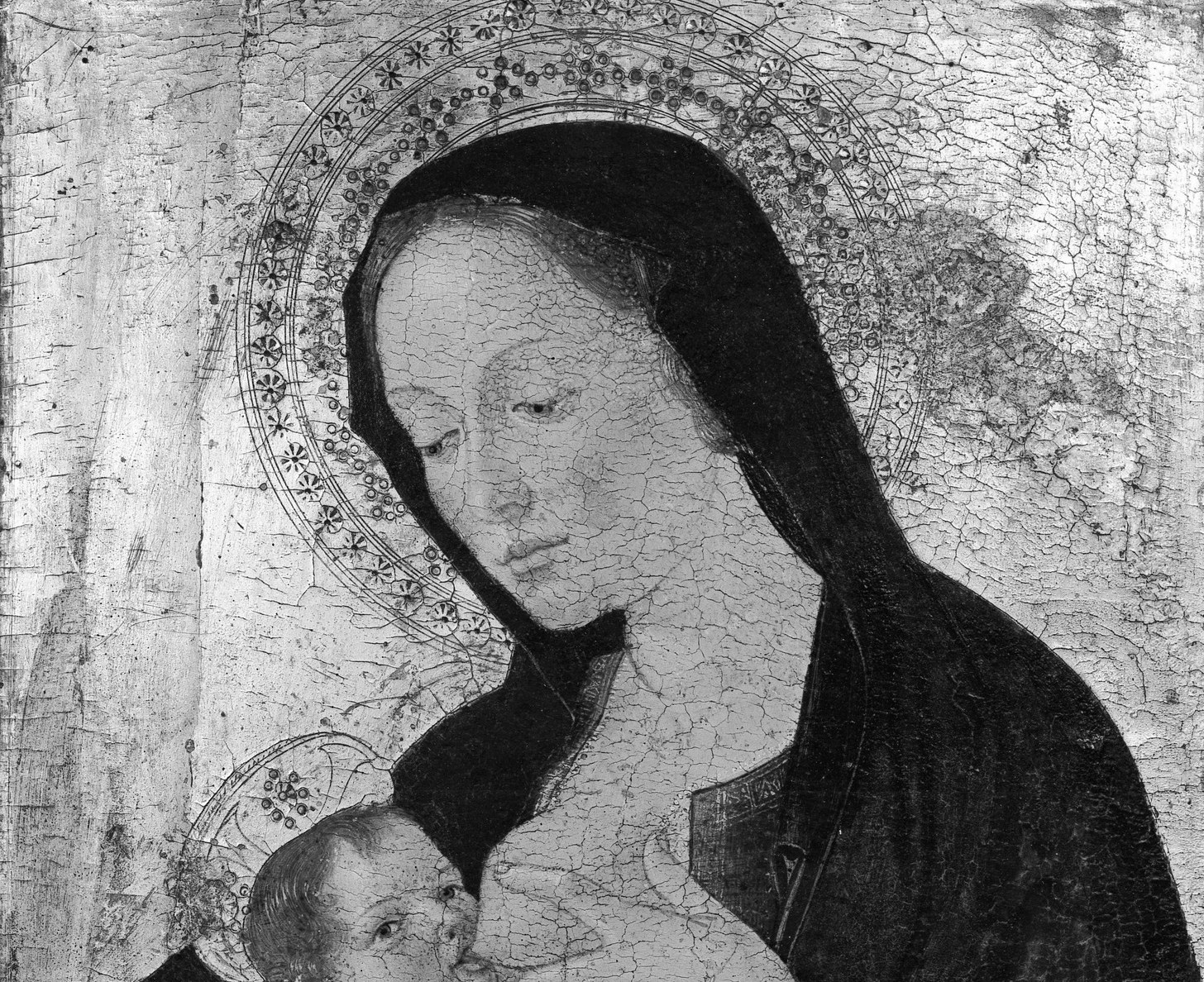
This is "Madonna and Child" by Antoniazzo Romano, painted on panel in 1482. Today it hangs in the Musée des Beaux-Arts in Lyon, but its frame still carries the logic of a private Renaissance household: a compact, gold-backed icon meant for someone kneeling close.
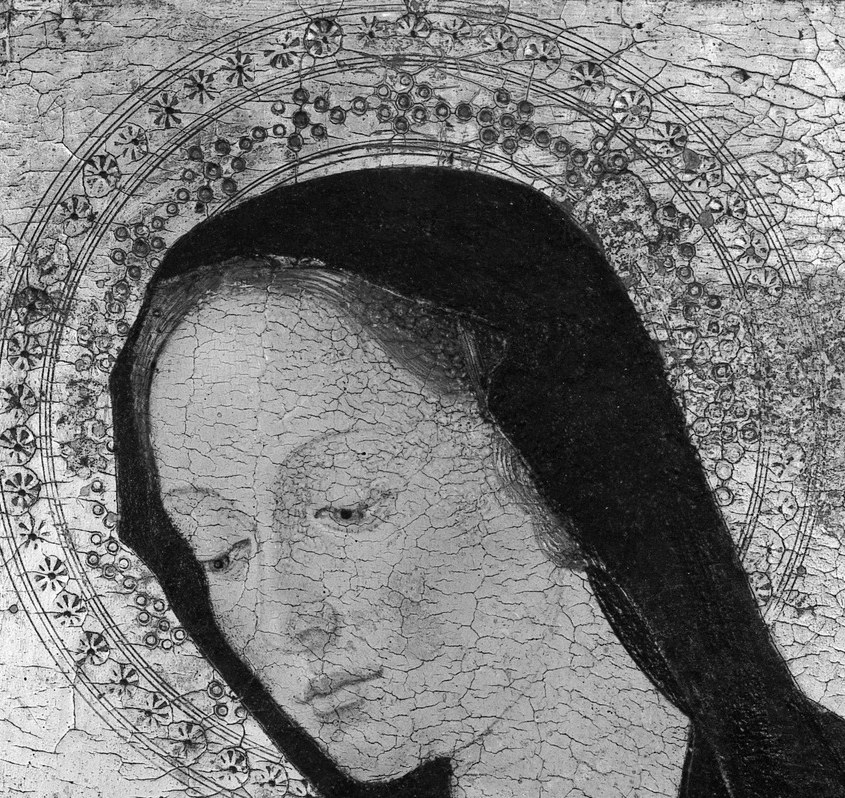
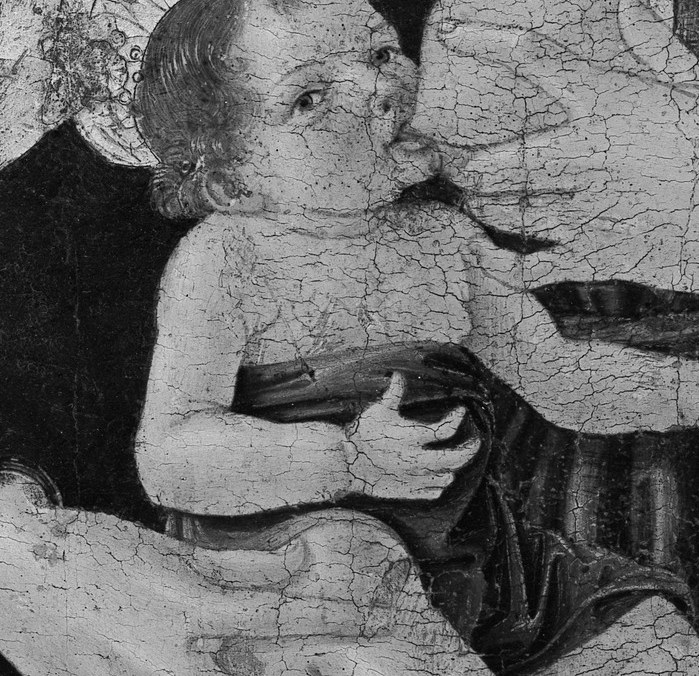
Look first at the plain background and the two halos. By the 1480s, most Italian painters were filling that space with air, architecture, and distant hills. Here, there is nothing. The gold isolates the figures like a stamp of eternity. Then look at the dark mantle: what reads as near-black now was likely once a luminous ultramarine blue, darkened by centuries of chemical change in the pigment.
Antoniazzo led the Roman school in the late 1400s by refusing to chase Florence. He built a prosperous practice repainting older icons and generating new ones with an archaic flavor, deliberate throwbacks in an age that prized forward motion. His clients included papal courts and the city's old families, all willing to pay for sanctity that looked ancient.
A painting like this is a double object: a Renaissance artifact that pretends it is a medieval one, and a cultural proposition about what holiness should look like.
#arthistory #renaissance #antoniazzoromano
Details
Transcript
By the 1480s, most Italian painters had abandoned gold backgrounds. Linear perspective and natural landscapes were the new ambition. But this Roman artist built a career reviving the old medieval style. He made a specialty of archaism, and his patrons paid handsomely for it. The gold, the flat space, the iconic stillness, all deliberate. Even the dark mantle is likely ultramarine gone black with age. In 1482, looking old was a radical choice.