The Nativity by Perino del Vaga
View the artwork: The Nativity →
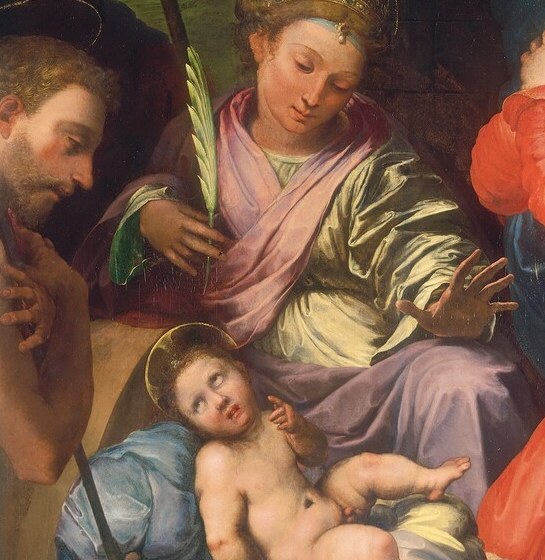
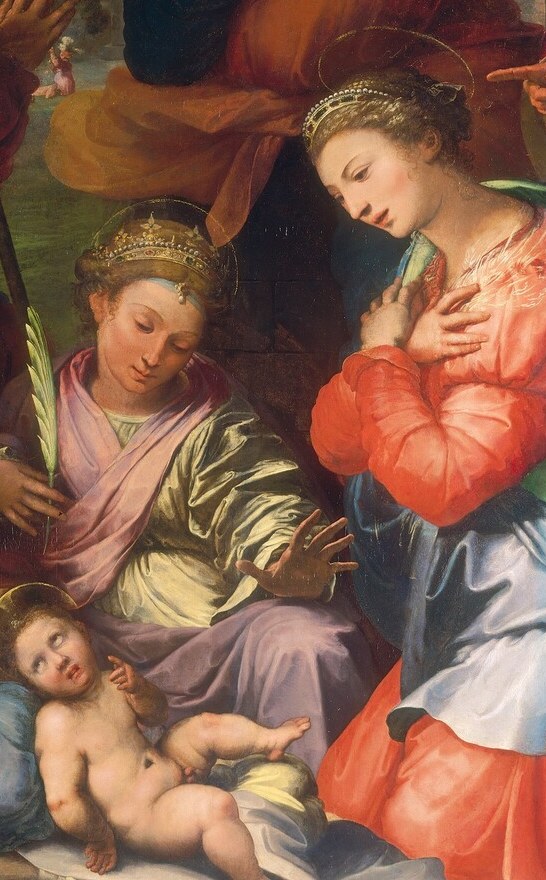
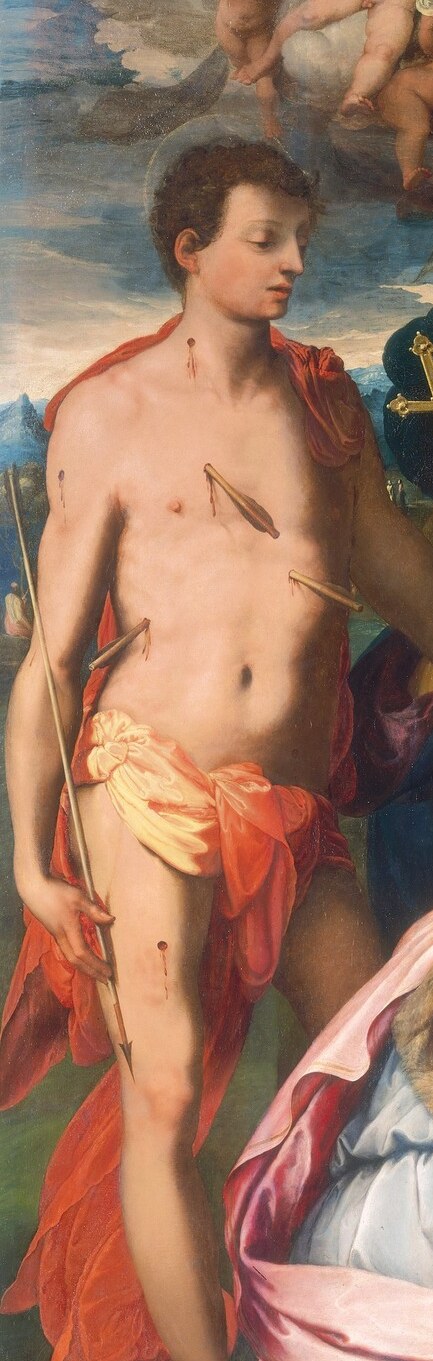
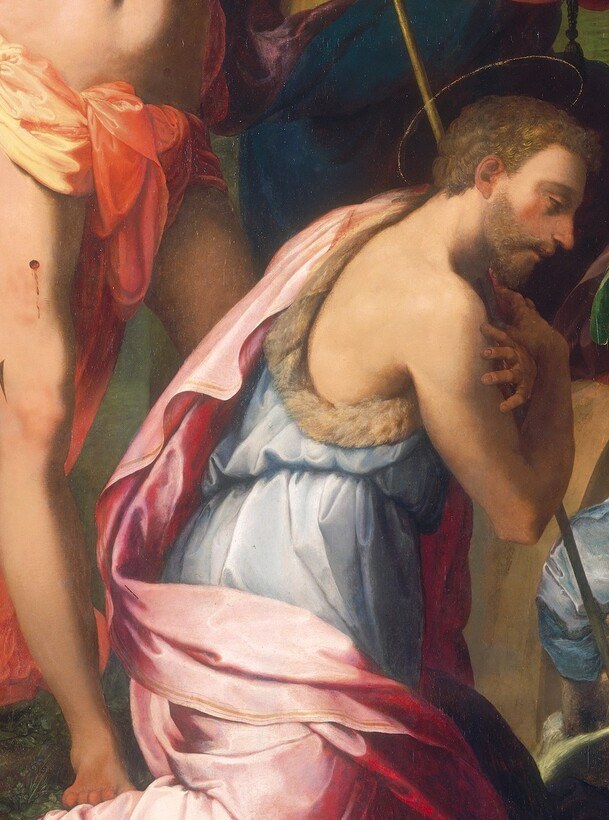
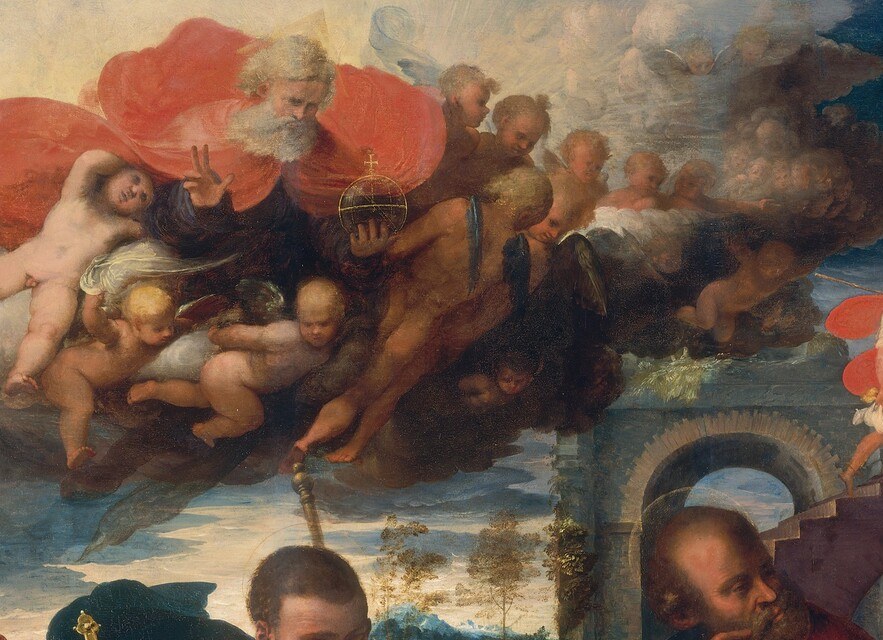
Perino del Vaga painted this Nativity in 1534, and it is a compact theological argument made in oil on panel. The infant Christ lies at the center on brilliant white cloth, but the figures around him are not the usual shepherds and angels. At left stands Saint Sebastian, arrow wounds visible on his torso. At his feet kneels a young Saint John the Baptist, already wearing the camel-skin garment of his desert ministry.
Sebastian is a martyr, killed for his faith in the adult Christ. John is the baptizer, whose ministry opens Christ's public life. By placing them at the manger, Perino compresses the entire arc of the Gospel into a single scene. Birth, baptism, and sacrificial death happen simultaneously.
Perino del Vaga was a leading Mannerist in Raphael's workshop and later worked for the Doria family in Genoa. This panel was later transferred to canvas, a conservation practice that saved many fragile Renaissance paintings. Mannerism prized these complex, intellectually dense compositions, and the inclusion of saints outside their own time was a deliberate devotional device.
Look at the way Sebastian's wounds echo the vulnerability of the newborn, and how John's kneeling posture mirrors the Virgin's adoration. Every body in this painting is a pointer toward the same truth.
#arthistory #renaissance #mannerism
Details
Transcript
A Nativity is a birth scene. So why is Saint Sebastian here, nearly naked and wounded? Sebastian was shot with arrows for his faith. His wounds at the manger tie birth directly to death. Now look at the kneeling figure in camel skin. That is John the Baptist as a young man, already in his wilderness garment. He is here because baptism is the other bookend of Christ's earthly life.