Woman with a Lute by Johannes Vermeer
View the artwork: Woman with a Lute →
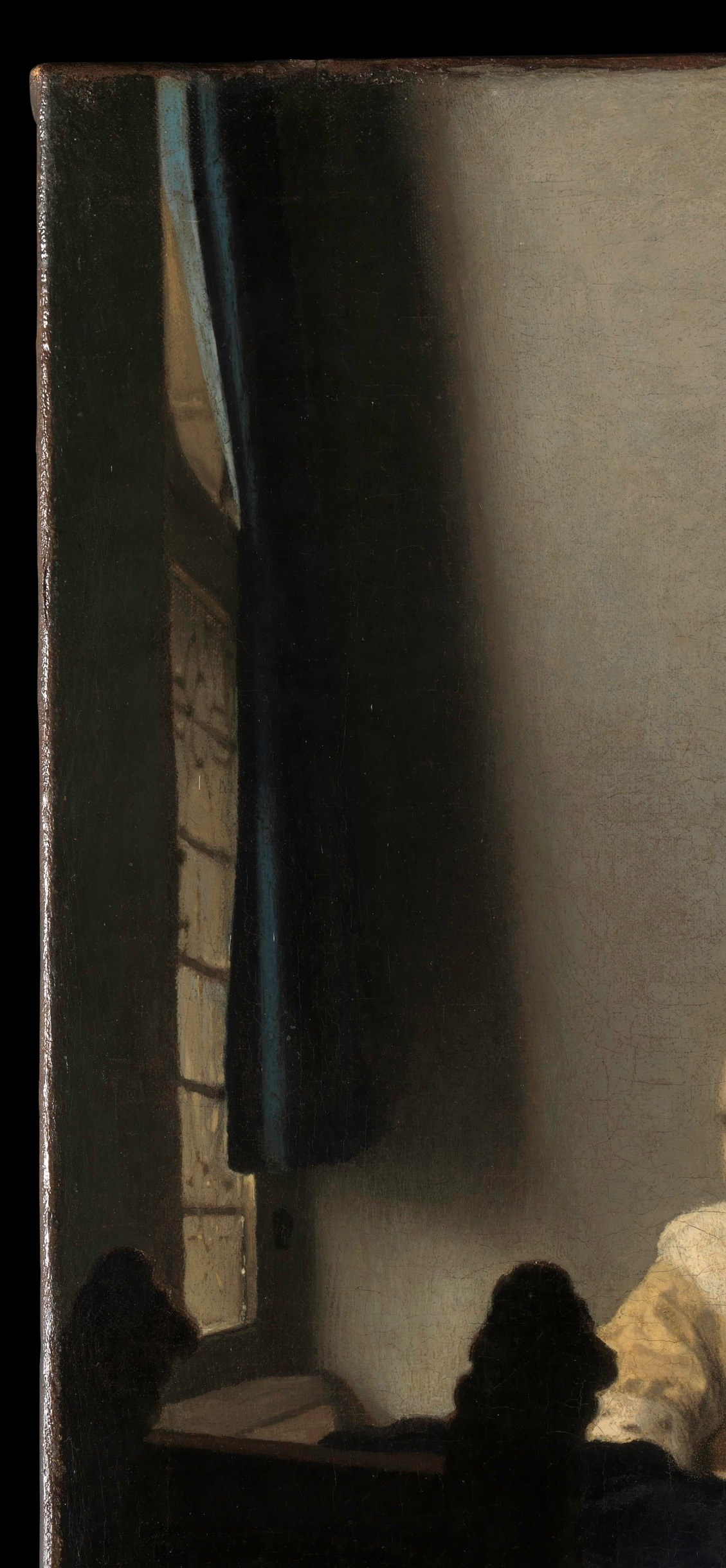
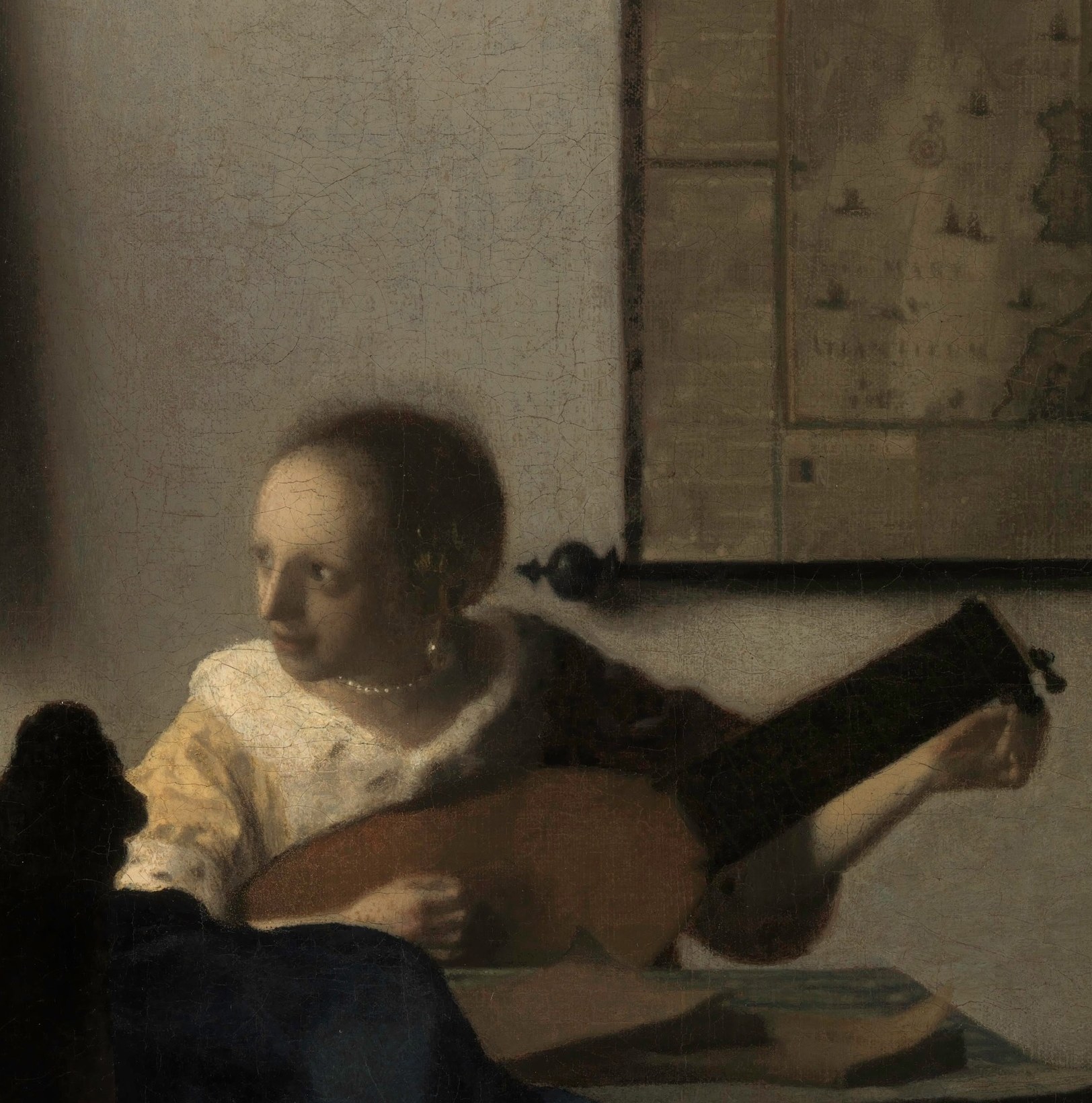
Johannes Vermeer's Woman with a Lute (ca. 1662-63) is a painting about interruption. A young woman in an ermine-trimmed jacket tunes her lute, then stops. She looks toward the window, expectant. The viola da gamba on the floor waits for a second musician who hasn't yet arrived. The Metropolitan Museum of Art describes the scene as a musical courtship paused in mid-rehearsal.
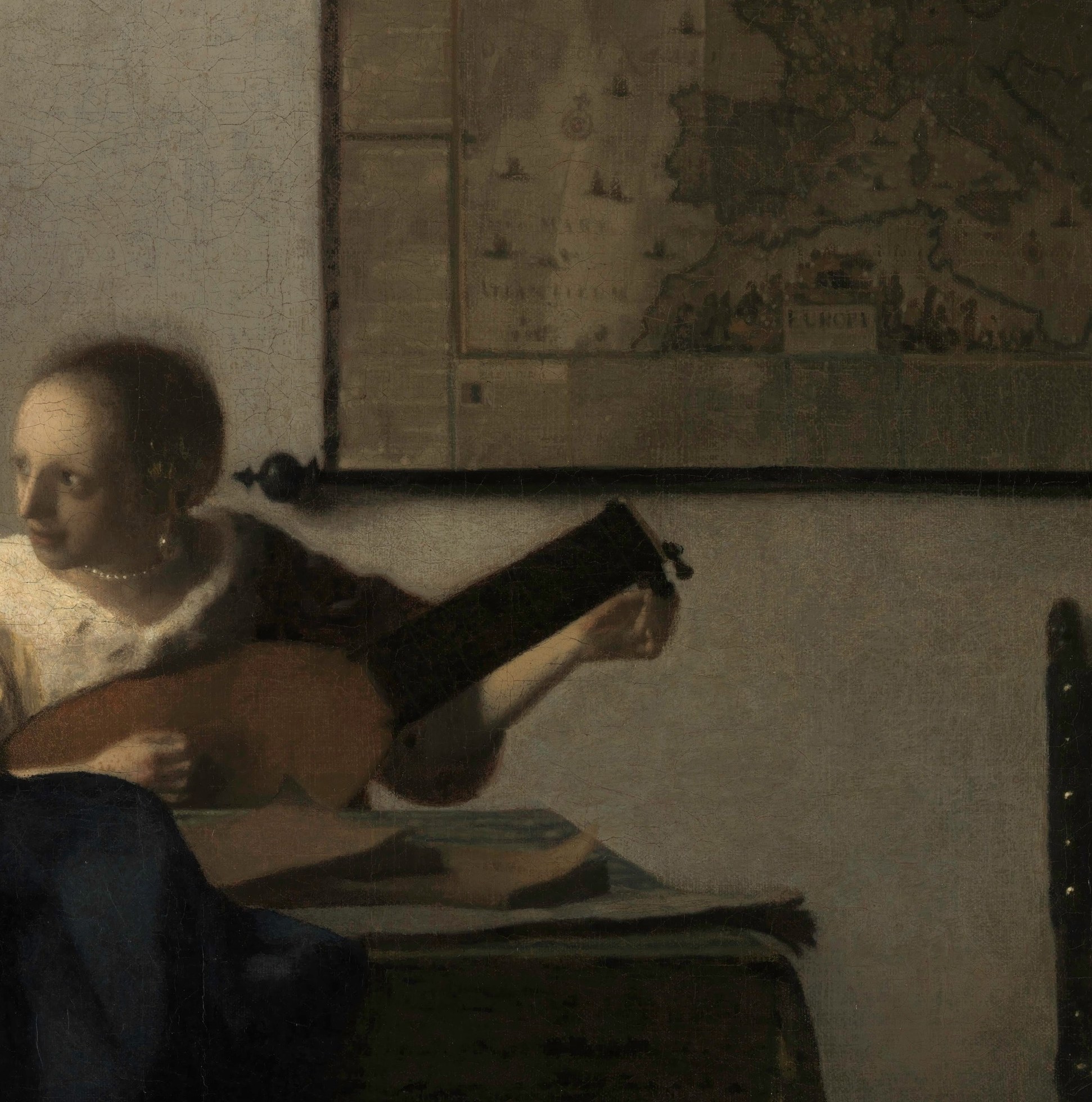
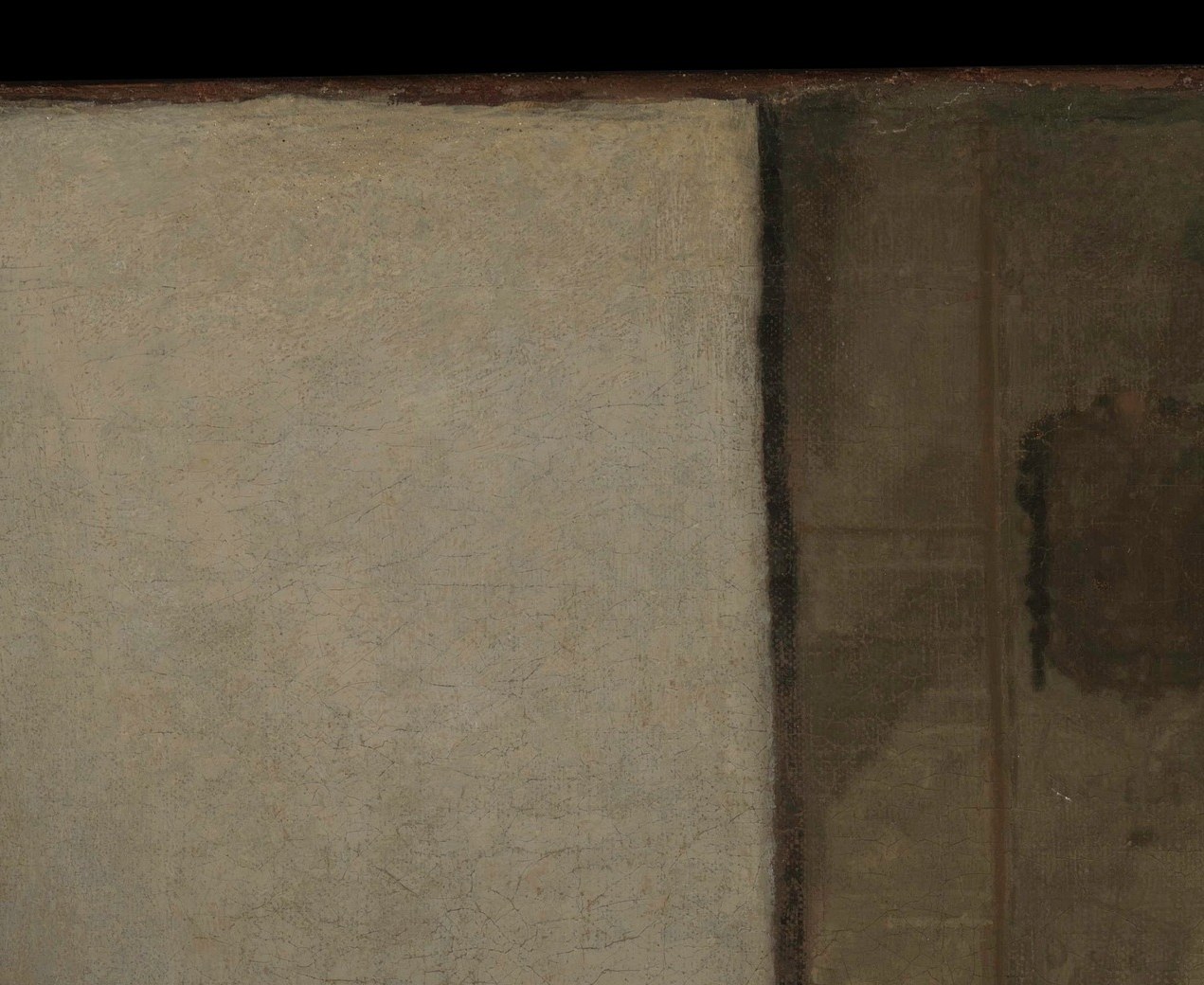
Her enormous pearl earring, the blue ultramarine tablecloth, the scattered songbooks all signal comfortable Dutch prosperity. But look past her toward the back wall. Hanging there is a large map of Europe, rendered in enough detail that scholars have identified it: it's a 1659 world map published by the Amsterdam cartographer Joan Blaeu, just three years before Vermeer painted this scene.
Maps appear in eleven Vermeer interiors. They meant more than decoration. A map in a domestic room spoke to the Dutch Republic's self-image as a seafaring, trading empire whose reach extended far beyond these quiet rooms in Delft. The cartographer Blaeu was the official mapmaker of the Dutch East India Company, and his works hung in the homes of burghers who had never left Holland but whose fortunes were tied to global commerce.
The yellow jacket, the lion-head chair, even this canvas itself connect this painting to others. Conservators have found that its canvas was cut from the same bolt as Vermeer's Lady Writing a Letter with her Maid. She is one figure in a linked family of women painted in the same two rooms, with the same props, in the same soft indirect light. What do you notice first, the woman or the world on the wall?
#arthistory #vermeer #dutchgoldenage
Details
Transcript
She looks up from her lute, mid-note. Her fingers pause. She's waiting for someone. A viola da gamba waits on the floor for the missing player. Now look at the map on the wall behind her. Vermeer put maps in eleven paintings. This one is real. It's a 1659 Blaeu map of Europe. Published just three years before this was painted.