The Visit to the Nursery by Gabriel Metsu
View the artwork: The Visit to the Nursery →
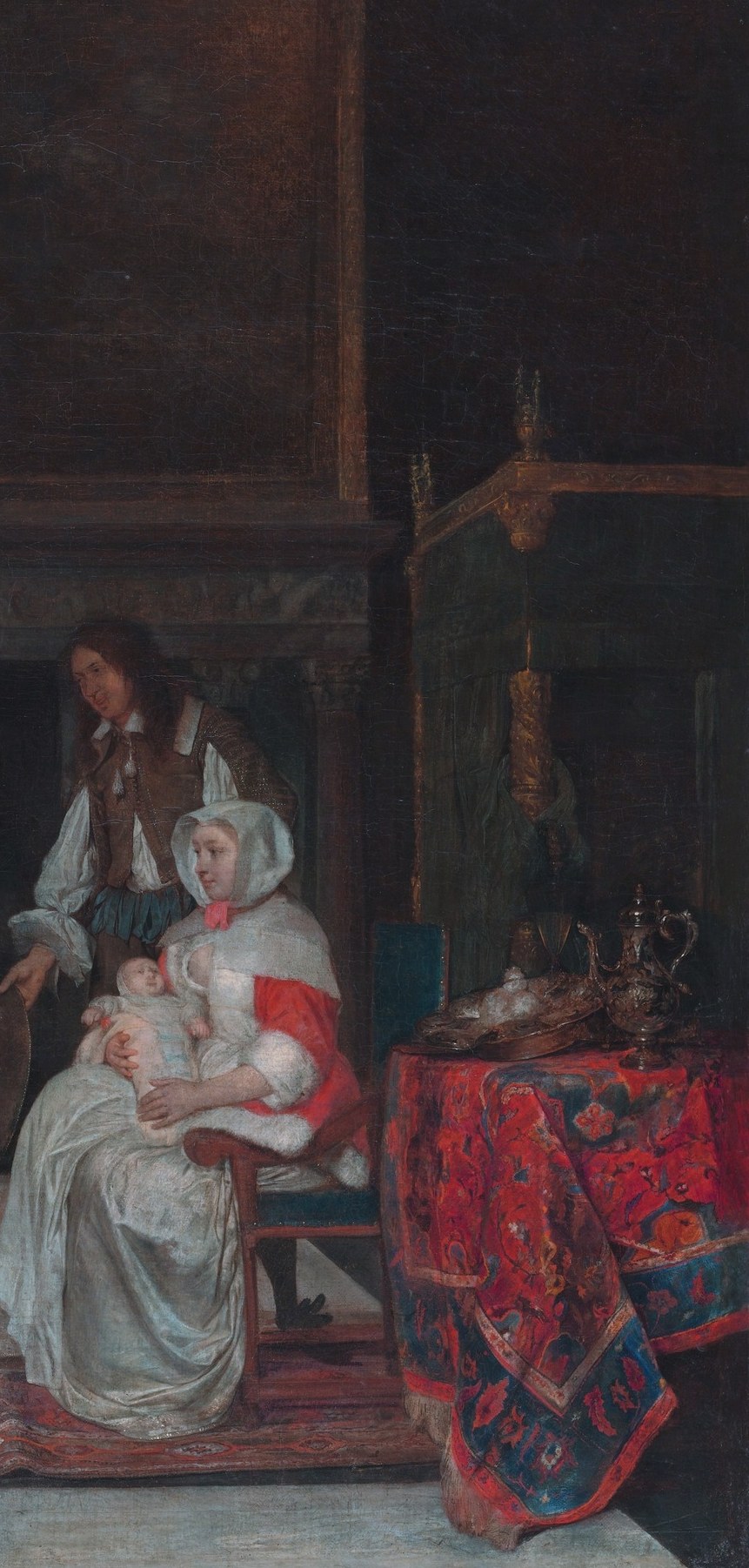
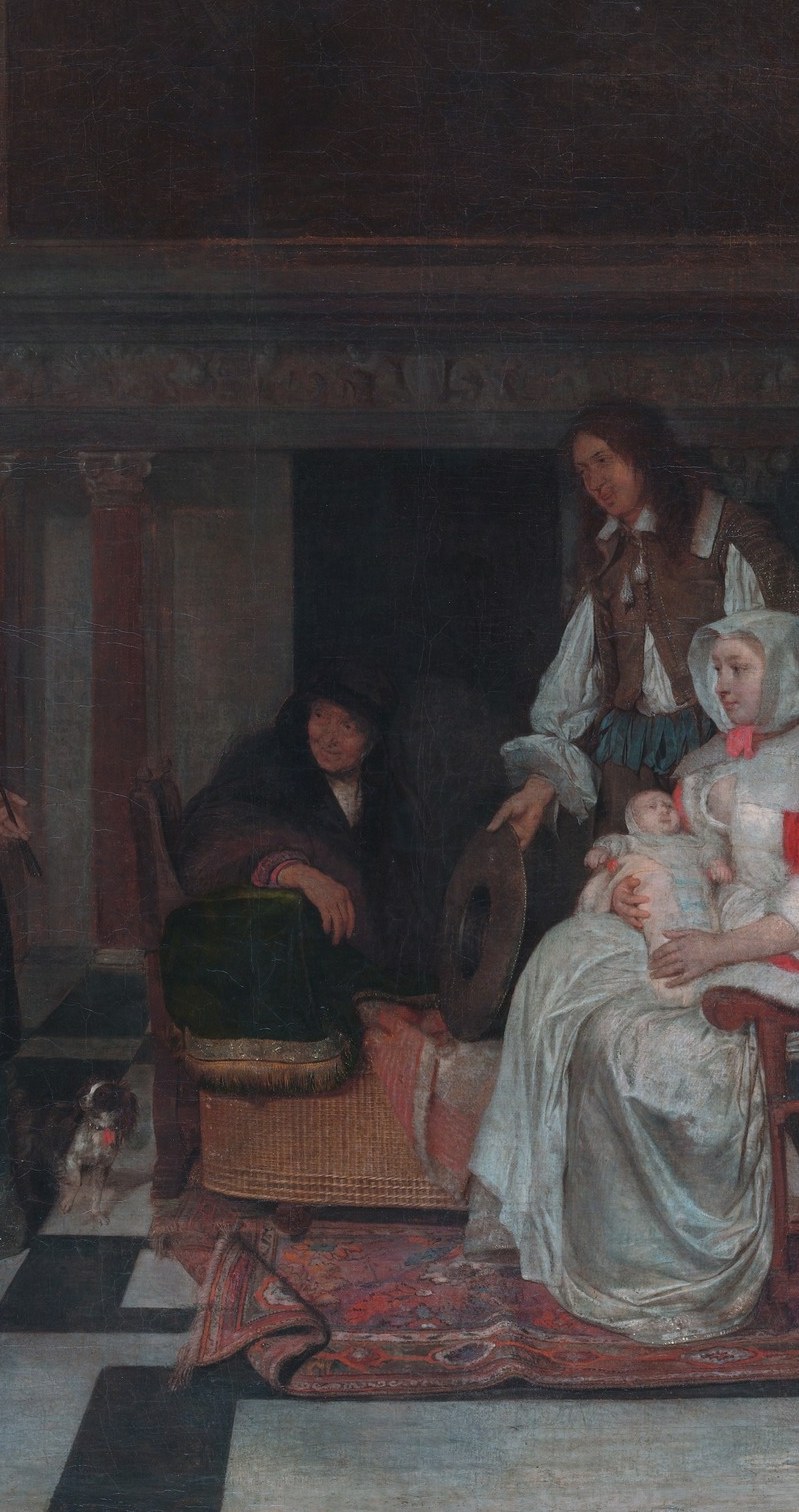
Gabriel Metsu's "The Visit to the Nursery" (1661) is a record of a birth celebration, but the real story is a father's coded ambition. Jan Jacobsz. Hinlopen commissioned the work to mark the arrival of his daughter, Sara, in June 1660.
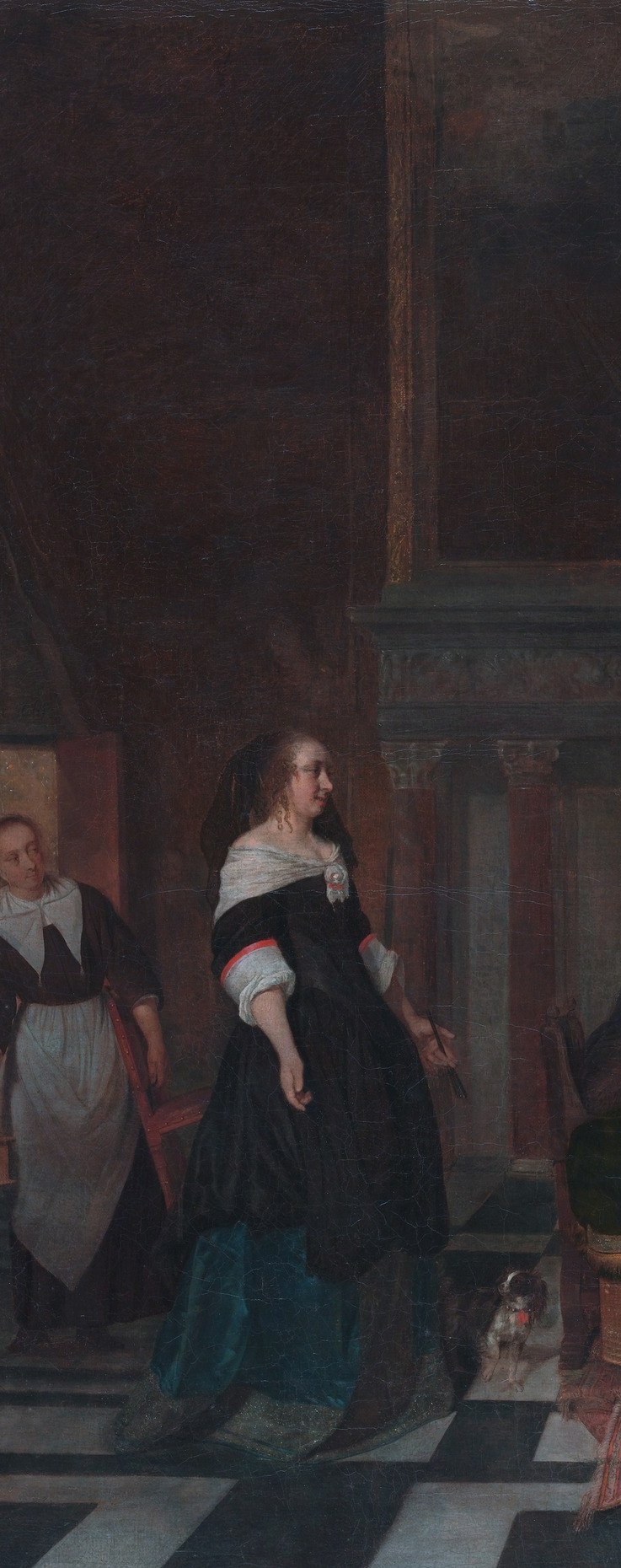
The scene shows a formal Dutch post-birth visit, called a kraambezoek. The new mother is the fragile center in her white satin dress and the distinctive starched linen cap worn only during this period. She is being honored by a stylish visitor and a maidservant.
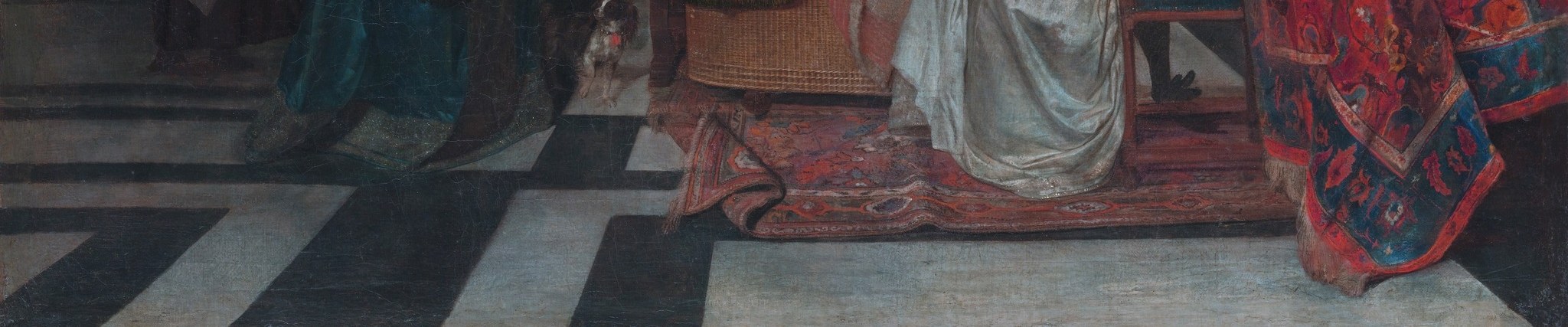
Hinlopen was one of Metsu's most important patrons. Here, he gave the painter a very specific instruction: do not show our actual home. The black-and-white marble floor belongs to Amsterdam's new Town Hall Council Chamber. The family's domestic joy is framed by the city's most potent symbol of civic power.
The painting originally hung in Hinlopen's house alongside a later family portrait. It passed through elite collections across Europe before J. Pierpont Morgan donated it to the Metropolitan Museum of Art, where it remains. Wear from old restorations has softened the surface, but the father's hidden message endures.
#arthistory #dutchgoldenage #gabrielmetsu
Details
Transcript
A visitor calls on a new mother. It is 1661.A wealthy Dutch couple has just had a daughter. The mother wears the starched white cap of her lying-in. Her husband commissioned this painting to mark the event. Look at the floor.They are not in their own home. Metsu set the scene inside Amsterdam's grand new Town Hall. A father's ambition, hiding in plain sight under a birth visit.