The Cathedrals of Broadway by Florine Stettheimer
View the artwork: The Cathedrals of Broadway →
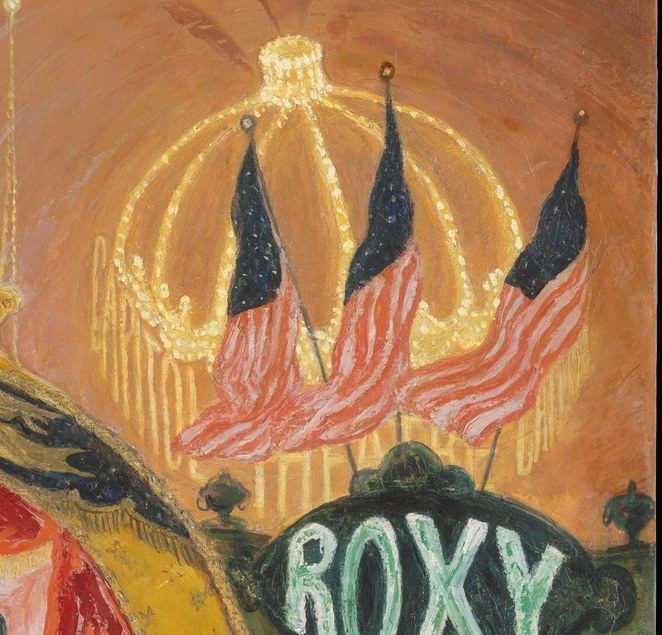
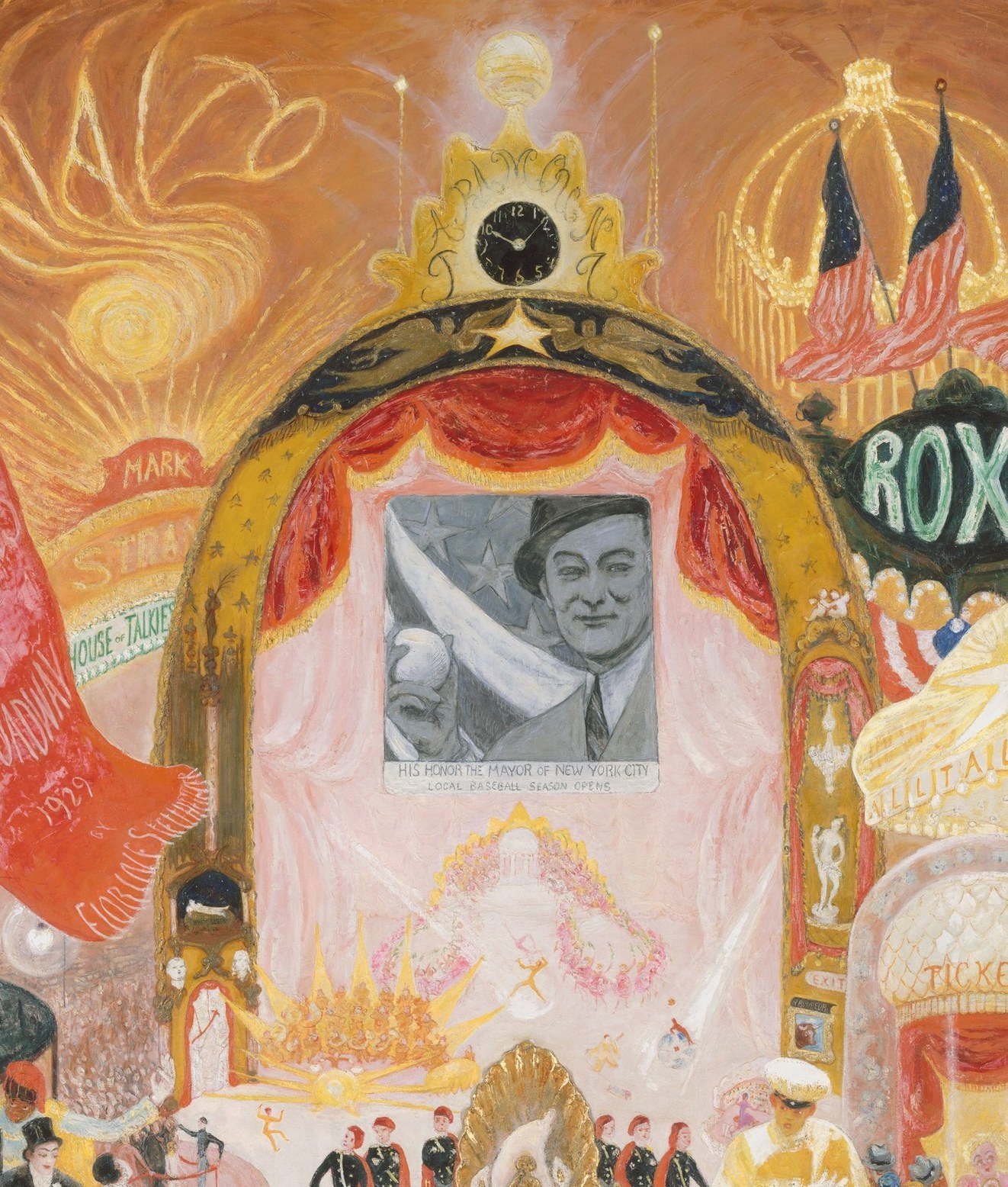
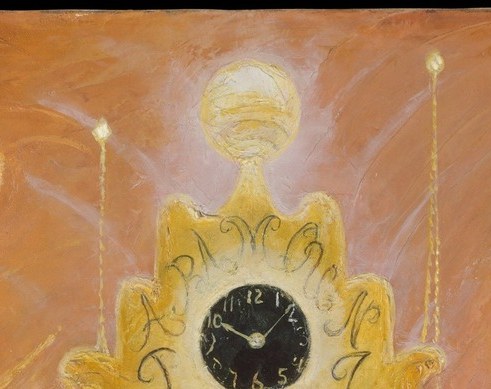
Florine Stettheimer painted The Cathedrals of Broadway in 1929, as the Great Depression began. It opens a four-part series on New York's secular shrines. The Met acquired it in 1953 as a gift from the artist's sister, Ettie, who made a quiet, monumental choice: she preserved the paintings Florine's will asked her to destroy. The canvas stands about five feet tall, and it's built like a stage set. Look first at the red curtain in the upper left corner. Stettheimer signed her name there, inside the world of the painting, claiming authorship as a theater impresario would. Above the crowd, a proscenium arch lifts the glow of real theater marquees, the Roxy, the Strand, into something closer to stained glass.
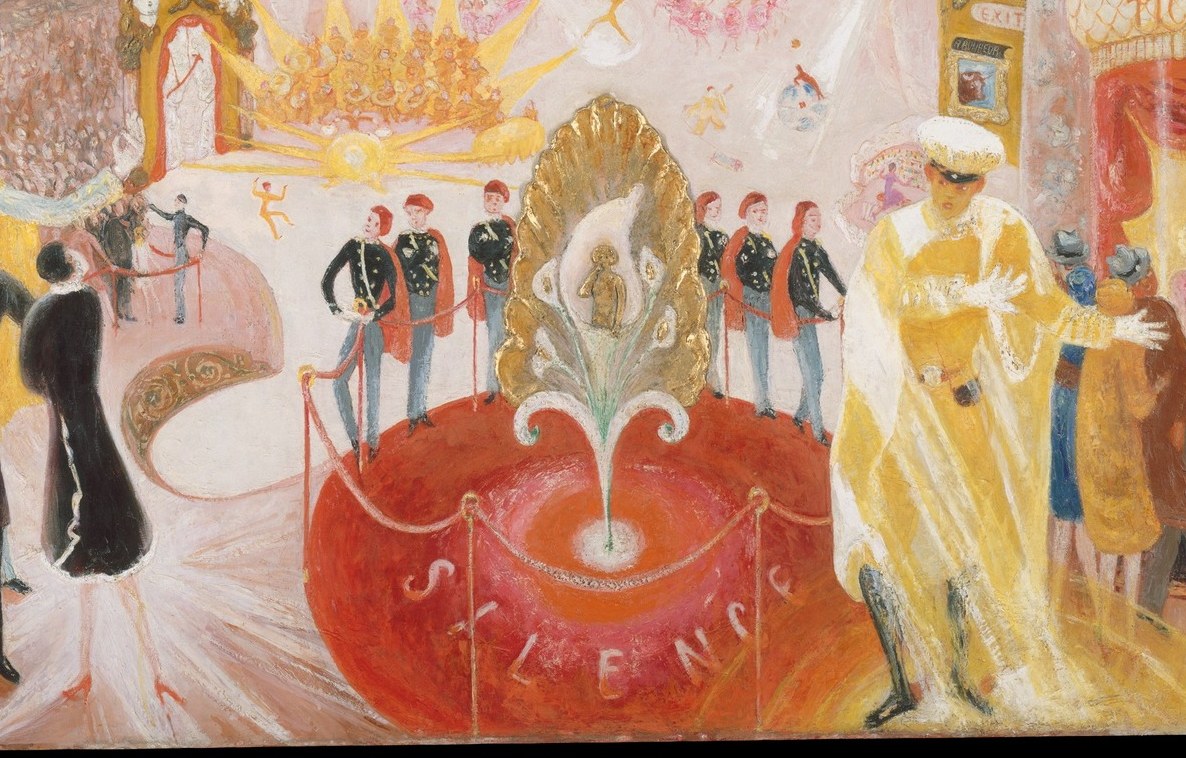
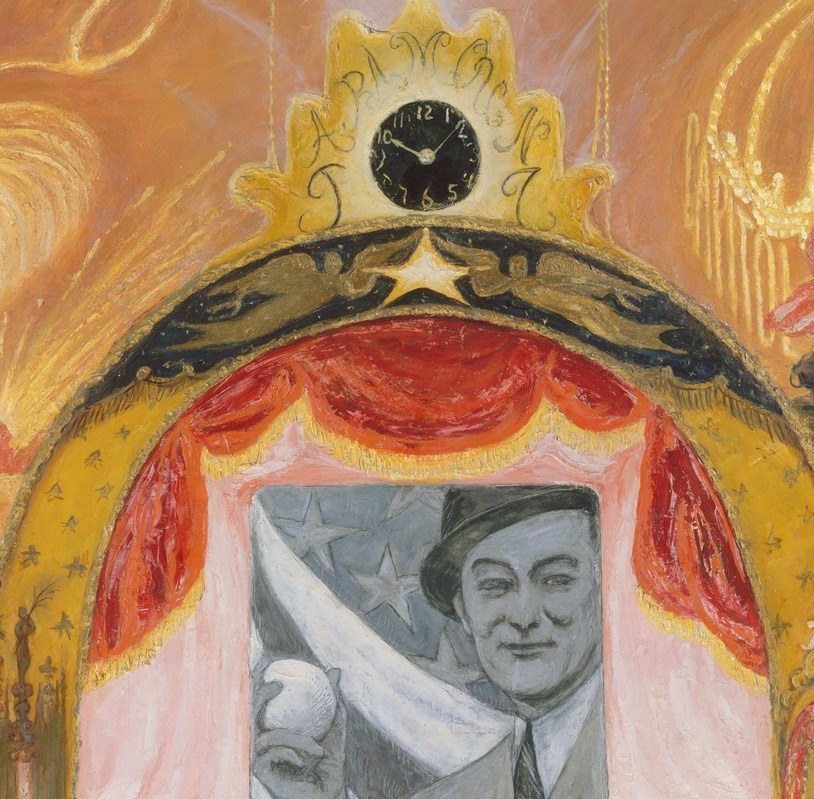
The central screen shows an actual newsreel of Mayor Jimmy Walker throwing out the season's first pitch. Stettheimer collapses film, sport, and politics into a single frame, treating celebrity as Broadway's true religion. The elegant crowd in evening dress at the bottom are the congregation, gathered at the altar rail of a night out.
Stettheimer designed sets for the avant-garde opera Four Saints in Three Acts, and this painting thinks like a stage designer. A golden orb floods the scene with artificial light. Electric bulbs become decorative motifs. The whole composition flattens spectacle into pattern, Fauvism filtered through a Manhattan night.
The museum retrospective after her death was organized by her friend Marcel Duchamp. It was the Museum of Modern Art's first solo show for a woman artist. Because Ettie kept the work, we still see it. What do you notice when you look past the center stage?
#arthistory #florinettheimer #metropolitanmuseum
Details
Transcript
Florine Stettheimer left a clear instruction in her will. Destroy her paintings. Her name is right here, stitched into the canvas. She painted Broadway as a cathedral of pleasure. A real newsreel of Mayor Walker plays at the altar. Her sister Ettie refused the wish. She saved the work. In 1953, she gave it to the Met, where it hangs now.