Madonna and Child and Little Saint John by Robert Loftin Newman|Gilbert Stuart
View the artwork: Madonna and Child and Little Saint John →
This is Robert Loftin Newman’s "Madonna and Child and Little Saint John," a luminous oil painting completed by 1894. Newman was a quiet American mystic who studied in Paris under Thomas Couture and absorbed the loose, atmospheric style of the Barbizon School. He returned to the U.S. and spent his career painting small, intimate religious and mythological scenes that most of the art world ignored.
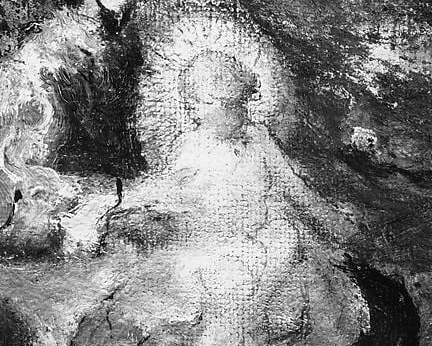
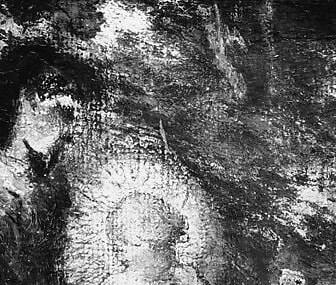
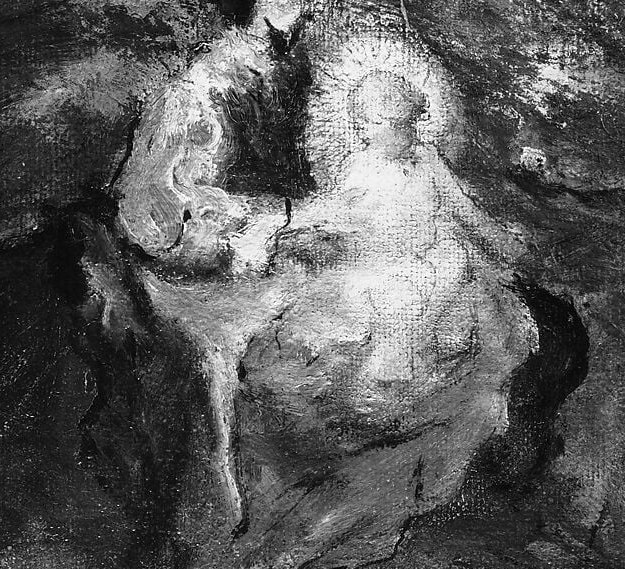
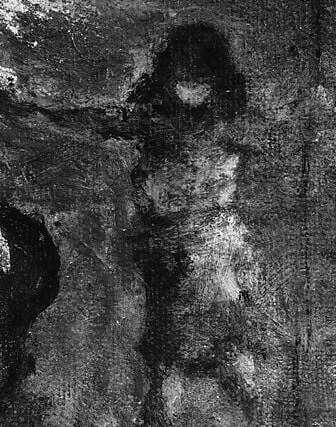
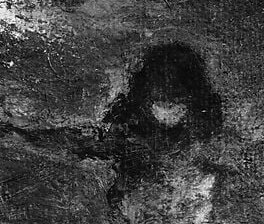
Look at how the Christ Child is built. There are no hard outlines, no precise features, just the brightest white on the canvas, glowing against a nearly black surround. Newman achieved a traditional halo effect purely through tonal contrast. Mary’s face, in turn, is rendered with the softest touch, her downward gaze reading more as tender presence than anatomical precision. The paint handling throughout is loose, almost smudged, intentionally sketch-like.
Newman died in Nashville in 1912, largely forgotten. His work was kept alive by a single dedicated collector, and periodically rediscovered by the market. In 1995 this painting sold at Christie’s New York for $497,500 (including premium), a remarkable sum for an artist most people couldn't name. The sale placed him momentarily back in the spotlight, but his star has since dimmed again.
Art markets have short memories. A painting can command half a million dollars, then slip quietly into a museum, its painter's name known only to a few. What do you think makes a painter last?
#arthistory #americanart #robertloftinnewman
Details
Transcript
This modest Madonna is by a painter you've likely never heard of. Robert Loftin Newman. An American who trained in Paris alongside the Barbizon painters. He built the Child entirely from light, no hard edges, just glowing white paint against deep shadow. His brushwork is loose, almost a sketch. Critics called his style unfinished. He died in 1912, nearly forgotten. A single patron kept his work alive. In 1995, this painting sold at Christie's for $497,500. Today it hangs in a public collection, its market value a fraction of that peak.