The Daughters of Catulle Mendès by Pierre-Auguste Renoir

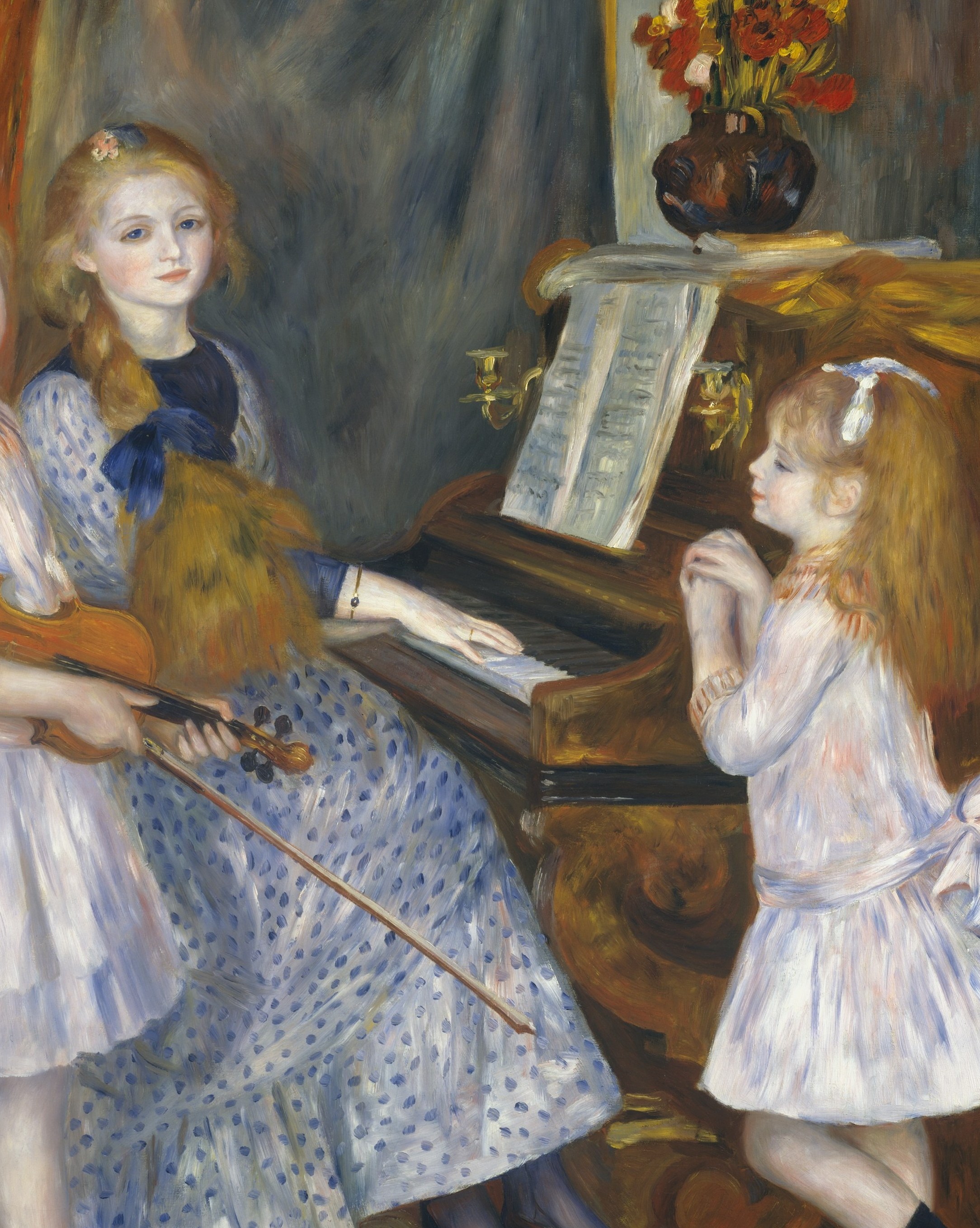
Renoir painted The Daughters of Catulle Mendès in 1888, completing it in just weeks to echo the acclaim of his 1879 Salon masterpiece, and it now hangs at the Metropolitan Museum of Art.

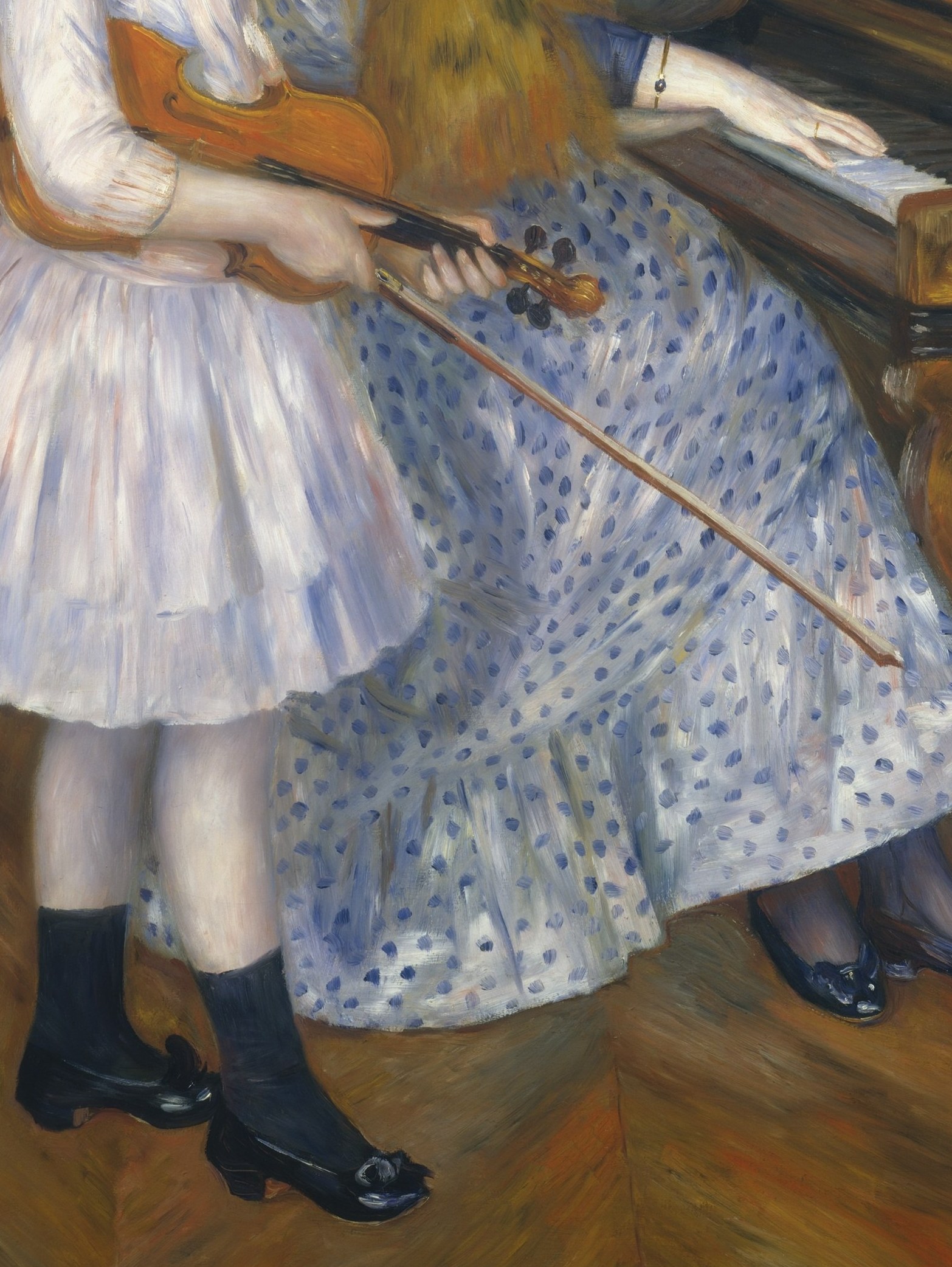
Three sisters are shown around a piano; their white dresses catch blue and violet highlights, their folded hands rest reverently, and a music sheet lies open on the instrument.

The work was a commission from the poet Catulle Mendès and his wife, pianist Augusta Holmès, intended as a society portrait. It passed through dealers Bernheim‑Jeune and Wildenstein, then collectors including the Prince de Wagram and Baron Maurice de Rothschild before the Annenbergs donated it to the Met in 1998.

Renoir’s rapid execution shows his ambition and the shifting taste of the late 1880s. What might have happened if the critics had praised it then?

#arthistory #Renoir

Details
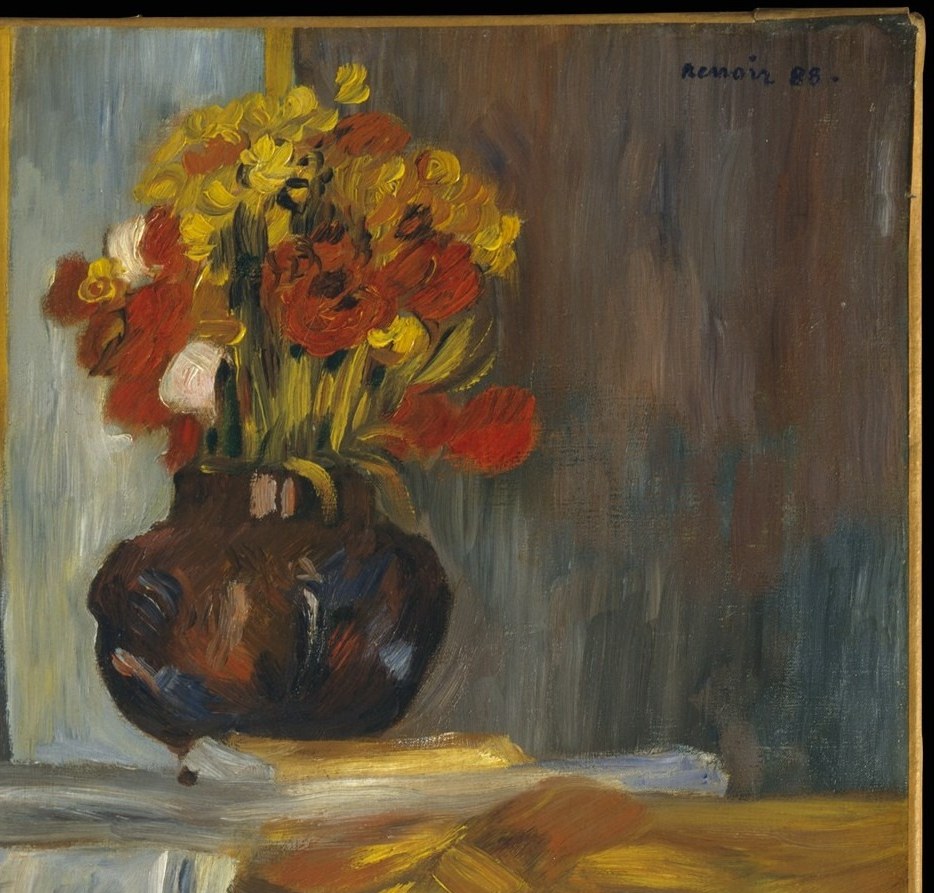
A warm chromatic accent that punches against the cool blues; its placement on the piano's upper edge frames the composition and signals Renoir's saturated new palette.
The most saturated passage in the painting and the element reviewers found jarring; Renoir's intensified hues are most visible here, marking his stylistic pivot of the late 1880s.
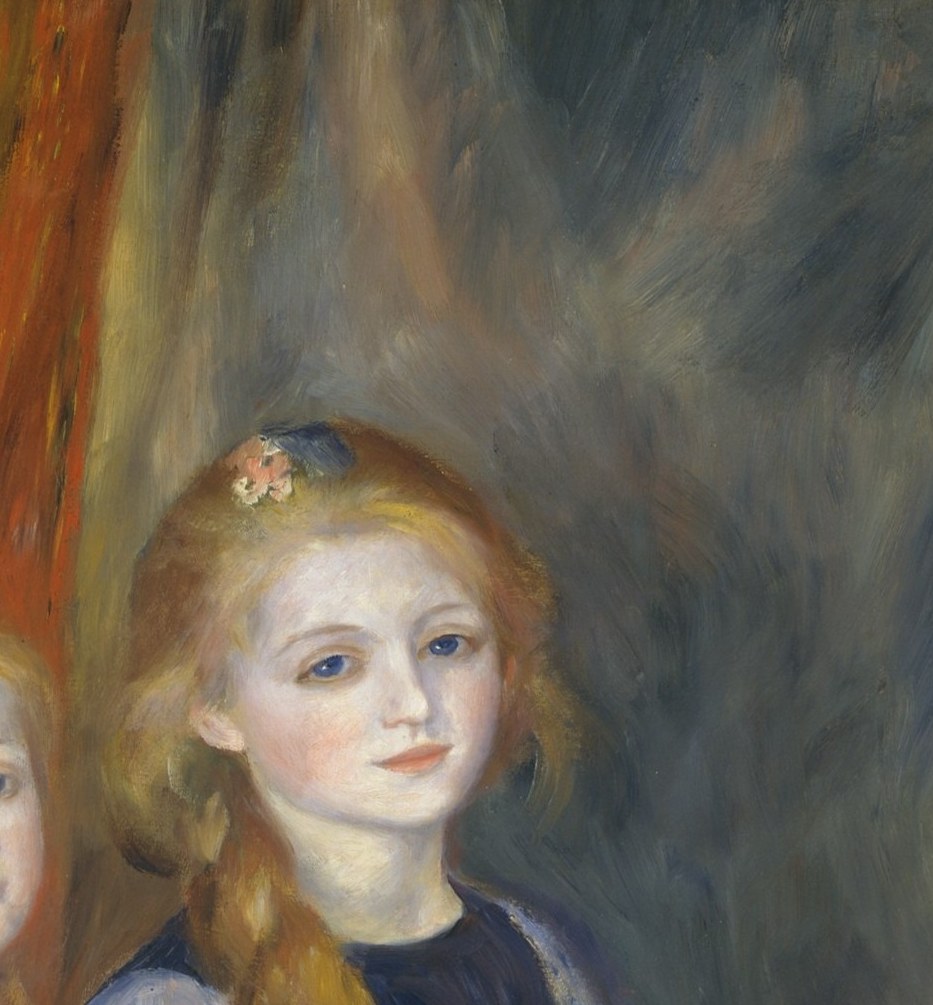
Positioned centrally and elevated by the piano bench, her face is the emotional pivot of the group; Renoir's 'schematized' modeling criticized by 1888 reviewers is most legible here.
The piano is effectively the domestic altar around which the three girls are arranged; its dark mass anchors the warm tones of the figures against it.
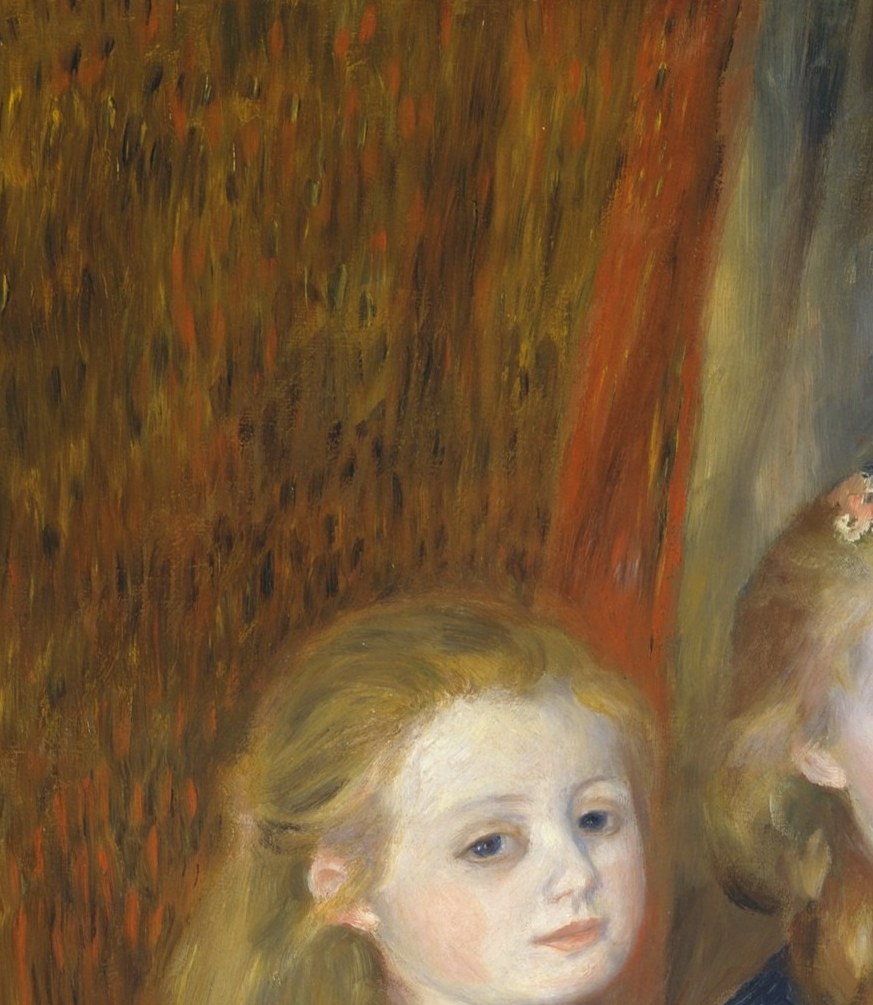
Direct, slightly guarded gaze outward; her individuality is distinct from the other two sisters and anchors the left edge of the composition.
Transcript

Three sisters gather around a piano. Their white dresses shimmer with blue and violet streaks. Renoir completed it in weeks, hoping to repeat his 1879 success. The piano keys gleam under soft indoor light. A music sheet rests on the piano. The Met acquired it in 1998 as part of the Annenberg collection.