The Crucifixion by http://www.wikidata.org/.well-known/genid/71e813b7e04c86820d6b74901b3d5893
View the artwork: The Crucifixion →
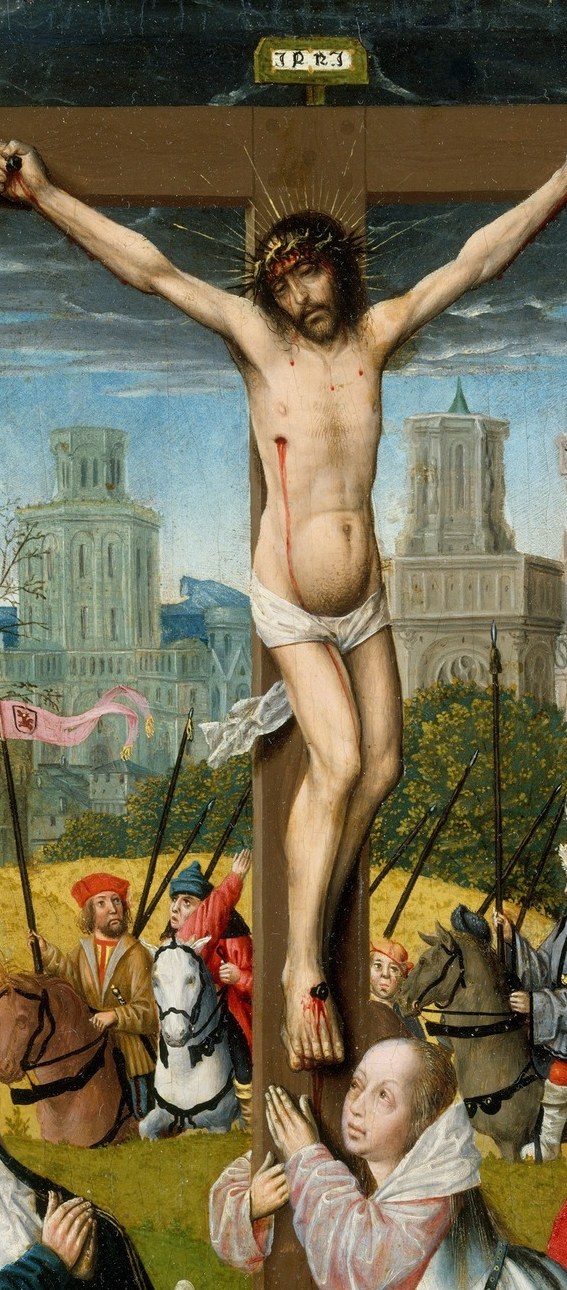
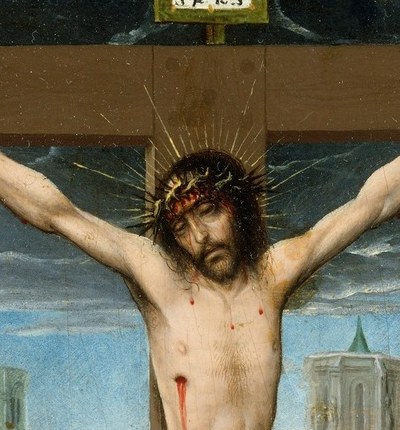
This is The Crucifixion, a small devotional panel painted in oil on wood around 1495 and attributed to the circle of the Netherlandish master Jan Provoost. It measures only about 32 by 26 centimeters, a painting made for private meditation, not a church wall, and it came to the Metropolitan Museum of Art in 1982 with the Jack and Belle Linsky Collection.
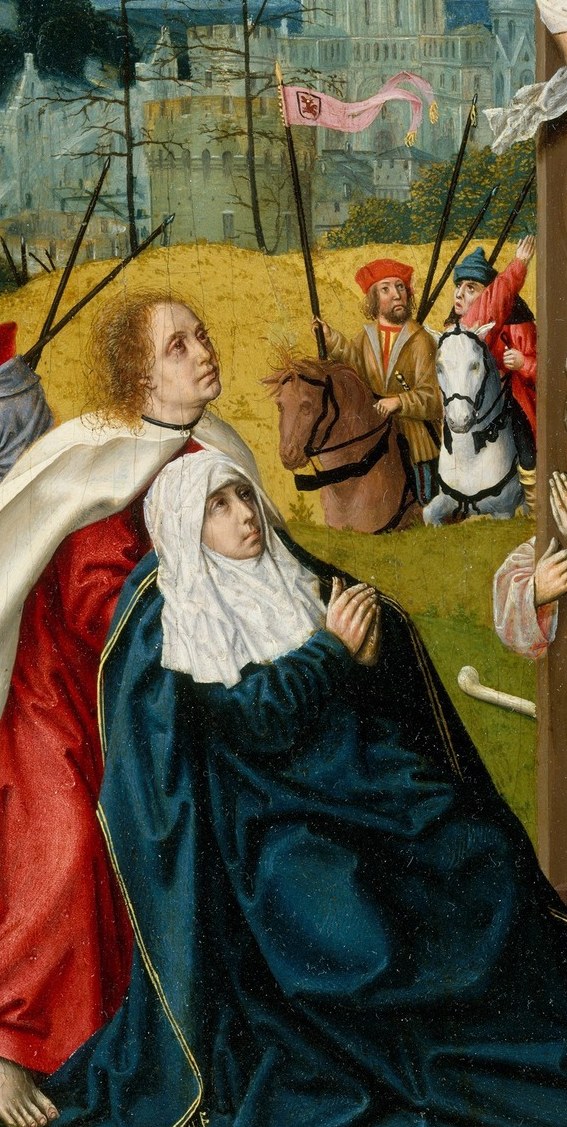
Look first at the bones scattered at the base of the cross. Those are not generic remains. In late-medieval theology, Golgotha was Adam's burial place, and painters made that literal: the first man's skull lies directly under the redeemer's cross, connecting the Fall and the Redemption in blood and soil. Then look up and to the right. Behind the cross, through an opening in a wall, a second complete scene plays out in miniature: the Annunciation. Gabriel visits Mary in a walled garden while the Crucifixion unfolds in the foreground.
The pairing is not arbitrary. The medieval liturgical calendar commemorated Adam, the Annunciation, and the Crucifixion all on March 25, binding the origin of sin, the incarnation, and the sacrifice into one cosmic arc. Provoost's circle has compressed all of salvation history into a single panel you could hold in your hands.
Next time you see a Crucifixion painting, look into the corners. The artists of the Northern Renaissance rarely wasted a square inch.
#arthistory #northernrenaissance #crucifixion
Details

Transcript
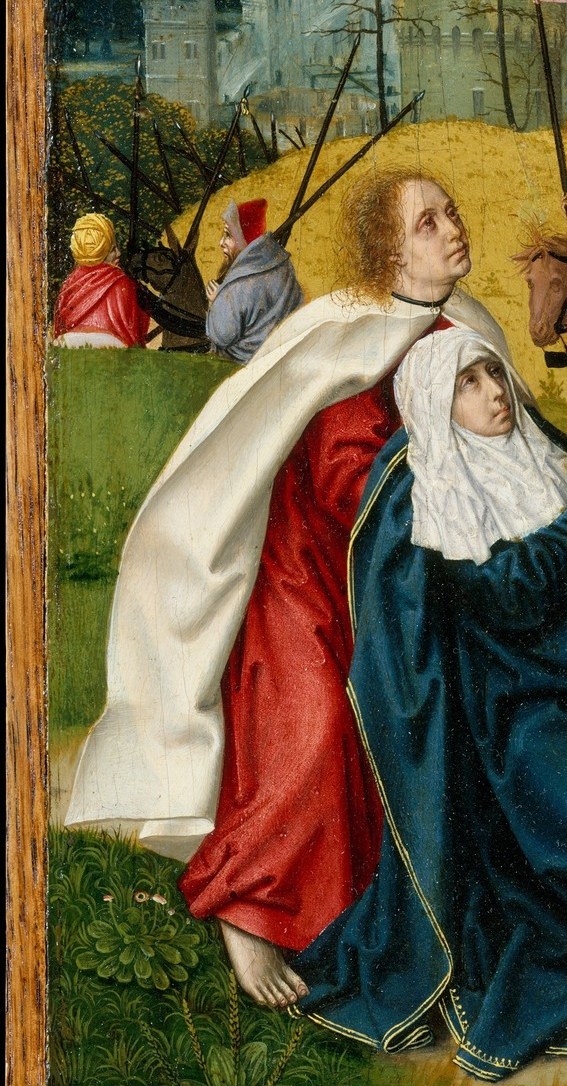
You have probably scrolled past the bones. At the hill's base: Adam's skull. The first death meets this one. Mary collapses in a cloak of ultramarine, the costliest pigment. But this painting holds a second, even more hidden story. Tucked into the upper right, behind the cross: a tiny walled garden. The Angel Gabriel announces to Mary she will bear a son. In medieval tradition, the Annunciation and Crucifixion both fell on March 25. One panel holds the conception and the death, bound into a single day.