Skating at Sloten, near Amsterdam by Jan Abrahamsz Beerstraaten
View the artwork: Skating at Sloten, near Amsterdam →
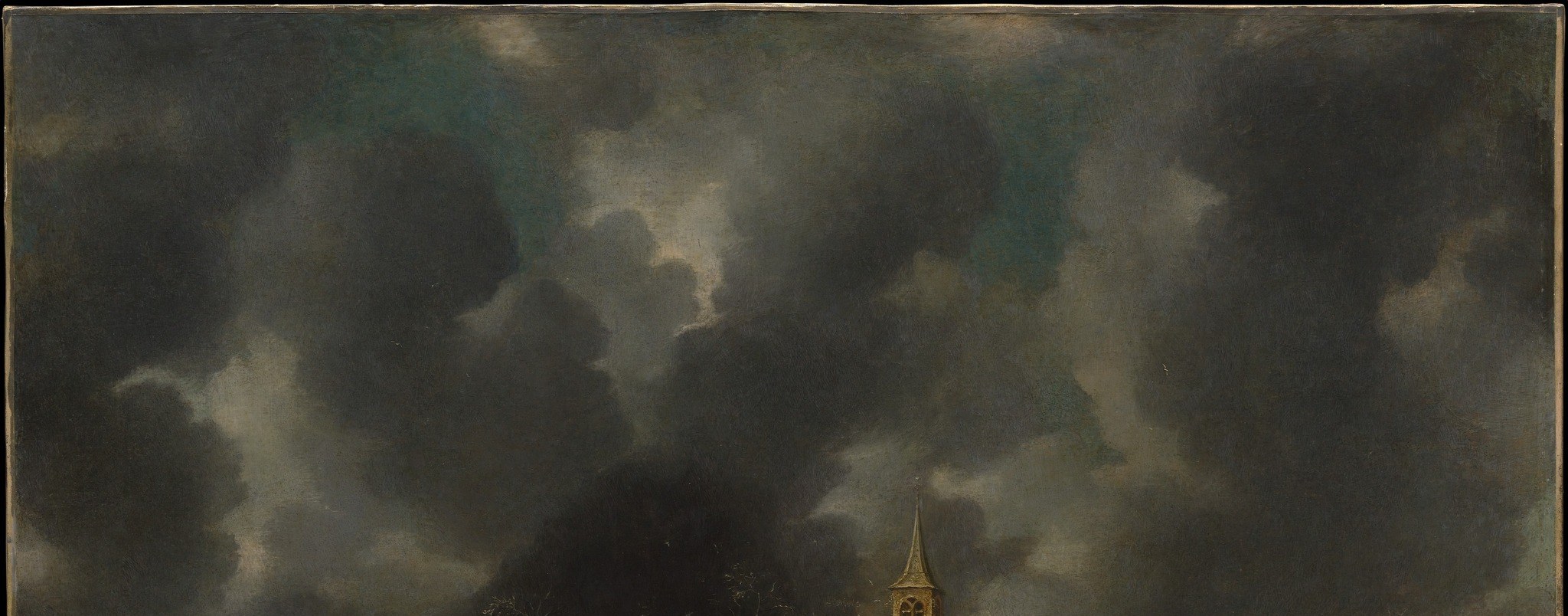
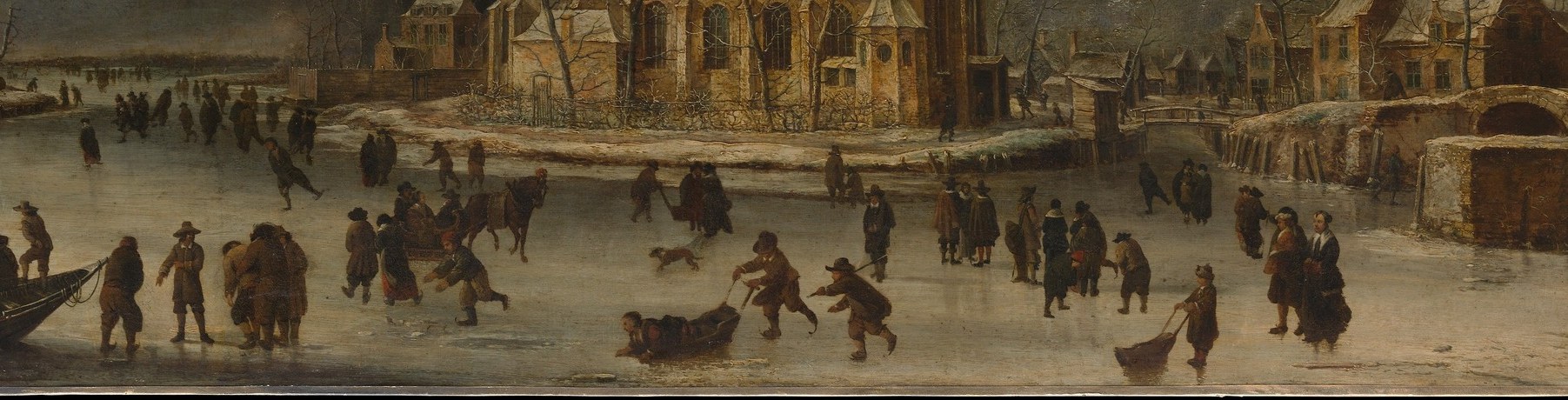
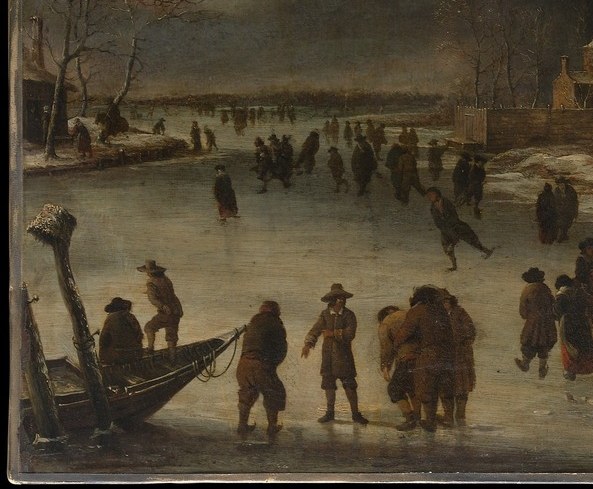
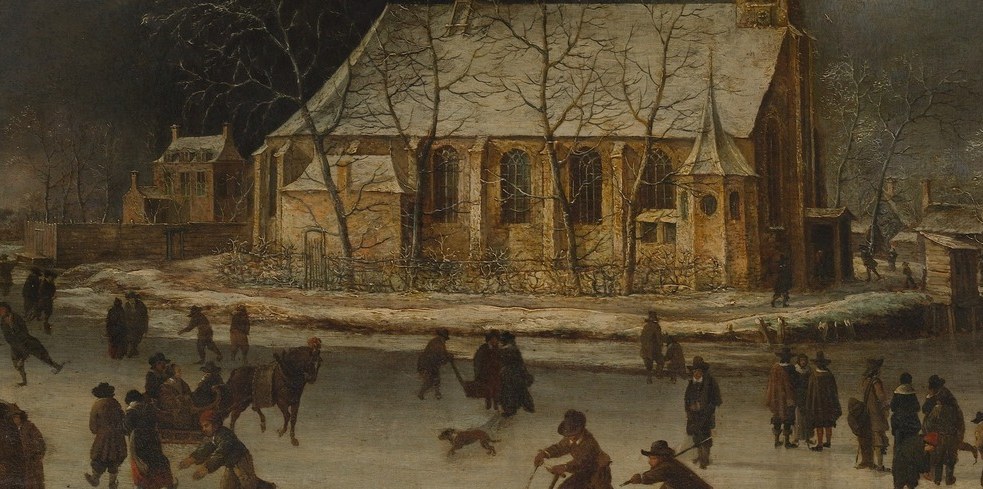
The ice glows. That is the first thing to notice in Jan Abrahamsz Beerstraaten's 'Skating at Sloten, near Amsterdam' (1654, oil on canvas). It is a painting of a storm, but the frozen canal itself holds the light, reflecting the cold glow of snow-covered banks under a sky that is threatening to break.
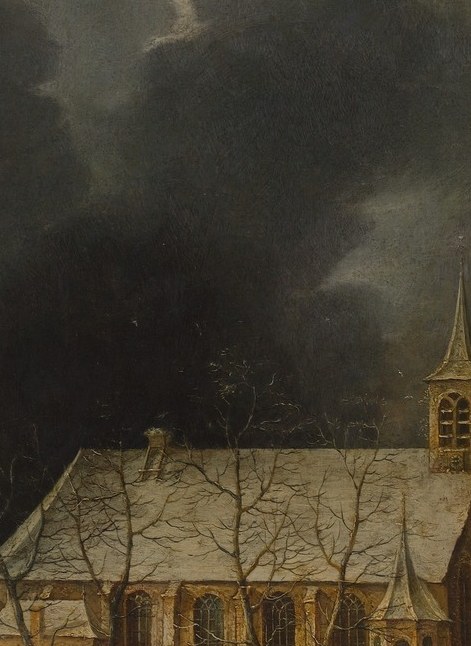
Look at the surface of the ice. Beerstraaten built it with thin, translucent layers of grey oil paint over a white ground, a technique that lets brightness come up through the paint rather than sitting on top of it. The result is a surface that feels lit from within, a cold illumination that pushes against the heavy turbulence above. The only true warmth is a pale sliver of light breaking the horizon just behind the church, a tiny release of pressure in an otherwise sombre palette.
Beerstraaten was a specialist in marine painting and cityscapes, capturing buildings and events across the Netherlands. He painted this winter scene two years after Amsterdam's old town hall burned down in 1652, during a period when the Dutch Republic was also engaged in the First Anglo-Dutch War. An ordinary afternoon of skating, in other words, was not a given; it was a small, resilient joy worth recording with real technical care.
Winter landscapes were beloved in the Dutch Golden Age, but 'Skating at Sloten' does more than document a pastime. It uses the hardest trick in oil painting, making a flat grey surface feel like luminous, solid ice, to hold a moment of communal life inside an unforgiving season.
#arthistory #dutchgoldenage #beerstraaten
Details
Transcript
A storm is about to break over a Dutch village. But look at the ice under that sky. It glows. A cold, reflected light from the snow-covered banks. The only warmth in the painting is a single break at the horizon. Beerstraaten used layer after layer of thin, translucent grey oil paint. He lets the white ground shine through, so the ice feels lit from within. He painted this two winters after Amsterdam's old town hall burned down. A record of ordinary joy, built on an unforgiving technique.