Wooded and Hilly Landscape by Jacob van Ruisdael
View the artwork: Wooded and Hilly Landscape →
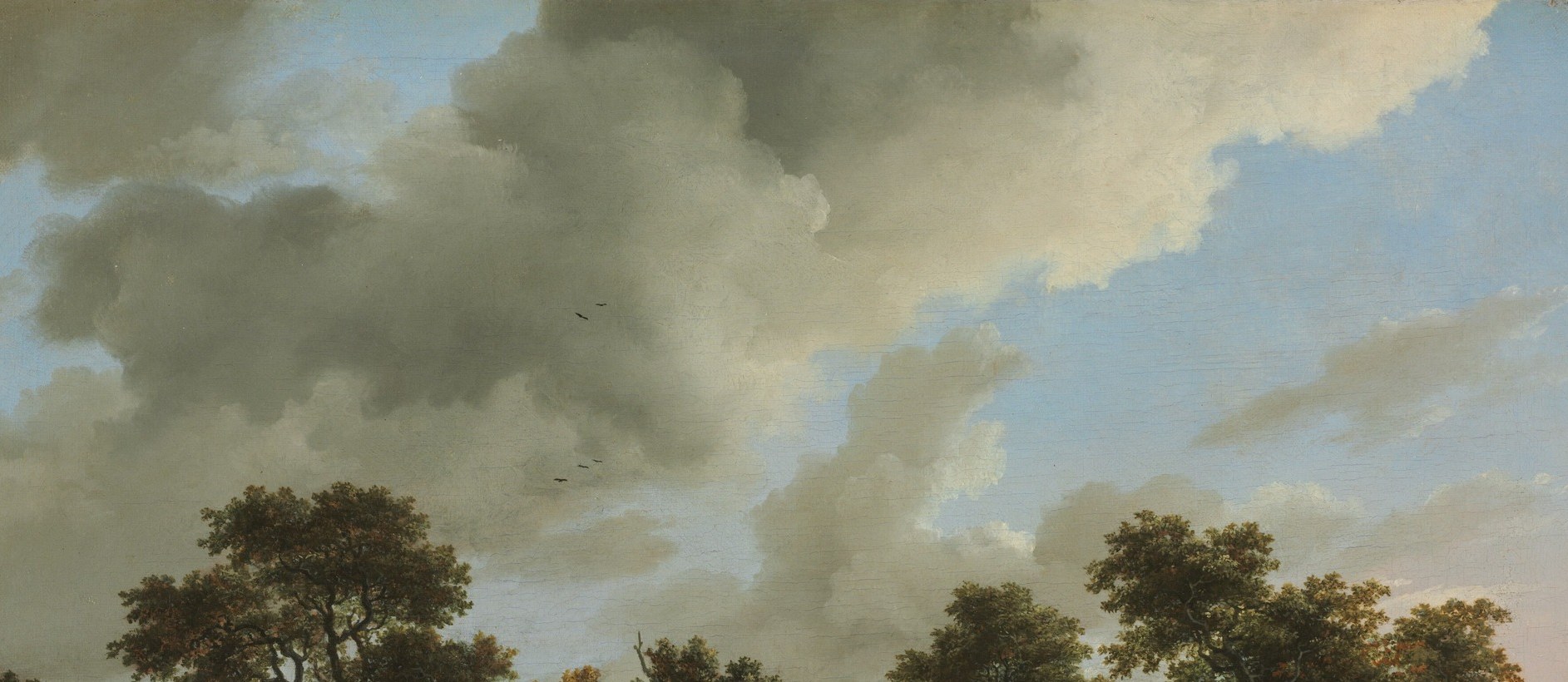
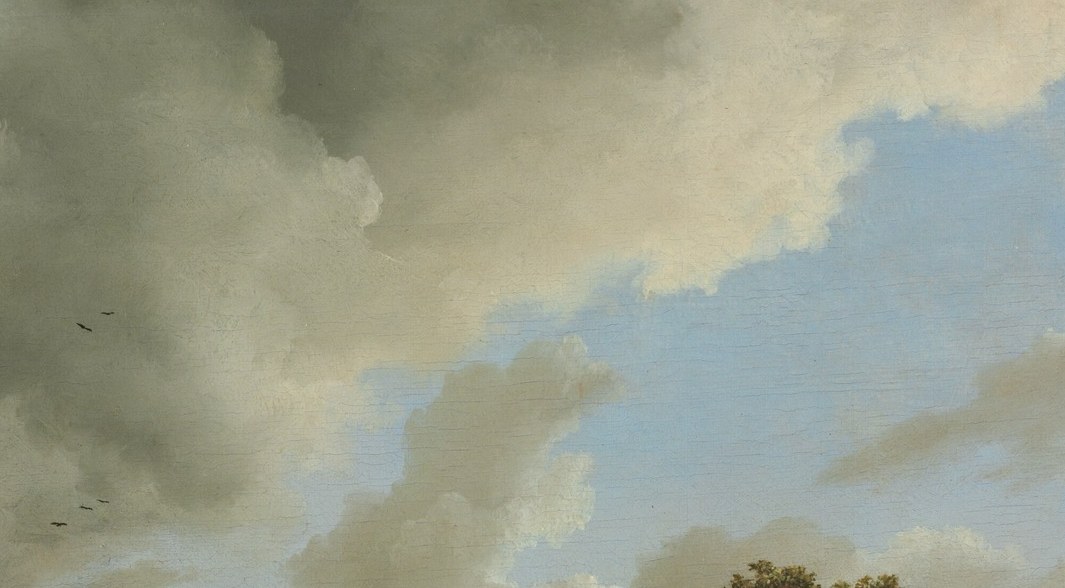
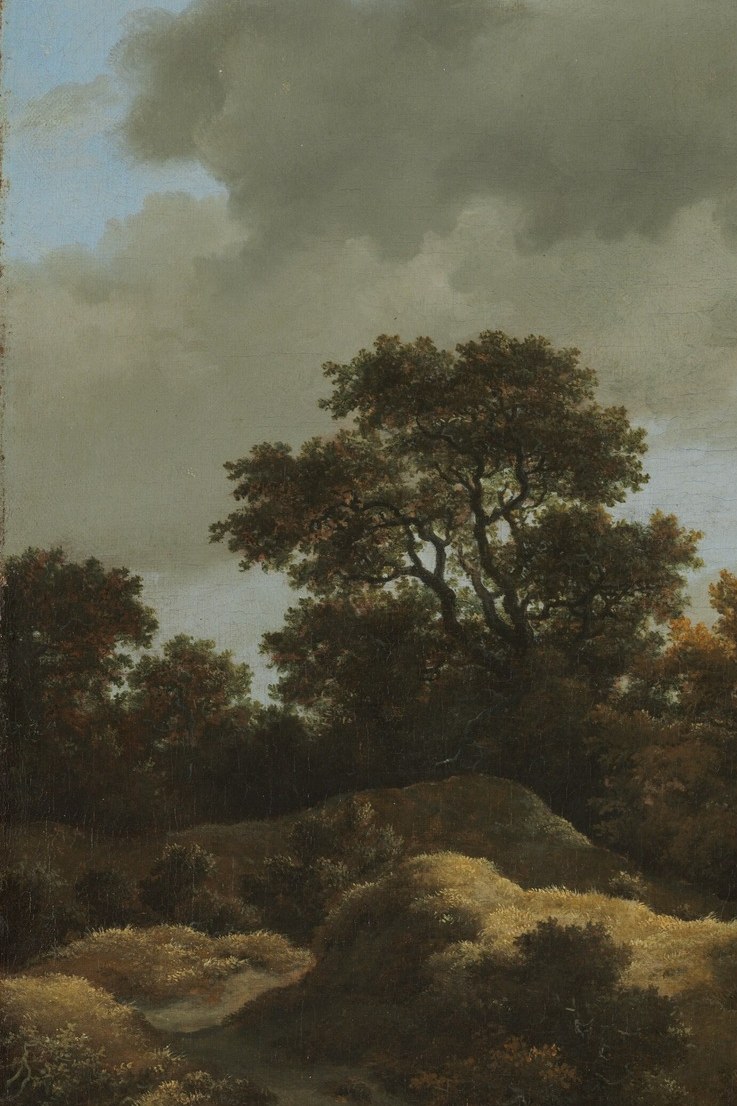
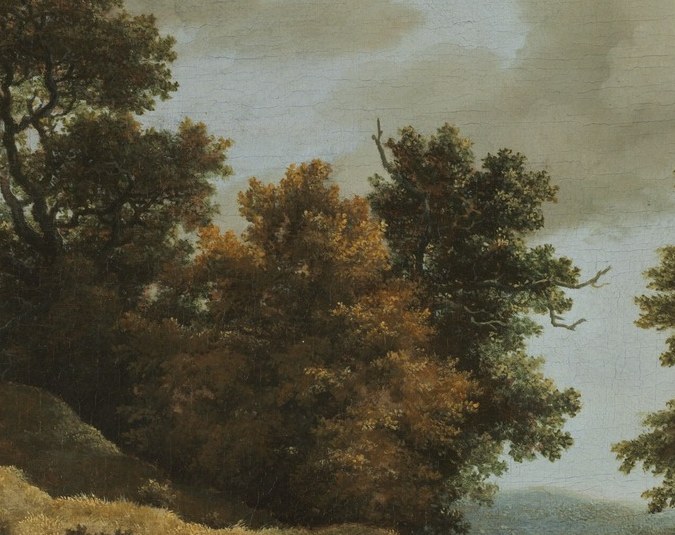
Jacob van Ruisdael's "Wooded and Hilly Landscape" (c. 1660) is not a documentary of a real place. It is a carefully constructed idea of wilderness, painted for wealthy Amsterdam merchants who wanted a piece of untamed nature on their parlor wall, even if that nature had to be invented.
Look first at the scale. A solitary traveler on the winding path is almost invisible against the towering cloud mass and the dark weight of the trees. That small figure is a standard device of the period, meant to make the viewer feel the landscape's enormity and their own smallness within it.
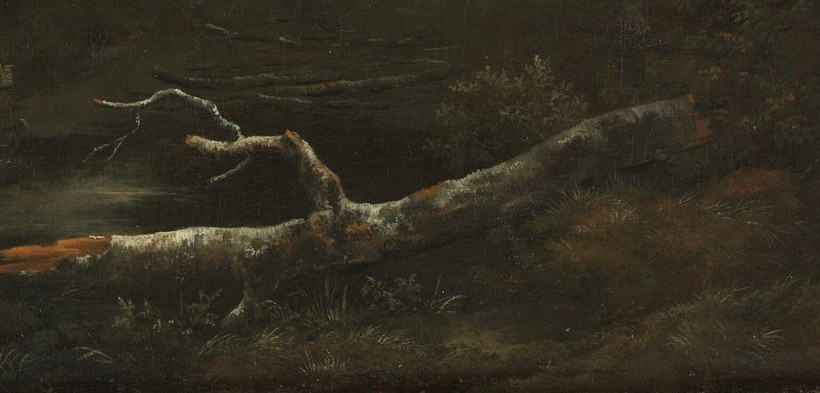
Then look at the fallen log in the lower right corner. Dead wood amid living trees was not a casual detail, it was a vanitas symbol, a reminder of mortality that a Dutch viewer of the 1660s would have understood without a caption. Ruisdael was the pre-eminent landscape painter of the Dutch Golden Age, and he wove moral instruction into his scenery as naturally as he painted leaves.
The painting lives in a private collection today, but its visual language, the dark repoussoir frame, the luminous distant valley, the signature clouds, remains one of the most influential formulas in the history of European landscape. What looks like a simple walk in the woods was, in its time, a statement about the soul.
#arthistory #dutchgoldenage #vanruisdael
Details
Transcript
Around 1660, in the Dutch Golden Age, landscapes like this filled townhouses. It was a lie, or at least a careful invention, the Netherlands is famously flat. Jacob van Ruisdael built hills and rocky outcrops from imagination to suggest wildness. A tiny traveller walks the winding path, the only human in the scene. The scale is the point: nature dwarfs the figure. This is the sublime before that word was used. Now look to the lower right, at a fallen, decaying log. A 17th-century viewer would recognize it instantly: a memento mori, death present even in a living forest.