Still Life: A Banqueting Scene by Jan Davidsz. de Heem
View the artwork: Still Life: A Banqueting Scene →
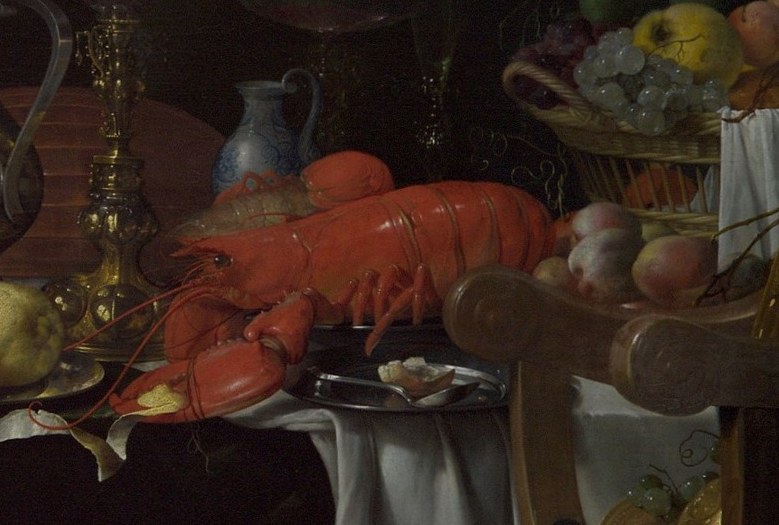
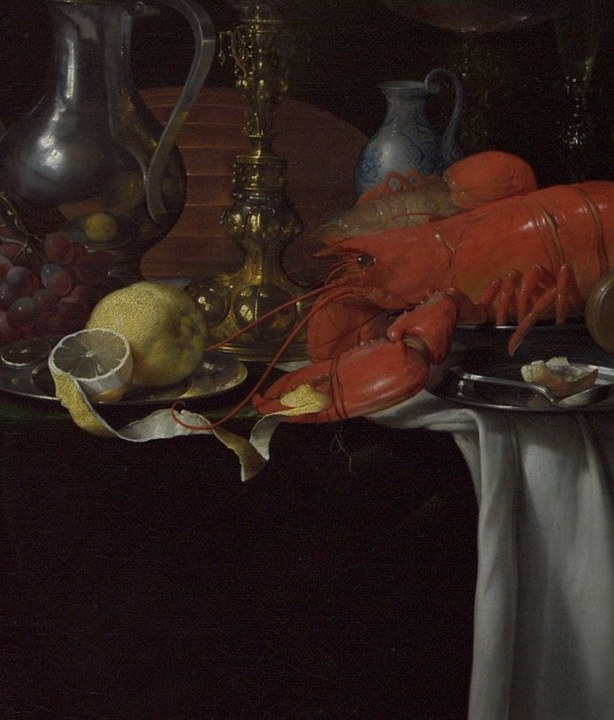
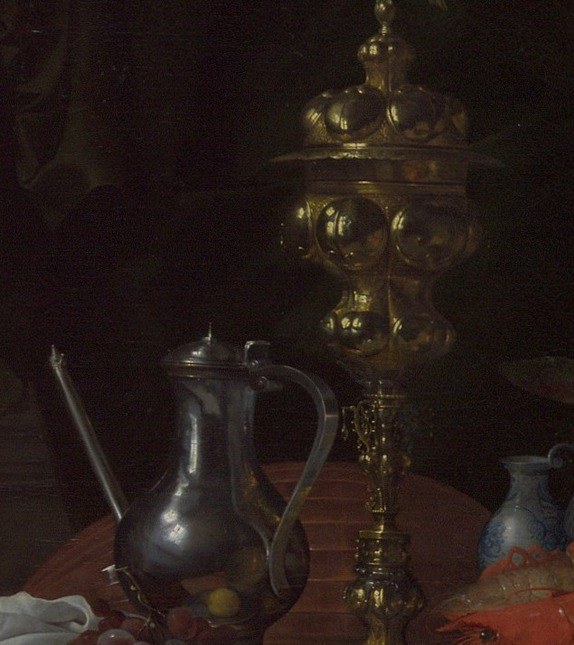
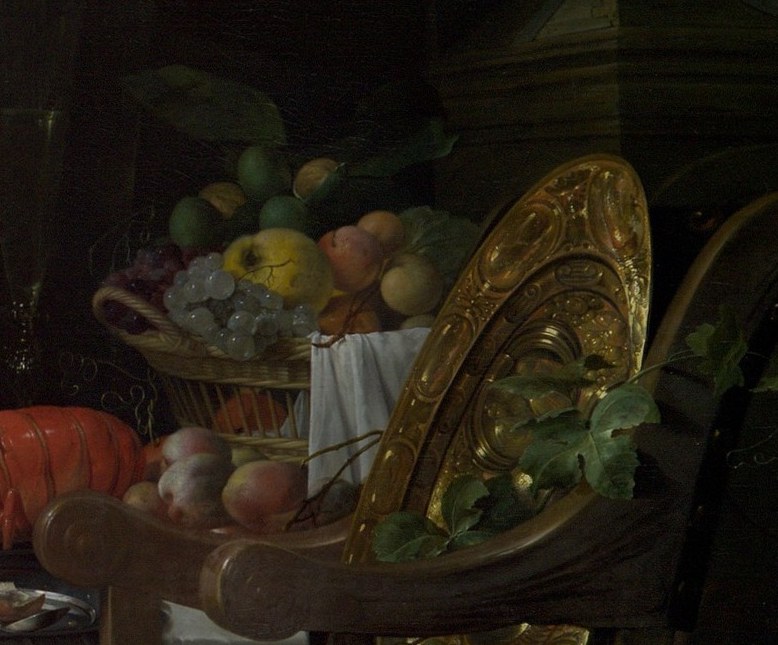
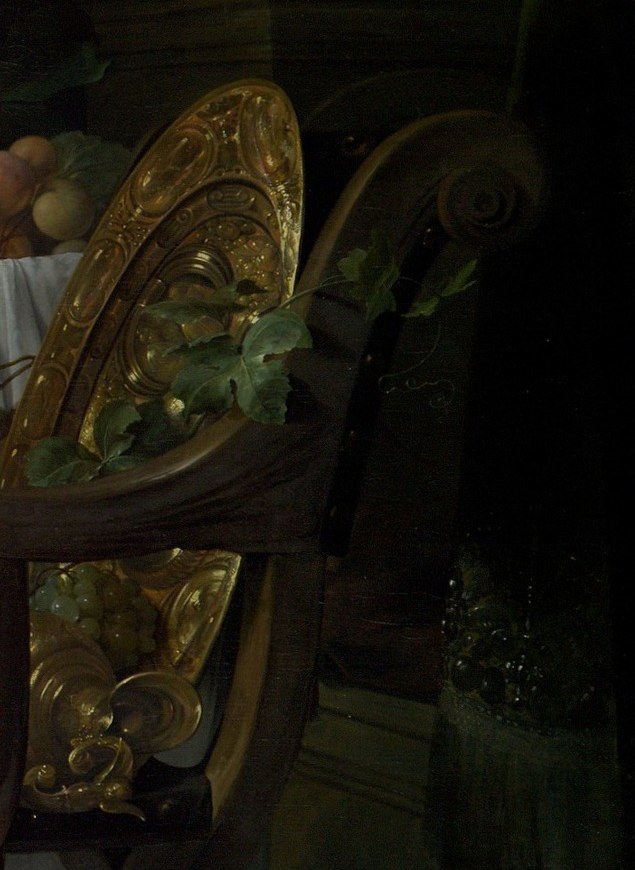
This is Jan Davidsz. de Heem's "Still Life: A Banqueting Scene," painted around 1640. It looks at first like a celebration of wealth: a brilliant red lobster, a gilded pitcher, and fruit spilling from a wicker basket. But there is one small, easy-to-miss detail that turns the whole painting into a warning.
Look at the left side of the table, just behind the gleaming pewter plate. A small dead bird lies there, nearly absorbed into the shadows of the dark background. It is not a cooking ingredient. It is there deliberately, nestled beside symbols of luxury.
De Heem was working in the Dutch vanitas tradition. These paintings piled up expensive objects, lobster, imported lemons, elaborate metalwork, only to slip in a quiet sign of mortality. A dead bird. A watch. A skull. The message was direct: all this abundance is temporary.
What is remarkable here is the restraint. The bird is not showy. You have to slow down and actually look. De Heem lets the feast dominate, trusting that the viewer who pays attention will get the real point.
#arthistory #dutchgoldenage #vanitas
Details
Transcript
A banquet fit for a merchant prince. Lobster, imported fruit, and a gilded ewer. Everything signals wealth and abundance. But Dutch still lifes are never just about the feast. Look at the left edge of the table. A dead bird lies beside the gleaming silver. This is a vanitas: a reminder that all pleasures end.