The Art Gallery of Jan Gildemeester Jansz by Adriaan de Lelie
View the artwork: The Art Gallery of Jan Gildemeester Jansz →
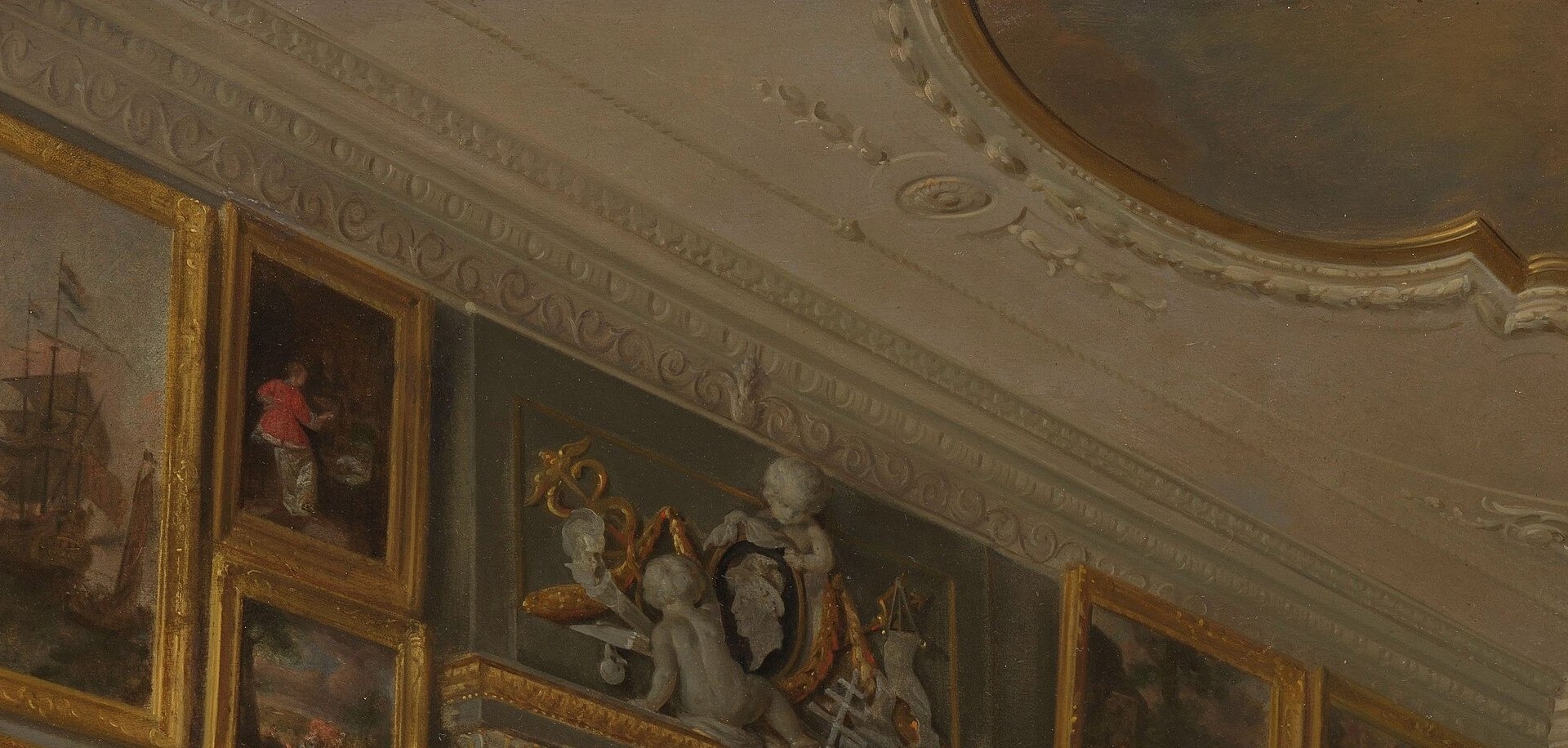
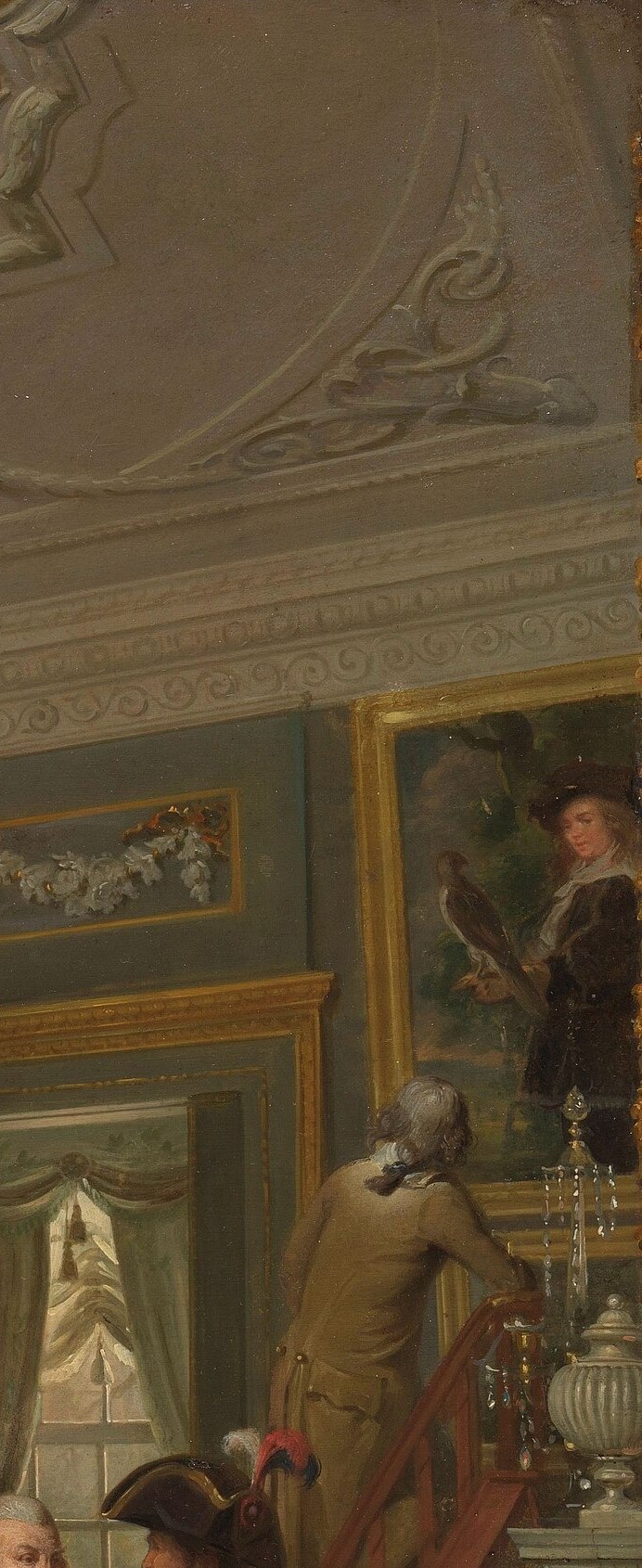
This is The Art Gallery of Jan Gildemeester Jansz, painted by Adriaan de Lelie in 1794-95, now at the Rijksmuseum. It is not a painting of a public museum. It is a private home on the Herengracht in Amsterdam, where a wealthy merchant turned two large rooms into a personal gallery, then had the whole thing documented in oil paint.
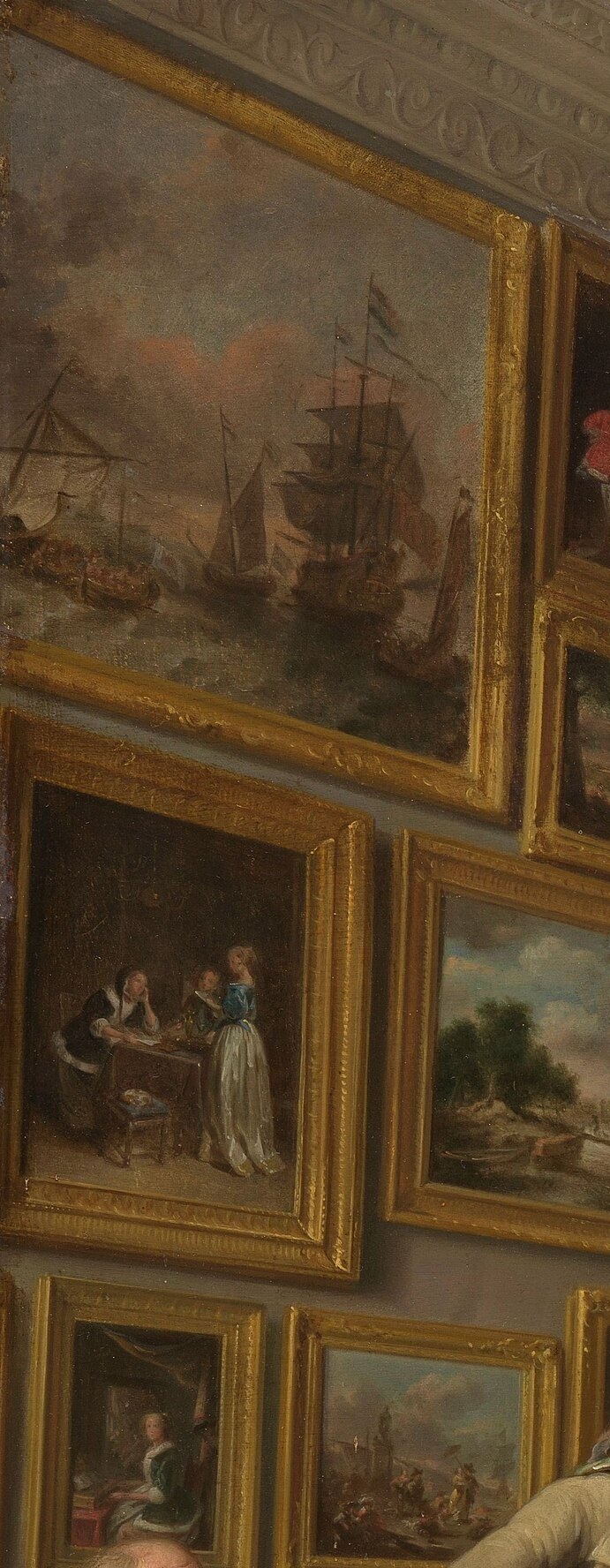
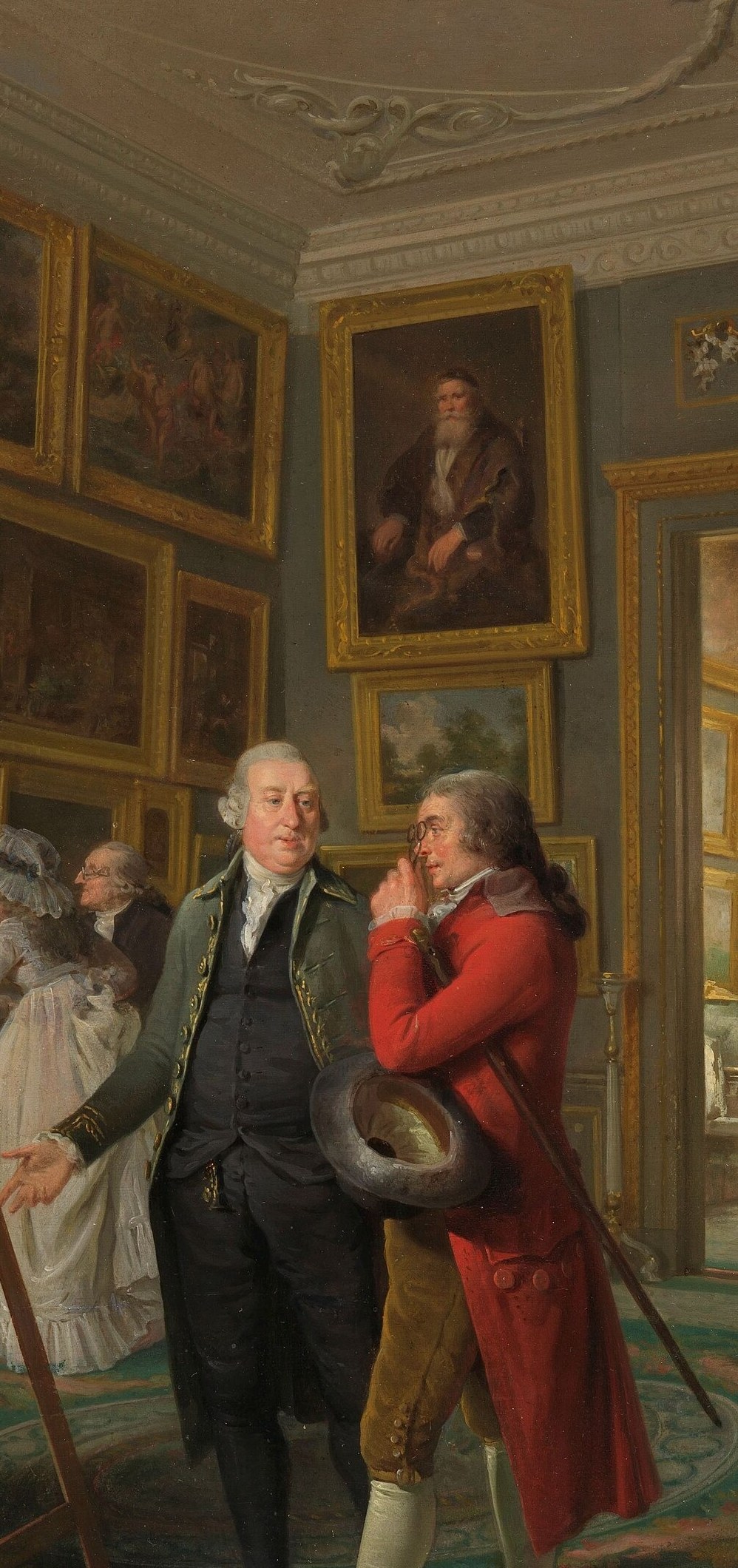
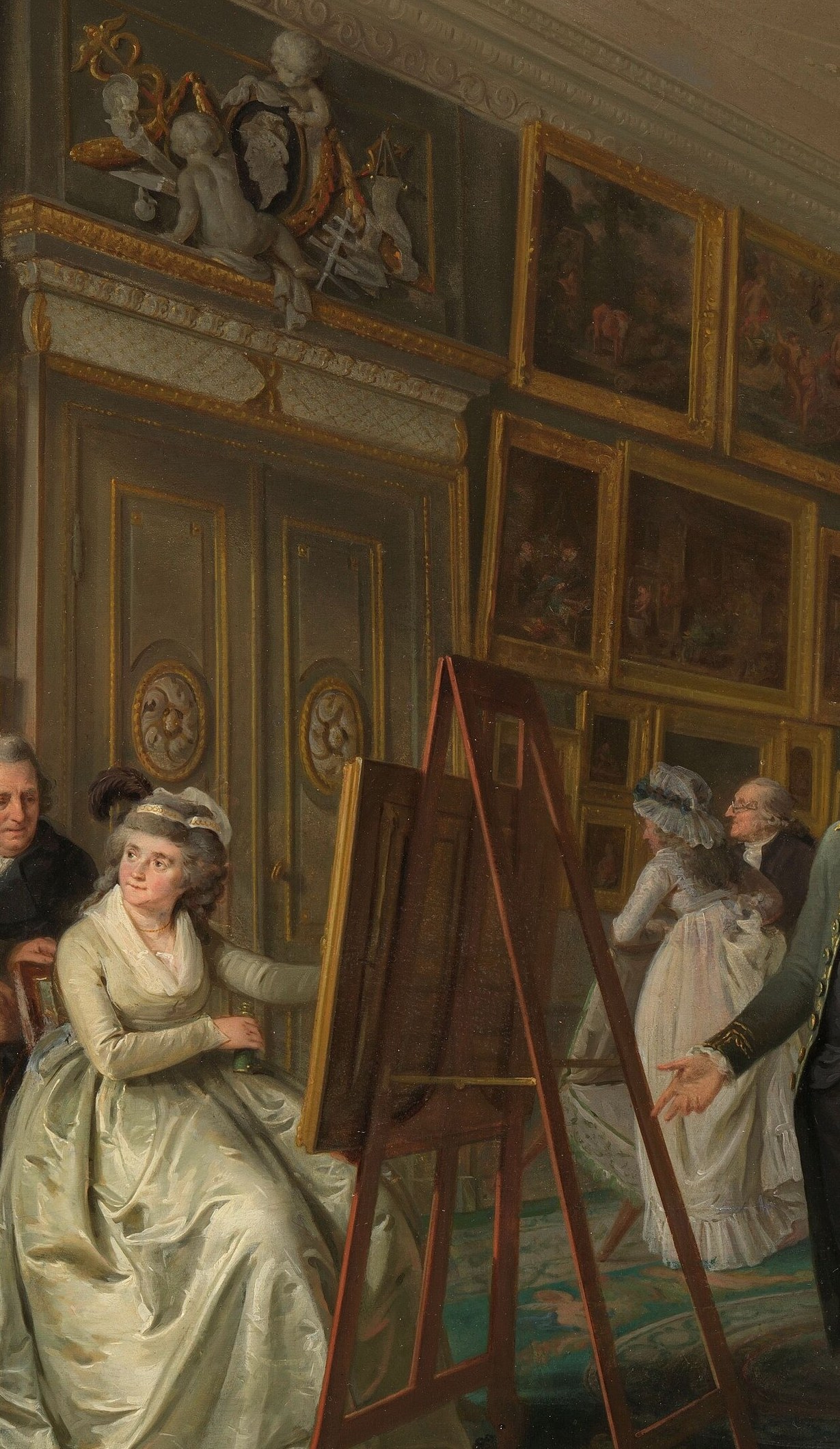
Look at the walls. The paintings are hung salon-style, frame to frame, floor to ceiling. That tight packing was not decorative. It was a language of connoisseurship: the denser the hang, the deeper the collection. On the left wall, scholars have identified specific Old Master works. A Rembrandt sits directly above the host's head, like a crown.
The man in the red coat is Jan Gildemeester Jansz, the collector. He stands at the center, presenting his holdings to bespectacled guests. And the painter, Adriaan de Lelie, wrote himself into the scene: he is the kneeling figure in the right foreground, watching the room. This is a meta-portrait. A painting of a gallery of paintings, with the painter inside it, painting you into the act of looking.
The late 18th century saw Amsterdam's merchant class transforming their homes into exhibition spaces. Art was capital, but it was also theater. A gallery like this existed to be seen seeing. De Lelie's picture is the final proof: the collection, the room, the social performance, all preserved together.
#arthistory #dutchart #rijksmuseum
Details
Transcript
This is not a public museum. It is a canal house in Amsterdam, 1794. The man in red is the owner. Jan Gildemeester Jansz. He had two rooms converted just for his paintings. Hanging floor to ceiling, salon-style, was the mark of a serious collector. Every frame tells a guest: look at what I own. The painter put himself here. Adriaan de Lelie, kneeling in the right foreground.