An interior of a barn with a scullery maid at a well by http://www.wikidata.org/.well-known/genid/dc5424b19fe34f2a112867767cc487c5
View the artwork: An interior of a barn with a scullery maid at a well →
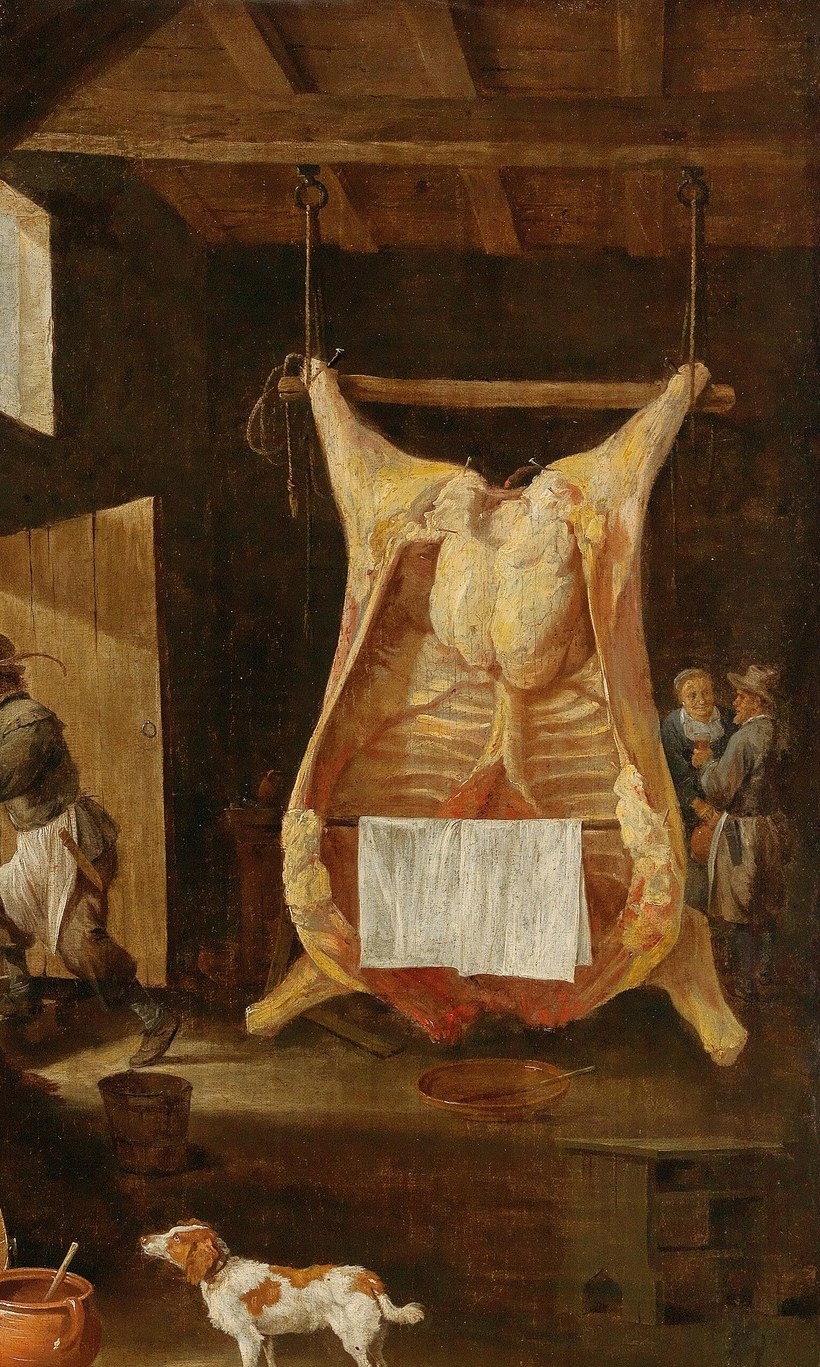
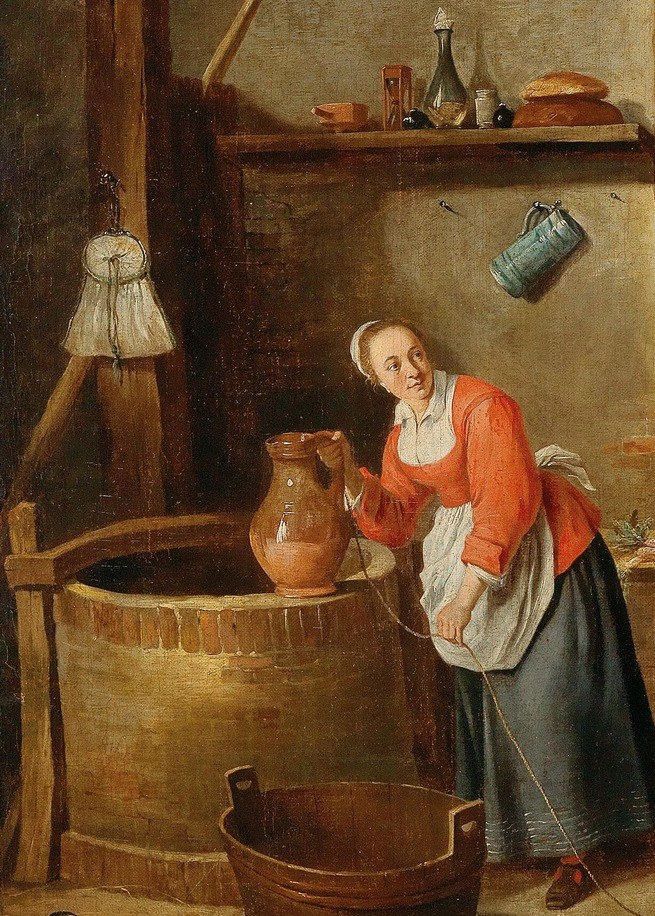
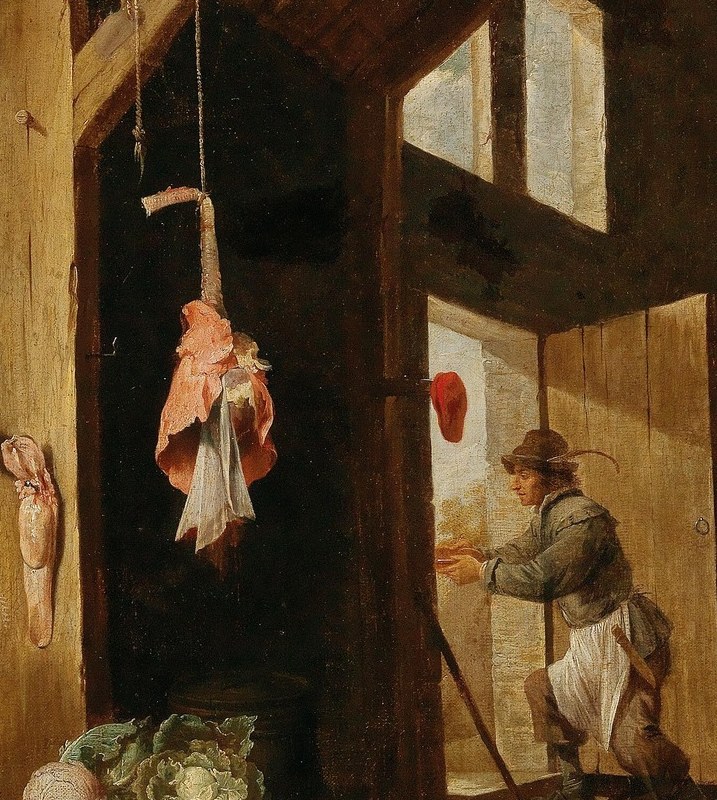
This is "An interior of a barn with a scullery maid at a well," painted around 1655 by an artist in the circle of Isaac van Ostade. It hangs at the National Galleries of Scotland. Its true subject is not poverty or piety, but the unvarnished economics of a working farm.
The eye goes first to the maid in her orange dress, but the painting's most revealing detail is nearly invisible on a phone screen. Pinned to the butchered pig at the right is a small scrap of paper. Look for it just above the exposed ribs. It is almost certainly a butcher's tally, a price, or a record of weight, stuck directly onto the product. With that single gesture, the scene shifts from a generic image of rural labor into a precise document of commerce.
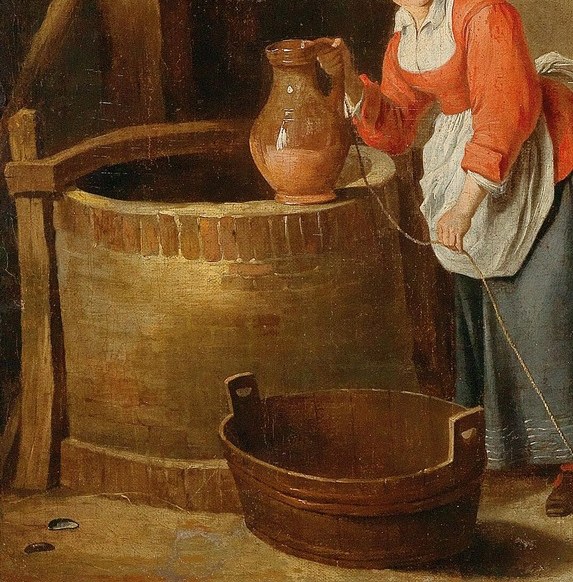
Dutch genre painting of this period often rewarded close viewing with exactly this kind of buried information, and this barn is dense with it. Beyond the tally, the upper-left shelves hold an inventory of household tools, each painted with enough specificity to be identified, while the earthenware vessels on the floor form a small still-life of period ceramics. The bright doorway in the back reveals a second worker, lit only by the outside light, turning the painting into a collective scene of work rather than a portrait of one woman.
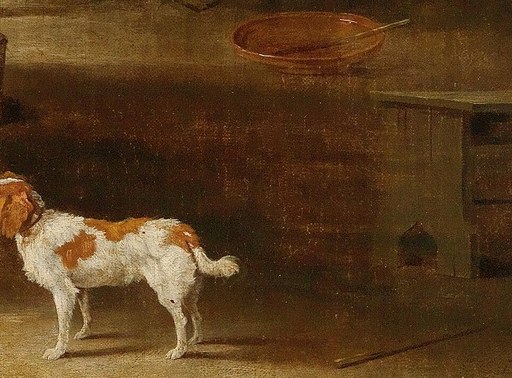
The carcass dominates the right third of the canvas, a Baroque vanitas object rendered with tactile attention to muscle and fat. Against it, the maid's modest domesticity creates a sharp but unforced contrast: two kinds of sustenance, two kinds of effort, sharing one dim space. The dog waiting patiently near the basket reminds us that animals inhabited both sides of this economy.
What other scraps of paper might be hiding in the corners of Dutch paintings?
#arthistory #dutchgoldenage #genre
Details
Transcript
A maid drawing water in a dark barn. Light picks out her quiet, work-worn face. Everyday seventeenth-century farm life, painted without sentimentality. A butchered pig hangs in the dark at the right. Its raw flesh is painted with almost clinical precision. But look closer. Pinned to the carcass is a small piece of paper. It is likely a butcher's tally. A price, pinned to the flesh. The scene is not a timeless pastoral. It is a transaction.