Sunrise in the Catskills by Cole, Thomas
View the artwork: Sunrise in the Catskills →
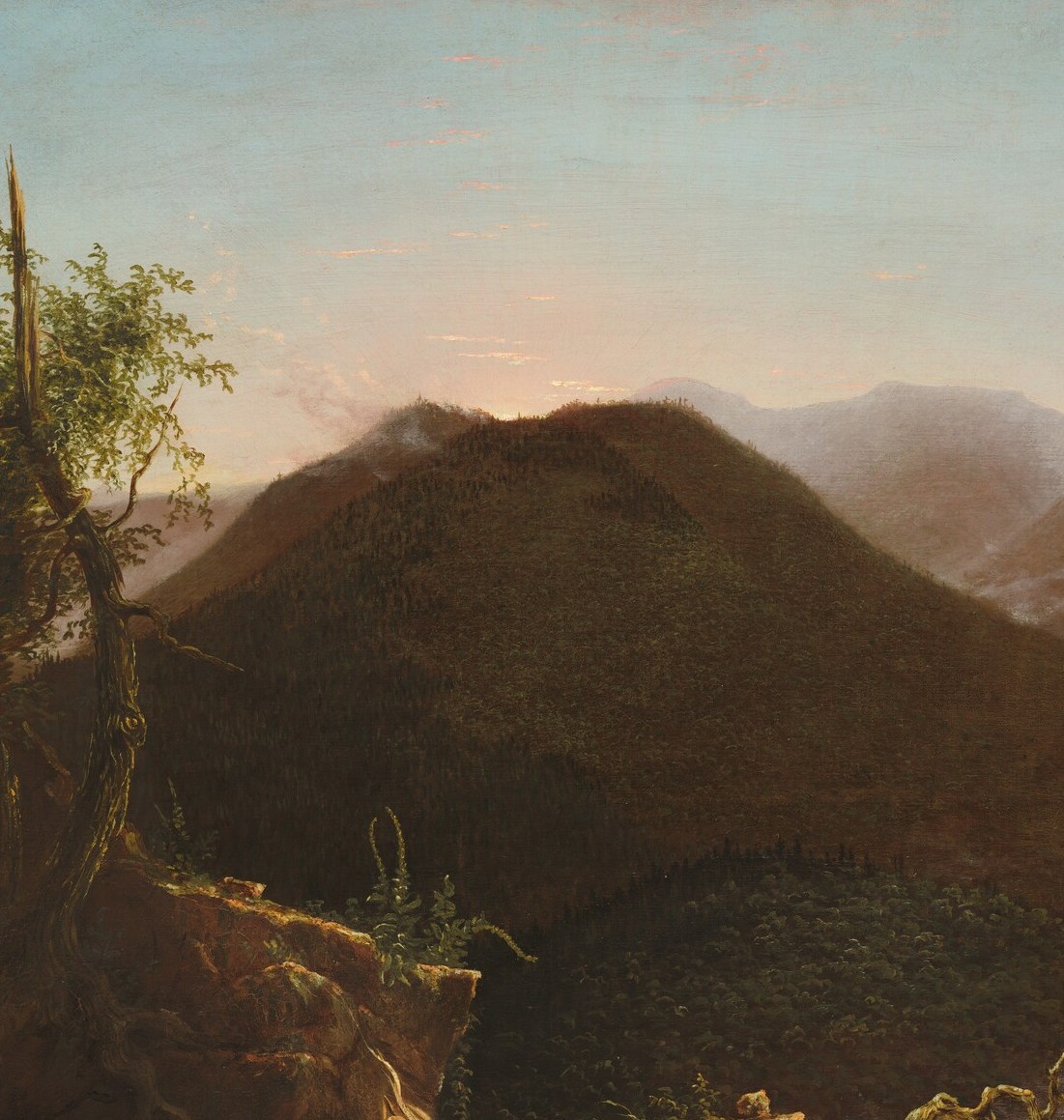
Thomas Cole painted "Sunrise in the Catskills" in 1826, not long after his family emigrated from Lancashire, England. He was 25 years old, and the American wilderness was a revelation. This canvas, now in the collection of the National Gallery of Art, is one of the foundational works of the Hudson River School, a movement Cole essentially invented by treating the native landscape not as raw property but as a source of moral and spiritual renewal.
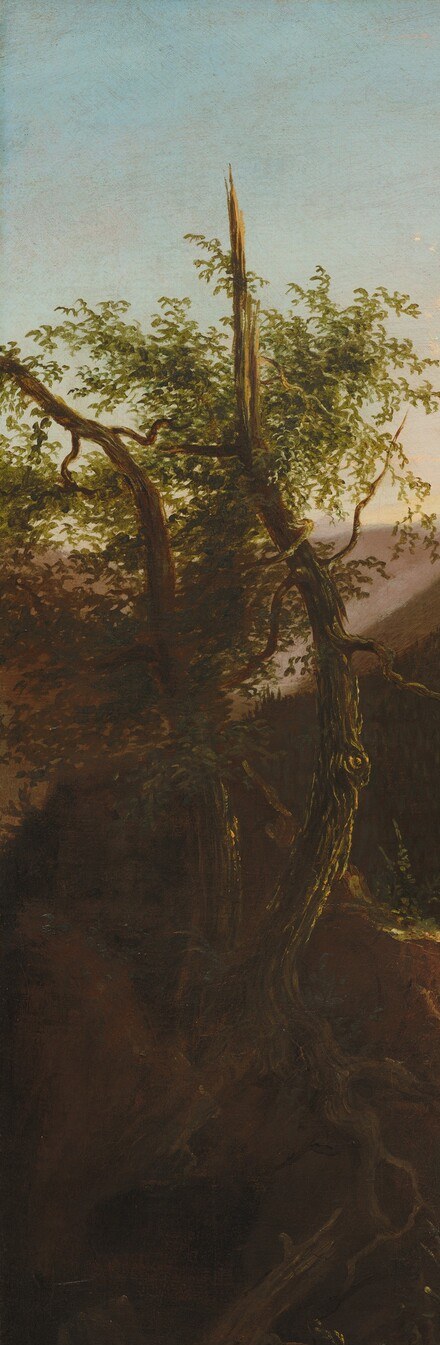
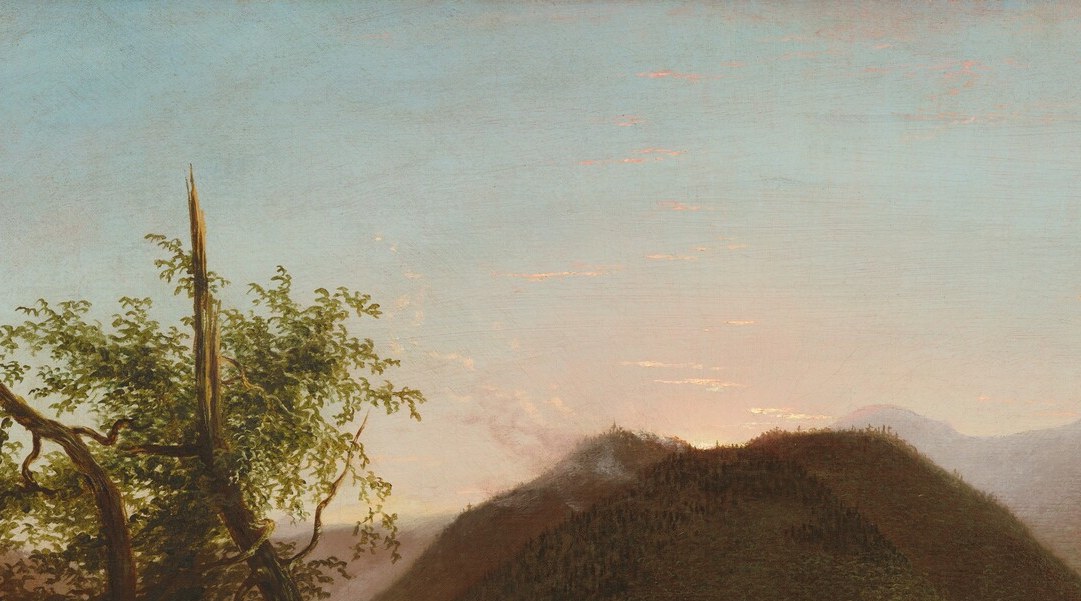
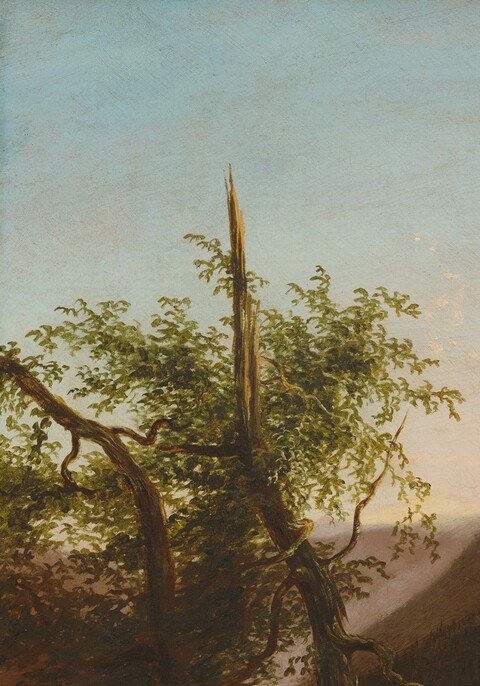
Look first at the foreground. A gnarled, leafless tree rises from the rocky terrain, a memento mori planted deliberately among living foliage. Cole used this life-death pairing repeatedly: the dead tree is not decay but a reminder that nature contains the full cycle of existence. From there, your eye moves down the valley corridor between the dark mountain masses, following the brightening mist toward a distant ridge where the sun crests the horizon.
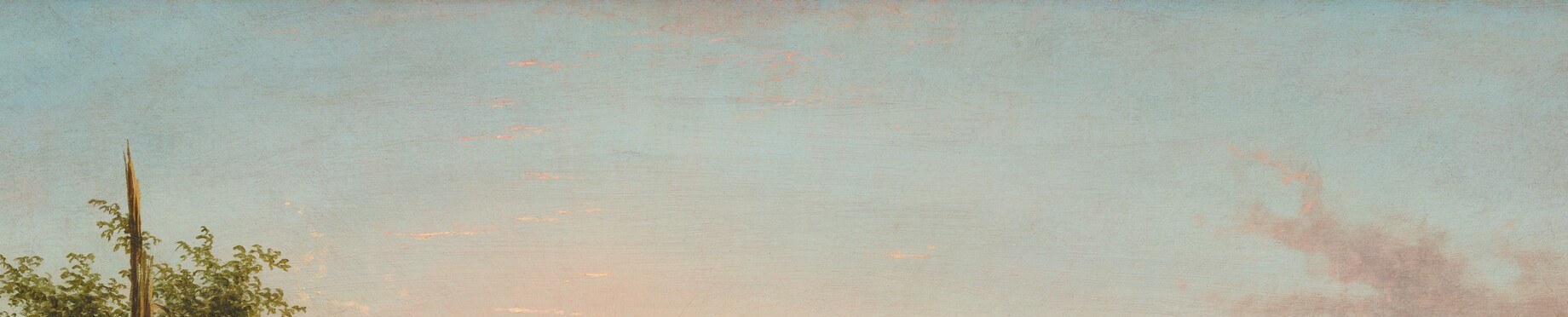
Cole sketched in the Catskills repeatedly during the 1820s, often hiking alone with a portable easel. He believed the American landscape deserved its own visual language, distinct from European pastoral conventions, and that a sunrise over these mountains carried the symbolic weight of a new beginning. The painting's atmospheric precision, warm light near the horizon cooling to violet overhead, shows his close study of civil twilight and aerial perspective.
"Sunrise in the Catskills" is not a documentary record. It is an argument, made in paint, that wild places can enlarge the human spirit.
#arthistory #hudsonriverschool #thomascole
Details
Transcript
Thomas Cole was 25 when he first saw these mountains. He had just arrived from England. He bought a sketchbook. A single dead tree holds the left side of the frame. Among the rocks, Cole painted mortality into the wilderness. The valley cuts a corridor straight through the dark peaks. Mist catches the first warmth of the new day. Now look at the precise line where darkness yields to light. This painting launched the Hudson River School: wilderness as a sacred place.