Christ Carrying the Cross by Poelenburch, Cornelis van
View the artwork: Christ Carrying the Cross →
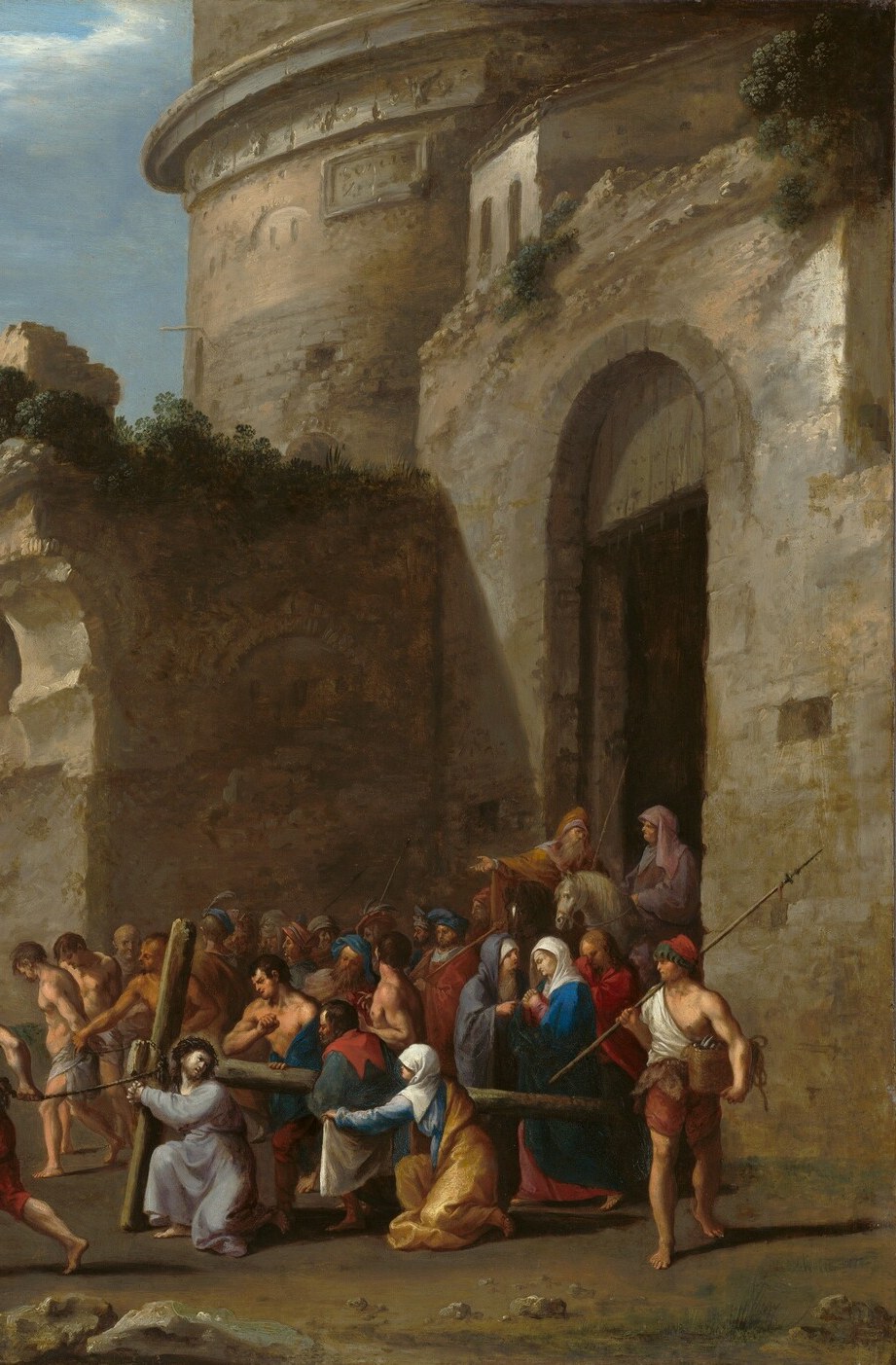
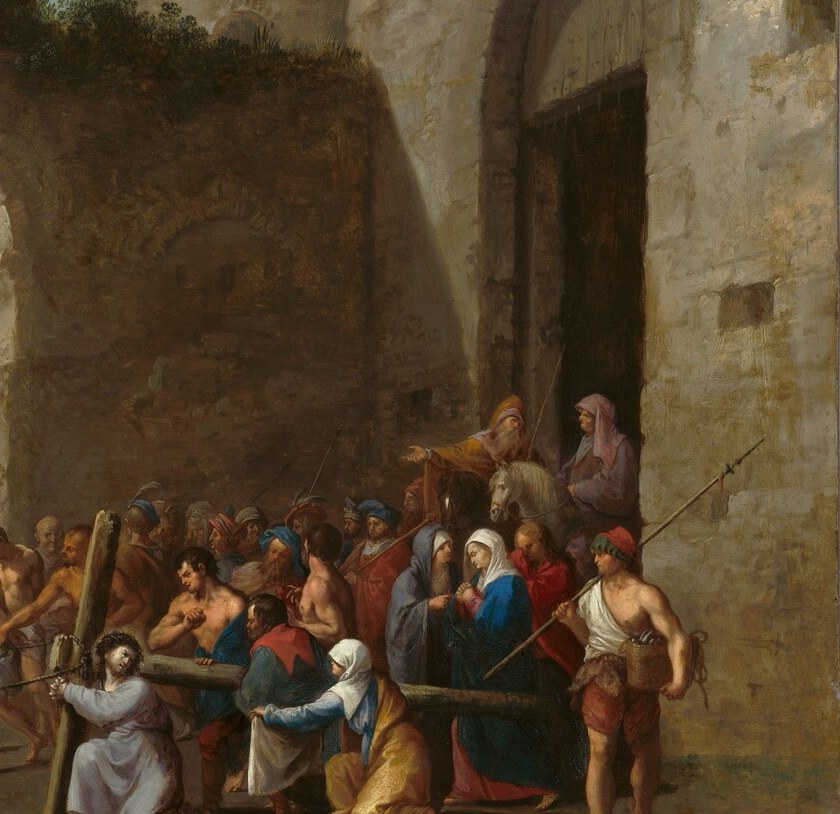
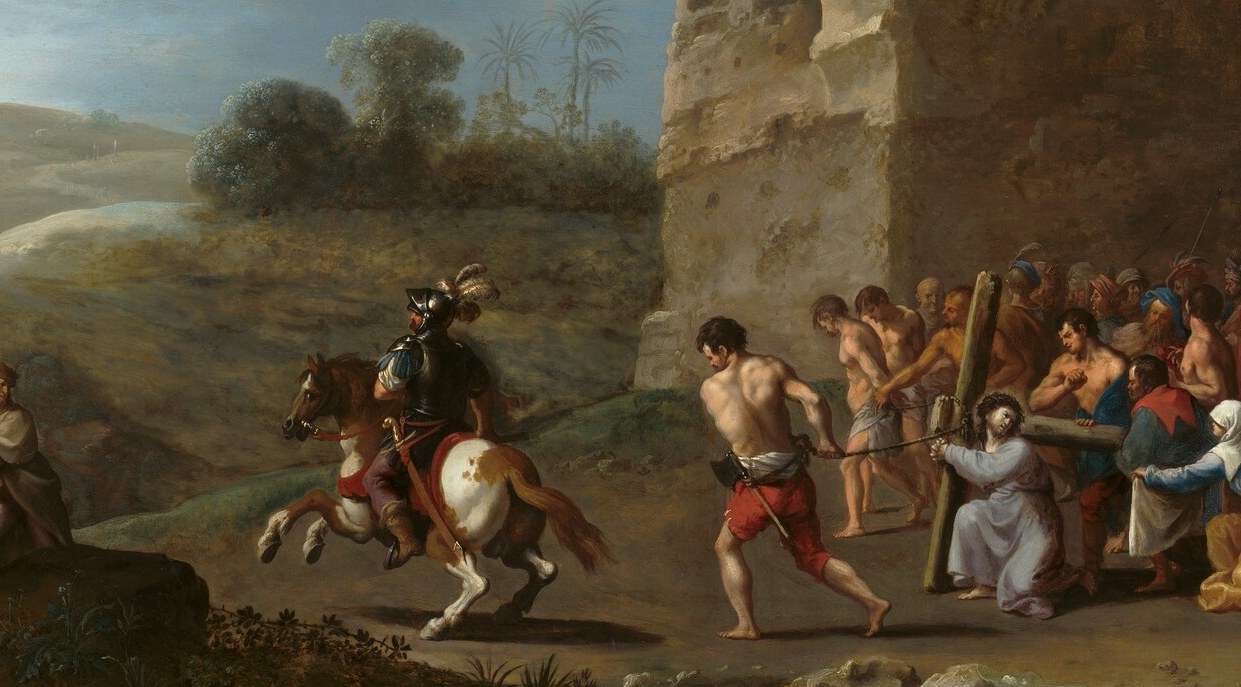
This tiny oil painting, Christ Carrying the Cross, was made in the early 1620s by the Dutch artist Cornelis van Poelenburch. It is painted on a sheet of copper, a technique prized for its ability to capture impossibly fine detail with a luminous, jewel-like surface.
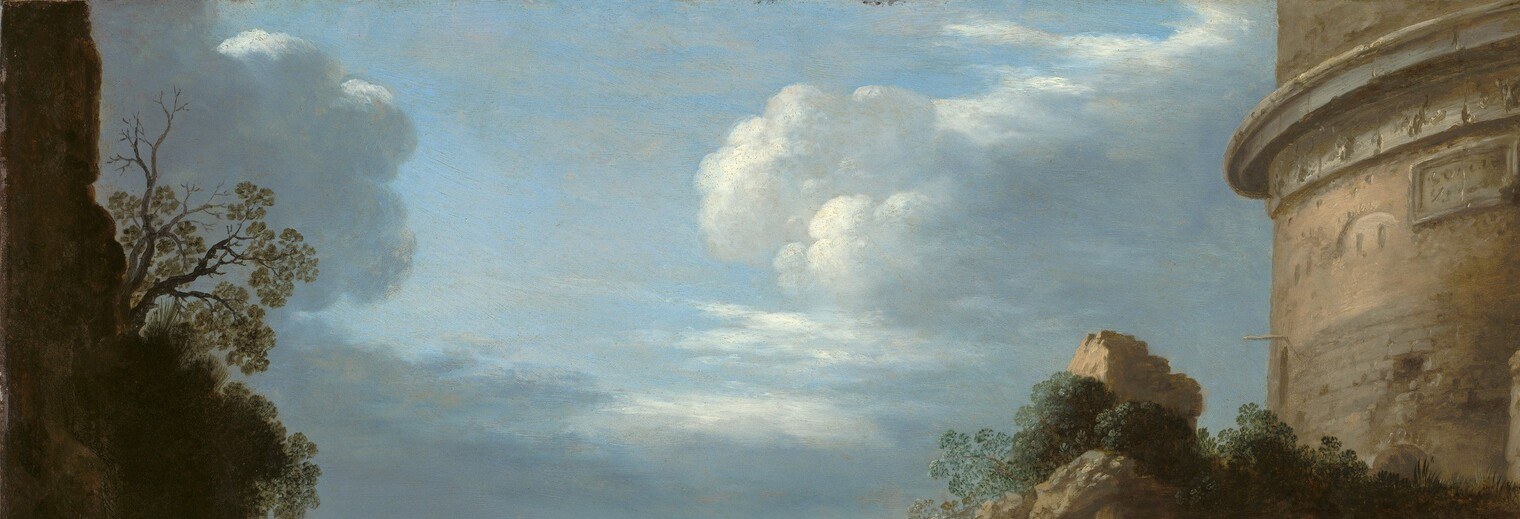
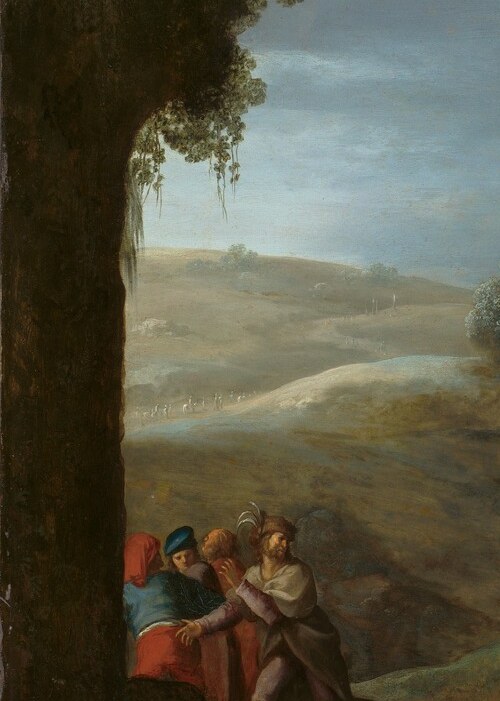
Look closely at the crowd and the landscape. Dozens of miniature figures fill the scene, but the real surprise is on the right. That curved, arched ruin is not a Jerusalem building, it is the Roman Colosseum. Look for its repeating arcaded bays and barrel-vaulted openings.
Poelenburch was a leading figure among the first generation of Dutch Italianates, artists who traveled to Rome and brought its landscape back to the Netherlands. By placing the Colosseum at the crucifixion, he made a deliberate theological argument: imperial Rome, which executed Christ, was also the empire that later converted. It was a common anachronism meant to show the victory of faith over pagan power.
The figures are so small that at a normal gallery distance, the Colosseum can vanish into a generic ruin. But on copper, every single stone block is preserved. What other details can you find in the arcades and the distant hills?
#arthistory #dutchgoldenage #poelenburch
Details
Transcript
You might think this is just another crowded crucifixion scene. Painted in the 1620s on a sheet of copper, it rewards looking very closely. There is Christ, bent under the wooden cross. Roman soldiers on horseback drive the procession forward. But now look at the right half of the painting. That is not a Jerusalem building. It is the Roman Colosseum. Poelenburch set the Crucifixion inside pagan Rome on purpose. Empire and sacrifice, literally painted into the same tiny scene.