Judith with the Head of Holofernes by Lucas Cranach the Elder
View the artwork: Judith with the Head of Holofernes →
This is Lucas Cranach the Elder's 'Judith with the Head of Holofernes', painted around 1530. It is not a narrative scene. There is no tent, no drunken general, no maid waiting with a sack. Cranach stripped everything away until only two things remained: a composed woman in astonishing clothes, and the dead man she is holding by the hair.
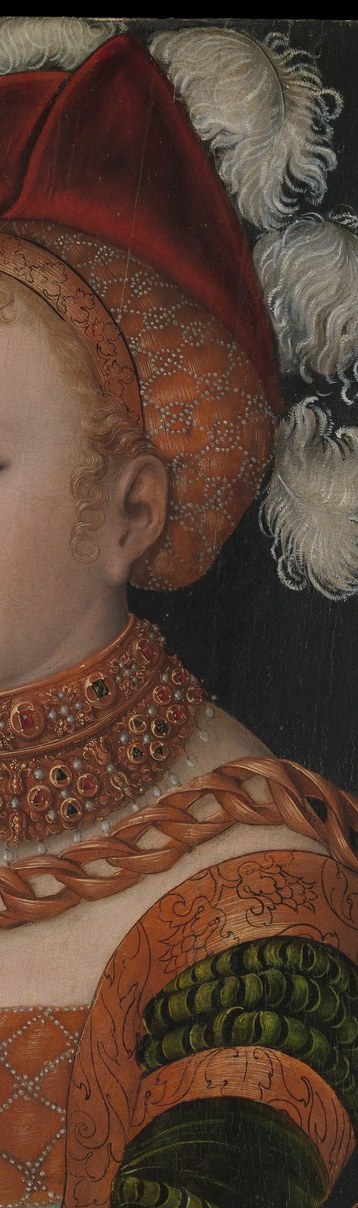
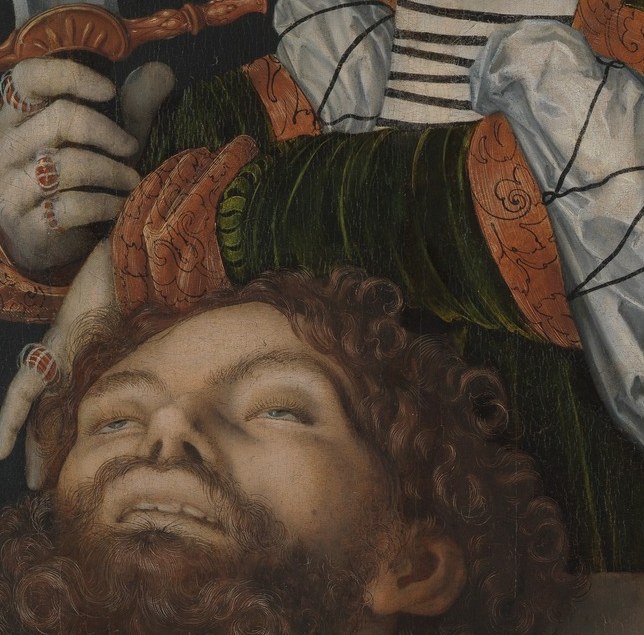
The first thing to notice is the background. It is a featureless, dark olive void. That choice is the whole technical gamble of the painting. With no landscape or interior to distract you, every brushstroke on the figure must carry the illusion by itself. Look at the fur collar at her throat: soft, warm, almost downy against the skin. Then the necklace: individual pearls built from tiny white highlights on a grey sphere. Then the slashed sleeves, where green velvet parts to show a red underlayer pulling through. Each material requires a completely different handling of paint, and they sit directly next to one another.
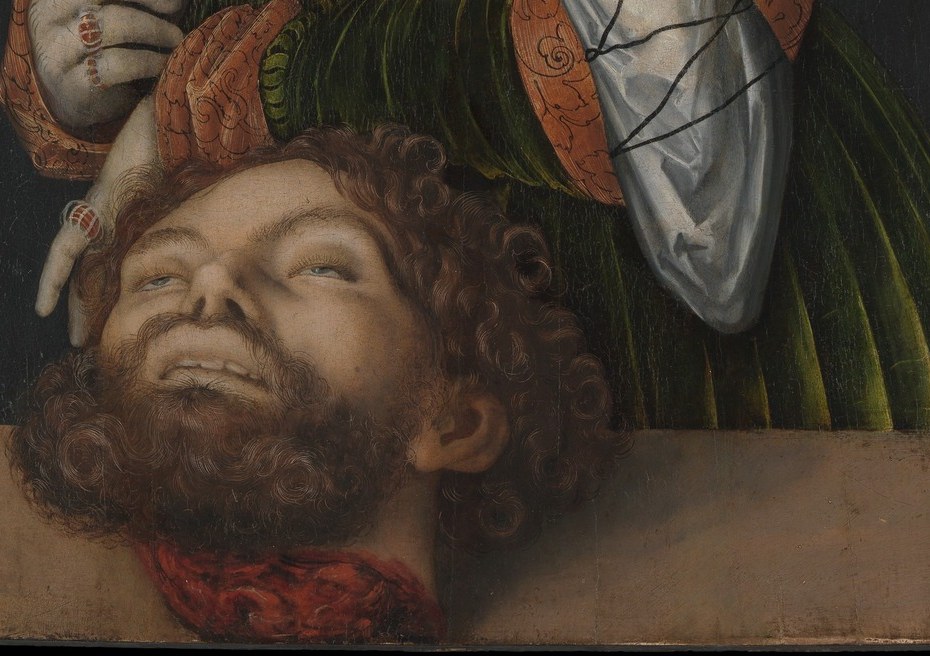
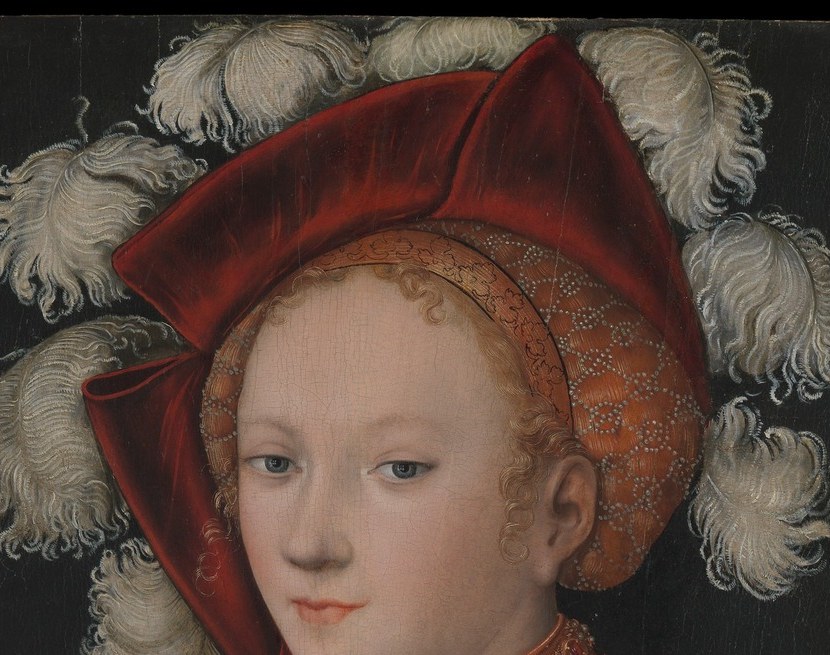
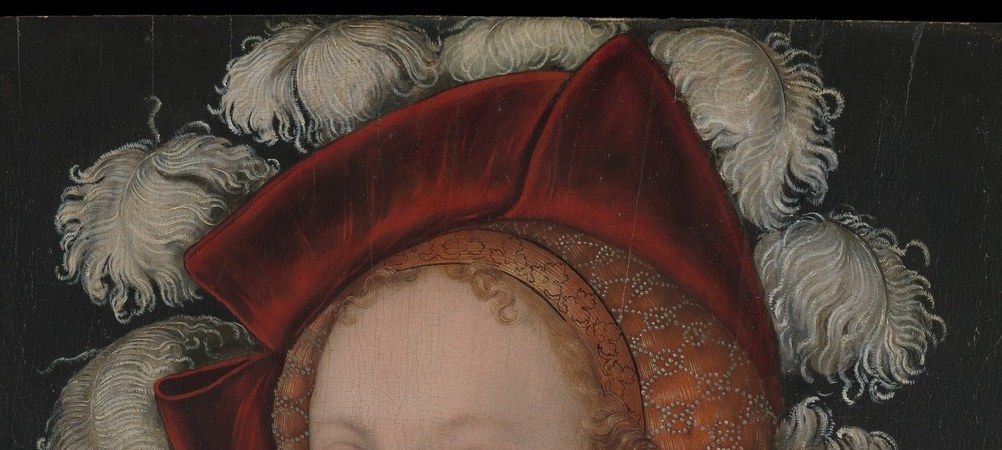
The blade of the sword is the quietest and most confident touch. It is not bloodied. It catches light along its edge and bisects the composition cleanly. Below it, at thigh level, is the severed head of Holofernes. His hair is rendered in dry, matted strokes, a deliberate contrast to the glossy feathers in Judith's hat. His eyes are half-open, glazed. They still catch light, and they seem to look back at you. That detail implicates the viewer in a way the story alone does not.
Cranach was court painter to the Electors of Saxony and a close friend of Martin Luther. His Judith is not a historical reconstruction. She wears the slashed sleeves, feathered hat, and layered necklaces of a 16th-century German court lady. The painting collapses biblical time into contemporary fashion, making the moral lesson immediate and local. The cruciform shape of the sword hilt, held at her waist, is probably not accidental: the instrument of salvation, shaped like a cross, held by a woman who saved her city.
When you look at this painting, notice that no texture repeats. Fur, pearl, velvet, steel, feather, hair, and skin all demand separate techniques, and Cranach never blurs the boundary between them. Can you find the faint tonal shift at the right edge that hints at a wall, the single concession to an interior?
#arthistory #lucascranach #renaissancepainting
Details
Transcript
No landscape. No background. Nowhere for the painter to hide. Against that void, Cranach had to differentiate every single surface. Soft fur at the throat, painted so you feel the warmth of the body beneath it. A bejeweled necklace, each pearl a tiny sphere of reflected light. Slashed velvet sleeves: the green top layer, the red underlayer pulling through. The cold gleam of a steel blade held upright, still catching light. Cranach was a court painter. He dressed biblical heroines in the fashion of his own patrons. All this luxury, and then paint must become coarse, matted hair on a dead man's head.