L'Arlésienne by Vincent van Gogh
View the artwork: L'Arlésienne →
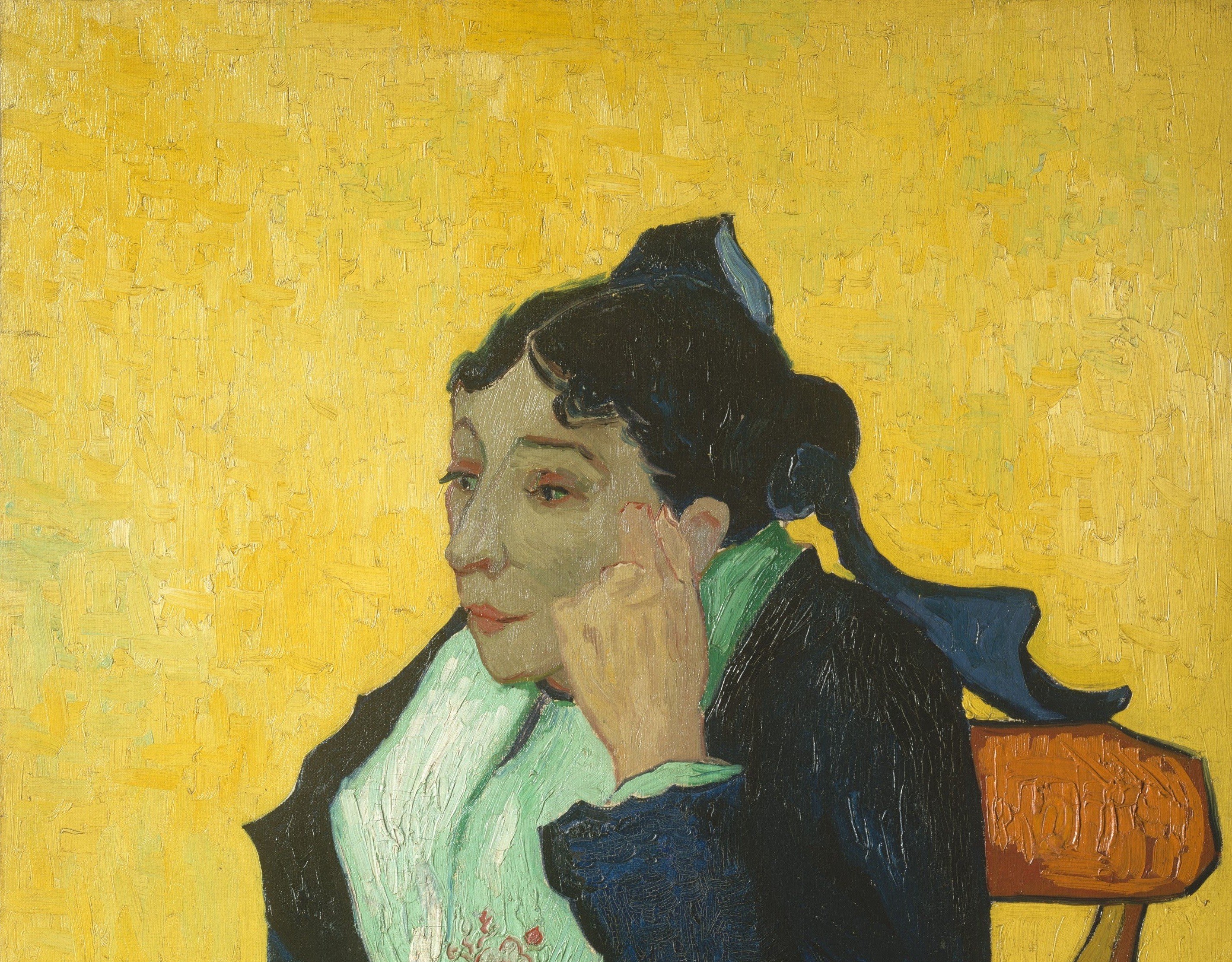
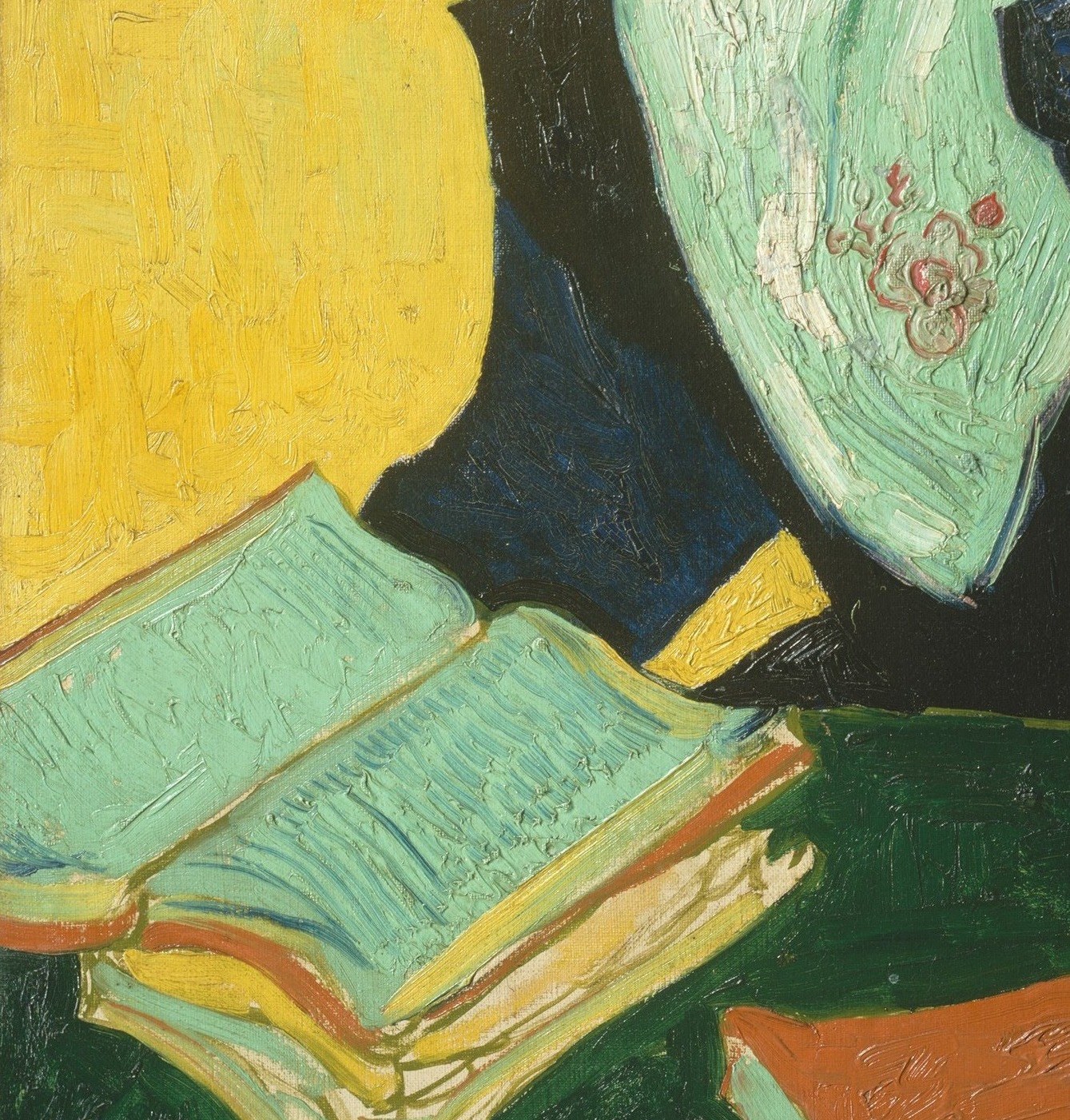
This is L'Arlésienne, painted by Vincent van Gogh in 1888. It hangs in the Musée d'Orsay in Paris. The title simply means 'the woman from Arles,' and most visitors see a quiet portrait of a local woman seated with a book. But painted onto the open pages is a detail so small it rarely gets noticed.
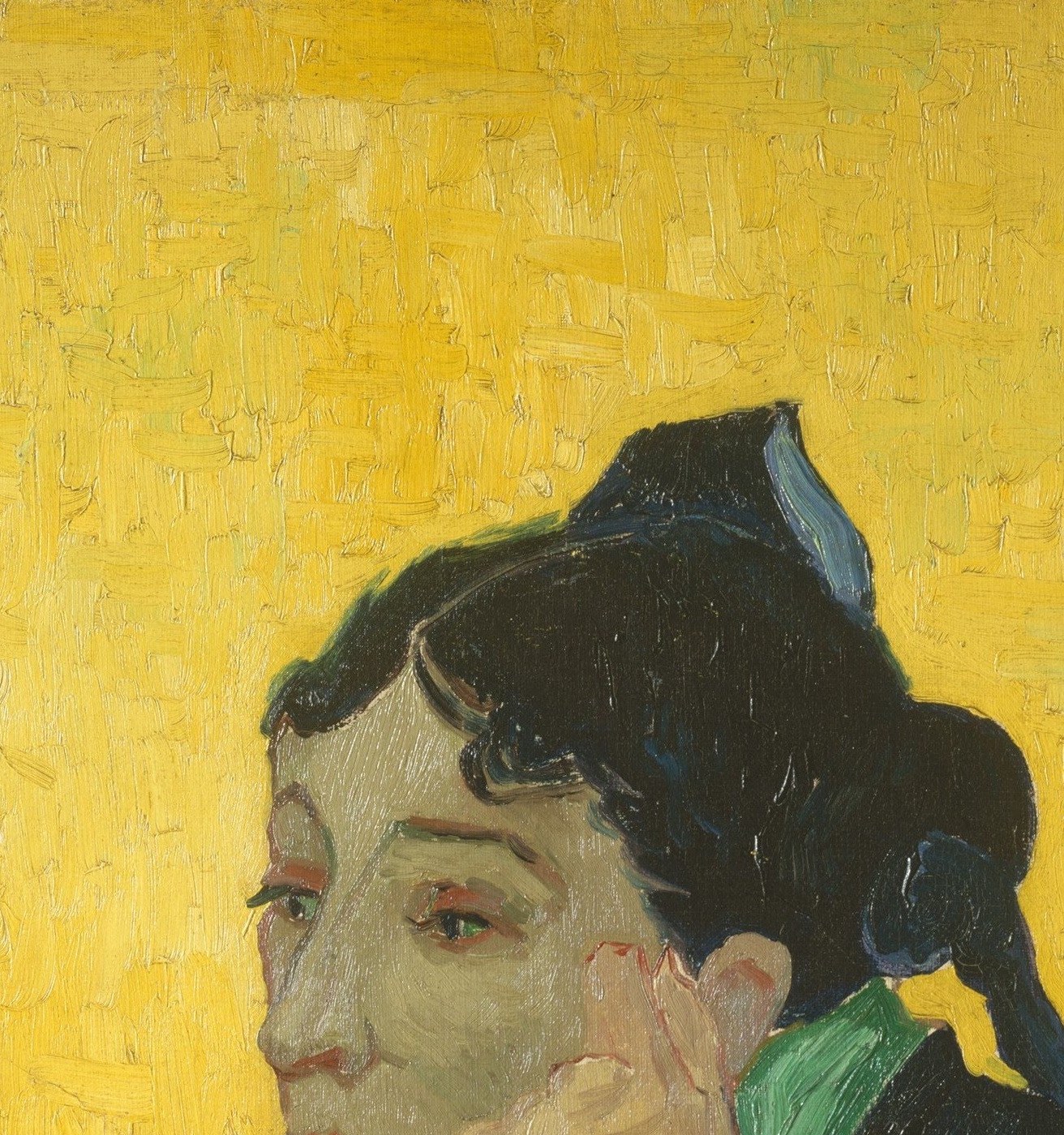
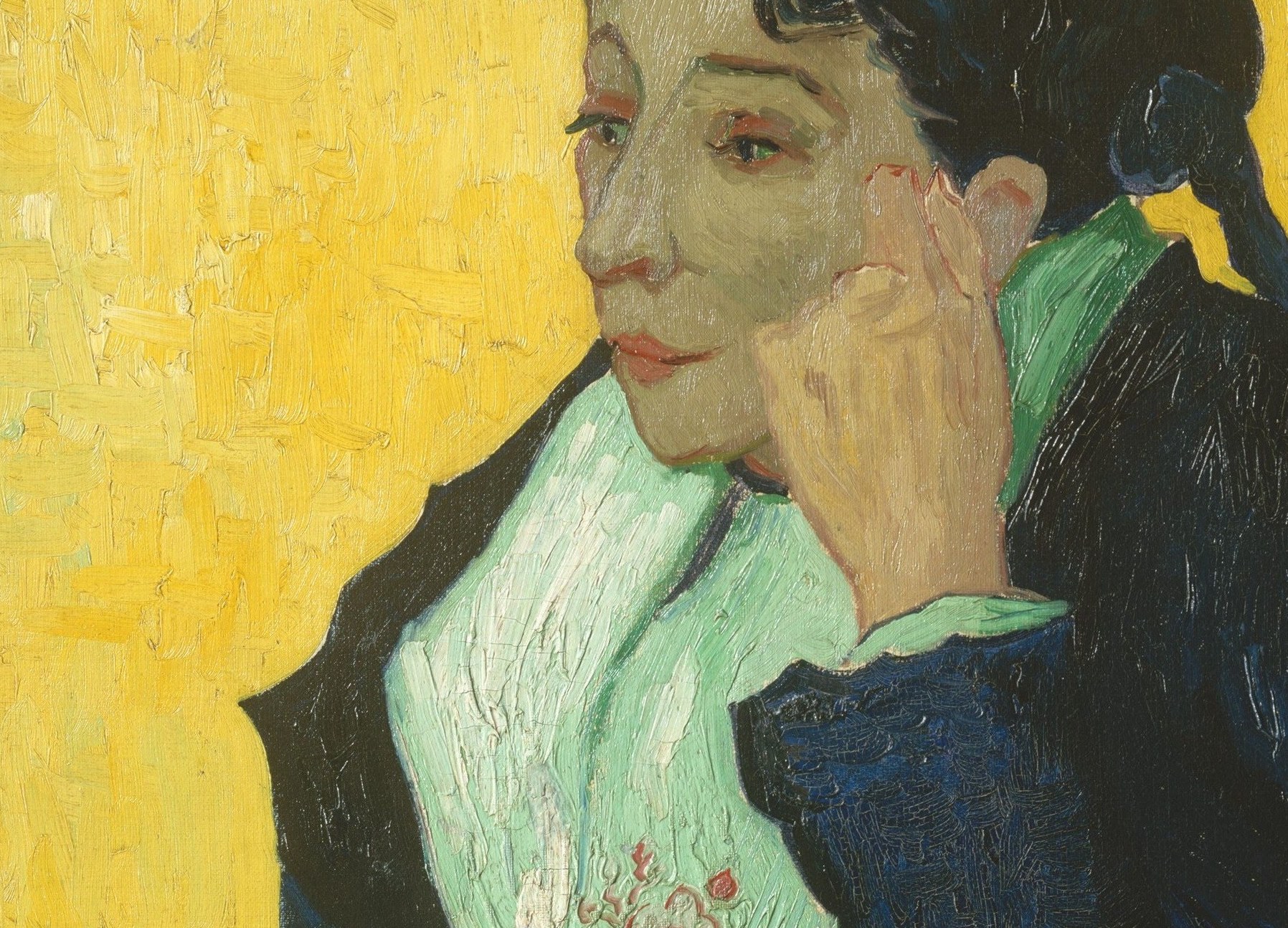
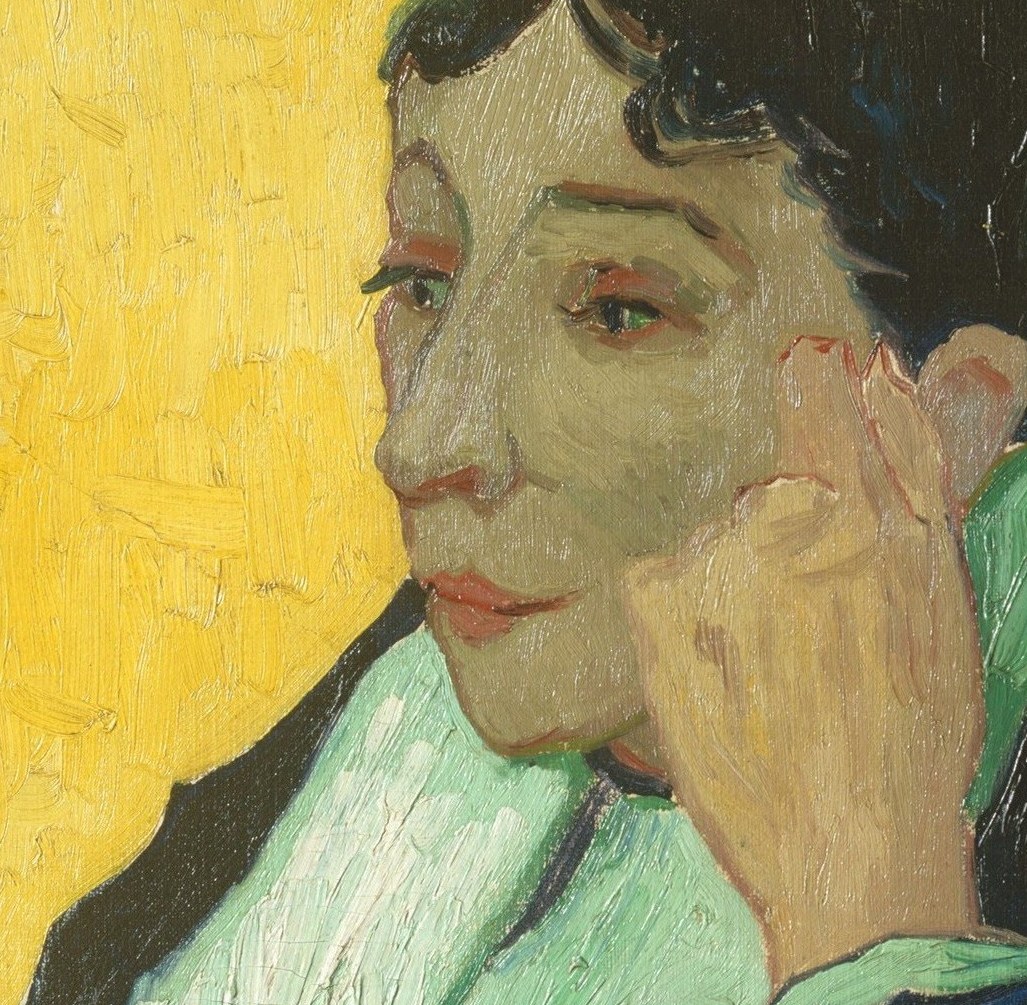
The woman is Marie Ginoux, the wife of a café owner Van Gogh knew well. She sits in her dark dress and green shawl beside a table with two books. Her face is calm, her posture still. But the real surprise is on the page of the open book.
Look closely at the cream-colored spread. Van Gogh painted tiny strokes of dark paint that form actual words. They are legible enough to identify the text: it is a French translation of Charles Dickens's 'A Christmas Carol,' specifically the ghostly Christmas story within it. Van Gogh read Dickens avidly and wrote to his brother Theo about his love for the English novelist's work.
A portrait that seems to be about stillness has a hidden story inside its pages. Next time you see this painting in the gallery, look at the book. What other details might you have scrolled past?
#arthistory #vangogh #postimpressionism
Details
Transcript
She looks like a woman reading in a quiet room. But this is not just any woman. She is the mother of Van Gogh's friend, painted in Arles in 1888. She sits beside two books. One is open. Now look closely at the book's pages. On the open page, Van Gogh painted actual words. They are legible: a Christmas story by Dickens.