The Sisters by Morisot, Berthe
View the artwork: The Sisters →
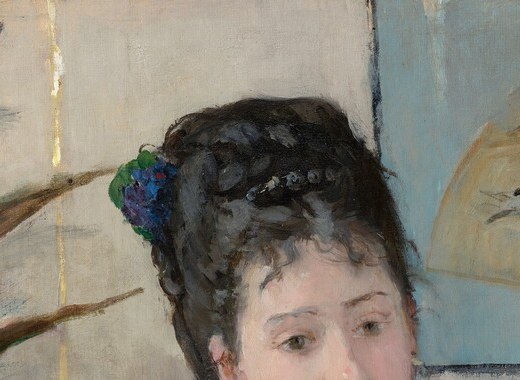
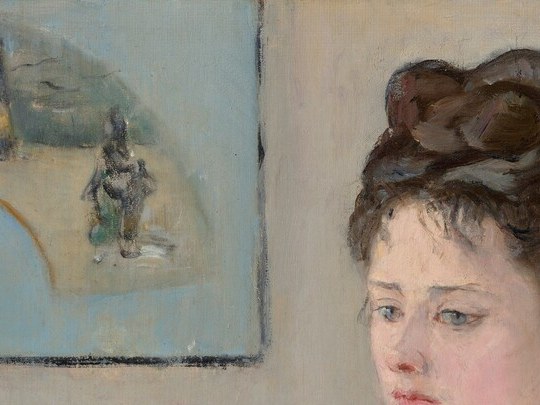
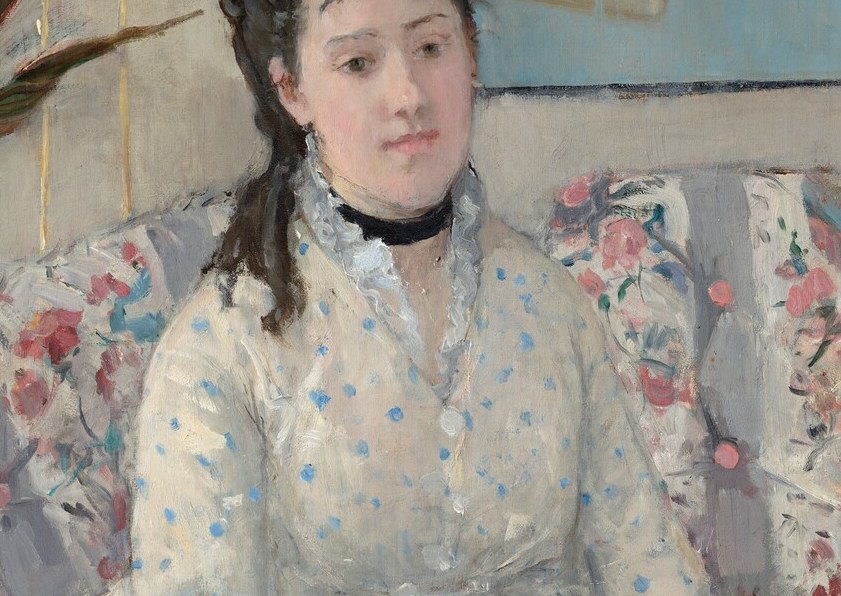
Berthe Morisot painted "The Sisters" in 1869, five years before the first Impressionist exhibition. The painting shows the artist with her sister Edma, and it hangs today as a record of a private world. This is an early work, but it already carries the DNA of what Morisot would become.
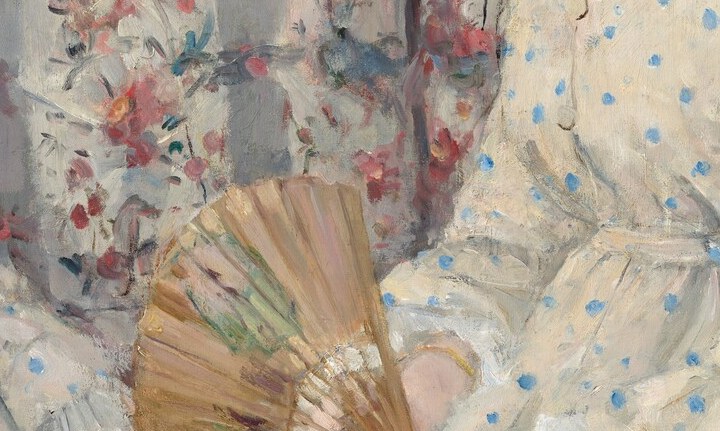
The first trick lives in the white dotted dresses. Where Edma's dress meets the floral sofa, the pattern stops being dress and starts being upholstery. Morisot lets the short, loose strokes flicker between fabric and furniture, a deliberate blur that dissolves a hard edge into pure light and movement. The folded fan in the other sister's lap is built the same way: a few quick marks that read as ribs and silk only when you step back.
Morisot was twenty-eight. She had already shown at the prestigious Paris Salon, but within five years she would throw her lot in with the "rejected" group, Cézanne, Degas, Monet, Renoir, and become the only woman in the first Impressionist exhibition of 1874. Art critic Gustave Geffroy later named her one of "les trois grandes dames" of Impressionism.
Next time you see a late Morisot figure dissolving into a garden, remember that the technique was already here, indoors, on a quiet sofa.
#arthistory #impressionism #berthemorisot
Details
Transcript
Two sisters in white. A quiet moment in 1869. The painter is Berthe Morisot. The woman reading is her sister Edma. Her dress dissolves. The white dots flicker into the sofa's flowers. Five years before the first Impressionist show, she is already painting light itself. The only dark note in the whole picture: her sister's black hat. Look at the fan. Loose, quick strokes. Her hand is barely suggested. She would go on to defy the Salon and become the first woman to exhibit with the Impressionists.