Virgin and Child by Joos van Cleve
View the artwork: Virgin and Child →
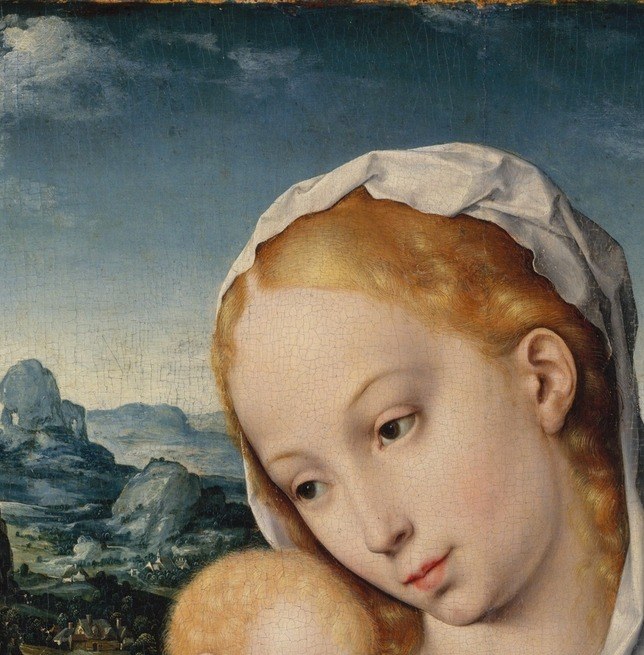
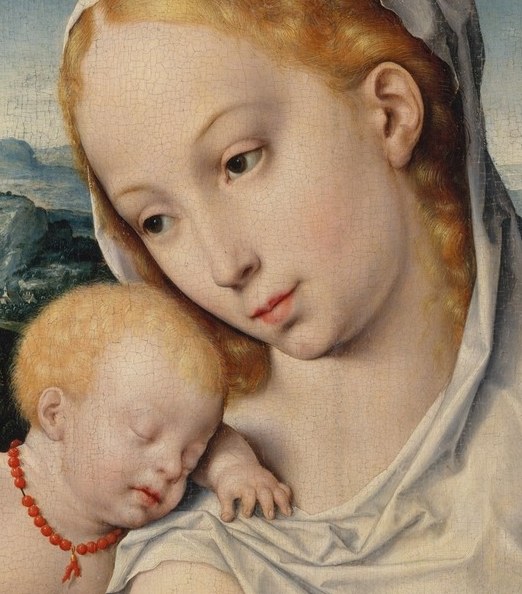
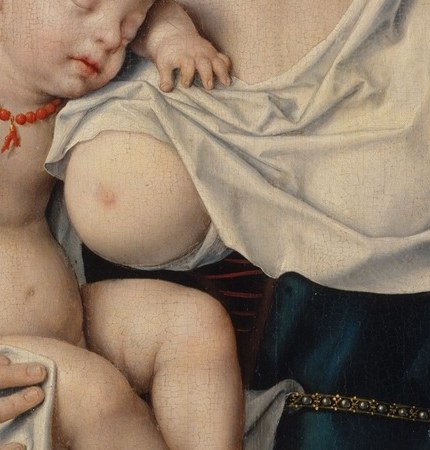
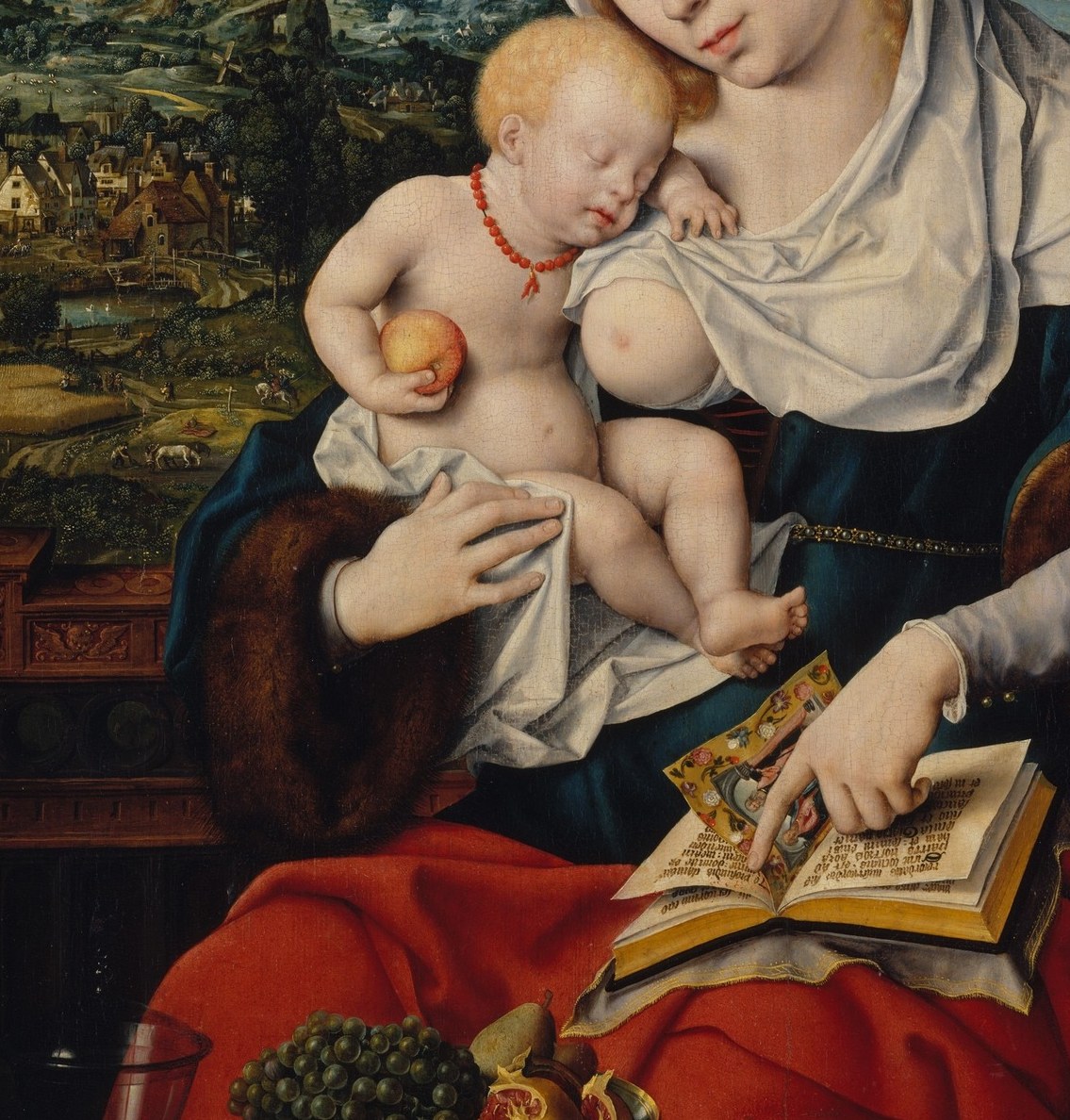
This is Joos van Cleve's Virgin and Child, painted in Antwerp around 1525. On its face, it is a tender domestic scene: a mother reads while her infant turns toward us. But every object on that table and in their hands is a word in a visual language that a sixteenth-century viewer would have recognized instantly.
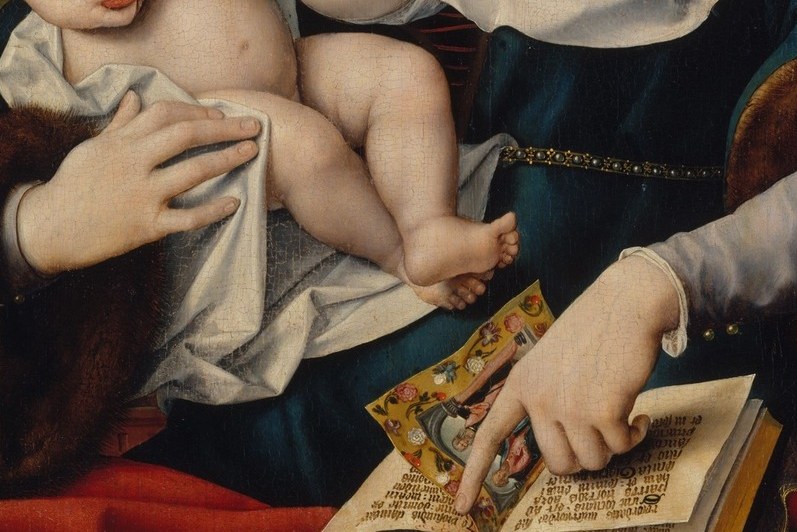
Start with the apple in the Christ Child's hand. It is not a generic piece of fruit. It is the fruit of the Tree of Knowledge, the symbol of Adam's sin. By holding it himself, the infant signals his future role as the second Adam who undoes the Fall. Beside it, on the table: a gilded chalice and a cluster of grapes. Together, they prefigure the wine and the vessel of the Eucharist, Christ's blood, still decades away, already present in code. The open book on Mary's lap completes the argument: she is the Seat of Wisdom, the fulfillment of Old Testament prophecy.
Van Cleve was a master of the Northern Renaissance, a leading painter in Antwerp and co-deacon of its Guild of Saint Luke. His workshop produced religious works and portraits across a wide stylistic range, but his gift here is the marriage of Flemish naturalism with theological precision. The blue of Mary's gown is ultramarine, the red vermilion, the two most expensive pigments of the day, a deliberate material tribute. The landscape through the window places a biblical scene in a recognizable Flemish countryside, making the story intimate and local.
Painted on the eve of the Reformation, an image like this carried real weight. Every detail had to be legible and theologically sound. This is not just a mother and child. It is a statement about sin, wisdom, sacrifice, and redemption. When you look at the infant's face, you are looking at the one figure who, in the logic of the painting, already knows all of it.
#arthistory #northernrenaissance #joosvancleve
Details
Transcript
A mother reads. Her child seems to look past her, directly at you. He holds a single apple. The fruit of Adam's sin, now cradled by redemption. A gilded chalice on the table. Not a prop, a premonition of the Passion. Grapes spill beside it. They stand for the wine of the Eucharist, Christ's blood. The book on her lap: Scripture, the Seat of Wisdom, fulfilling ancient prophecy. Van Cleve painted this in Antwerp around 1525. Every object here is an argument. The code reads clearly: the Fall, the prophecy, the sacrifice, and the quiet infant who will carry it all.