Imaginary Self-Portrait of Titian by Vecchia, Pietro della
View the artwork: Imaginary Self-Portrait of Titian →
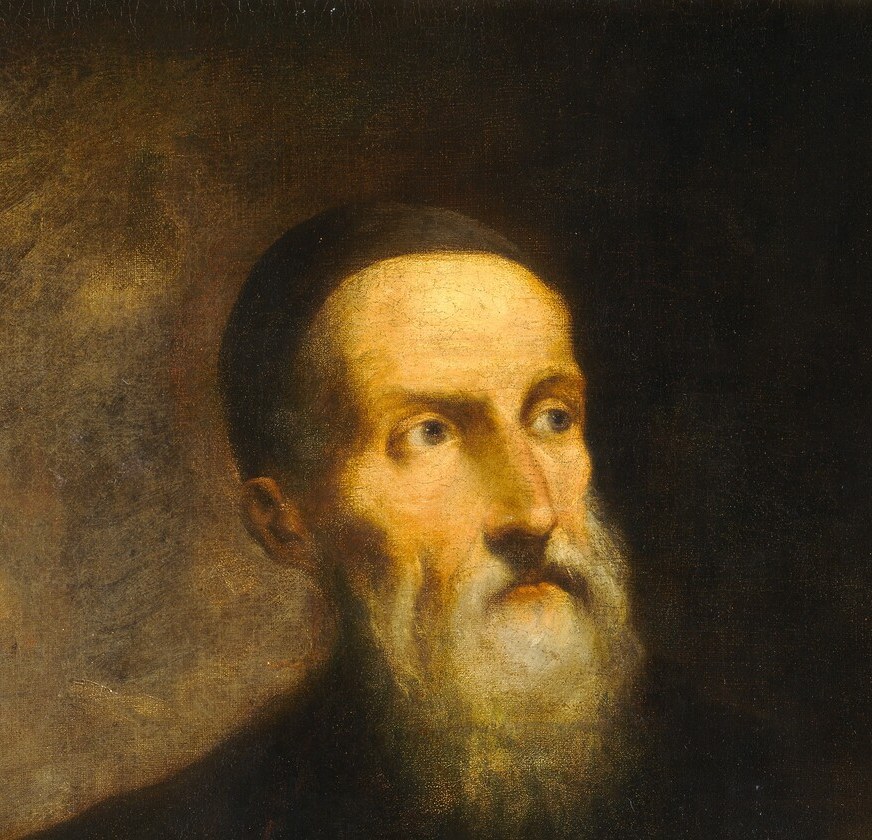
This is not a self-portrait by Titian, even though it looks exactly like one. It is an "Imaginary Self-Portrait of Titian" painted in the 1650s by Pietro della Vecchia, a Venetian artist who was born a generation after Titian died. He made a career out of painting uncanny pastiches of earlier masters.
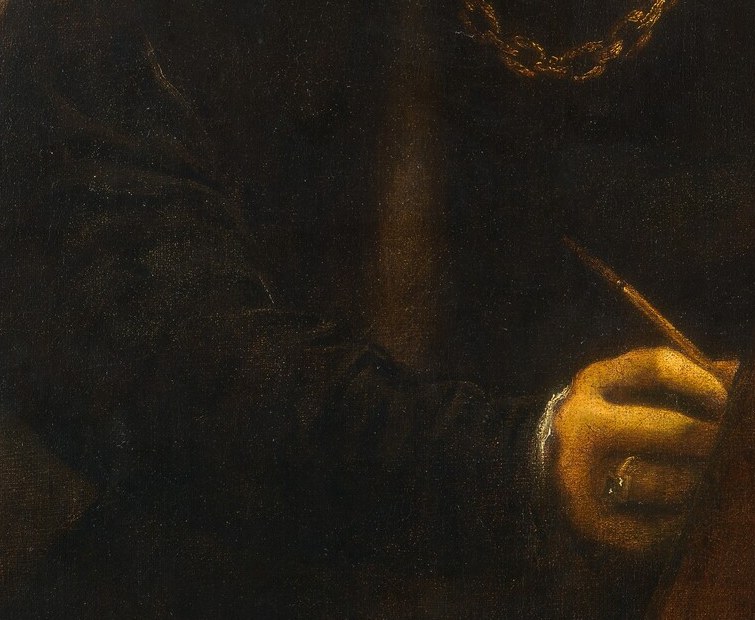
Look at the dark robe. The broad, almost messy strokes are not an accident. Della Vecchia is mimicking Titian's famous late style, the rough, expressive brushwork that younger painters called "pittura di macchia" and revered. He is impersonating Titian's hand as much as his face.
Della Vecchia worked as a restorer and expert authenticator in Venice. He knew old paintings inside out, physically and chemically. That technical knowledge let him build convincing fakes of Giorgione, Titian, and other giants, often filling a market demand from collectors who wanted a piece of the past.
The painting now hangs in the Gallerie dell'Accademia in Venice, the city where both Titian and della Vecchia lived. It is a portrait of ambition: one painter reaching back through time to inhabit the skin of a legend.
#arthistory #venetianpainting #titiantribute
Details

Transcript
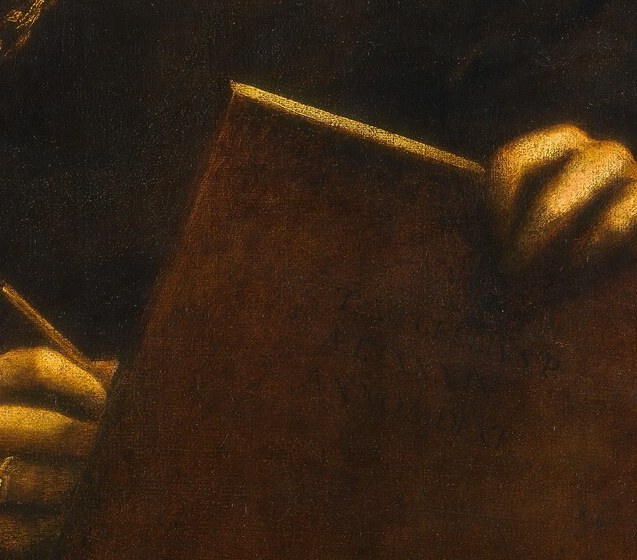
He looks you straight in the eye, like a man who knows his worth. Gold chains were gifts from emperors to their favorite painters. The brush is held casually. No effort, no paint. Pure authority. Look closely at the dark robe. These are not careful glazes. Broad, loose strokes. This is Titian's own late style, imitated in every fold. But the man who painted this was not Titian at all.