The Organ Rehearsal by Henry Lerolle
View the artwork: The Organ Rehearsal →
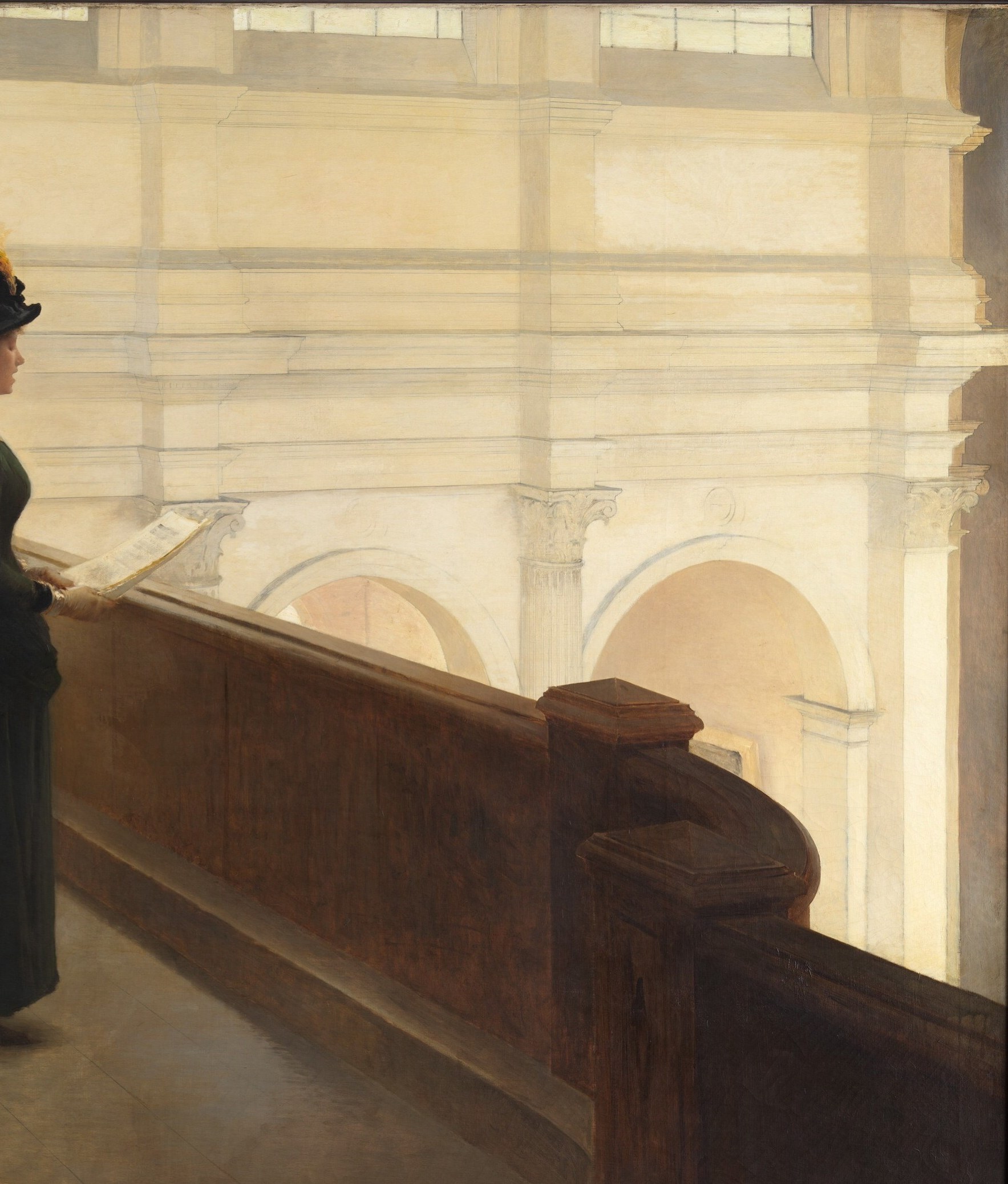
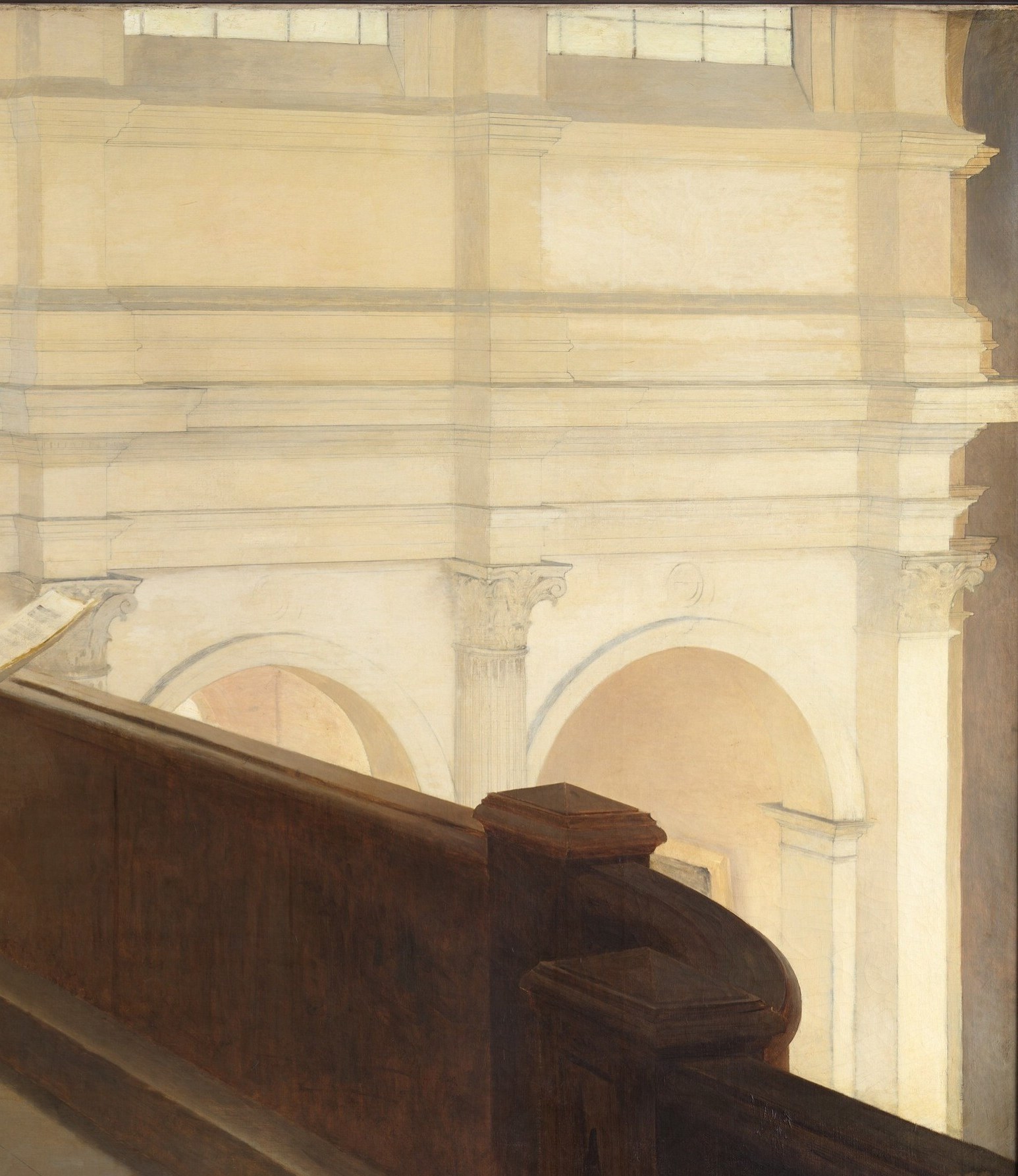
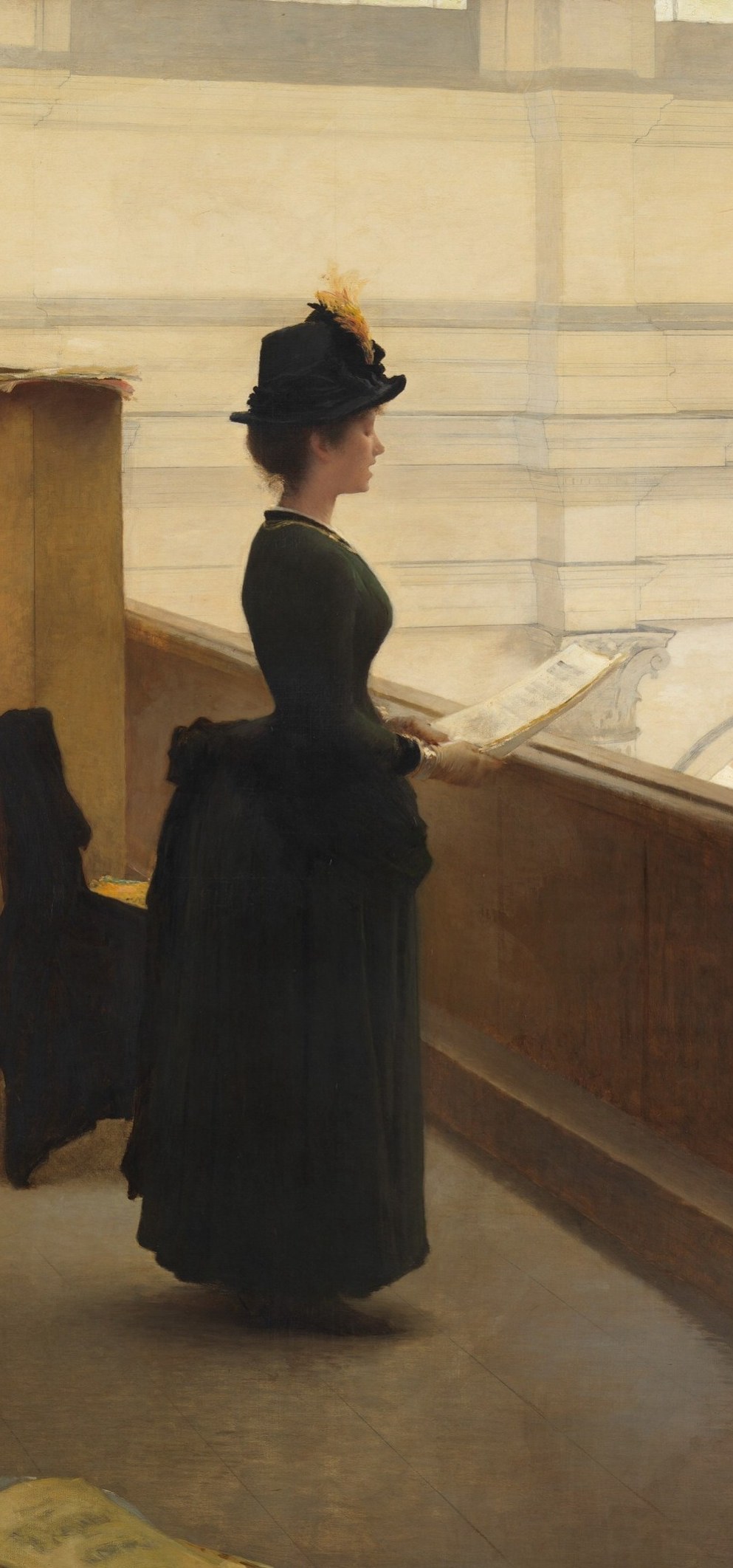
Henry Lerolle's The Organ Rehearsal (1885) is a nearly twelve-foot-wide painting of a private musical moment in the otherwise empty Church of Saint-François-Xavier in Paris. When it crossed the Atlantic in 1886 for the first major Impressionist exhibition in America, a critic noticed that spectators instinctively lowered their voices in front of it.
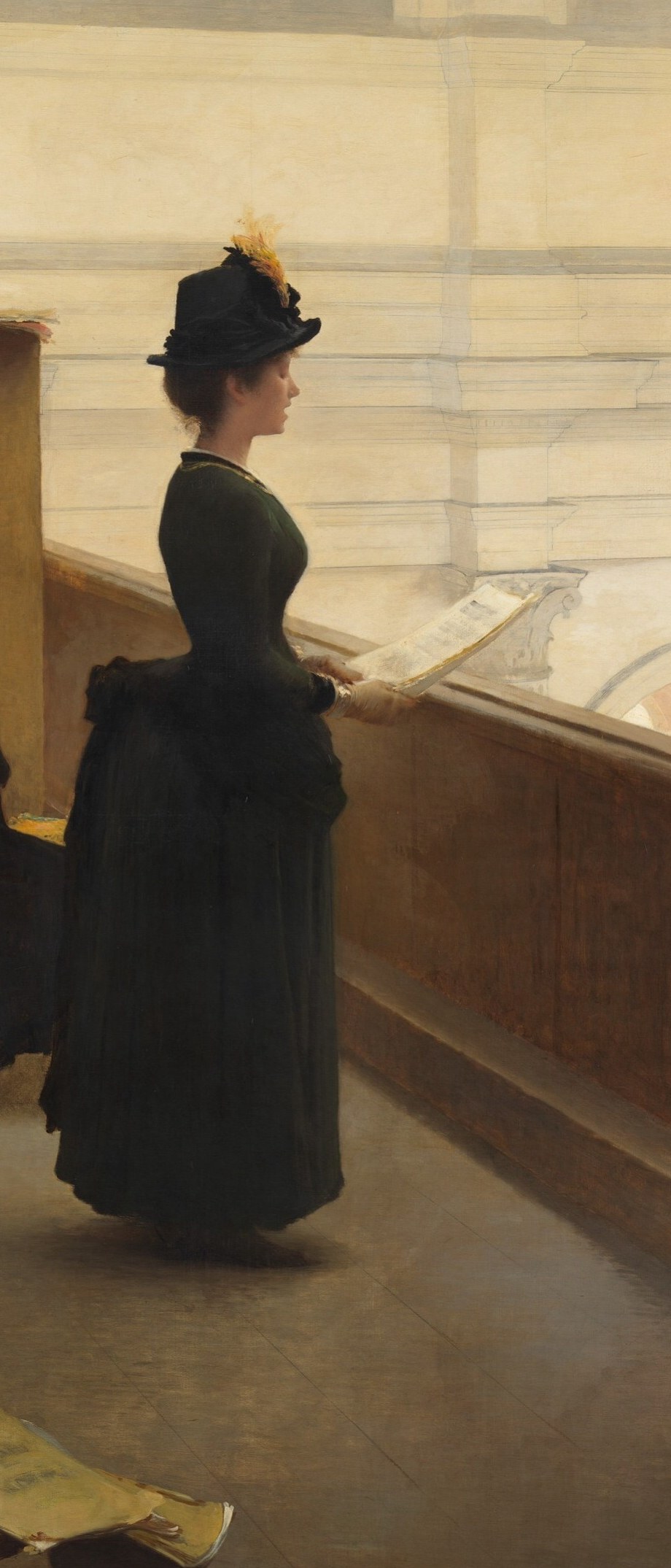
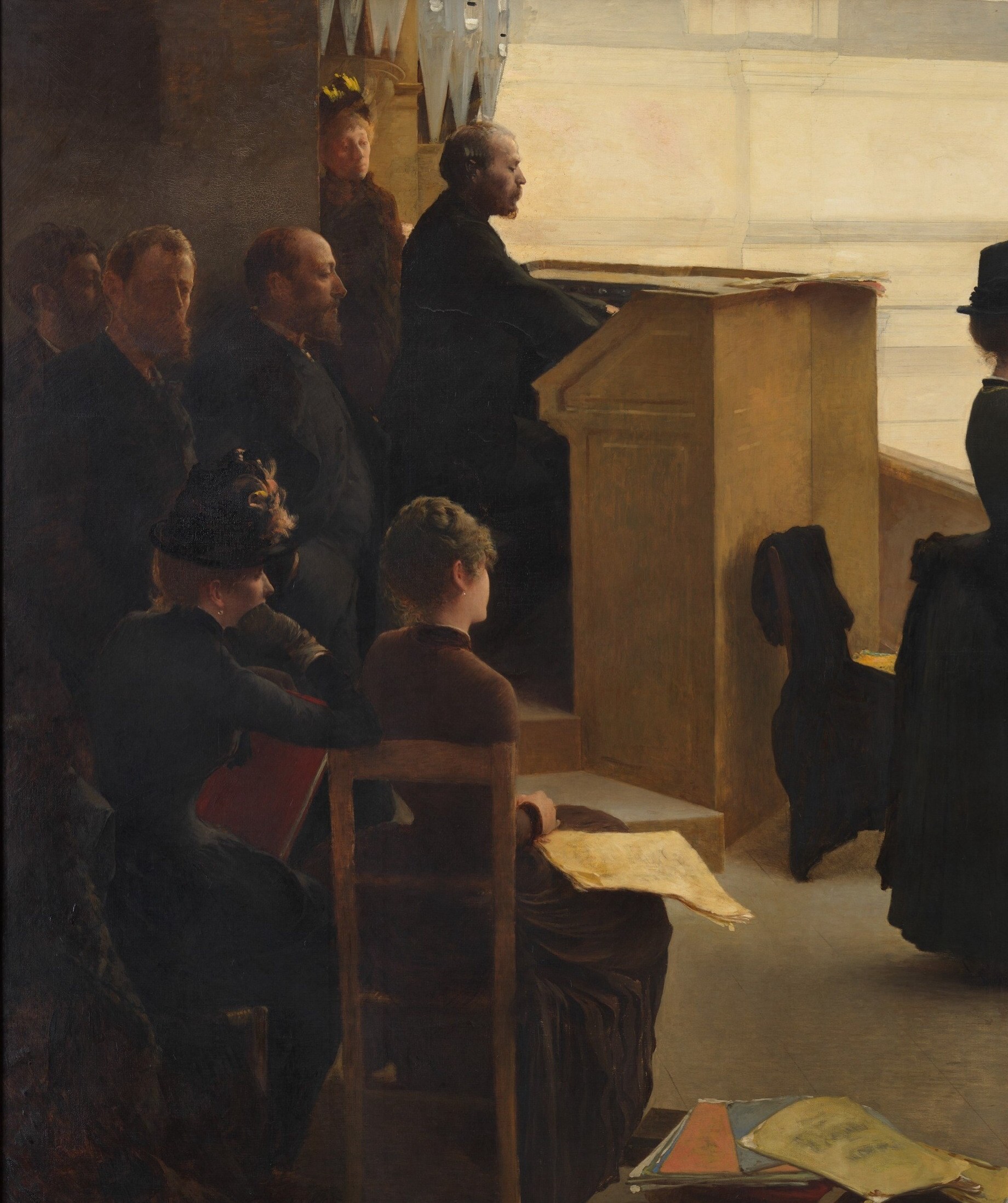
Lerolle filled the choir loft with his own family. His wife Madeleine sits with the sheet music. Her sisters are gathered beside her. The artist's mother stands in the shadows behind the organ. And Lerolle himself is visible at the far left edge, turning to look at us, a quiet confession that we are watching his private world. The woman standing alone in the center is his wife's sister Jeanne, caught at the exact boundary where the dark warmth of the loft meets the pale light of the empty nave.
The composer at the organ is Ernest Chausson, one of the most significant French composers of his generation. He was married to Madeleine's sister. He would die fourteen years later, in 1899, thrown from his bicycle into a stone wall at the age of 44. This rehearsal, this morning among family, is also a portrait of a brief life made permanent.
The Met acquired the painting in 1887, just two years after its Paris Salon debut. A 2010 conservation study revealed that Lerolle added two figures after the exhibition, shifting the organist's position and inserting his mother and a young man, evidence of a composition that kept evolving even after the public had seen it. Like memory itself, the painting was never quite finished.
#arthistory #impressionism #metmuseum
Details
Transcript
They speak low, as if waiting for the music to begin. The artist put everyone he loved in this choir loft. His wife. Her sisters. His mother behind the organ. Now look at the woman standing alone. She stands exactly where the warm shadow meets the cold light of the nave. The man at the organ is Ernest Chausson, who would die in a bicycle accident at 44. Four years after this, Lerolle himself appears, turning from the edge to face us. A marriage, a family, a morning of music, held still inside a church that has gone on without them.