The New Bonnet by Francis William Edmonds
View the artwork: The New Bonnet →
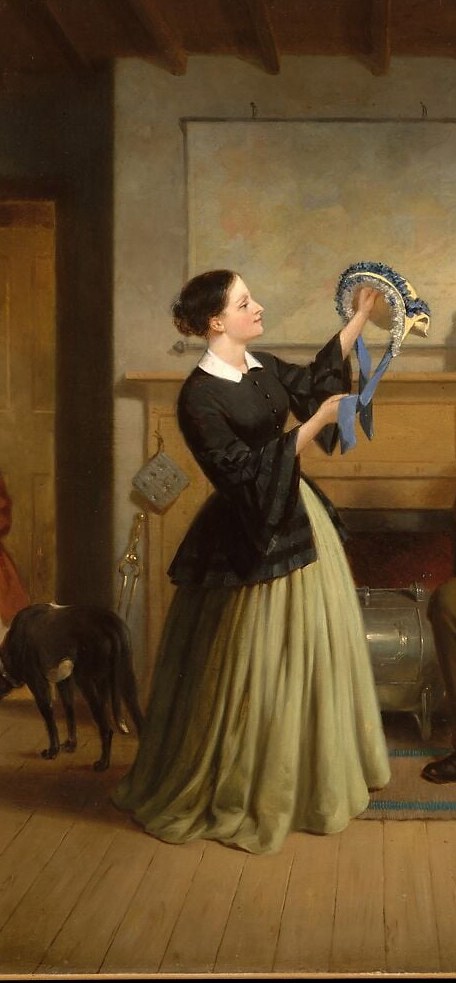
The New Bonnet, painted by Francis William Edmonds in 1858, is a family argument rendered in oil paint. A young woman presents an elaborate blue-ribboned hat to her plainly dressed parents in a bare farmhouse interior. She looks toward us, but her father's face registers unmistakable displeasure. In a single frozen moment, Edmonds maps the emotional geography of an antebellum American household at odds with itself.
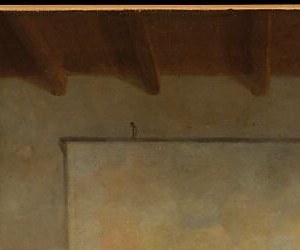
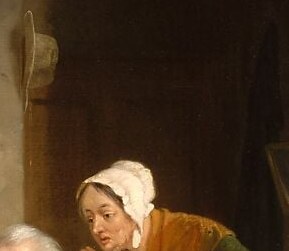
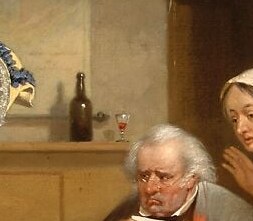
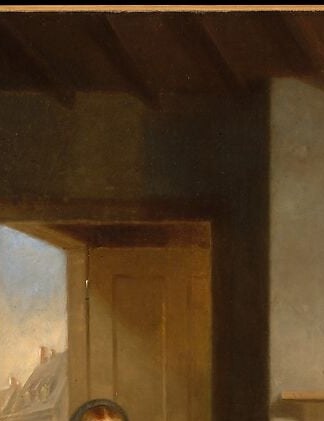
Look first at the bonnet, held aloft at the apex of the composition like an offering awaiting judgment. Then look at the two other heads: the mother's unadorned white cap, a deliberate visual contrast, and the father's skeptical expression. His is the painting's heaviest face. Behind them, a child sits in the shadows, silently absorbing a drama she is too young to name. The floor holds a pumpkin and scattered vegetables, reminders that this is a family whose economy still depends on the harvest.
Edmonds knew something about hidden lives. Born in 1806 into a Quaker family, he worked for decades as a banker while making his art in secret, even exhibiting under a pseudonym for fear of damaging his professional reputation. When The New Bonnet was painted, American consumer culture was accelerating, and the purchase of a fashionable hat could read as moral failing. The painting joined the Metropolitan Museum of Art in 1975 and hangs in the American Wing.
What a single object can do to a room. Does the daughter's expression strike you as pride, or as something closer to defiance?
#arthistory #americanart #19thcenturyart
Details
Transcript
She has just unwrapped it. A new bonnet, held up like an argument. Her mother already wears a plain cap. She always has. Her father's face says what the room cannot. Francis Edmonds was a banker who hid his art from his employers. He painted this a few years before the Civil War, when every expense carried weight. Look behind her, in the dark. A child watches. The youngest generation, learning what a family fights about.