The Coronation of the Virgin by http://www.wikidata.org/.well-known/genid/0ccbb001b589cc1b39497a181616fd8a
View the artwork: The Coronation of the Virgin →
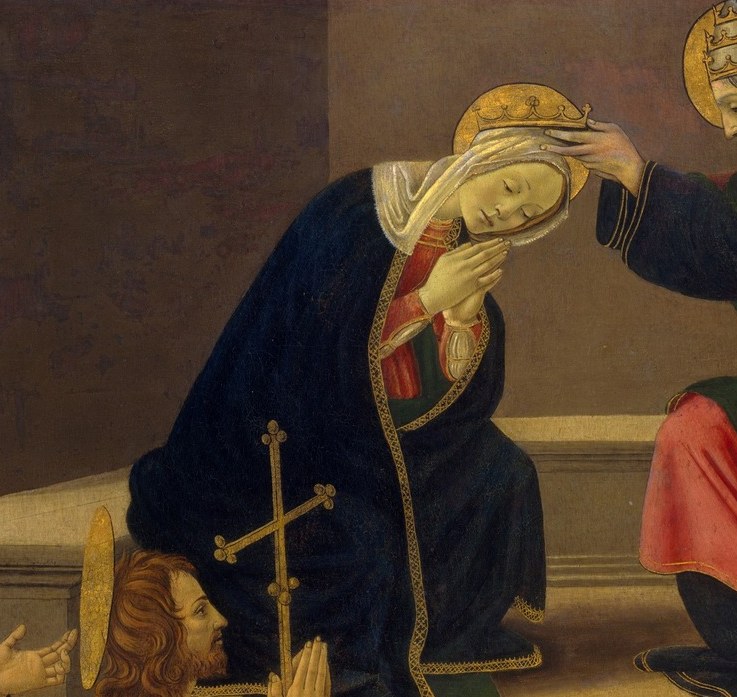
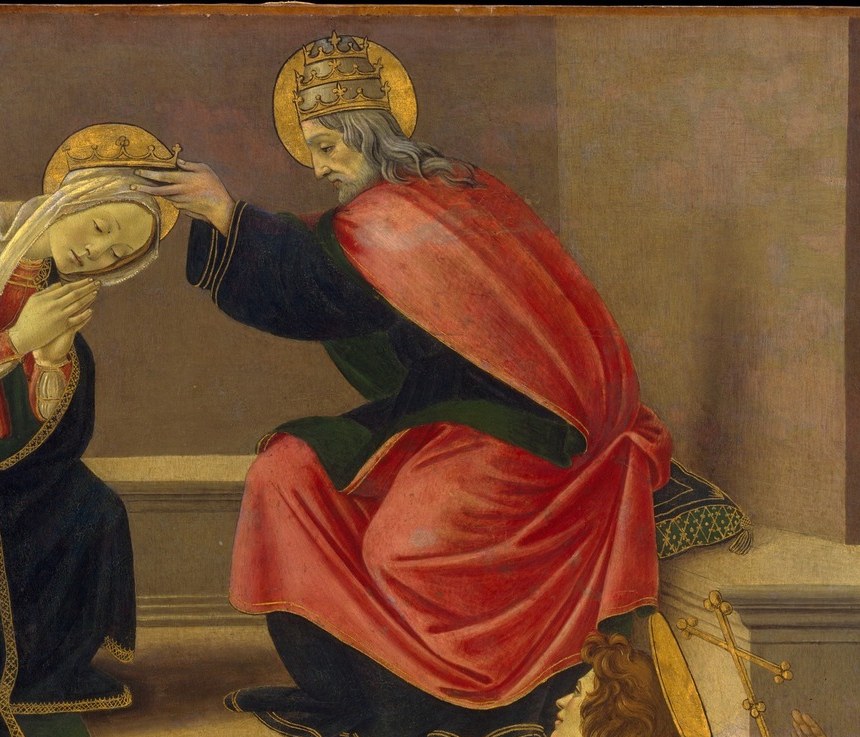
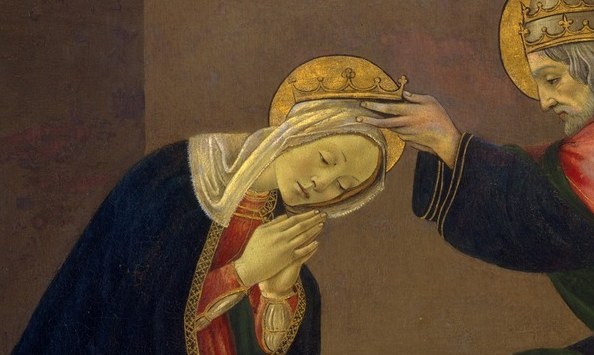
This is 'The Coronation of the Virgin,' painted around 1500 by an unknown master of the Umbrian or Florentine school.
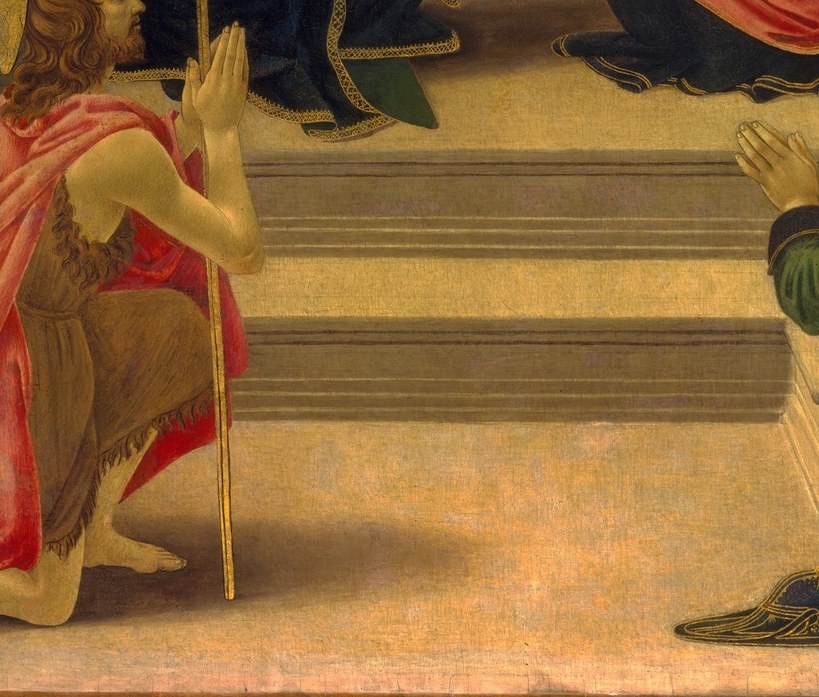
At first glance, it is a straightforward sacred scene: the Virgin Mary, draped in an almost-black mantle, bows her head to receive a golden crown from Christ, who is wrapped in brilliant crimson robes. A young deacon saint kneels in the foreground, his red-and-green vestments making him the most vivid figure in the painting.
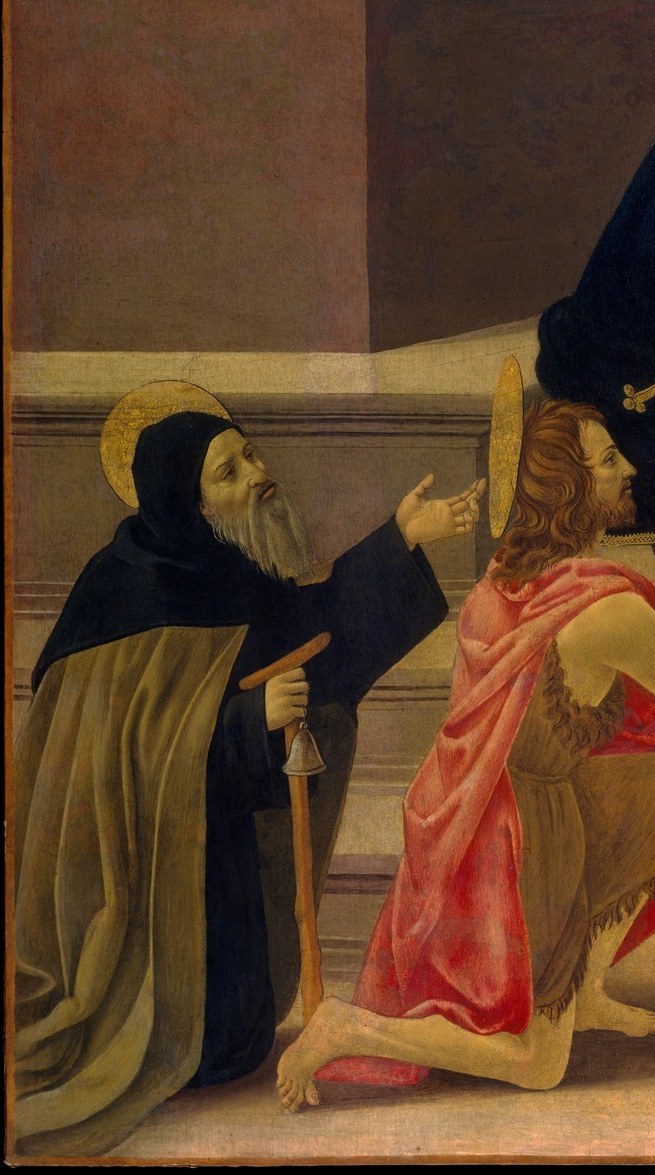
But the real surprise is at the edges. To the left stands a Dominican friar in a black-and-white habit, tall and commanding. To the far right, mirroring him, kneels a Franciscan in humble brown. Seeing the two great mendicant orders, often rivals for prestige and commissions, placed as equals around the Virgin is exceptionally rare. Their joint presence suggests a specific alliance, perhaps a confraternity that included members of both orders, or a deliberate plea for institutional harmony.
The painting hangs in an unlisted collection, and much about it remains beneath the surface. The deep blue-black of Mary's mantle may conceal now-darkened ultramarine, and the dark upper background could hide traces of gilded architecture lost to time.
What other truces are hiding in the edges of Renaissance paintings?
#arthistory #renaissance #italianart
Details
Transcript
A heavenly queen kneels to receive her crown. The red robes of Christ lean into the tender act. Look now to the left. A Dominican friar in black and white. Now to the right. A Franciscan in humble brown. These two orders rarely shared an altarpiece in 1500. Their presence here signals a rare joint commission. In heaven, ancient rivalries dissolve.