Landscape with two Trees by Paul Joseph Constantin Gabriël
View the artwork: Landscape with two Trees →
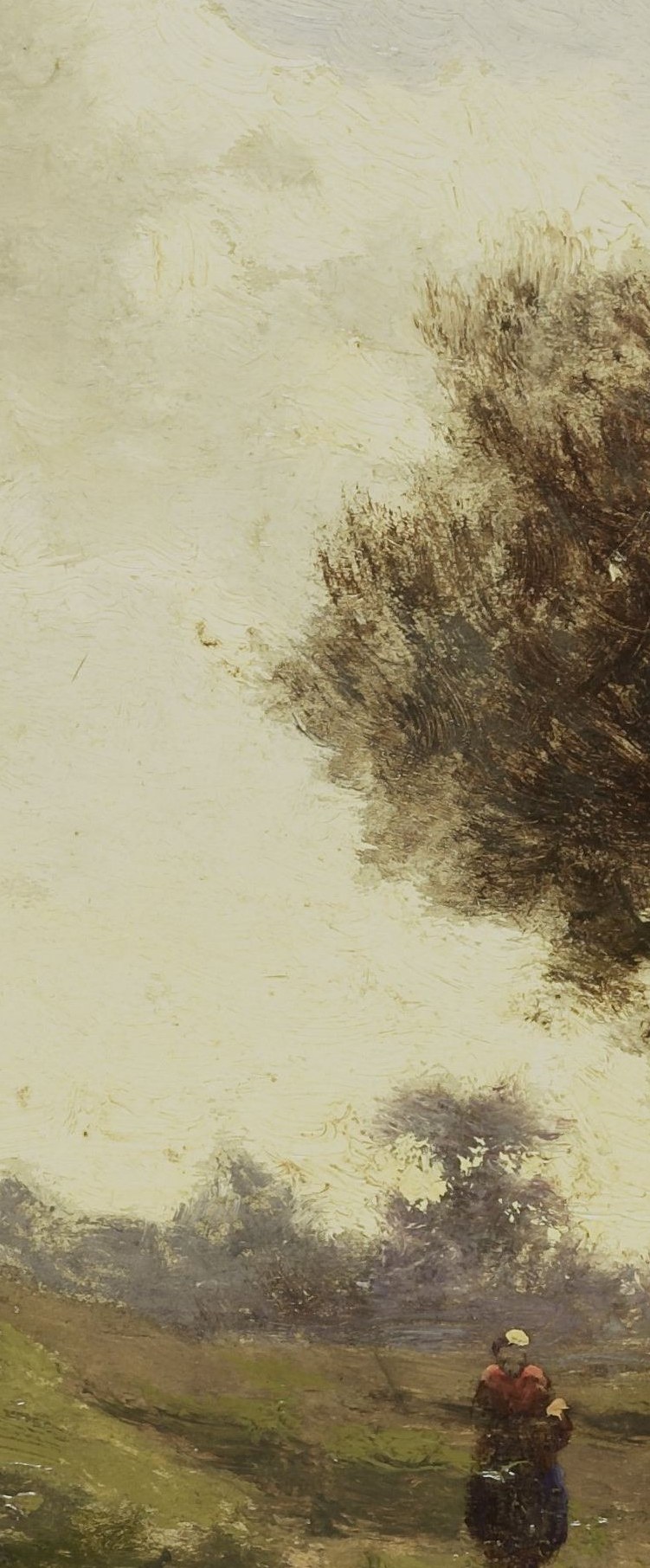
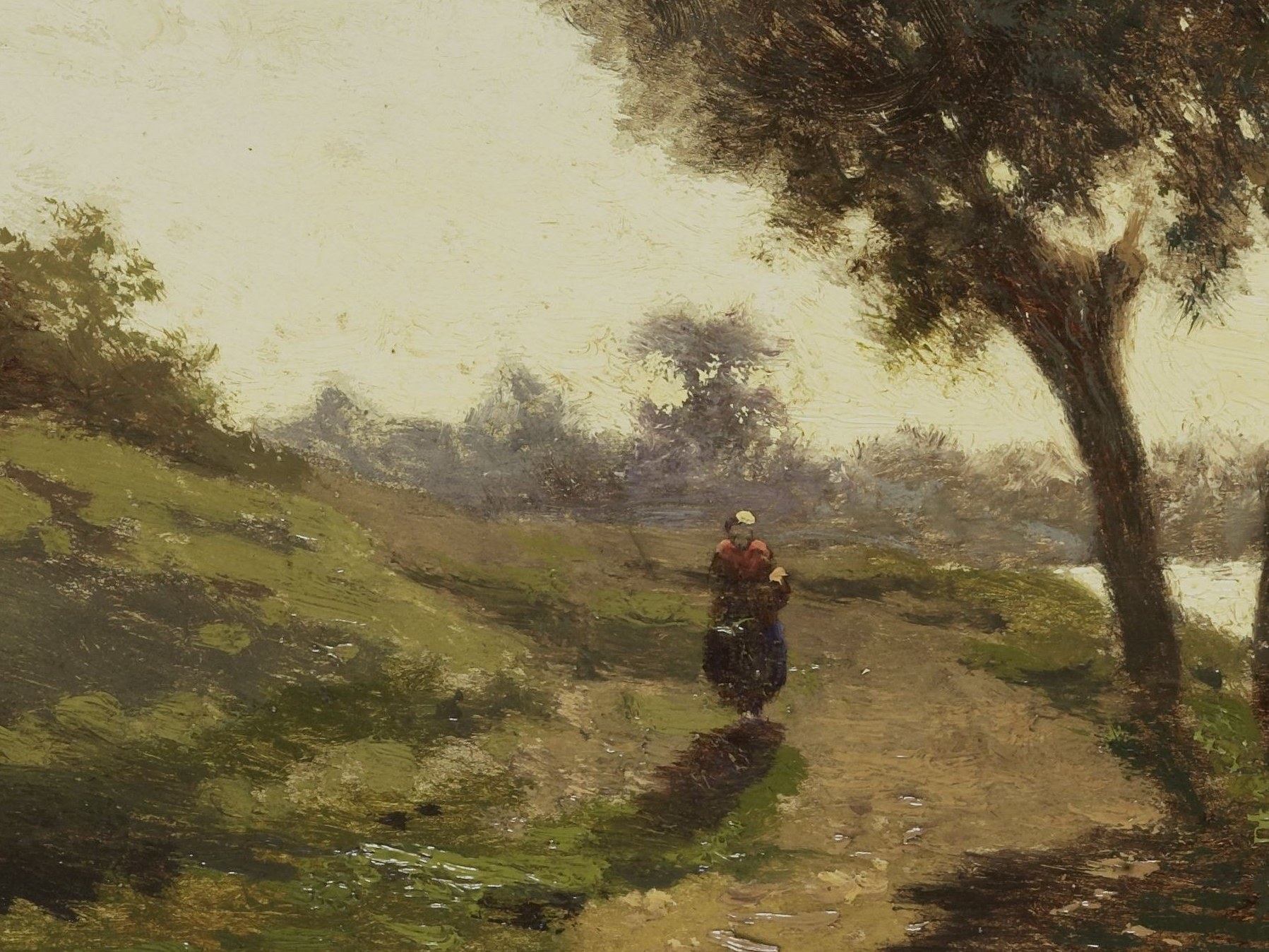
This is Landscape with Two Trees, painted by the Dutch artist Paul Joseph Constantin Gabriël in 1860. It lives quietly in the Rijksmuseum, and on a phone screen it almost disappears. But stay with it. The whole emotional weight of the painting is carried by a single figure in a red shawl, walking away from us into the flat Dutch light.
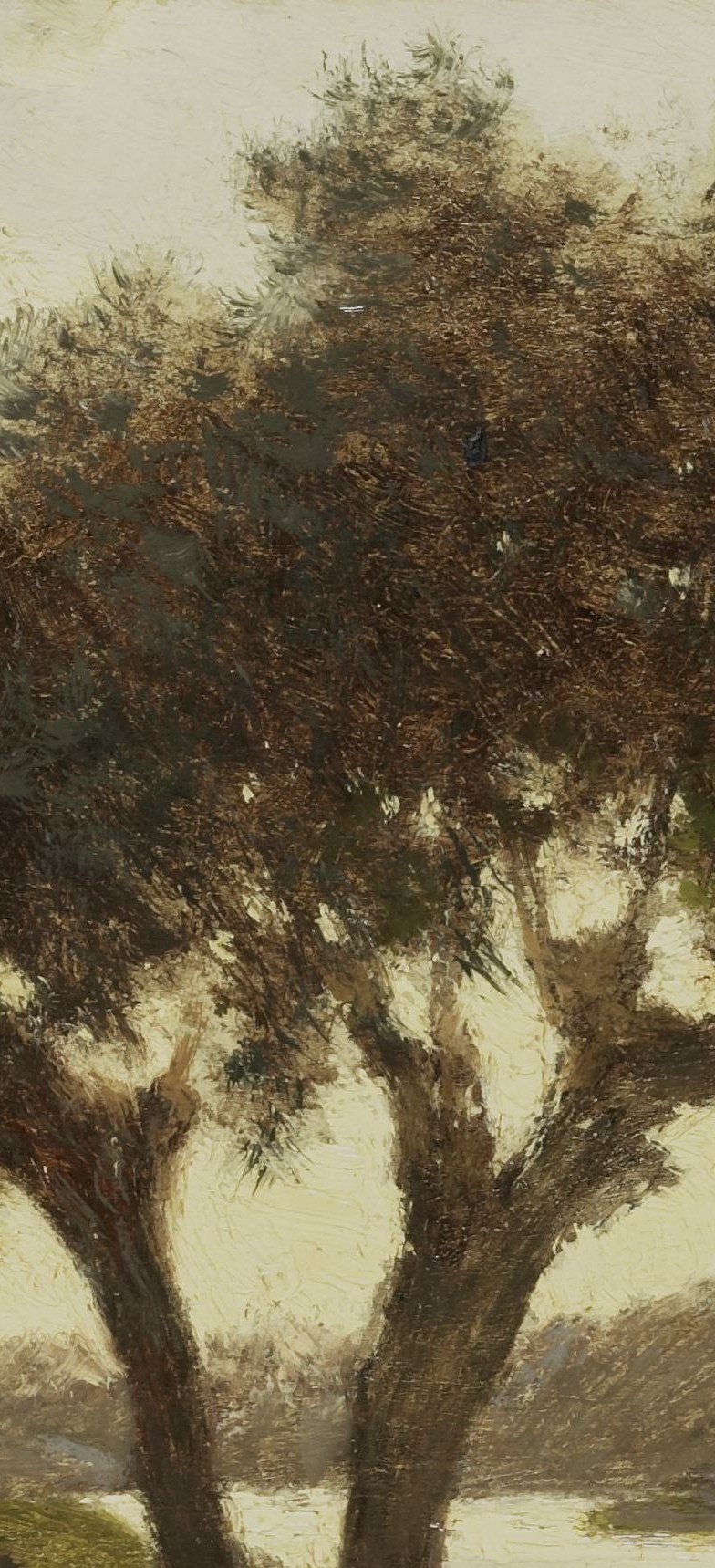
Look first at the trees. They are not majestic oaks but ordinary trunks, rough and a little weary, leaning in to form a natural gateway. Between them, a dirt path bends in an S-curve and vanishes. Everything is grey-green and brown except for that one warm, startling accent: the red shawl on the woman's shoulders. She is the only human presence, and she does not turn around.
Gabriël belonged to the Hague School, a group of Dutch painters who loved the muted, humid atmosphere of the polder landscape. He was born in 1828 and lived until 1903, working through most of the nineteenth century in a modest, steady way. Unlike his more famous contemporaries, he never quite broke through. The market wanted drama; he gave it patience. His wife died early in their marriage, and he spent the next four decades painting alone, returning again and again to the quiet canals, the thin trees, the luminous grey sky.
There is no grave event in this picture. Just a woman on a path, in a landscape that asks nothing of her. But Gabriël knew what solitude cost, and he painted it here without sentimentality, as a fact of light and distance. The red shawl tells you: someone is in there. Someone is still walking.
#arthistory #hagueschool #dutchpainting
Details

Transcript
A single figure, almost swallowed by the trees. Gabriël painted this in 1860, when he was 32 and still uncelebrated. The red shawl is the only warm thing in the whole landscape. He spent his life painting the flat Dutch countryside, never quite famous. The path bends, and she goes with it. His wife died young. He painted alone for 40 more years. Her face is hidden. We only know her by where she is going.