Early Morning After a Storm at Sea by Winslow Homer (American, 1836–1910)
View the artwork: Early Morning After a Storm at Sea →
Winslow Homer painted Early Morning After a Storm at Sea around 1900-01-01, and the painting now belongs to the Cleveland Museum of Art. Homer was in his sixties and living on the Maine coast, where he spent the last decades of his life painting the Atlantic in every mood. This canvas is not large, but it carries immense physical presence.
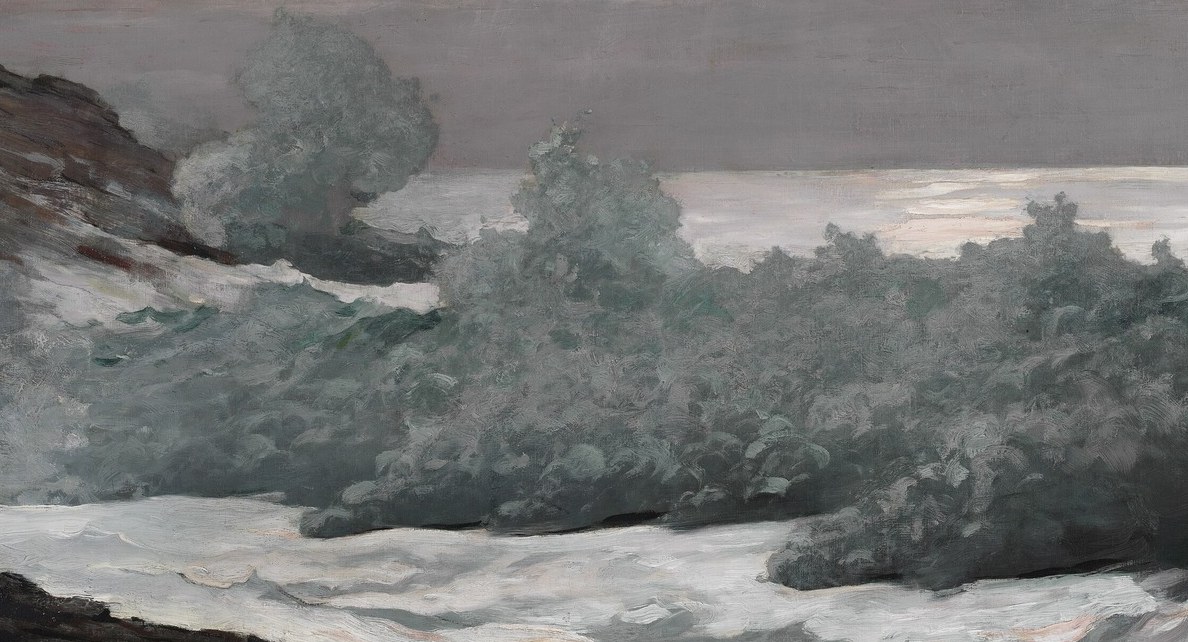
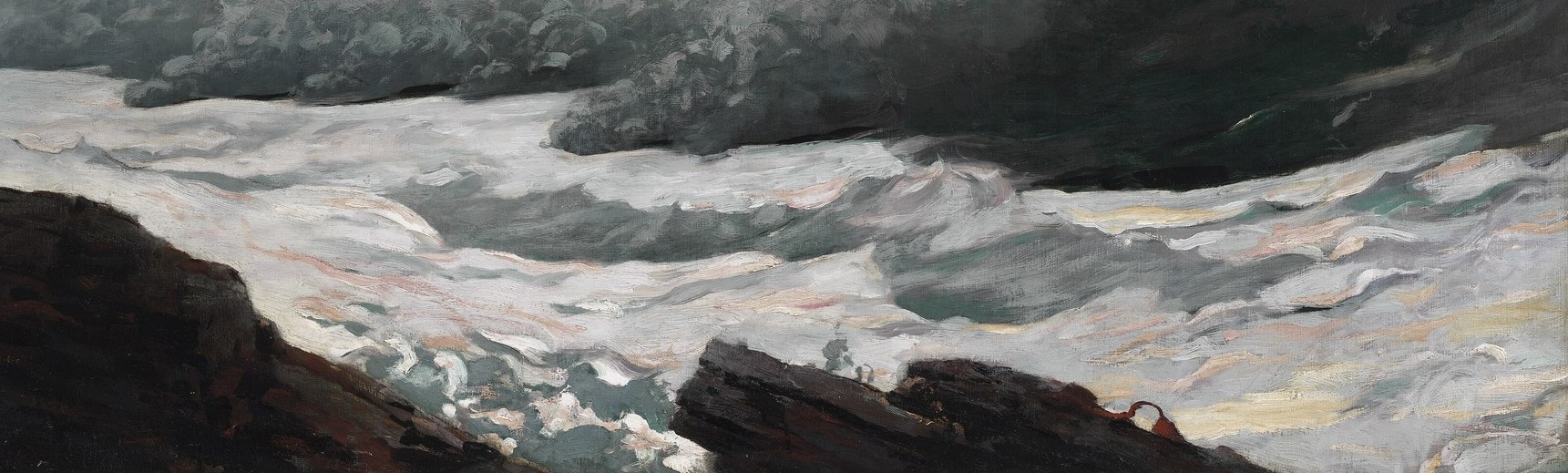
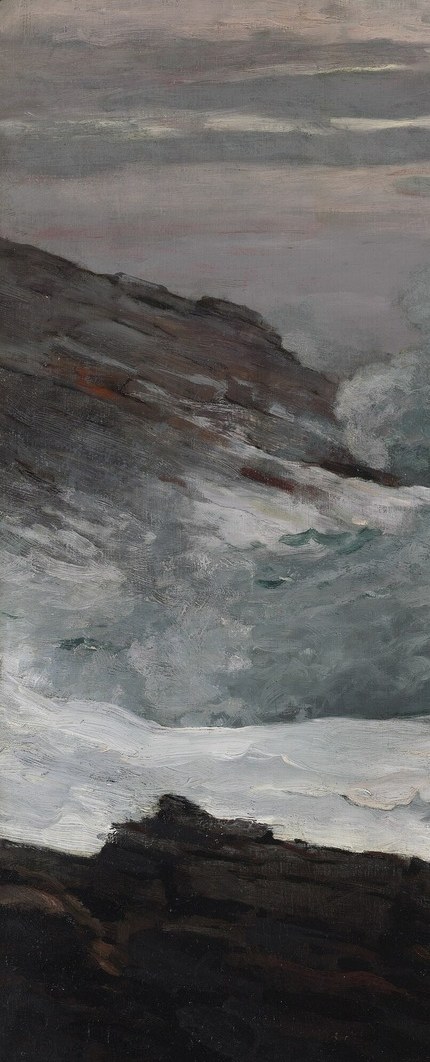
Look at the face of the breaking wave. Homer applied paint with a stiff brush and a palette knife, leaving ridges thick enough to cast their own shadows. He realized that the way to paint water's weight was to give the paint itself literal heft. Then, look inside the wave just before it crests. That flash of dark green translucency is an optical event that occurs for a fraction of a second before a wave collapses. Homer caught it in the slowest of mediums.
Homer was largely self-taught and began as a commercial illustrator for Harper's Weekly during the Civil War. By the time he settled permanently at Prouts Neck, Maine, he had stripped his art down to a single elemental relationship: rock, water, and sky. He painted the sea from direct observation, walking the cliffs in winter storms, and then translating what he saw into paint in his studio.
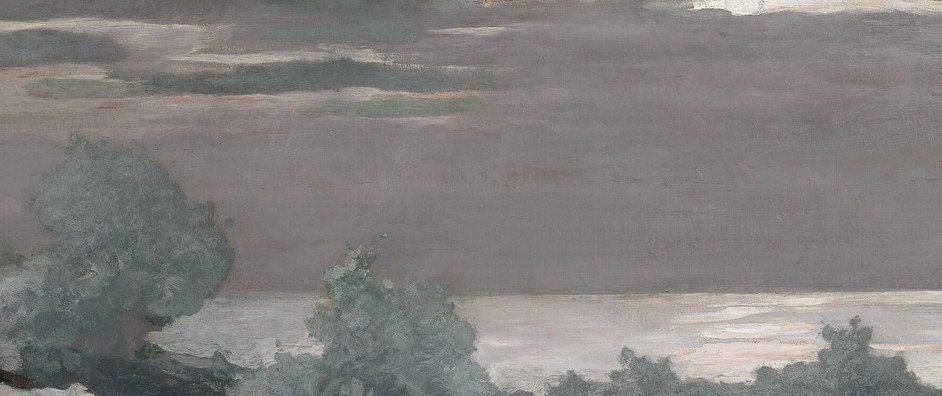
This painting is not the drama of the storm itself, but the exhausted aftermath and the first reluctant return of light. The spray is still up, and the water still churns, but the sky is beginning to clear. What do you feel the sea is about to do next?
#arthistory #winslowhomer #americanart
Details

Transcript
It looks like a photograph of a storm passing. But this is oil paint. 1902. And no camera can do what happens here. Feel the weight of the water. Homer laid paint on with a knife, building ridges that physically cast shadows. The material is the wave. The oil paint is the water. A split second of green translucency, held in a medium that dries slowly. The rest of the world dissolves into mist and darkness. But this wave, and the light inside it, is why he painted the sea.