A Woman Seated beside a Vase of Flowers by Edgar Degas
View the artwork: A Woman Seated beside a Vase of Flowers →
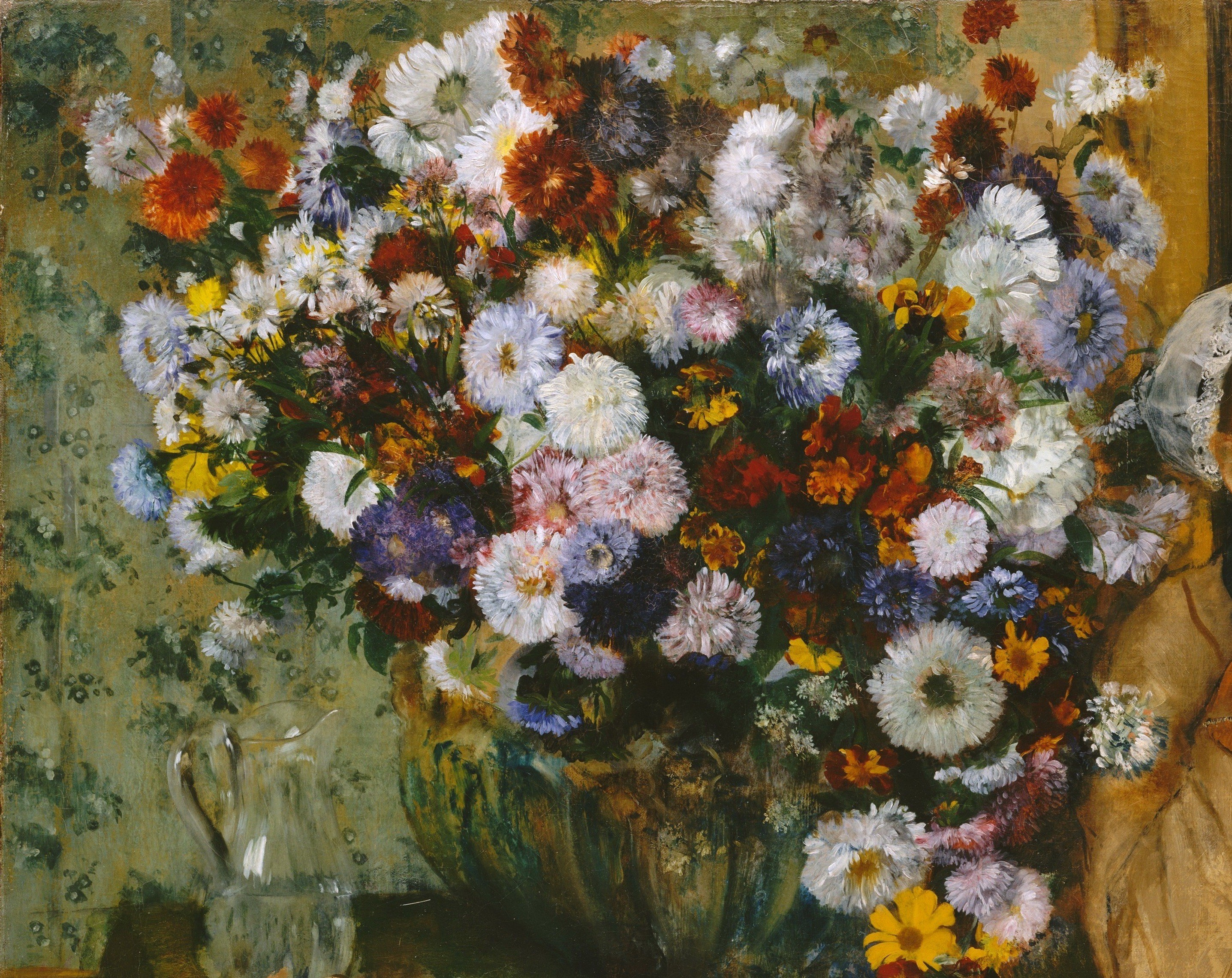
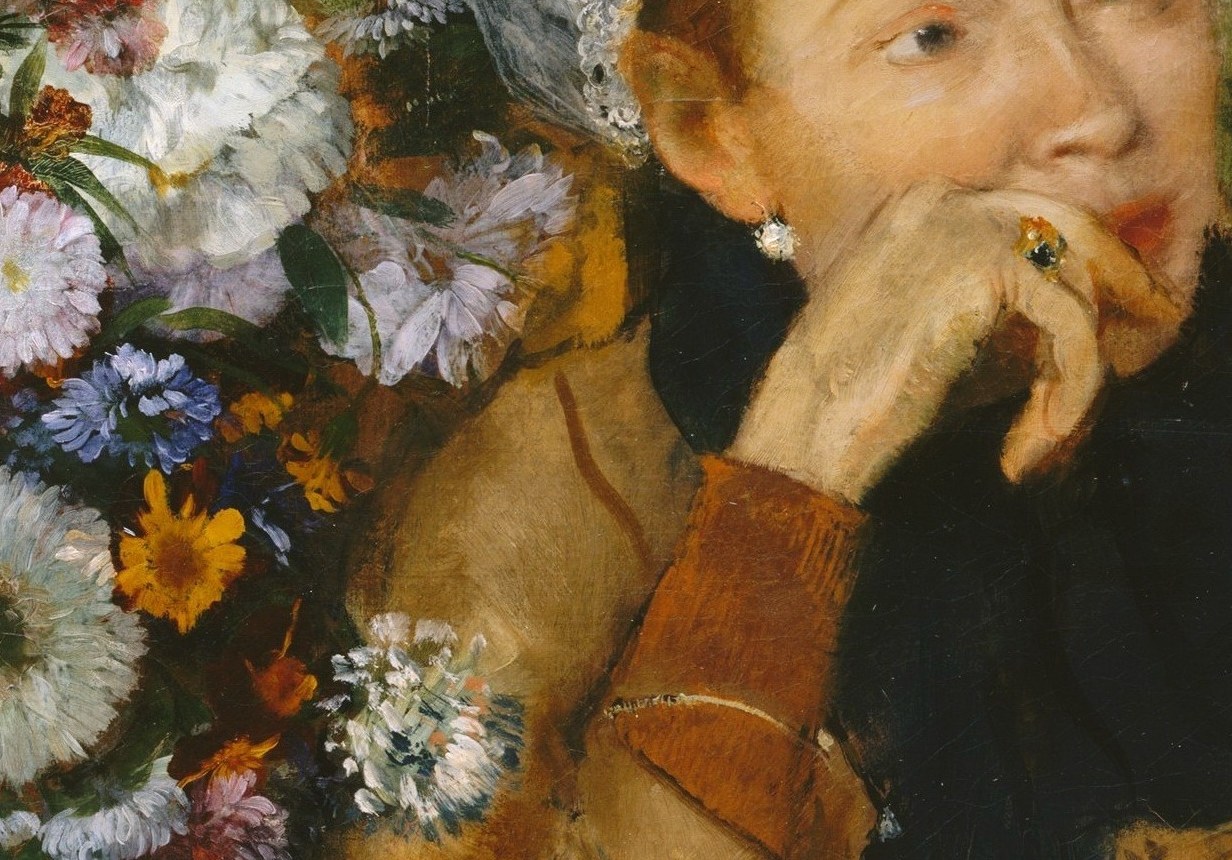
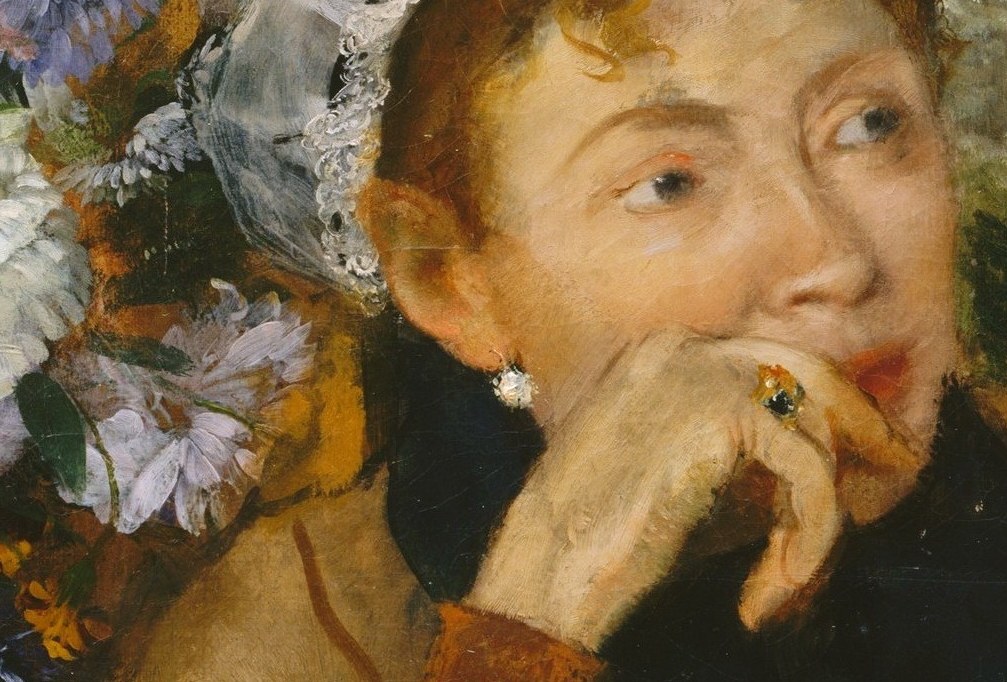
Edgar Degas painted A Woman Seated beside a Vase of Flowers in 1865, a canvas where the still life seizes roughly two-thirds of the picture plane and the nominal subject, likely Madame Paul Valpinçon, sits pressed to the right margin with her hand at her cheek.
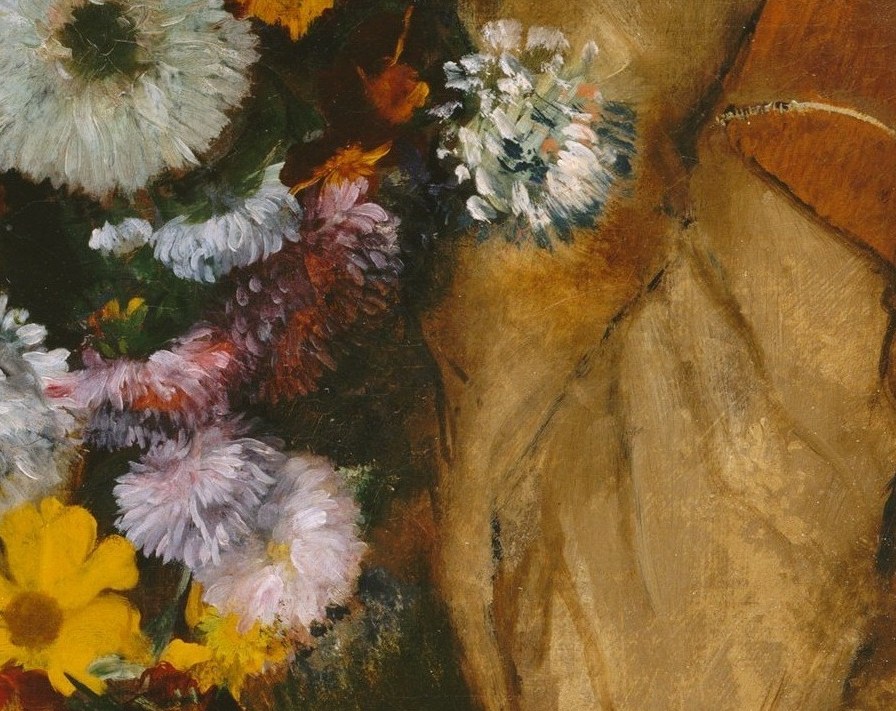
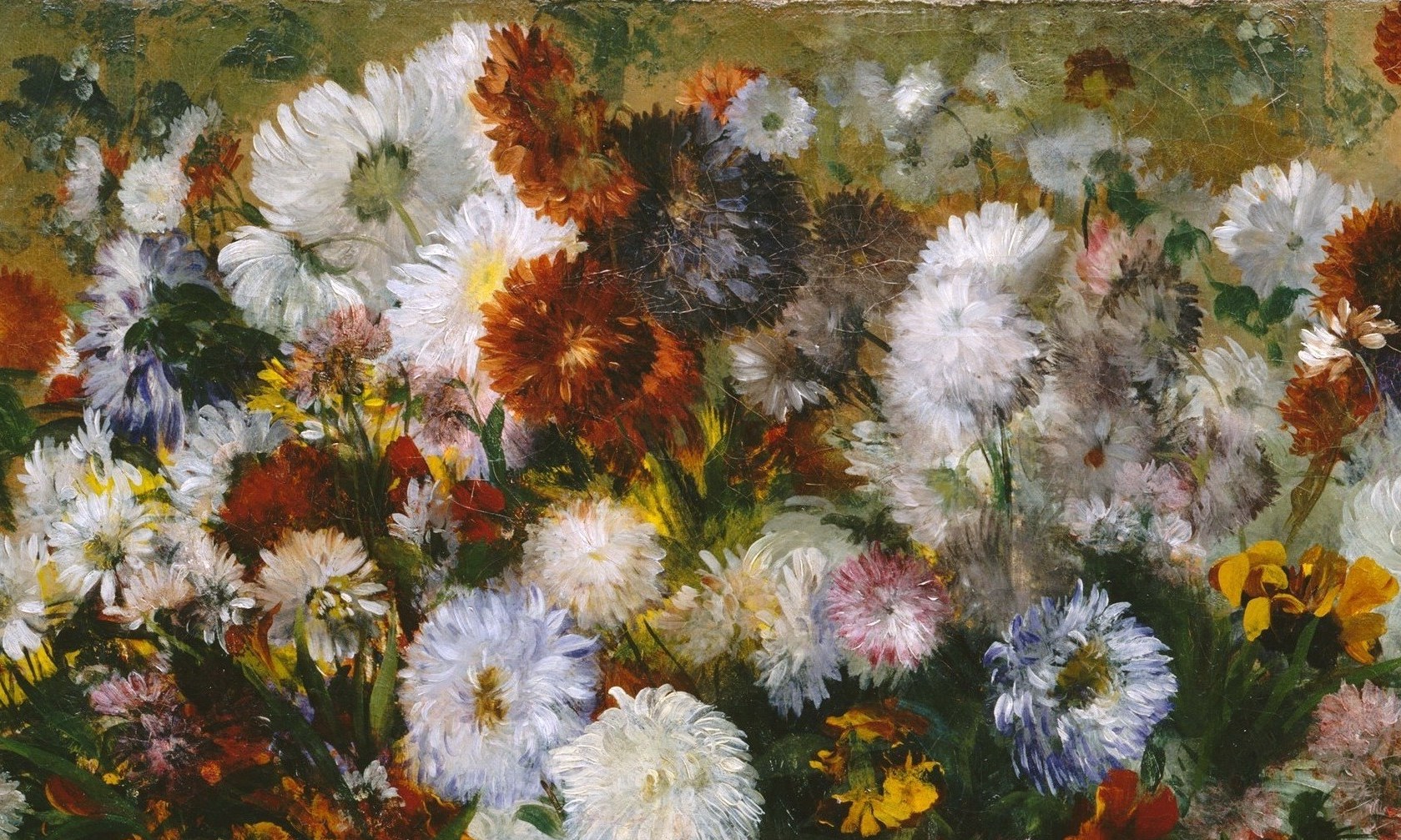
Look at the flowers: white asters crown the bouquet as its brightest passage, while red and orange dahlias anchor the center. Together with the gaillardias, they form a botanical calendar, these blooms come only in late summer, which precisely dates Degas’s stay at the Valpinçon country estate in Normandy to August of that year.
The painting was a private gift for Paul Valpinçon, a childhood friend. Degas kept the work close; it never entered the market during his lifetime and only reached the Metropolitan Museum of Art in 1929 through the Havemeyer bequest. Early viewers found the composition so radical they suspected the woman was added as an afterthought, but Degas famously pushed back: his skewed arrangements were carefully planned to feel candid.
It is an early, quiet declaration of the off-center visual logic that would define his career, a portrait where the flowers do the talking.
#arthistory #degas #metmuseum
Details
Transcript
She is pushed to the edge of her own portrait. The painting was a gift for a childhood friend. Degas never sold it. It stayed private for decades. The dahlias and gaillardias bloom only in late summer. They date his visit to August, 1865. Normandy. Critics thought the figure was an afterthought. Degas insisted: no art was ever less spontaneous than his.