The Presentation in the Temple by Alvaro Pirez d'Evora
View the artwork: The Presentation in the Temple →
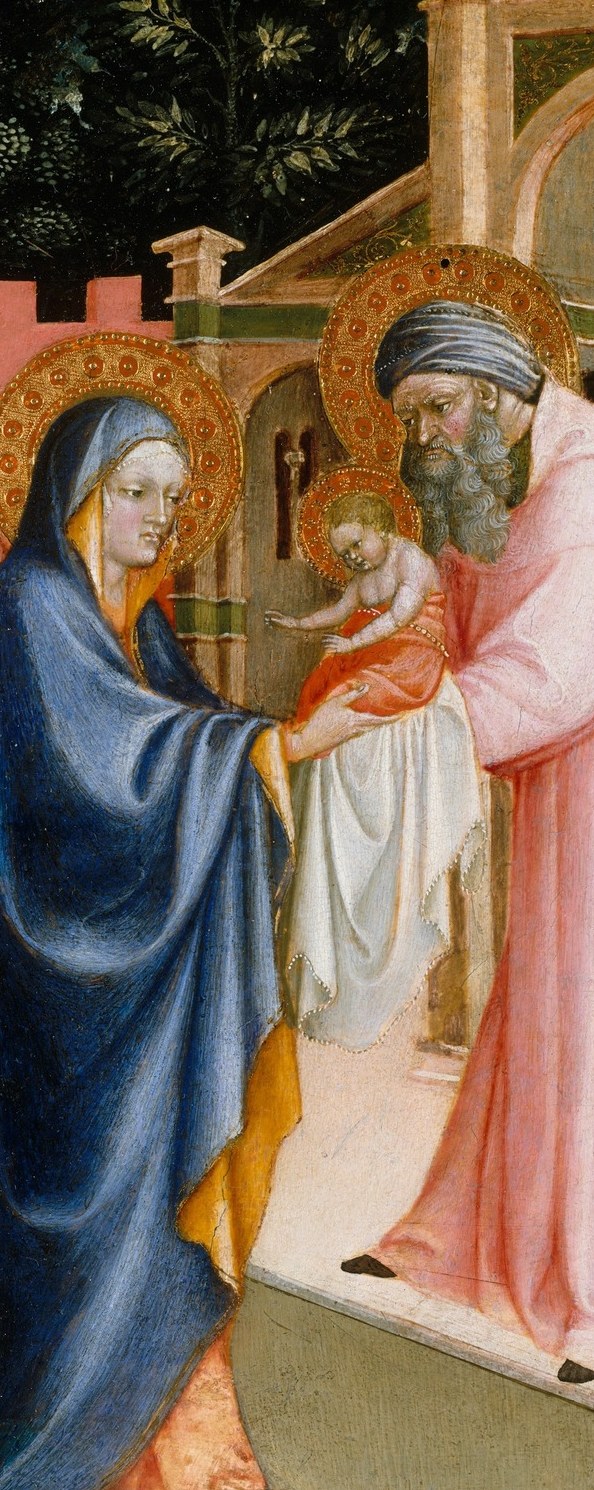
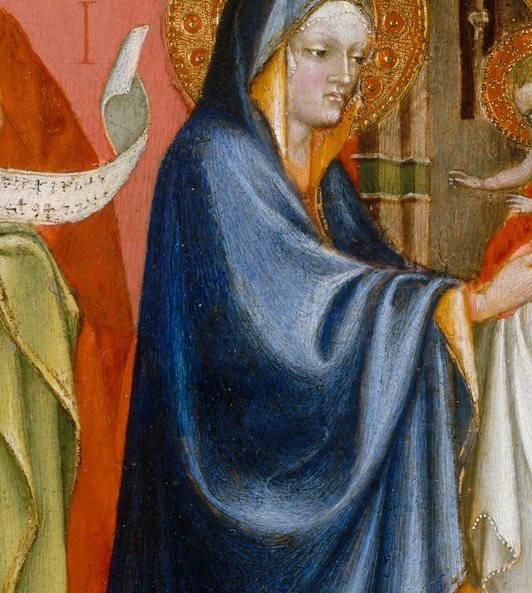
The Presentation in the Temple, painted around 1430 by the Portuguese-born Alvaro Pirez d'Evora, is a scene of ceremony built on a devastating private truth. The biblical moment shows Mary and Joseph bringing the infant Jesus to the Temple, but the emotional center is quieter: the aged Simeon has just prophesied that a sword will pierce Mary's own soul.
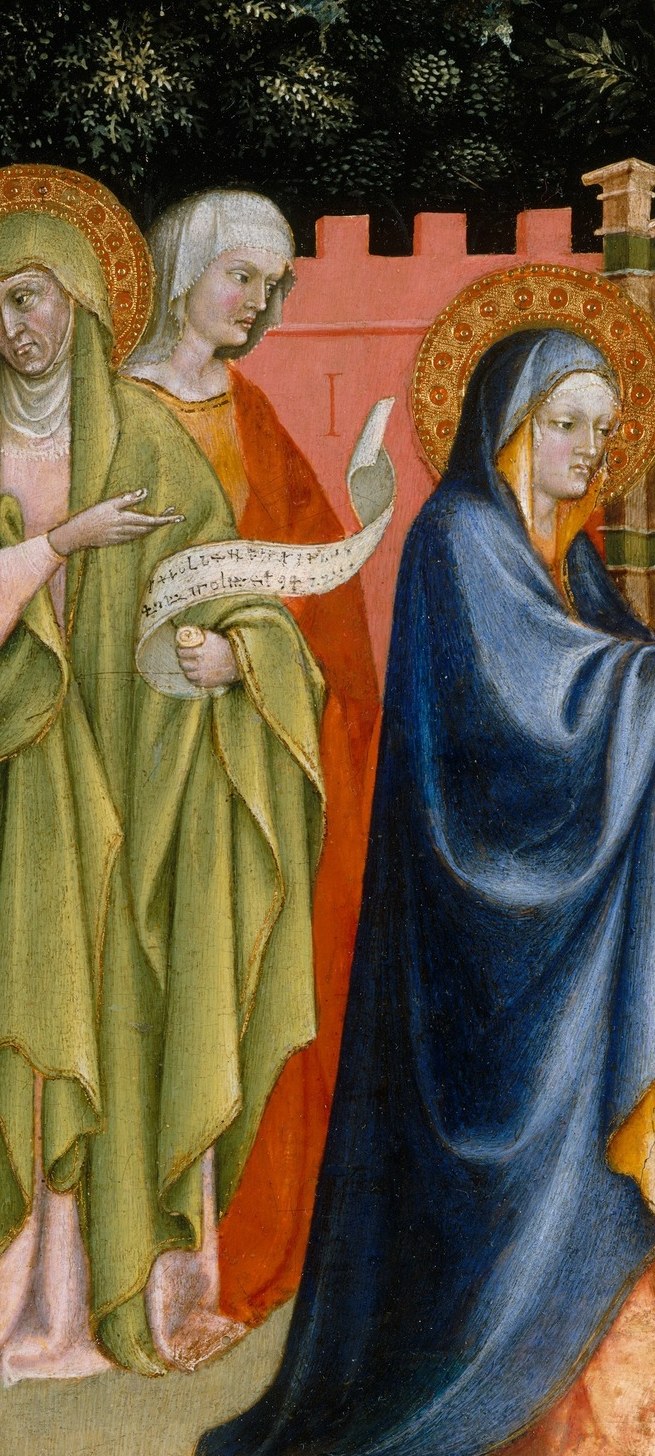
Look at the space between Mary's blue robe and Simeon's pink one. The white swaddling cloth bridges them, the infant suspended at the exact point of transfer. Mary's halo and Simeon's mirror it above the exchange like twin suns, meeting of prophecy and fulfillment rendered in gold. On the left, a group of witnesses watches, some haloed and some not, encoding the boundary between the sacred and the mortal.
Pirez was the earliest known Portuguese painter to build a documented career in Italy, working almost entirely in Tuscany for ecclesiastical patrons in Pisa, Prato, and Volterra. He signed one altarpiece with his Évora origin, and his work sits between late Gothic Iberian line-work and the emerging spatial ambitions of early Renaissance Florence. This panel lives at the Metropolitan Museum of Art.
A mother handing her child toward a fate she already knows. How much of that stillness is composure, and how much is grief held inside the ceremony?
#arthistory #portugueseart #renaissance
Details
Transcript
A ritual in the Temple at Jerusalem. Mary, in luminous blue, holds her infant son. Simeon the priest reaches out to take him. This is the moment of consecration. But Simeon has just told Mary her heart will be pierced by sorrow. So she hands him over already knowing the cost. The painter was a Portuguese exile working alone in Tuscany.