The Stolen Kiss by Jean Honoré Fragonard
View the artwork: The Stolen Kiss →
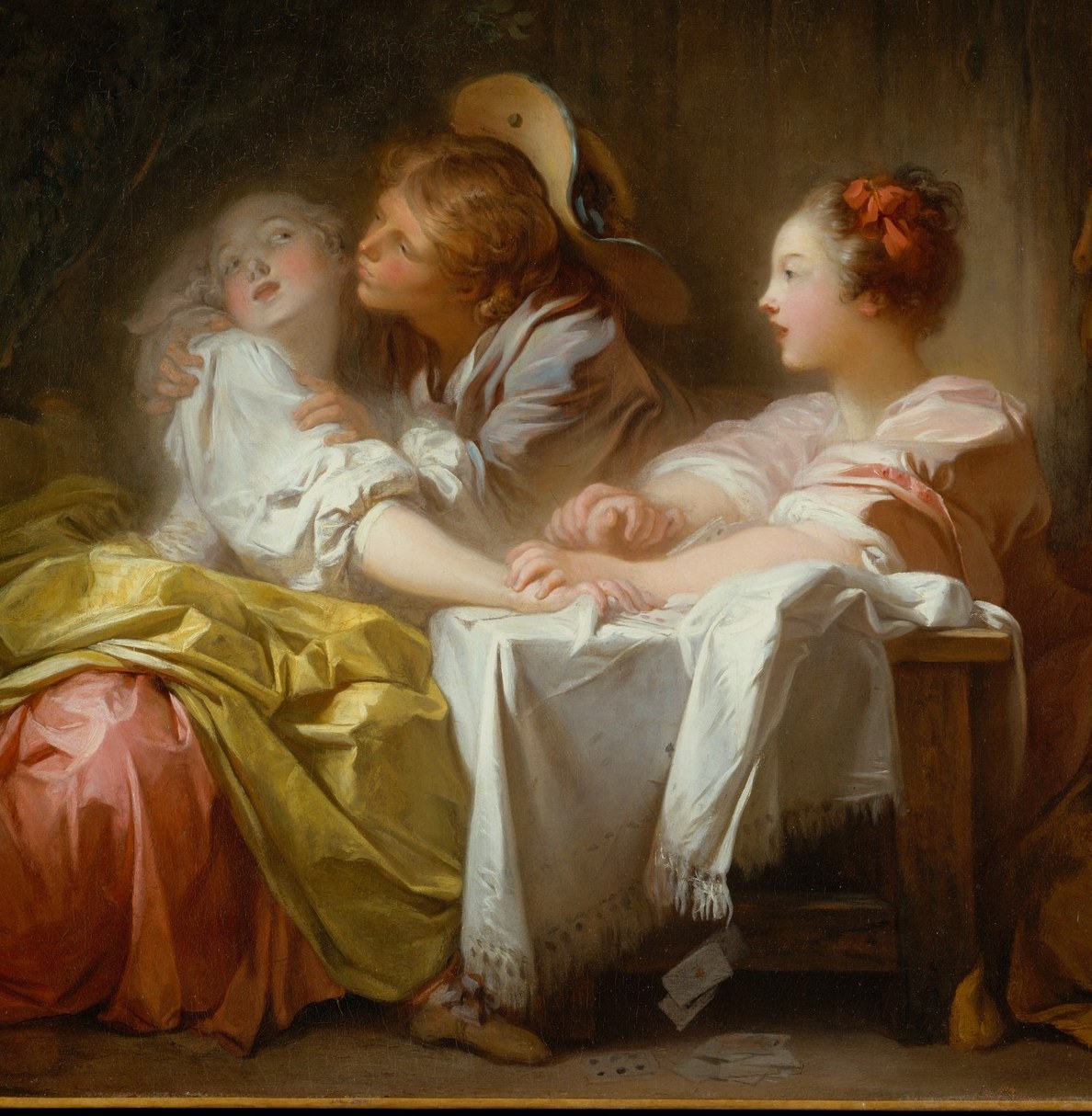
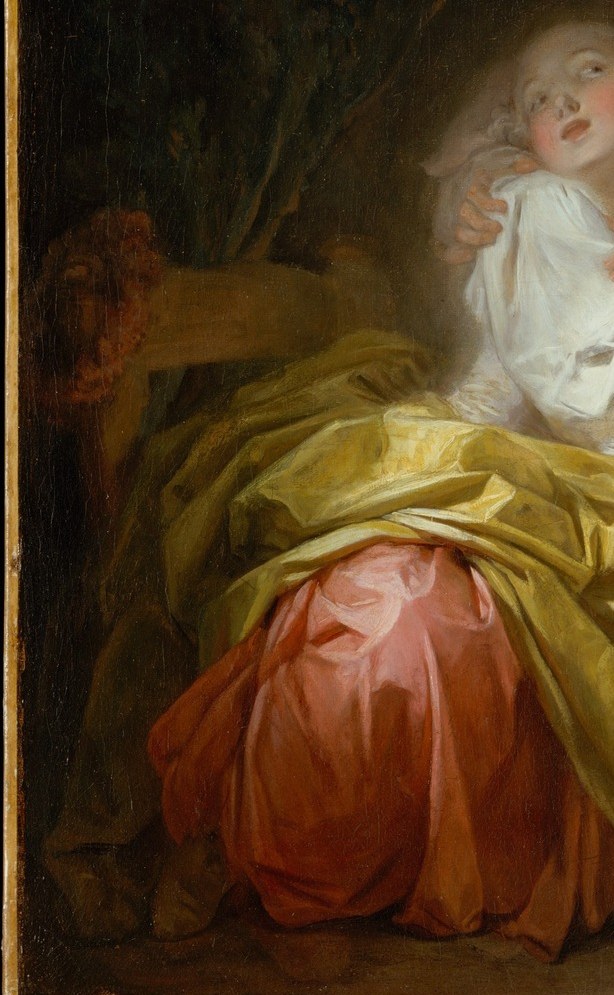
"The Stolen Kiss" by Jean-Honoré Fragonard (circa 1760) is not simply a painting of two lovers. It is a three-person drama compressed into a single moment, and the woman in pink on the left is the key to the whole performance. She watches from the shadows, her expression calm and knowing. Without her, this is a secret. With her, it is a game.
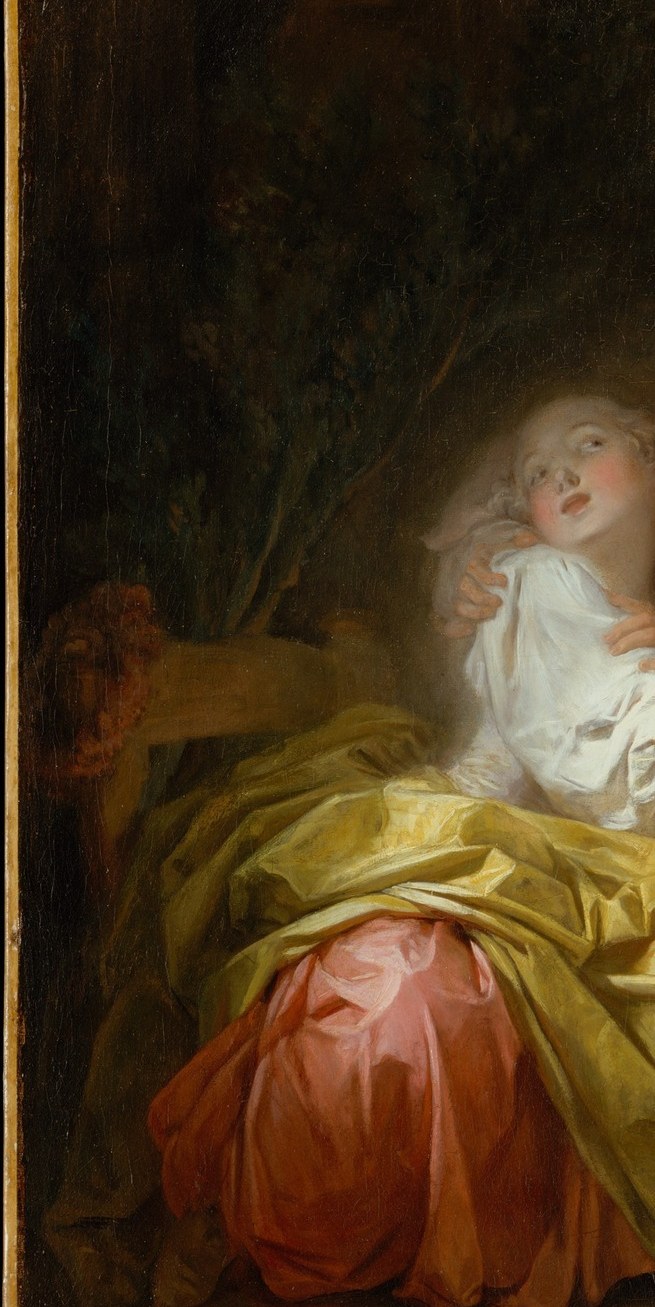
The heavy curtain on the right frames the scene like a stage flat, a favorite device of Rococo painters. The yellow dress functions almost as a light source itself, pulling your eye before you ever reach the faces. But Fragonard then nudges you left, into the shadow, toward the observer. Her rose-pink gown is a cool visual counterweight to all that blazing satin, signaling emotional distance while keeping her woven into the story.
Fragonard was the supreme painter of aristocratic intimacy in the last decades of the French Ancien Régime. His world was one of private theatricals, candlelit game rooms, and carefully coded gestures. In this context, a third figure watching from the edge of the room was rarely an intruder. She was part of the architecture of flirtation, a chaperone who permitted by looking, or a friend who found pleasure in witnessing the scene. Her presence gives the kiss its charge without turning it into alarm.
Look again at her face. She is not turning away. What do you read there?
#arthistory #fragonard #rococo
Details
Transcript
You see a stolen kiss. But you are missing the other story. The painting is shaped like a theater. So who is the woman in pink? Her face is the moral hinge of the scene. She is not alarmed. She is not calling out. 18th-century aristocrats staged these private theaters of desire. Her gaze turns this from transgression into play.