The Silver Tureen by Jean-Baptiste-Siméon Chardin
View the artwork: The Silver Tureen →
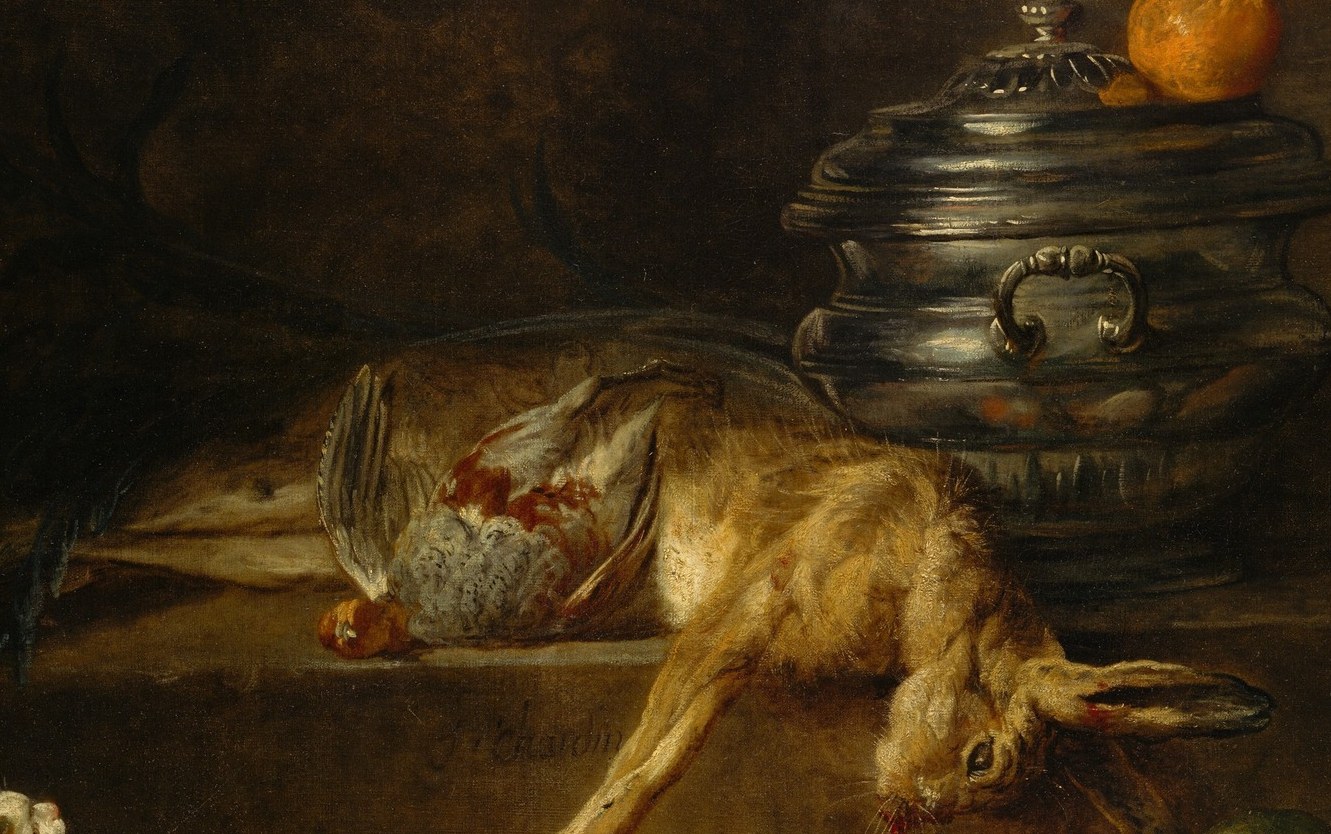
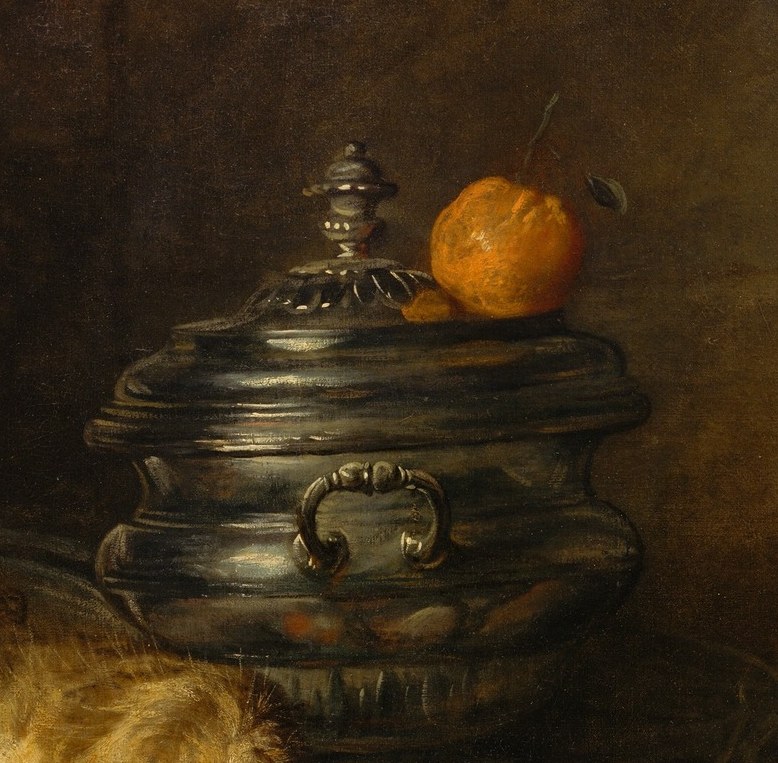
This is "The Silver Tureen" by Jean-Baptiste-Siméon Chardin, painted around 1730. It is not a grand history painting but a quiet witness to the material life of the French bourgeoisie. Every object on this shelf is a line item in a household's economy, from the costly polished silver to the game for the stewpot.
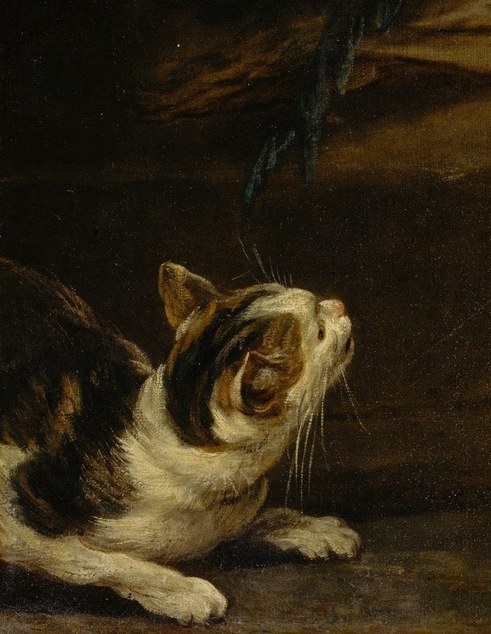
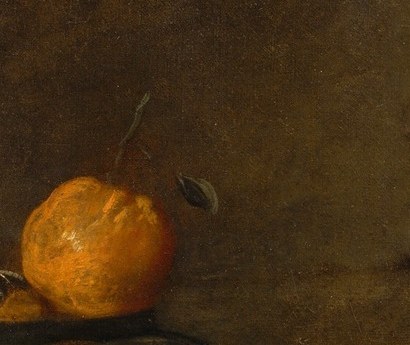
Look past the dramatic sprawl of the rabbit and you see a ledger of domestic value. The silver tureen reflects the room's light and the family's portable wealth. Beside it sit humble kitchen essentials: an onion with papery skin, a ripe apple, a scattering of hazelnuts. At the lower left, a black-and-white cat stares with the fixed intent of a predator, introducing a live tension into a scene of still preparation.
Chardin was a master of the quiet middle ground, painting the pantries and sculleries of the Parisian bourgeoisie rather than the feasts of the aristocracy. His backgrounds are featureless shadows that push these simple objects forward with a stage-like gravity. The ledge itself is a favorite illusionistic trick, making the rabbit's drooping ear seem to hang into our space.
This painting survives as a document of 18th-century food culture, where luxury and humility sat unromantically on the same stone shelf. The silver tureen and the dead rabbit depend on each other. Which object on this shelf seems most alive to you?
#arthistory #chardin #stilllife
Details
Transcript
Paris, 1730. A kitchen is also a ledger. The polished silver is the family's portable wealth. A fresh rabbit, bought for the pot. And the cat who wants his cut. Humble onions and apples sit alongside the luxury. Chardin painted the French middle class by painting its pantries.