The Dissolute Household by Jan Steen
View the artwork: The Dissolute Household →
Jan Steen's The Dissolute Household (1664) is a Dutch morality play painted in oil, now at the Metropolitan Museum of Art. It is so famous in the Netherlands that a messy home is still called a "Jan Steen household."
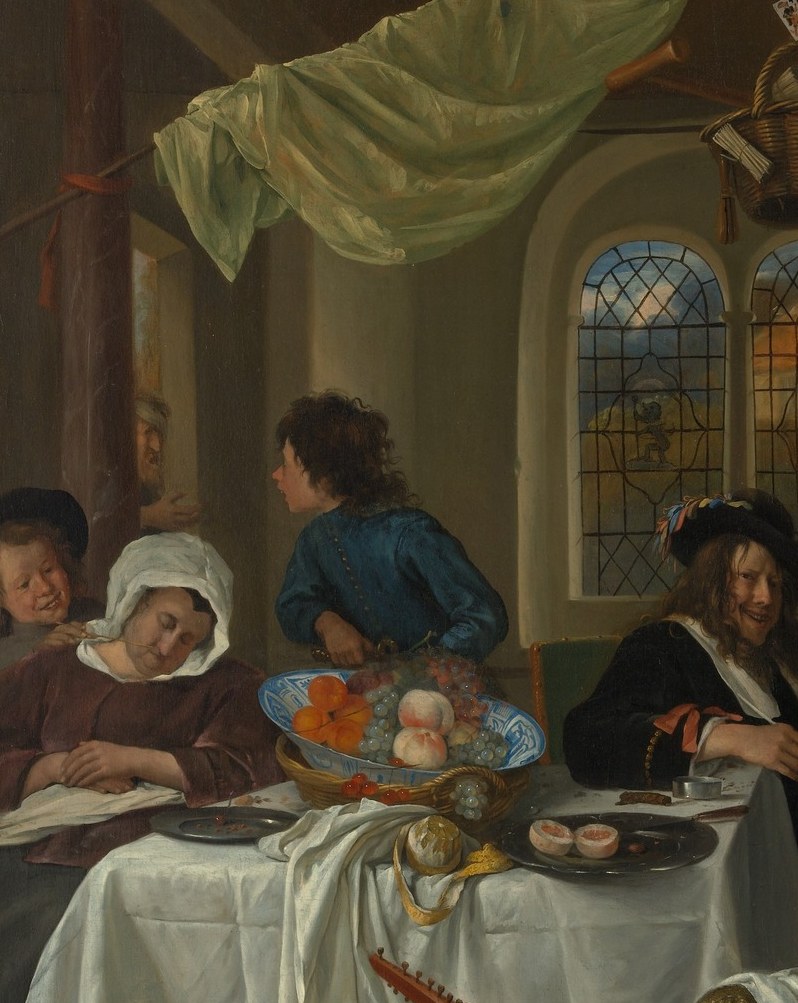
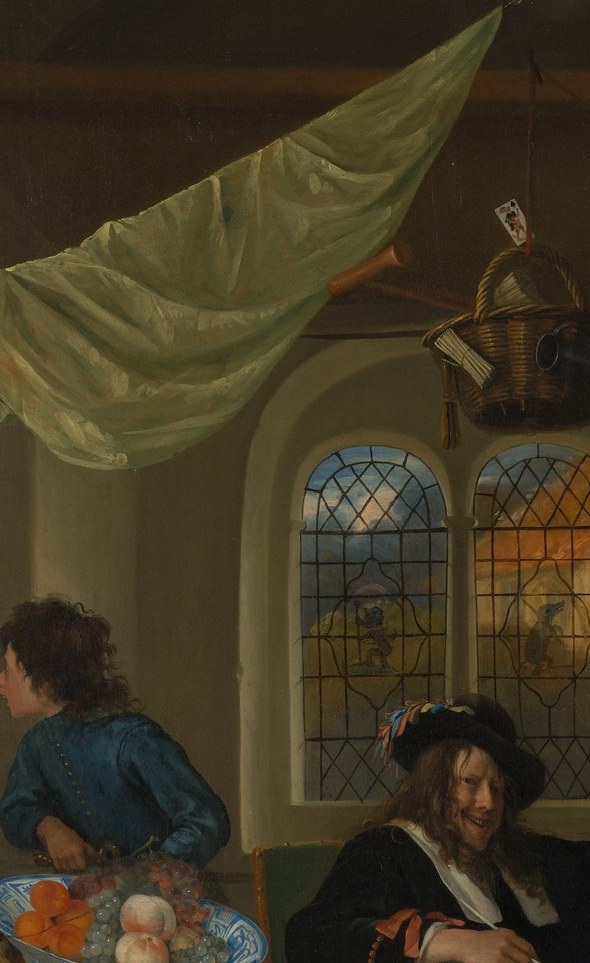
What looks like chaos is a tightly controlled stage. The yellow fabric at the top is a theater curtain, and the heavy red drapery on the right completes the frame. Steen isn't showing you a home; he's showing you a performance. Every object is a prop in a sermon about vice.
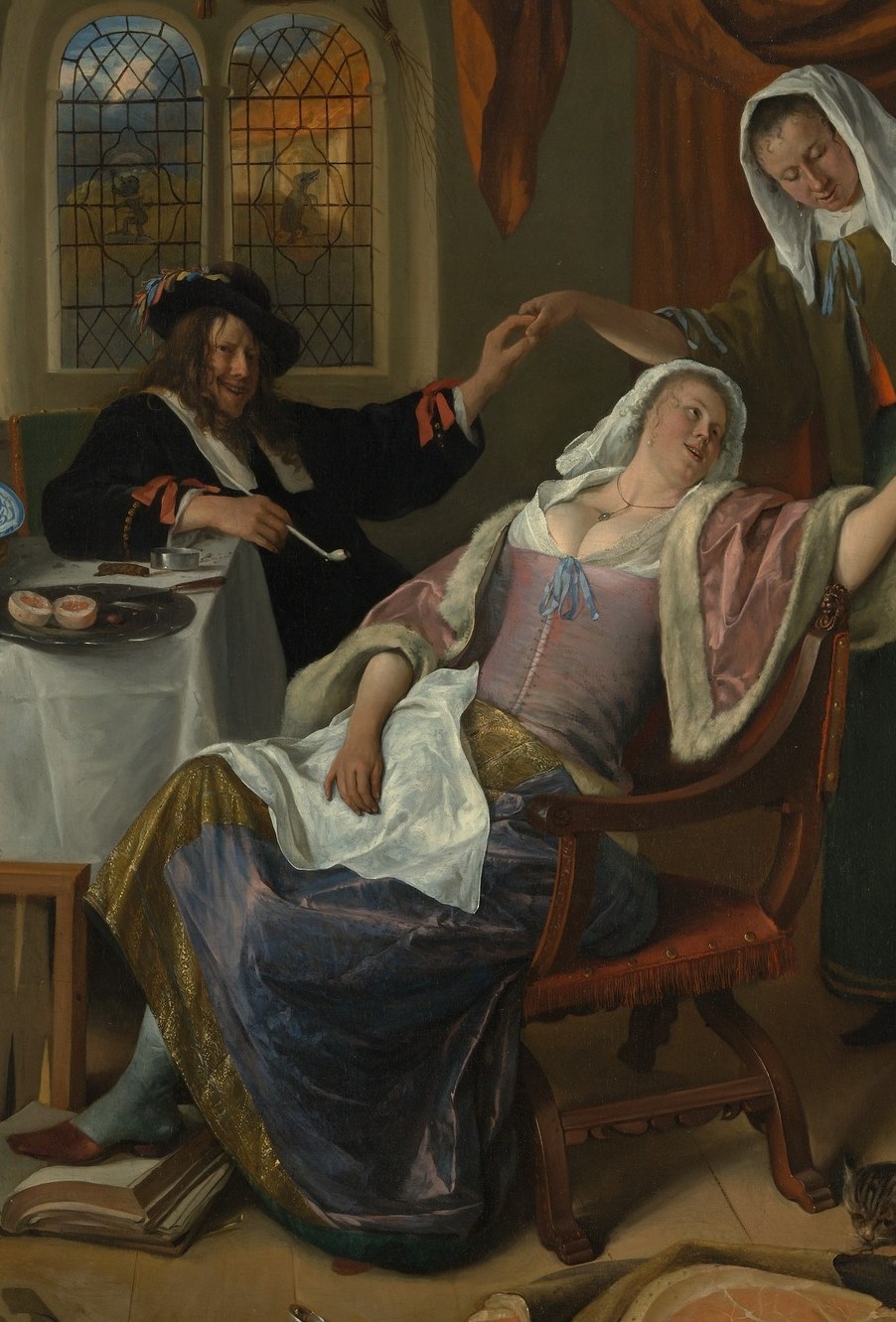
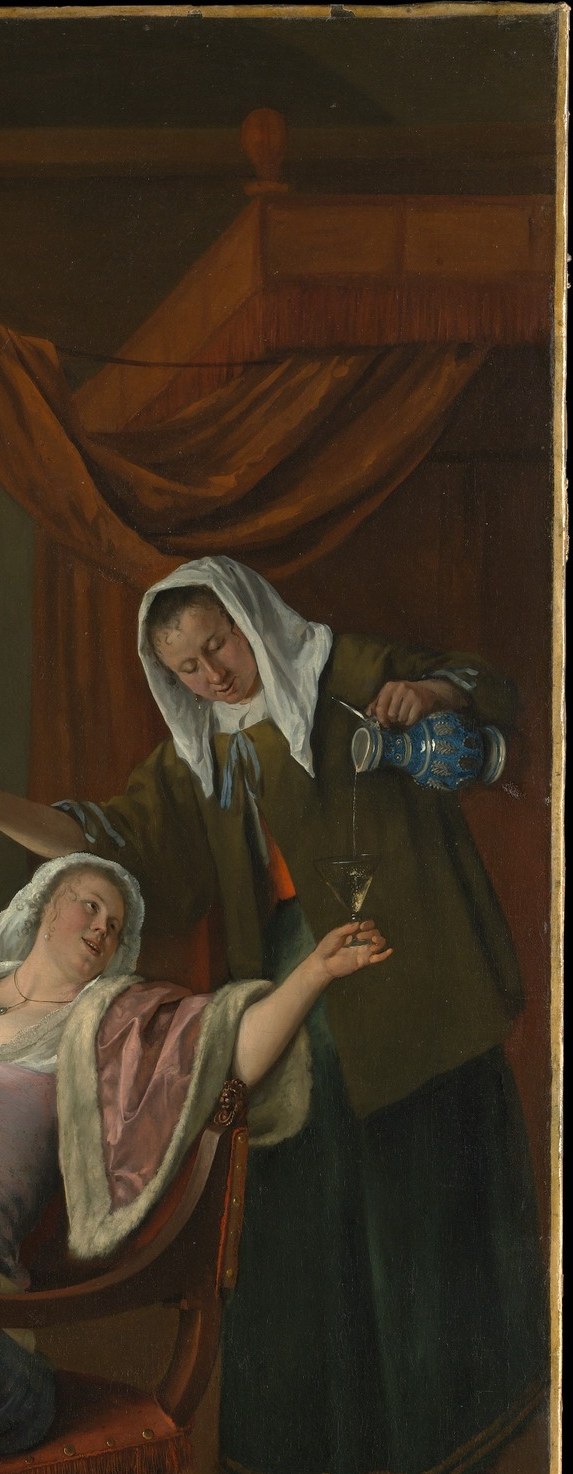
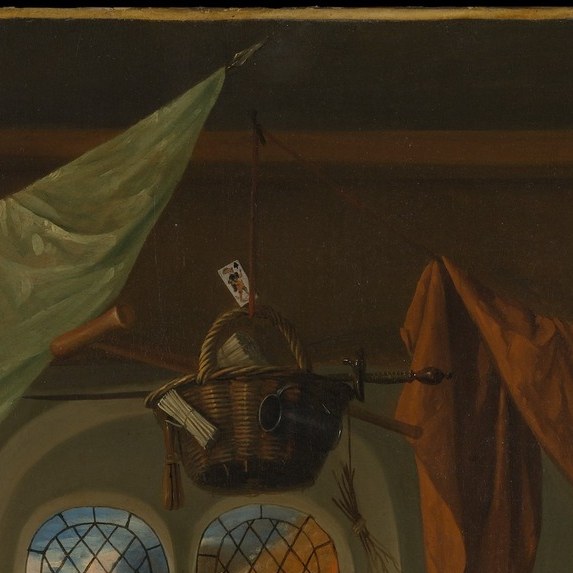
Look at the basket hanging from the ceiling. It holds three things: plague clappers, a beggar's crutch, and the jack of spades. Dutch viewers would have read them instantly as disease, poverty, and gambling. On the floor, a Bible lies trampled in the debris. The artist painted himself into the middle of it all, leaning in and laughing, his fingers intertwined with a serving maid as she pours more wine. The reclining woman reaching for a drink is likely modeled on his own wife.
Steen was the Dutch Golden Age's great comic moralist. His technique was to build an entire argument into a single unified space, layering still-life detail with theatrical framing and multiple figures, each one a different vice. The painting entered the Met in 1982 as part of the Jack and Belle Linsky Collection. What domestic disorder would you stage as a painting?
#arthistory #jansteen #dutchgoldenage
Details
Transcript
It looks like a house in free fall. But the yellow canopy at the top is a theater curtain. This isn't a real room. It's a stage. Overhead, a basket holds three warnings. Plague clappers, a crutch, and the jack of spades. Disease, poverty, ruin. Jan Steen painted himself at the center, grinning. He staged his own household as a cautionary farce.