Rosa Mystica by Augustus Vincent Tack

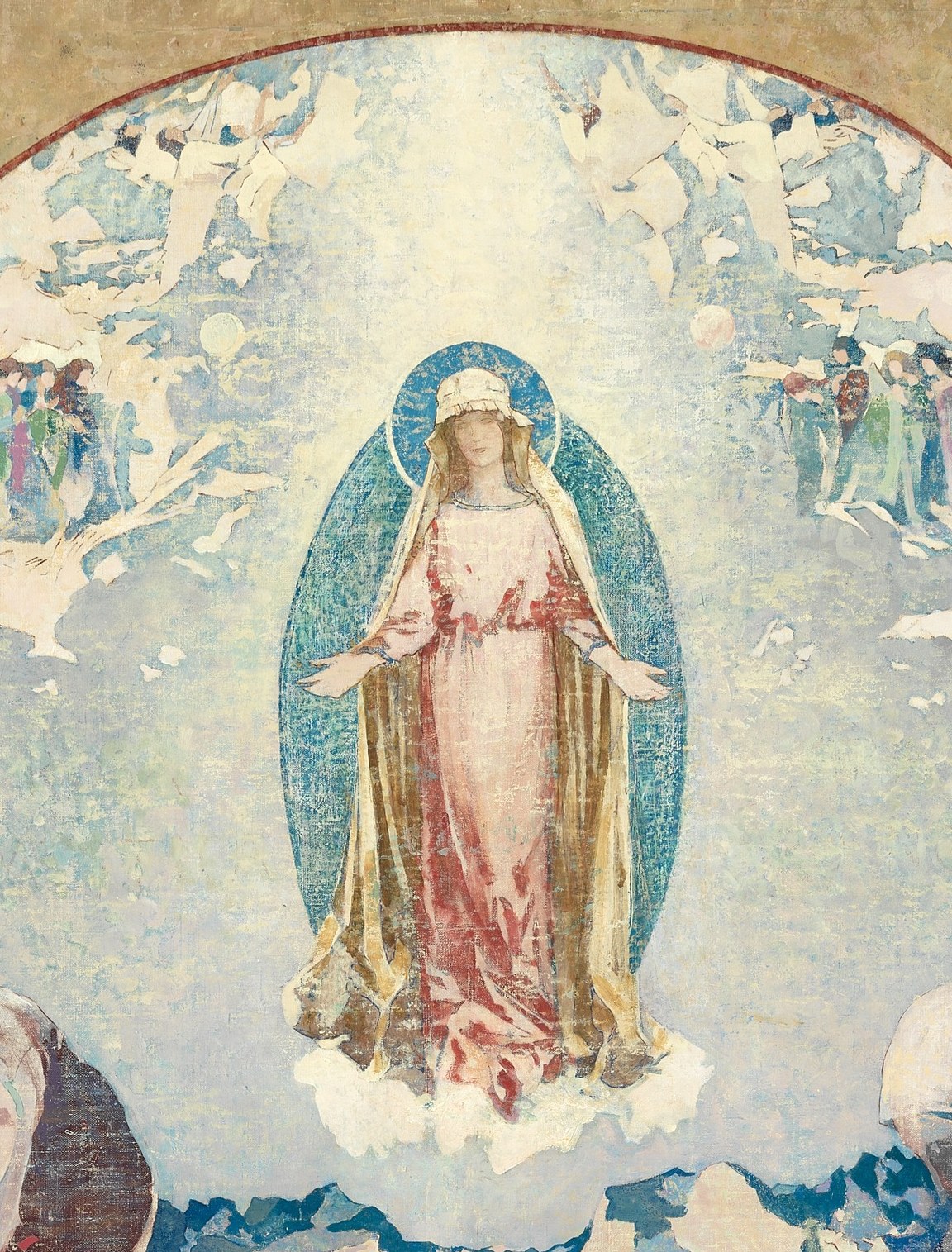
This is Rosa Mystica by the American painter Augustus Vincent Tack, painted in 1923 and held today at the Smithsonian American Art Museum. At first scroll it looks like a medieval altarpiece, a faded, almost crumbling fresco. But it is an oil on canvas made in the twentieth century, and the aging was entirely intentional.

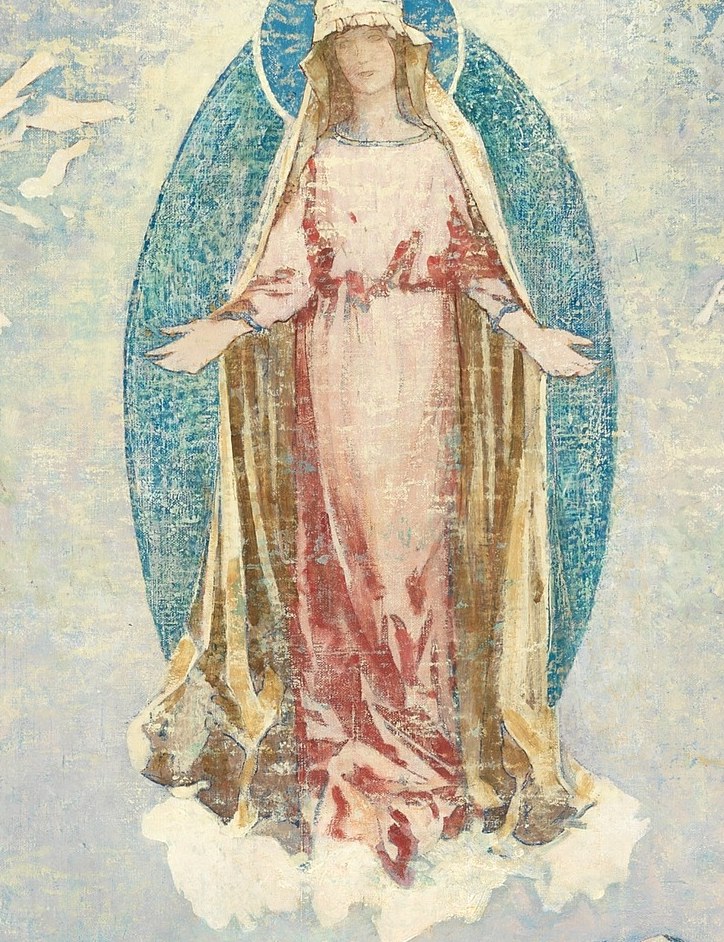
The Virgin Mary stands on a cloud throne inside a blue-green mandorla, the pointed oval that medieval art used to signal divine presence. Her blue veil, the red and gold of her robe, these were colors with fixed meanings, coding charity, purity, and divinity. Tack applied the gold pigment so thickly it catches light like gesso on a panel.

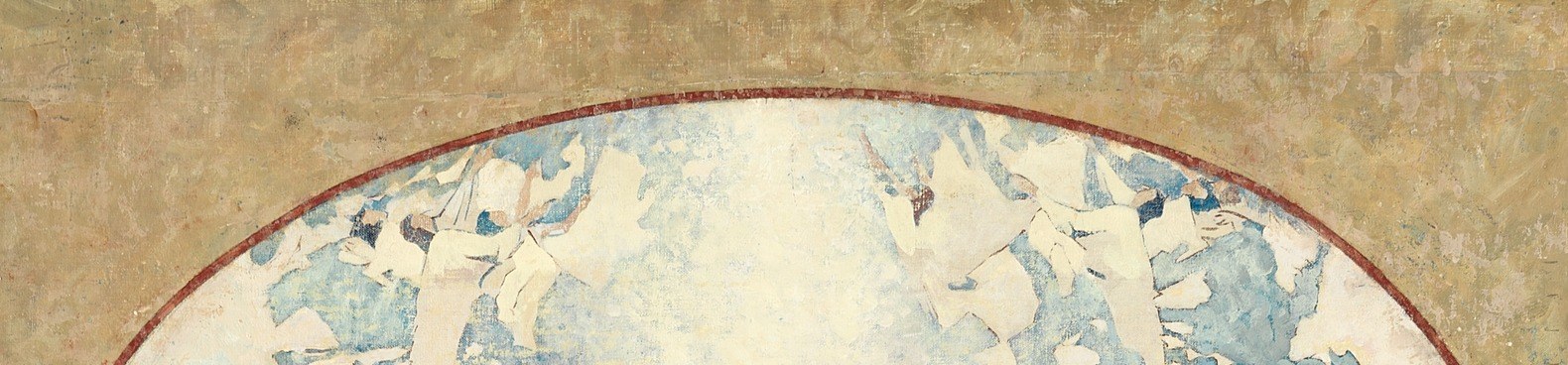
And the sky: look into it long enough and you begin to see hosts of barely-resolved winged figures. They are the painting’s hidden reward. Tack built them into the pale atmosphere with such restraint that they materialize only under sustained attention, a devotional device translated into paint.

Augustus Vincent Tack rarely gets mentioned alongside his modernist peers, but here he did something genuinely odd. He made a twentieth-century painting that refuses to feel new. It asks you to slow down, and when you do, it gives you more.

#arthistory #americanmodernism #symbolistart

Details
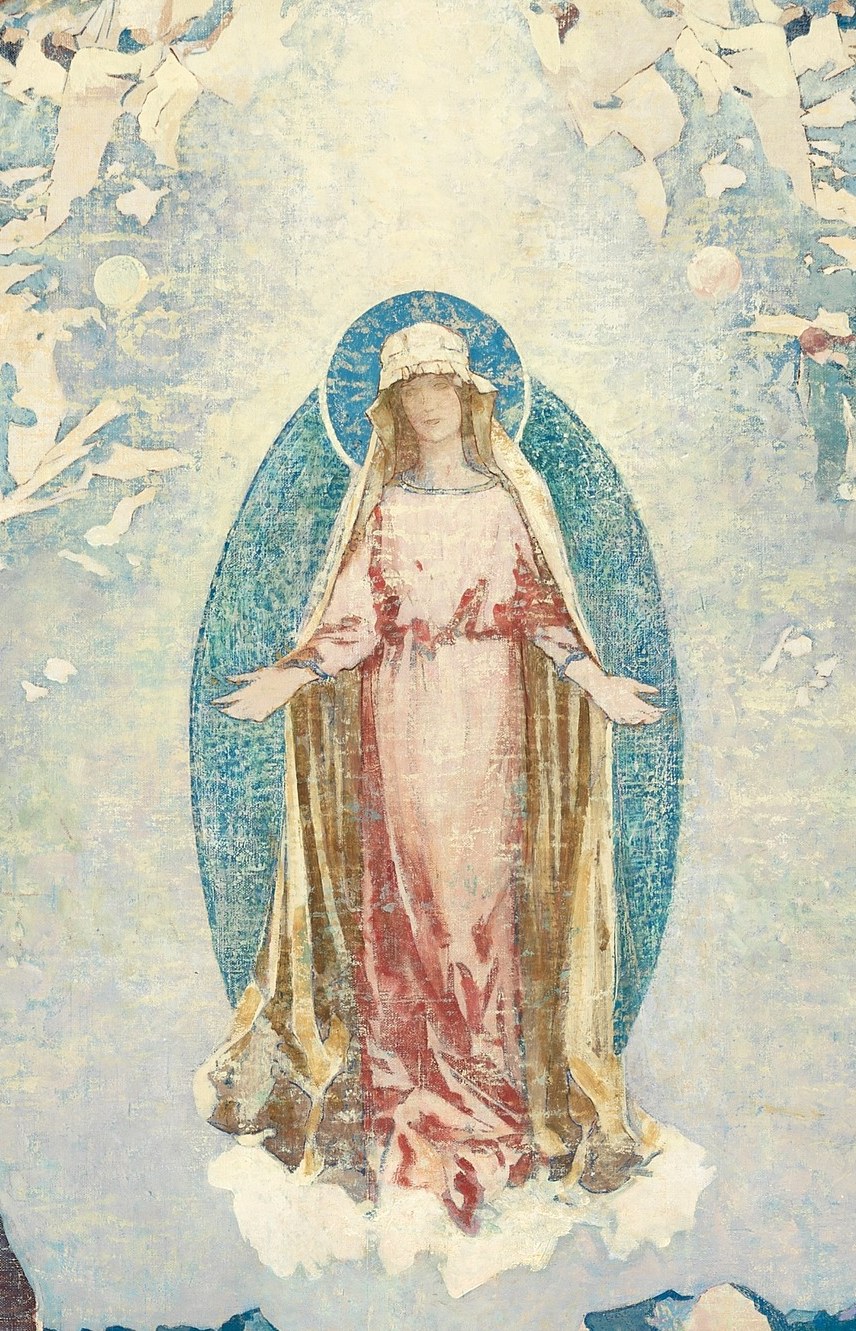
The devotional anchor of the composition; her open-armed posture signals intercession between heaven and the mortal supplicants below, making the viewer the implied recipient
This arch is painted pigment, not a physical frame , Tack built the altarpiece convention into the canvas itself, signaling that the viewer is entering a sacred space, not viewing a picture
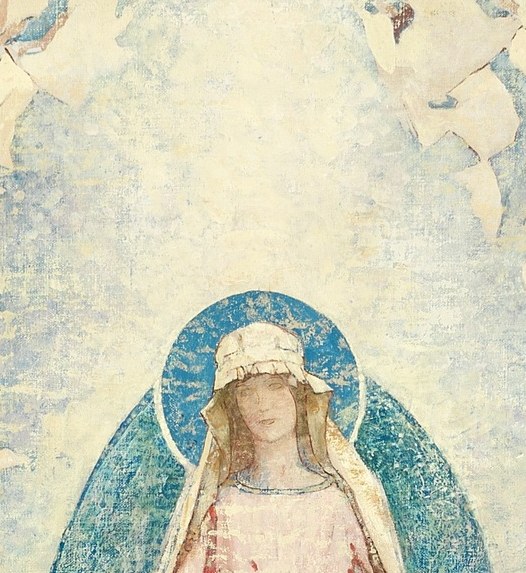
The serene, slightly downward gaze and blue veil , iconographic shorthand for purity since the Byzantine era , are the emotional center the whole painting orbits
The mandorla (vesica piscis) is a medieval symbol of divine transcendence; Tack's use of it links his 1923 modernism deliberately back to Romanesque altarpiece tradition
Impasto application is most visible here; red signals charity or Christ's passion, gold divinity , a theological color program encoded in the fabric texture itself
Transcript

She seems to float in a crumbling sky. See the red and gold? Those are the colors of charity and divinity. The painter applied the pigment inches thick. Now look into the upper corners. Keep looking. These angels appear only when you stop scrolling. Tack painted the aging itself, so it would feel centuries old.