A Kitchen by Hendrik Martenszoon Sorgh
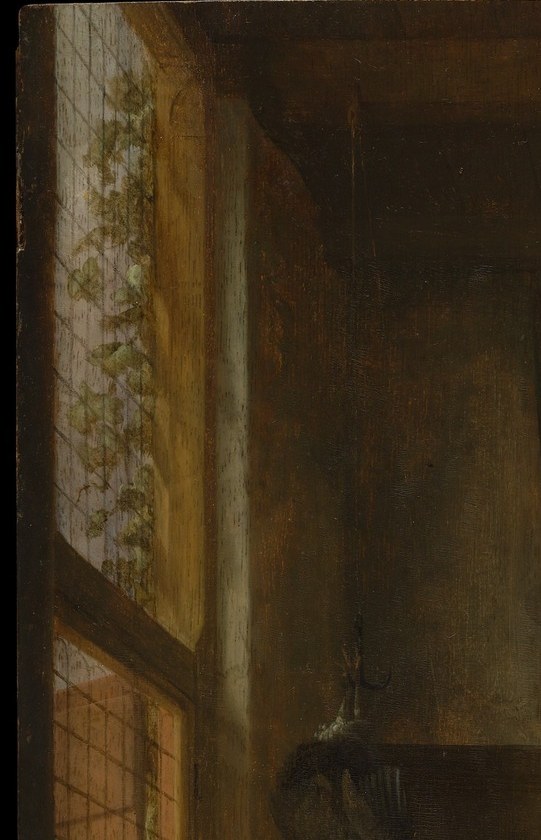
This is 'A Kitchen' by Hendrik Martenszoon Sorgh, painted in 1643. It lives in a quieter corner of the Dutch Golden Age, far from the crashing waves and naval battles. Sorgh was only twenty-three, working in Rotterdam, and he chose to paint a moment of domestic labor with the seriousness other artists gave to generals and kings.
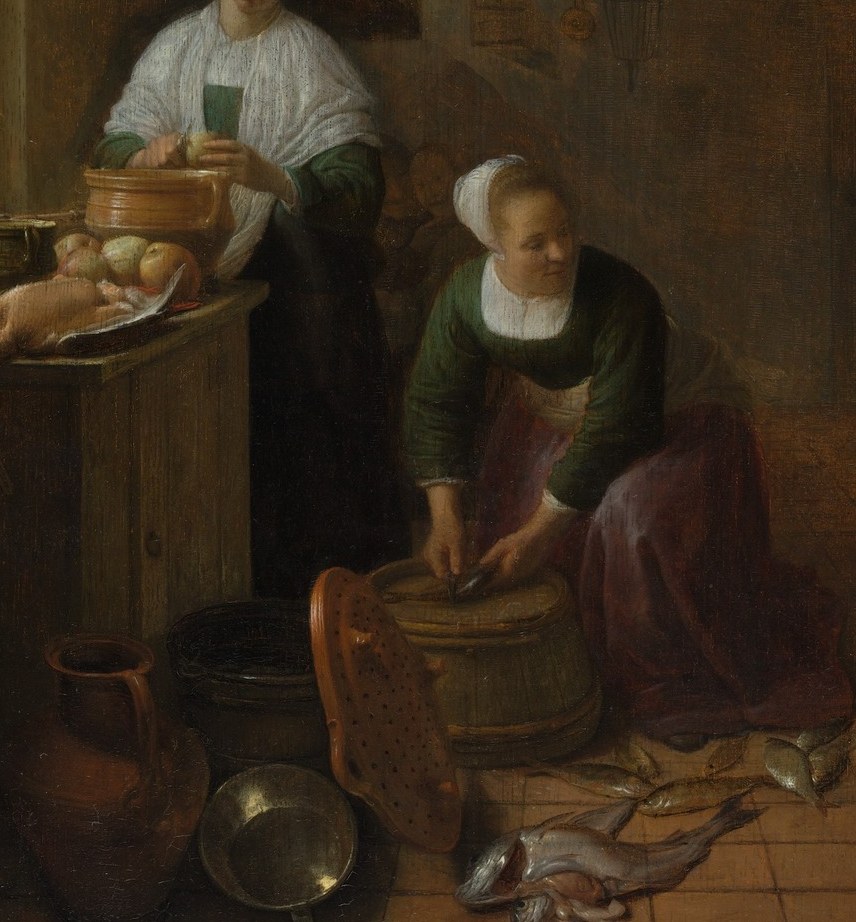
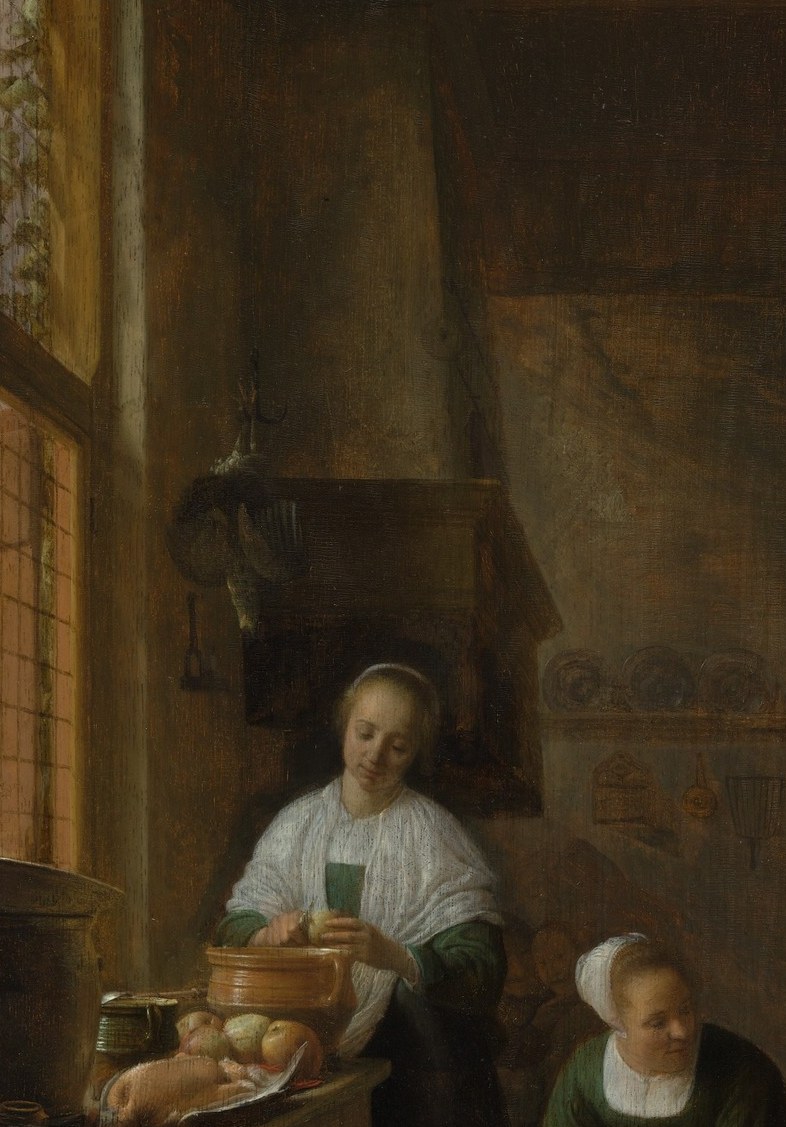
Look at the two women. The standing figure in the white cap anchors the entire composition. Her face is the psychological center: a downward, composed expression that reads not as sadness but as focused authority. Below her, on the floor, another woman kneels, scraping a fish. In Dutch genre painting, that vertical split, one above, one below, was a clear social signifier. But Sorgh doesn't mock either of them. He lights them from the same window.
The scattered fish are worth a close look. Raw herring and cod were everyday provisions in 17th-century Rotterdam, but in a painting they also carried a Lenten meaning: bodily sustenance as a metaphor for spiritual cleanliness. The basket of apples on the table tips the same way, ripe produce at its peak, a quiet vanitas note about time and perishability.
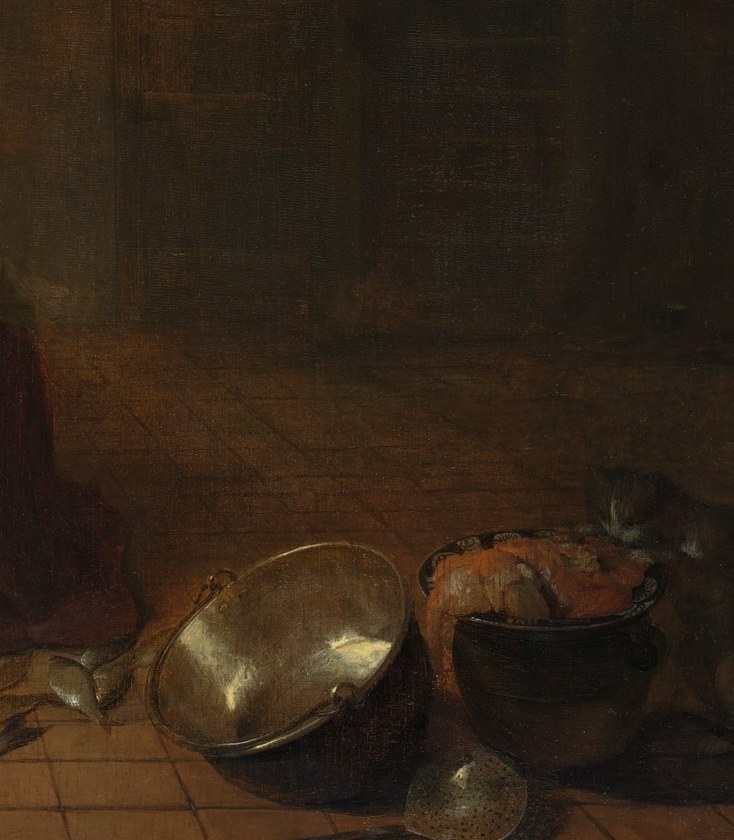
The real technical showmanship is in the copper pots on the right wall and the wide metal bowl on the floor. Dutch collectors prized reflections in beaten metal as evidence of a painter's skill, and Sorgh delivers: the bowl catches the window light and pulls the eye to the lower foreground, balancing a composition that would otherwise tumble leftward into the brightness.
What do you think these two women's working relationship actually was?
#arthistory #dutchgoldenage
Details
Transcript
In 1643, Rotterdam's household kitchens were normally run by men. But here, two women control the room. She stands above, handling the cloth. Her face is composed. Her downward gaze runs the house. Below her, another woman kneels on the floor, cleaning fish. Sorgh was twenty-three, painting the dignity of ordinary labor. Dutch kitchens were moral stages. Clean fish, clean soul. The light of a single window gives her work a quiet honor.