View from the Quai d'Orsay by Johan Jongkind

Johan Jongkind's *View from the Quai d'Orsay* (1854) at the Met is a landscape, but it is also a document of a city about to vanish. Every industrial object along this stretch of the Seine is a clue: within a year, Baron Haussmann would begin demolishing the medieval Paris you see here to build the grand boulevards we know today.

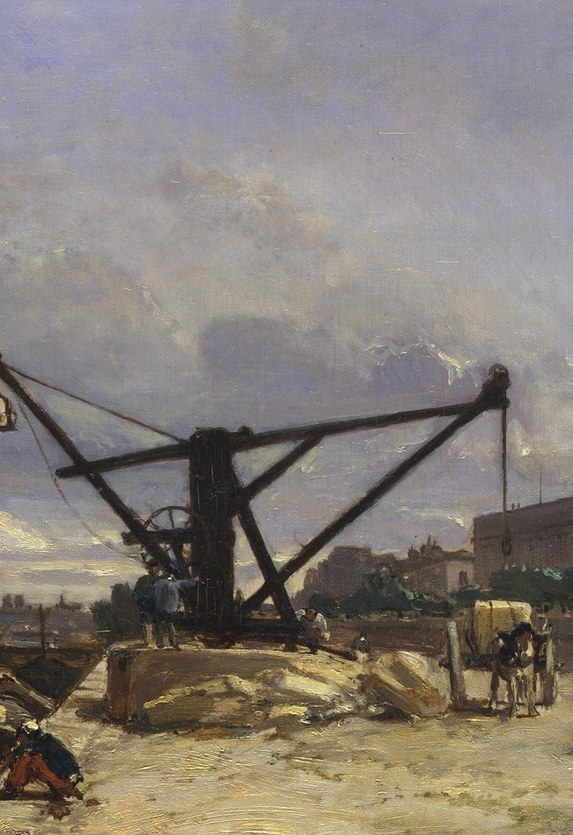
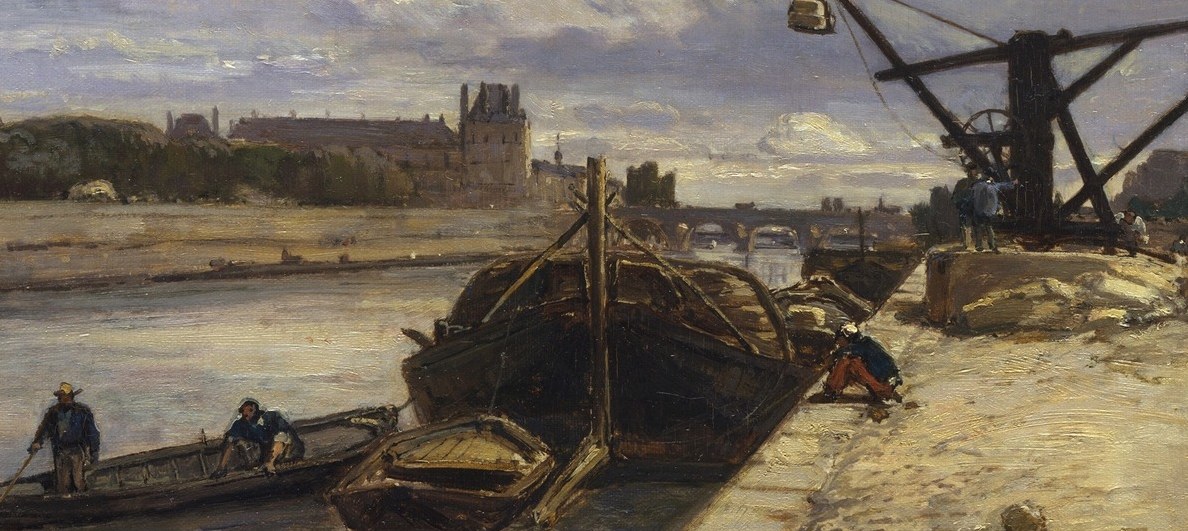
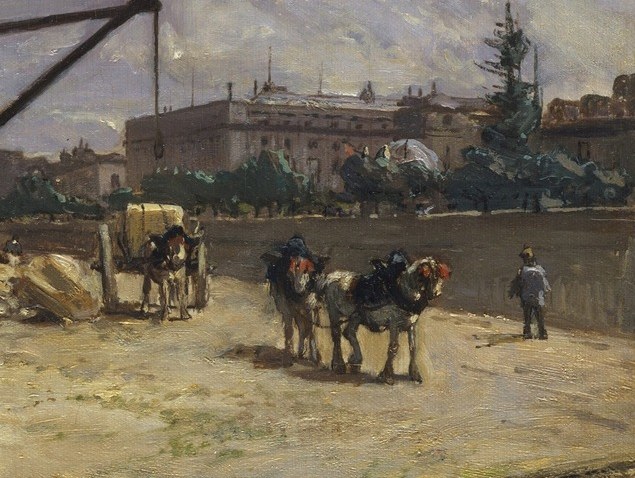
Look at the heavy wooden crane on the quay and the moored cargo barge in the foreground. These are the old working waterfront, a river economy that had served Paris for centuries but was already losing ground to the railways. The horse-drawn cart on the right is loaded with cut stone, likely destined for the first wave of new construction that would soon erase this very quayside.

Jongkind, a Dutch painter who moved to Paris, stood on the left bank and painted this in oils with a loose, atmospheric touch that directly influenced the young Claude Monet. The painting entered the Metropolitan Museum of Art in 2001 through a bequest from Meta Cecile Schwarz, preserving a rare view of the pre-Haussmann Seine.

It is a picture of a moment caught between two cities: one built by river barges and wooden cranes, the other rising in stone and steam. Which of the two do you think Jongkind preferred?

#arthistory #johanjongkind #parishistory

Details
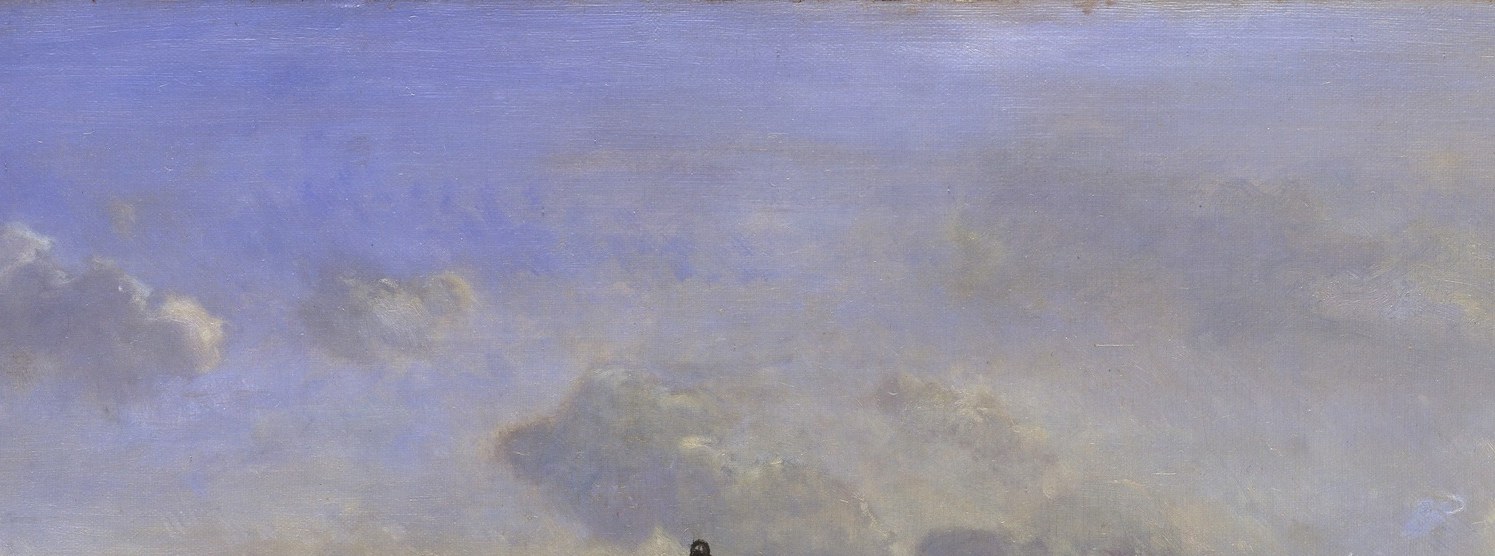
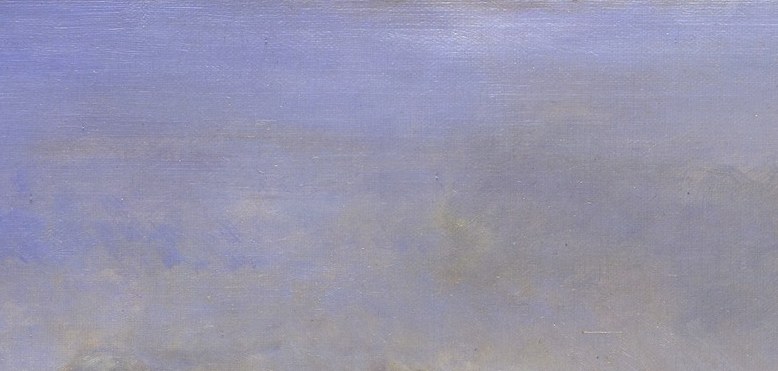
A sweeping, luminous cloud formation occupies more than a third of the canvas , typical of Jongkind's proto-Impressionist sky work and the element most likely to carry cinematic atmosphere in a close-up.
The dominant industrial landmark of the scene , a wooden hoisting crane dominates the mid-ground, symbolizing the working waterfront of 1850s Paris and anchoring the composition vertically.
The massive hull of a Seine barge fills the foreground left, its bulk contrasting with the open sky , a record of river commerce that would soon be overshadowed by the railway age.
A warm gap in the overcast lets golden light spill across the scene, the only warm note in an otherwise cool palette , Jongkind's signature handling of transient atmospheric light that directly influenced Monet.
A horse and cart with attendant workers at right ground the scene in daily labor, giving the painting human scale and animating the otherwise heavy industrial mood.
Transcript

This looks like a quiet view of the Seine. But every machine here is a coded argument. This barge is a dying technology. 1854. Railroads are strangling river trade. This crane belongs to the old port. Soon, Haussmann will demolish this whole quay. The lone cart carries stone blocks. It is building the new Paris that erases this one.