Peacocks by Melchior d' Hondecoeter
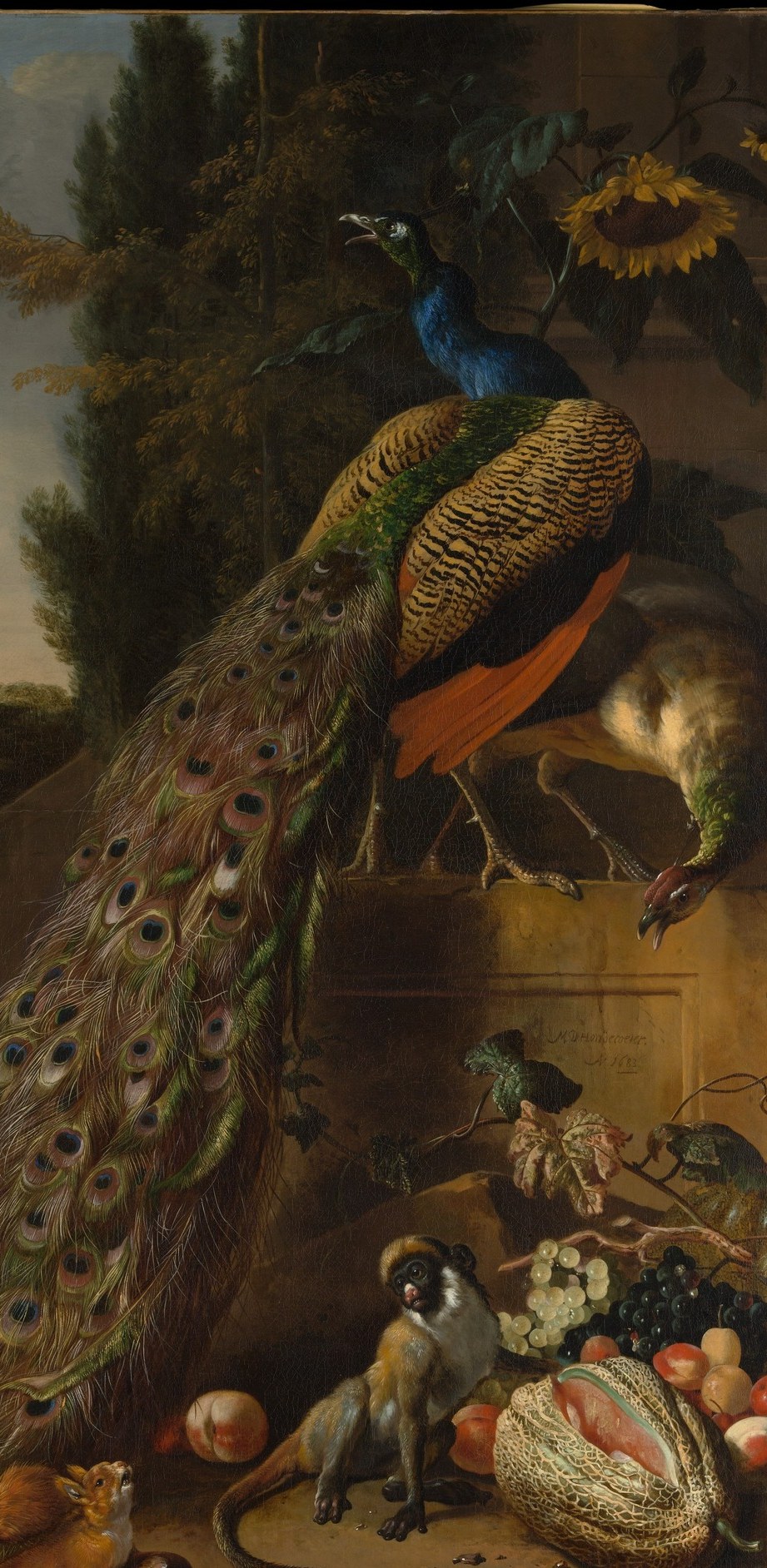
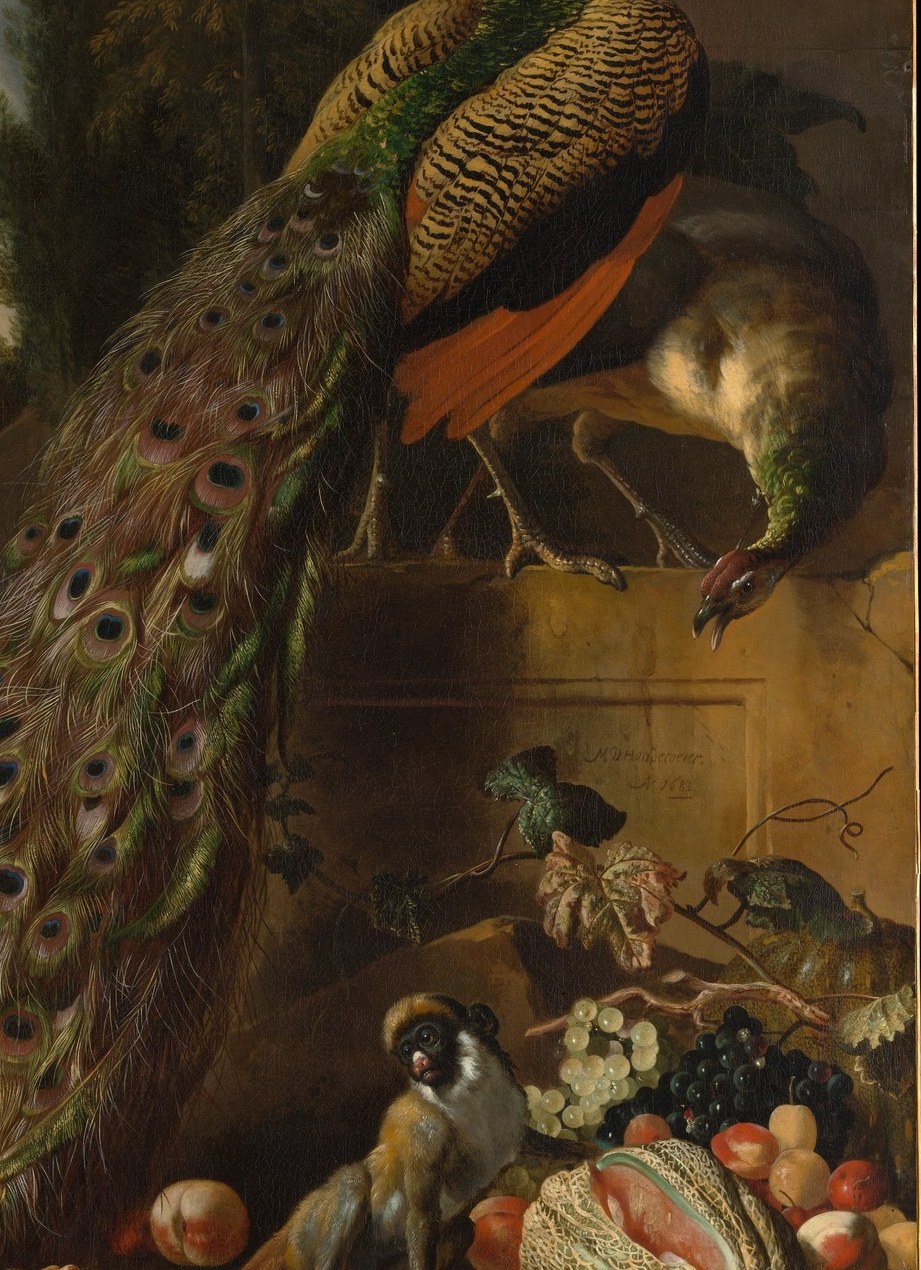
Melchior d'Hondecoeter’s "Peacocks" (1683, The Metropolitan Museum of Art) is a menagerie disguised as a portrait. The peacock dominates, tail fanned in iridescent blues and greens, but the painting is built as a collection of quiet dramas.
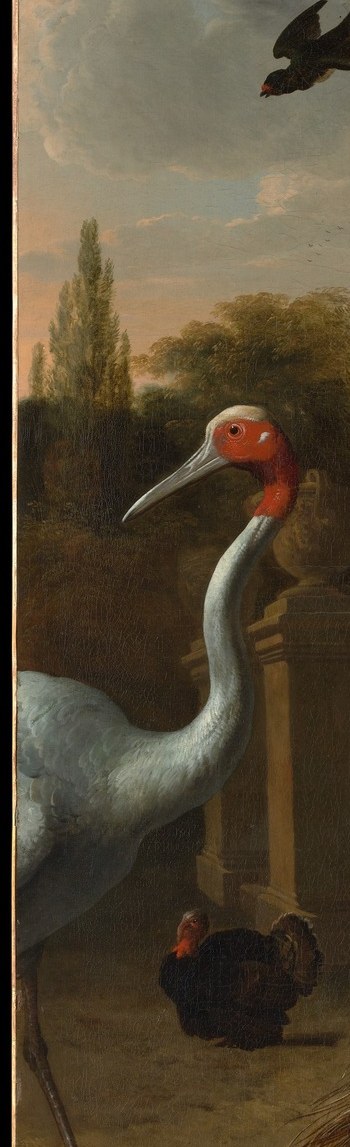
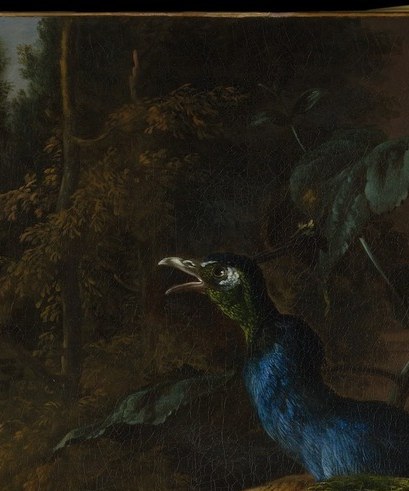
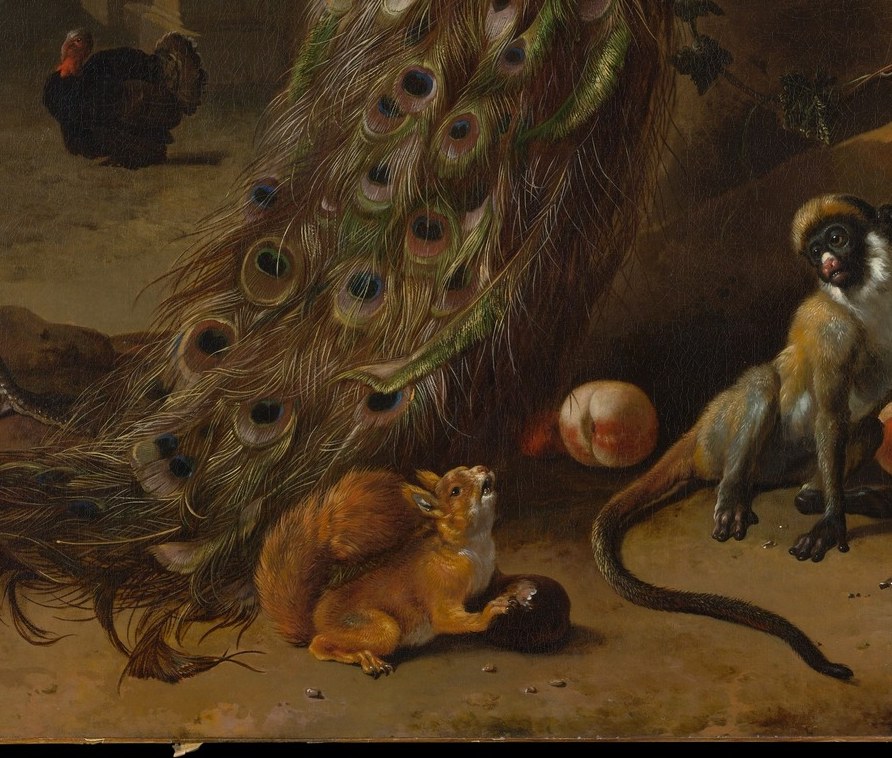
Look past the fan of feathers. A monkey and a squirrel squabble over fruit in the foreground. A white crane stands sentry on the left, and a tropical bird flashes color in the upper right. The composition rewards a slow read.
Hondecoeter was the leading animal painter of the Dutch Golden Age, supplying the country houses of wealthy Amsterdam merchants with living catalogs of the exotic creatures their trading ships brought home. These paintings signaled global reach: Indonesian cockatoos, African cranes, New World fruit.
Then your eye drops to the lower ledge. A snake coils in the shadow among the leaves, easy to scroll past, impossible to unsee once you find it. In a society that loved moralizing still lifes, the hidden snake was a small, sharp note: danger lives where you stop looking.
#arthistory #dutchgoldenage #animalpainting
Details
Transcript
At first glance, a peacock steals the show. His feathers hold a hundred painted eyes. The artist, Hondecoeter, was known as the 'Raphael of bird painters.' He filled his gardens with creatures from Dutch trade routes. A monkey picks through fruit beside a squirrel. But now look down, in the shadow beneath the ledge. A snake coils there, hidden in the leaves. In Dutch animal painting, the snake was a quiet reminder: even a wealthy garden hides danger.