The Holy Family by http://www.wikidata.org/.well-known/genid/6cd79e507c0354e537fb32061cde19ed
View the artwork: The Holy Family →
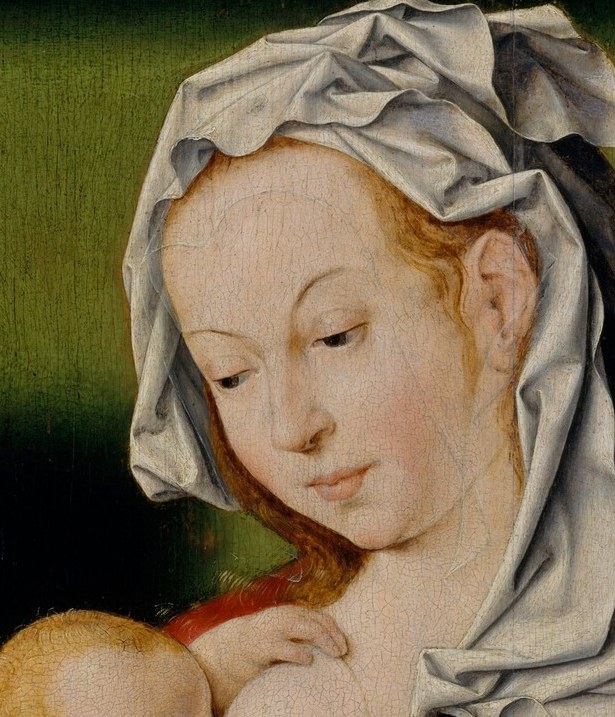
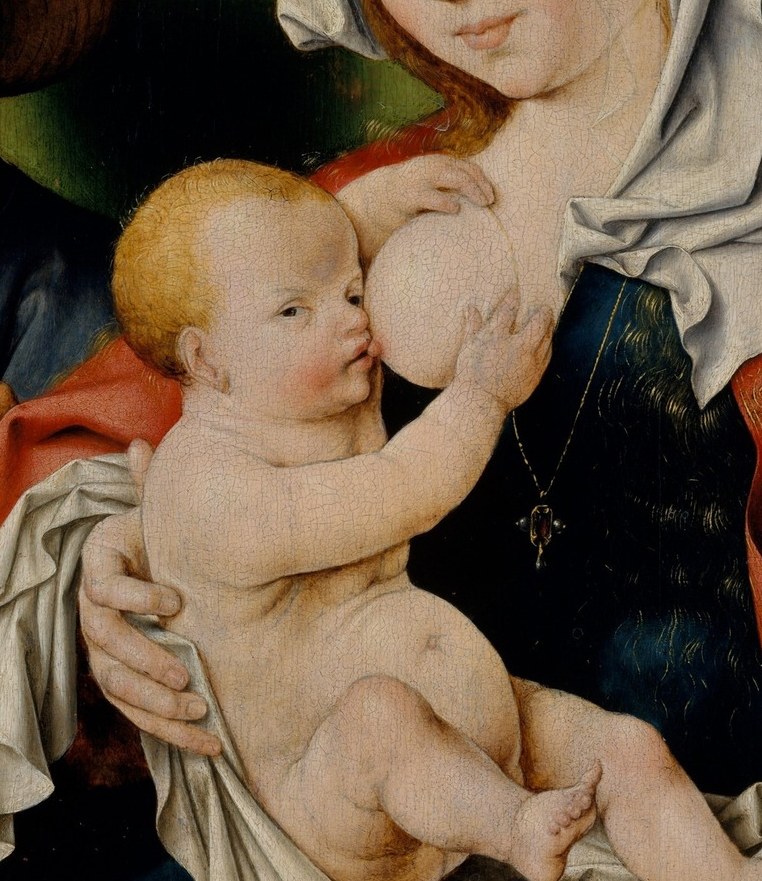
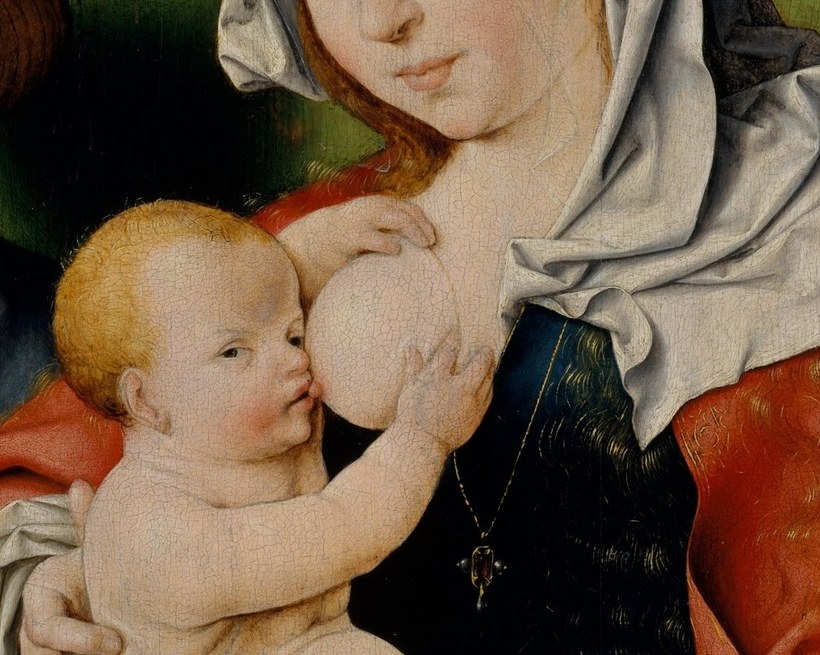
The Holy Family, painted around 1525 by an assistant in the Antwerp workshop of Joos van Cleve, looks at first like a tender domestic scene. It is also a prophecy in paint, a coded message that a 16th-century viewer would have read instantly, and that we can still decode today.
Look first at the basket of fruit on the table. It holds a pear, a cherry, an apple, and a cluster of grapes. Each is a symbol. For the Christian viewer of the time, the pear stood for Christ's love; the cherry, for the blood of his sacrifice. The apple recalled the Fall of Man in Eden. The grapes point to the Eucharist, the wine that would become Christ's blood.
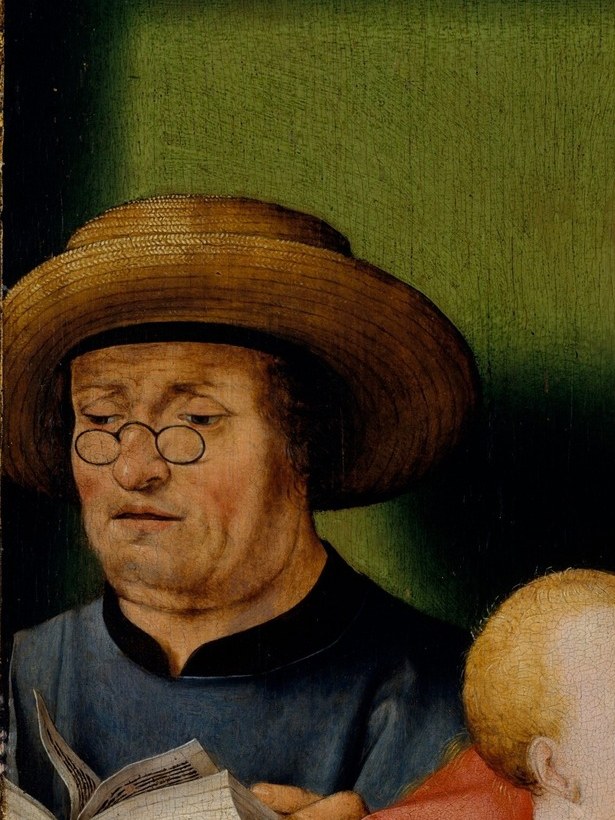
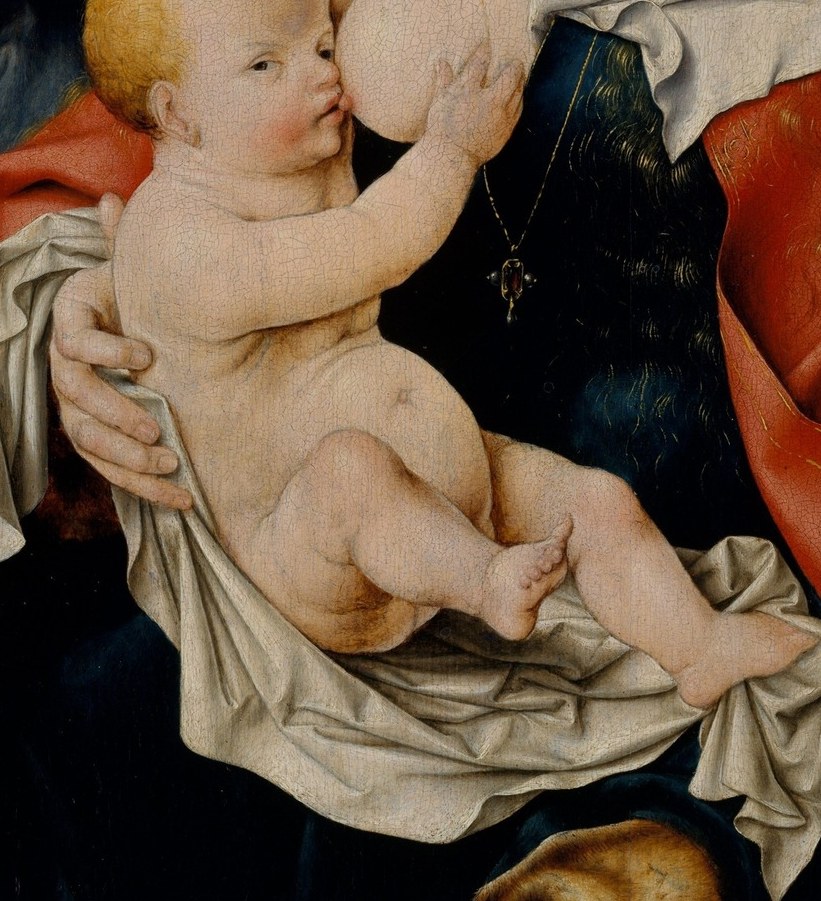
Joseph holds an open book, the scriptures, turned to a passage about suffering. Even here, in this quiet moment with the newborn, the story's end is already written. The Christ Child reaches not just for his mother but toward that future, his outstretched hand an acceptance of all that the fruit foretells.
This panel was mass-produced: the workshop used a pouncing technique to transfer the master's design, dusting charcoal through perforations onto the wood. The execution is less refined than Joos van Cleve's own hand, but the symbolic program remains entirely intact. It entered the Metropolitan Museum of Art in 1941 from the collection of George Blumenthal, where it hangs as a window into how ordinary families of the 1520s brought the sacred into their homes. Can you read the code now?
#arthistory #religiousart #flamishpainting
Details
Transcript
A mother, a child, an old man reading. It looks like a quiet family scene. But every object in a painting like this is chosen for a reason. Start with the fruit. A pear, a cherry, an apple, and grapes. The pear is Christ's love for humanity. The cherry, the blood he will shed. The apple is the Fall of Man. And the grapes, the wine of the Eucharist. Now the book. Joseph reads scripture, but it's open to a page on suffering. All of it is foretelling. The child reaches out to accept his fate. A family portrait, and a prophecy in paint.