The Virgin Adored by Saints by Scarsellino
View the artwork: The Virgin Adored by Saints →
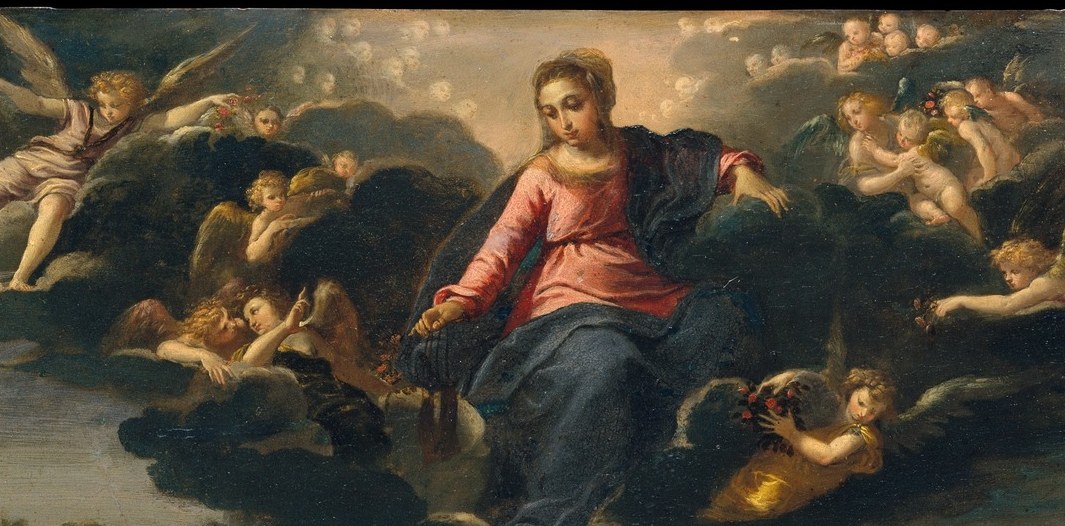
Scarsellino painted 'The Virgin Adored by Saints' in 1609, on a sheet of burnished copper. By the time he made this, he was nearly sixty years old and the most important painter of the School of Ferrara. He had spent his career reforming sacred art, stripping away mannerist decoration to find the raw human emotion inside a biblical story. This painting hangs today in a quiet room, and its power has not dimmed.
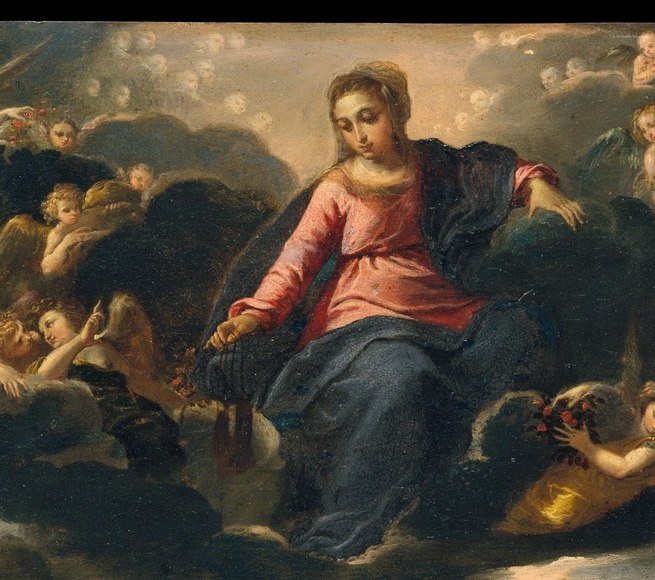
Look first at the sky. The Virgin appears in a swirl of cherubs, but the real miracle is the light itself. Because the ground is metal rather than canvas, the copper seems to breathe through the thin layers of oil paint. The heavenly zone glows with an inner warmth that no white pigment can match, as if the object itself believes.
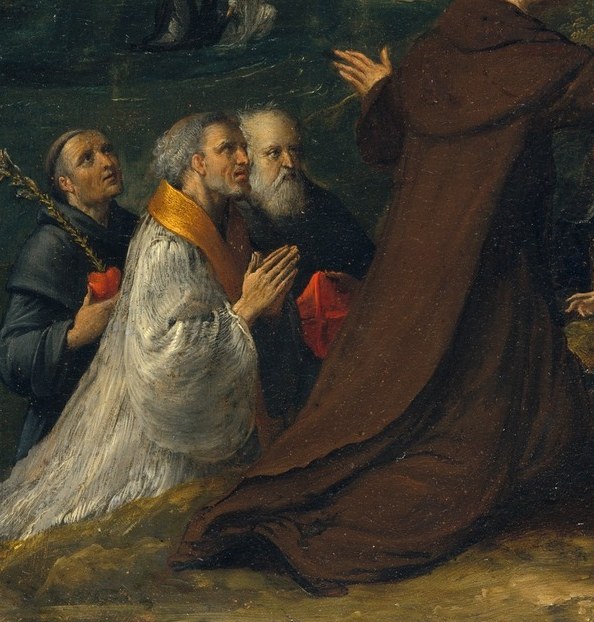
Then find the face. In the lower center of the crowded group of saints, one man looks straight up. His eyes are wide, his lips are parted, and Scarsellino has given him the specific, asymmetrical features of a real person in the grip of something he cannot explain. That face is the engine of the whole composition, the reason the painting exists.
Scarsellino died in 1620, eleven years after finishing this work. He never saw the landscape painting traditions his sacred scenes anticipated, but in this copper panel, he left a record of what it looked like to hope.
#arthistory #scarsellino #italianrenaissance
Details
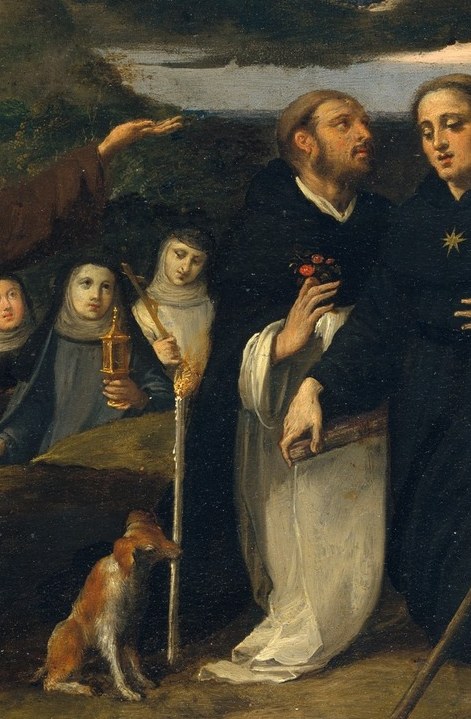
Transcript
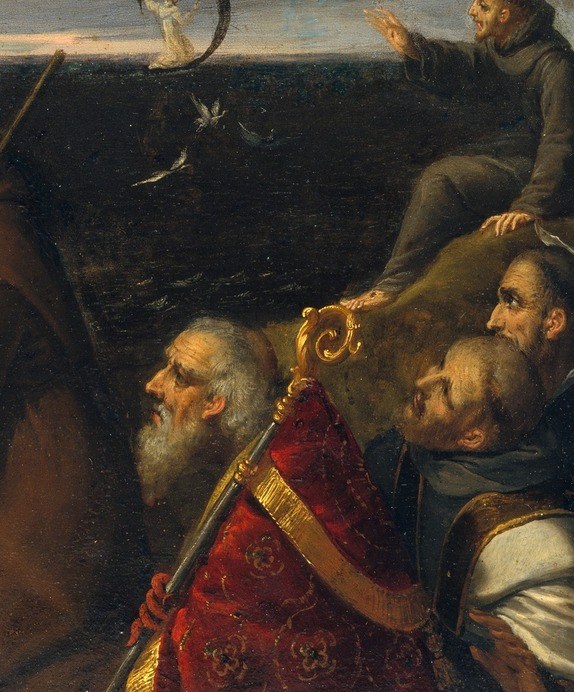
Look at the light around her. This is painted on copper, and the metal glows through. To make you feel the divine, he let the surface itself burn. Now look at the crowd below. This man's face is the center of the painting. He is not a type. He is a specific person being saved. Scarsellino painted this at sixty, for a church that trusted him. A frail friar bows so low his face is hidden.