U.S. Thread Company Mills, Willimantic, Connecticut by Weir, Julian Alden
View the artwork: U.S. Thread Company Mills, Willimantic, Connecticut →
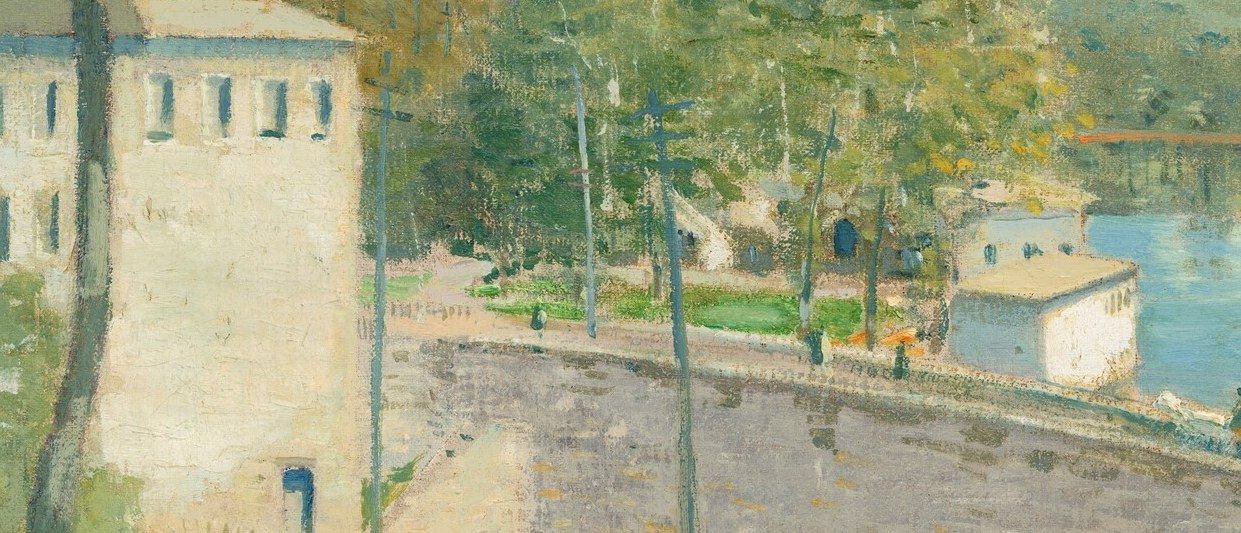
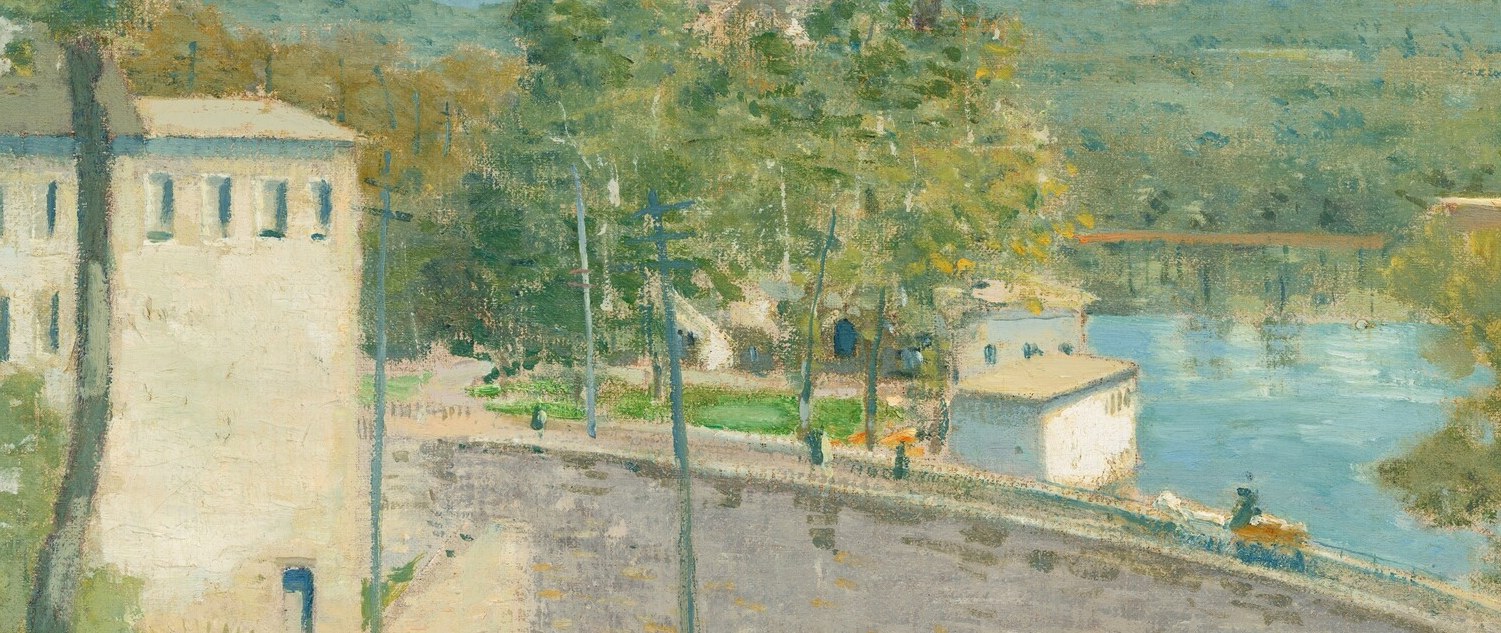
J. Alden Weir painted U.S. Thread Company Mills, Willimantic, Connecticut between 1893 and 1897. It shows the booming textile town near his summer retreat, with the vast U.S. Thread Company mill dominating the left bank. Weir trained in Paris under Gérôme and initially disliked Impressionism, but by the 1890s he had become one of its leading American voices. Here he applies its broken, light-filled brushwork to factory architecture, treating the industrial complex with the same atmospheric tenderness he brought to rural landscapes.
Look at how Weir structures the scene. A warm stone bridge pulls your eye across the Willimantic River, linking the whitewashed mill on the left to a cluster of clapboard houses and a church steeple on the right. The smokestack rises against the sky like a punctuation mark, yet the autumn foliage and soft green hills frame the whole thing as an almost idyllic pastorale. The river itself carries the painting's purest Impressionist passages, where tree reflections dissolve into strokes of color.
The painting is as much a selective document as a painting. The 1890s were years of intense labor unrest in New England's textile towns, but Weir erased every sign of it. No workers, no protest, no smoke thicker than a thread. There is an uncanny stillness. Weir's Willimantic is a town suspended in light, where industry and home appear to coexist without friction. It is a vision of harmony that the real Willimantic, at that moment, could not claim.
This canvas is one of at least six Weir made of Willimantic. It measures just 20 by 24 inches, and now lives at the National Gallery of Art in Washington, D.C., a gift from Margaret and Raymond Horowitz in honor of the museum's fiftieth anniversary.
#arthistory #americanimpressionism #julienaldenweir
Details



Transcript
It is the 1890s in Willimantic, Connecticut. Thread from this mill held American clothes together. The single smokestack marks the town's engine. Across the river, a church steeple rises against the trees. The painter places church and factory in quiet balance. White houses sit peacefully beside the mill. But these years saw bitter labor strikes across New England. Weir erased every trace of that conflict.