Enamels with the Crucifixion by http://www.wikidata.org/.well-known/genid/35d68242b06f7b11103fe287af16298b
View the artwork: Enamels with the Crucifixion →
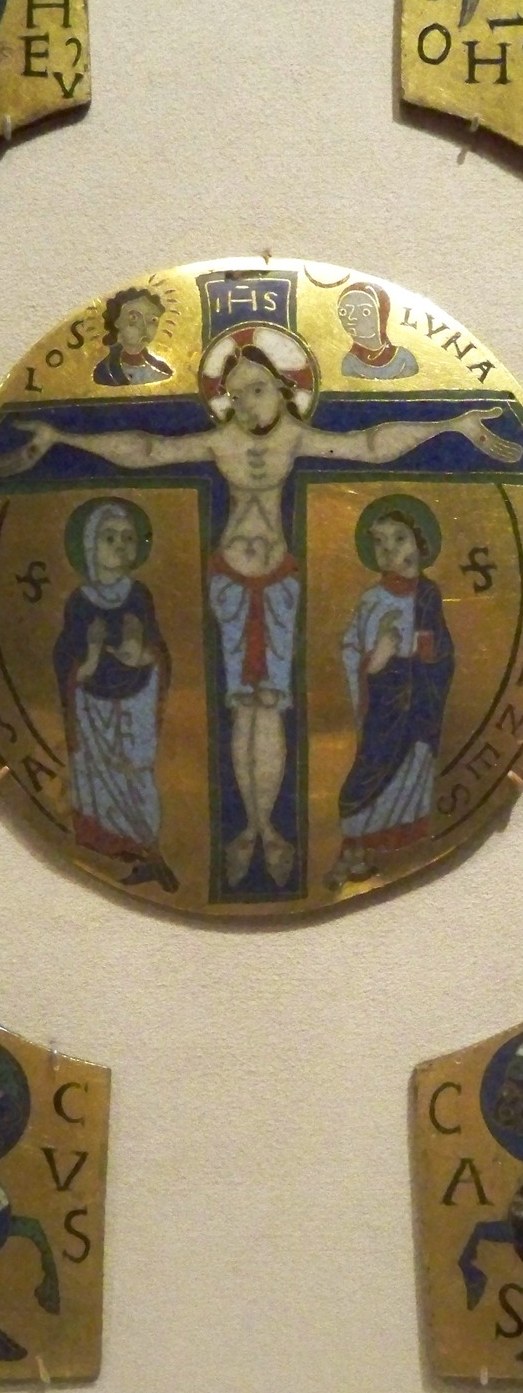
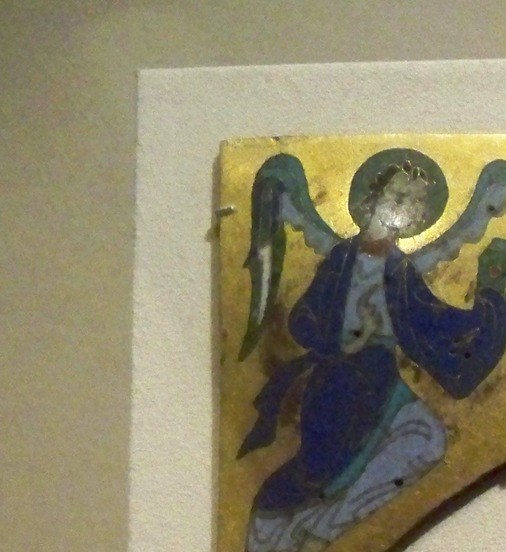
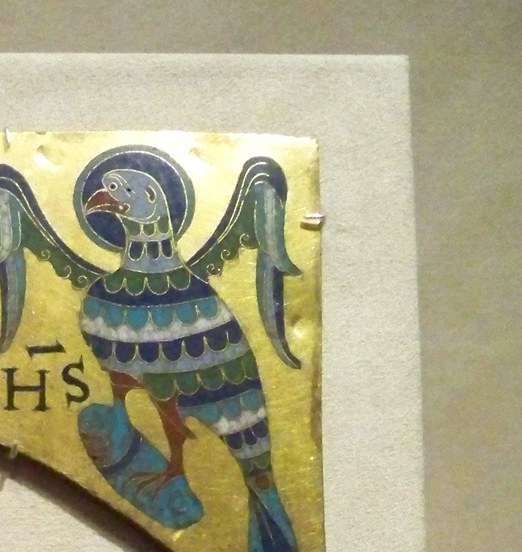
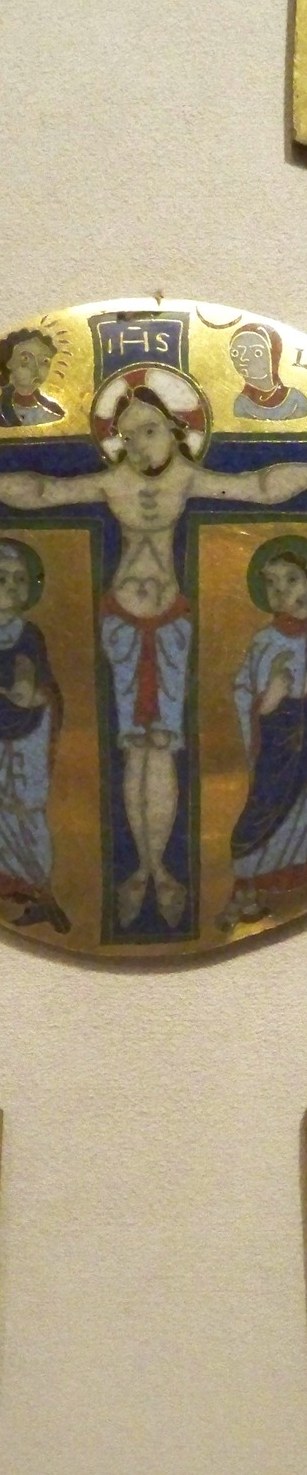
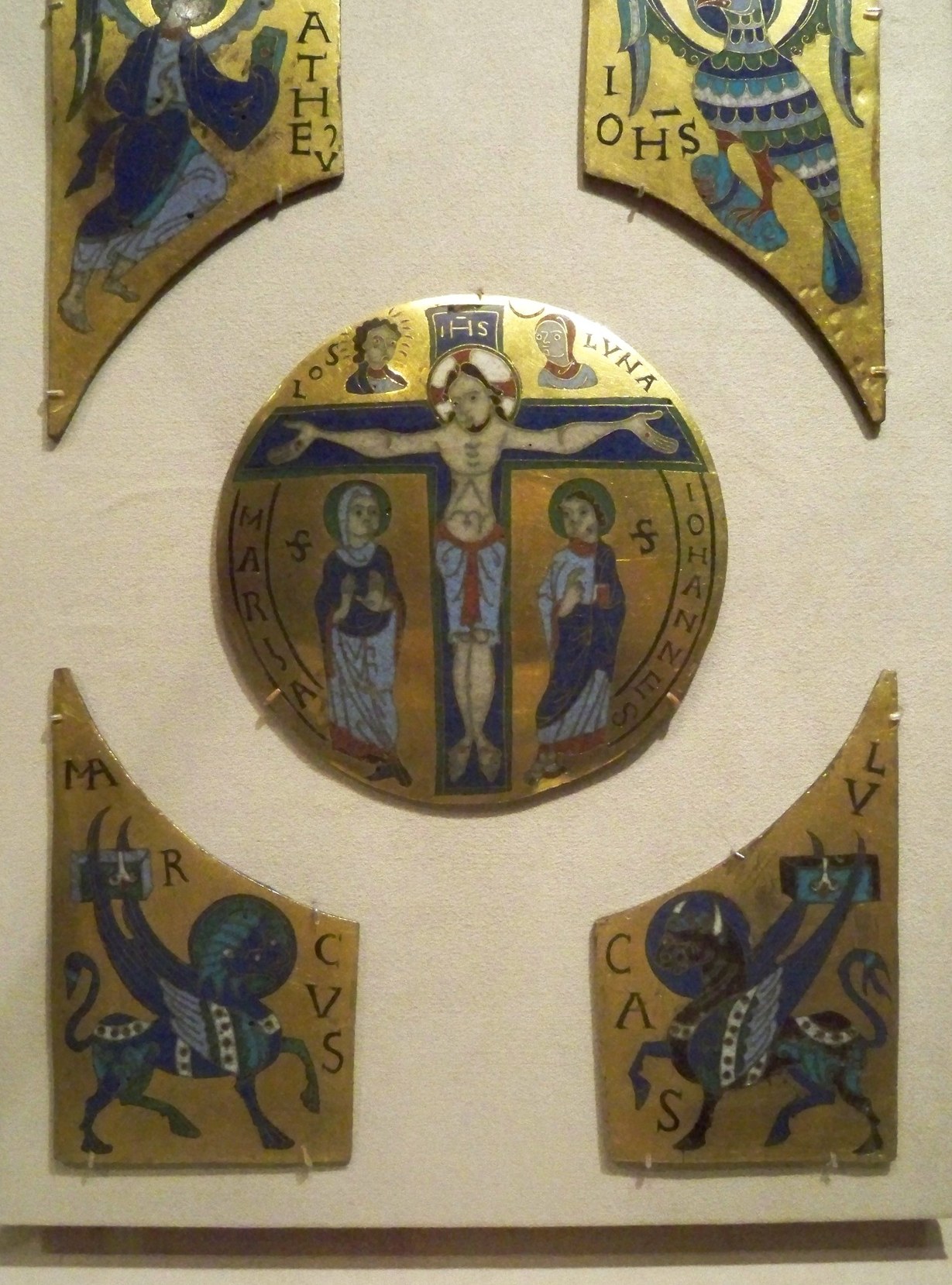
This is 'Enamels with the Crucifixion,' a fragmented copper and champlevé enamel plaque made in France around 1100, now in the Metropolitan Museum of Art. It depicts Christ on the cross flanked by the Virgin Mary and Saint John, framed by the four winged symbols of the Evangelists, but the full story here is not just the image. It is the object itself, and what was done to it.
The circular format is unusual. Most Romanesque altar plaques were rectangular; a disc composition like this one creates a mandorla-like aureole around the entire scene, declaring the Crucifixion a cosmic event rather than a historical moment. The saturated blue is powdered glass, packed into cells chiseled into the copper ground and fired, a technique called champlevé, and it has held its color for over 900 years.
The plaque is a fragment, forcibly cut from a larger altarpiece. During the French Revolution, church treasuries across France were stripped and smashed for their metal and gemstones. Someone intervened here: rather than let the whole thing be melted down, they cut this circular section free and concealed it. The rough edges you see around the medallion are not decay. They are the scar of an act that was, in its own violent way, an act of preservation.
It survived because someone believed it mattered. That ragged silhouette is not damage to look past, it is the reason the object is here at all.
#arthistory #medievalart #metmuseum
Details
Transcript
This gilded disc survived nine centuries. But not in one piece. Look at it closely. A circular shape, rare for altar plaques of this time. The sacred geometry is deliberate. Heaven encircles the Crucifixion. That brilliant blue is champlevé enamel, powdered glass fused into chiseled copper wells. No other fragments survive. This was forcibly severed from a larger altarpiece. During the French Revolution, church treasuries were systematically looted and destroyed. Someone saved this disc anyway, hacked it free and hid it until the violence passed. A sacred object mutilated to save it. Now the wound is its history.